

Why the Bank of Tanzania Is Selling Some of Its Gold Reserves?
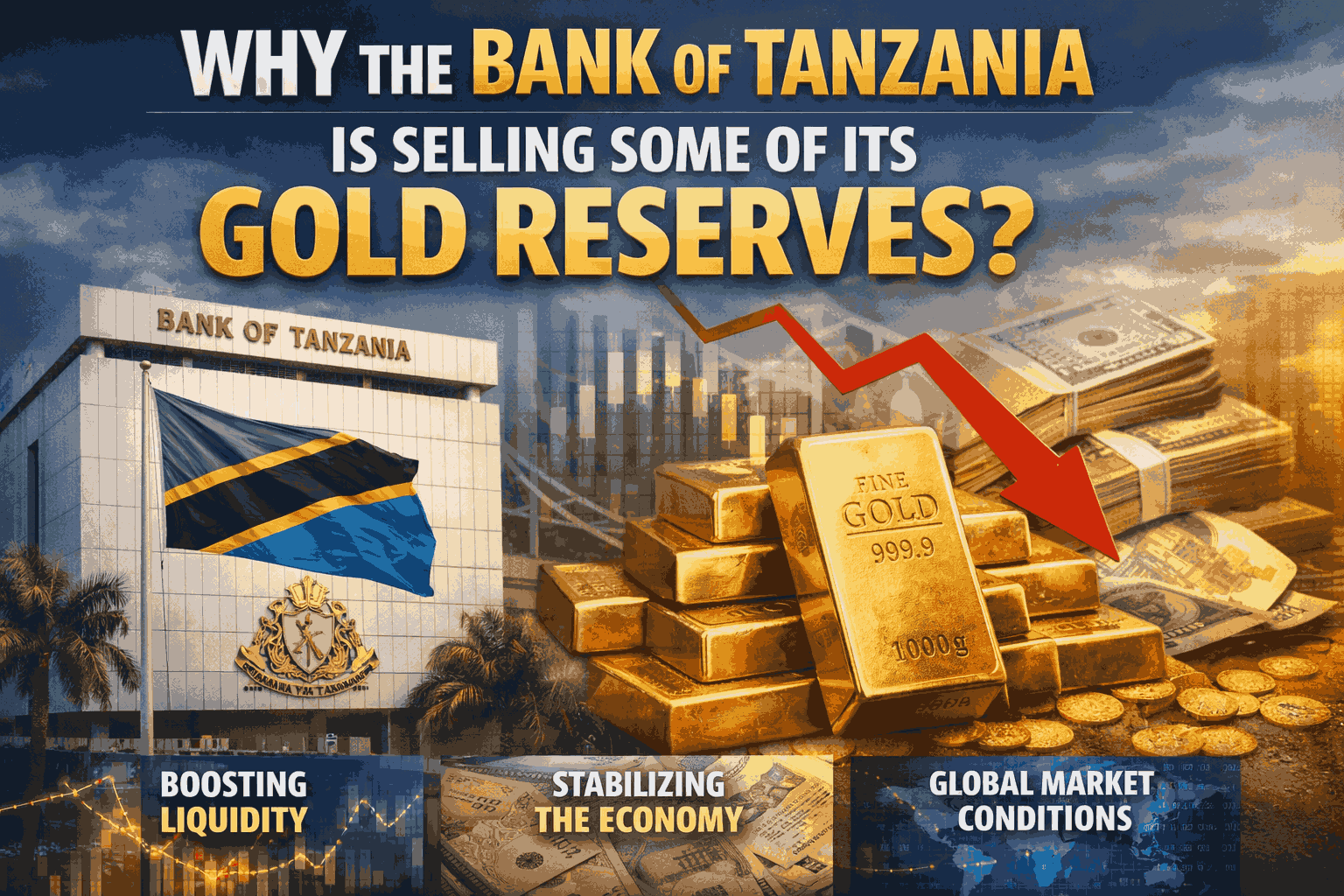
Global gold prices have climbed sharply in recent months, making gold a potentially lucrative asset to monetise, especially when holdings exceed planned strategic thresholds.
In early 2026, Tanzania’s central bank, the Bank of Tanzania (BoT), publicly acknowledged that it plans to sell a portion of its national gold reserves, a development that has generated both interest and speculation among citizens and analysts alike.
1. What the Bank Has Confirmed
Contrary to some rumours circulating on social media and elsewhere, BoT has not sold the entirety of the nation’s gold reserves, nor is it using the proceeds to directly fund government infrastructure projects. Rather, the Bank stated that:
- A gold sale plan exists, but the timing and amount depend on prevailing market conditions.
- The sale is part of routine reserve management and not earmarked for infrastructure financing.
- Proceeds from any sale will be reinvested in foreign financial markets or held in liquid foreign currencies not transferred to the government’s development budget without proper legal approval.
BoT officials have stressed its institutional independence and that any use of its assets beyond standard reserve management requires explicit parliamentary authorisation.
2. Why Sell Gold at a Time of Rising Prices?
Global gold prices have climbed sharply in recent months, making gold a potentially lucrative asset to monetise, especially when holdings exceed planned strategic thresholds.
From a financial perspective:
- Selling some gold while prices are high can secure gains that may otherwise be unrealised on the balance sheet.
- The central bank seeks to re-balance its portfolio — ensuring no single asset (like gold) dominates the reserve mix and exposes the nation to greater volatility.
- Proceeds can be shifted into other foreign exchange assets or highly liquid instruments that support Tanzania’s ability to pay for imports and service international obligations.
In simple terms, selling some gold now is like trimming your investment exposure when the price is peaking and reallocating into other assets that might be safer or needed for liquidity.
3. Context: Gold in Tanzania’s Reserve Strategy
This move did not happen in isolation. Over the past few years, BoT has been actively building its gold holdings:
- BoT launched a domestic gold purchase program, acquiring gold from Tanzanian miners under a 20 % allocation rule in the Mining Act.
- The Bank has bought significant amounts of gold in recent years, both to strengthen foreign reserves and support the local gold market.
- Gold has become an integral part of Tanzania’s foreign reserve diversification strategy, which also includes US dollars and other currencies.
In this respect, the sale is less about offloading a strategic asset and more about active portfolio management — balancing holdings to match risk tolerances and global conditions.
4. Addressing Misconceptions
Several misconceptions have spread alongside the news:
- “Gold is being sold to finance roads or infrastructure.” This is untrue. BoT officials have explicitly denied that sales proceeds are intended for government project financing.
- “Tanzania is replacing foreign currency with gold.” While the Bank continues to hold gold, this does not mean it is abandoning currency reserves like the US dollar. Gold remains a component of reserves, not a replacement.
5. What This Means for Tanzanians
For citizens, the key points to understand are:
- The gold sale is a technical financial decision, not a policy shift toward austerity or hidden government spending.
- Doing strategic sales when prices are high can benefit the national balance sheet, supporting economic stability in the long run.
- Tanzania’s gold purchasing program continues alongside the sale, indicating a broader reserve-management framework, not a one-off or crisis-driven move.
6. Broader Economic Implications
A few potential macroeconomic effects deserve attention:
- Foreign Exchange Buffer: Rebalancing reserves with liquid assets can help cushion against shocks (e.g., global financial downturns or import bill pressure).
- Currency Stability: By diversifying, BoT aims to reduce volatility in the Tanzanian shilling, though this is influenced by many factors beyond reserve composition.
- Gold Market Growth: Continued gold purchases from local miners could stimulate domestic mining and refining activity, helping the sector’s growth.
The Bank of Tanzania’s decision to sell a portion of its gold reserves reflects prudent, professional reserve management amid favourable market conditions. It is not a sign of fiscal distress nor a covert financing mechanism for the government, but rather part of a broader strategy to ensure liquidity, diversify risk, and strengthen the nation’s external financial position.