

Magufuli’s Economic Legacy: State Assertiveness, Infrastructure Momentum, and the Next Phase for Tanzania
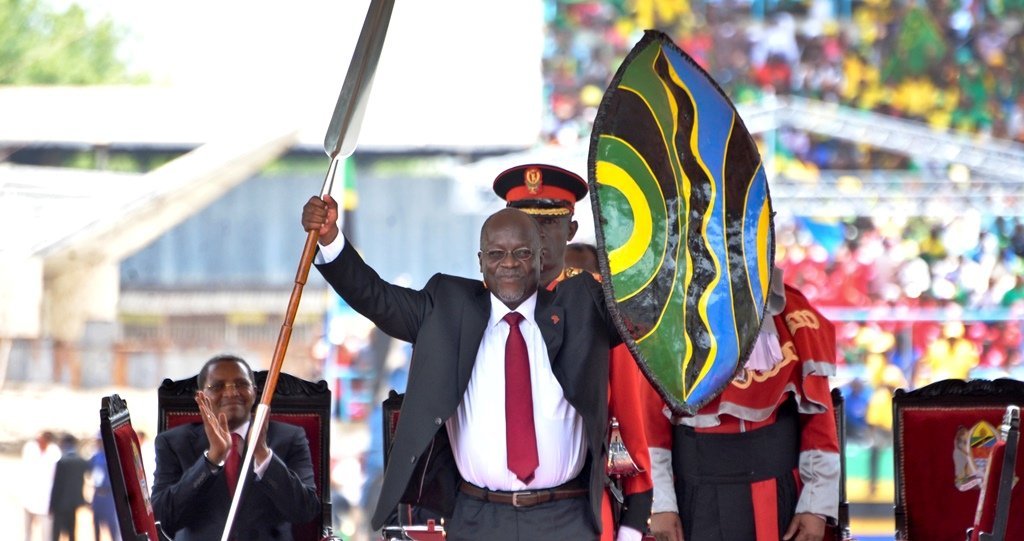
March 17 marks the passing of President John Magufuli, but beyond remembrance lies a deeper economic question. His tenure reshaped Tanzania’s approach to state-led development, infrastructure investment, and resource control. Today, his legacy continues to influence how Tanzania positions itself within an increasingly competitive East African economy.
A Day of Reflection, Beyond Memory
March 17 marks the anniversary of the passing of President John Pombe Magufuli, a moment that continues to carry weight in Tanzania’s national consciousness. While public remembrance often centers on leadership and personality, the more enduring conversation lies in economics. His presidency represented a distinct shift in how the Tanzanian state approached development, investment, and control over strategic sectors.
For Uchumi360 readers, this day is less about retrospection for its own sake and more about evaluating the structural imprint of that period. The relevant question is not what defined Magufuli politically, but what changed economically and what continues to influence Tanzania’s position within East Africa today.
Reasserting the Role of the State
Magufuli’s economic philosophy was grounded in a strong-state model. Public institutions were repositioned from passive regulators to active economic actors. This was most visible in sectors such as mining, energy, and infrastructure, where the government took a more interventionist stance to secure greater national benefit.
The renegotiation of natural resource contracts, particularly in mining, signaled a broader shift across Africa at the time. Tanzania aligned itself with a continental trend where governments sought to capture more value from extractive industries. While this created short-term uncertainty for investors, it also reset the baseline for how resource governance was approached.
The long-term implication is still unfolding. Tanzania today operates within a framework where state interests are more firmly embedded in strategic sectors, but where policy predictability remains a key variable for sustained investment inflows.
Infrastructure as an Economic Backbone
If there is one area where Magufuli’s impact is structurally visible, it is infrastructure. His administration accelerated flagship projects that continue to define Tanzania’s economic landscape, including the Standard Gauge Railway (SGR), the Julius Nyerere Hydropower Project, and major road expansions.
These investments were not merely symbolic. They addressed foundational constraints to growth by improving connectivity, reducing transport costs, and expanding energy capacity. In regional terms, they positioned Tanzania to compete more effectively as a logistics and trade hub within East and Central Africa.
Today, these projects form part of a broader continuity. The current administration has maintained and, in some cases, expanded this infrastructure agenda, reinforcing the idea that long-term economic transformation in Tanzania is anchored in physical connectivity and energy security.
Fiscal Discipline and Domestic Resource Mobilization
Magufuli’s tenure was also marked by a strong emphasis on domestic resource mobilization. Tax collection improved significantly, driven by tighter enforcement and institutional reforms. Public spending was scrutinized more aggressively, with a focus on reducing leakages and ensuring that government resources were directed toward priority areas.
This approach strengthened fiscal capacity in the short term and enabled the financing of large-scale projects without excessive reliance on external borrowing. However, it also created pressure within the private sector, particularly among small and medium enterprises that faced a more stringent tax environment.
The broader lesson for Tanzania and the region is the importance of balance. Strong revenue systems are essential for development, but long-term growth depends equally on maintaining a business environment that supports private sector expansion.
Industrialization and Local Value Creation
A central pillar of Magufuli’s economic vision was industrialization. Policies were designed to encourage local manufacturing, reduce import dependency, and promote value addition within Tanzania. This included support for industries such as cement, textiles, and agro-processing.
While progress was uneven, the strategic intent was clear. Tanzania sought to move up the value chain and reduce its vulnerability to external shocks. This aligns with a wider East African ambition, where countries are increasingly focused on building domestic industrial capacity as a pathway to sustainable growth.
Today, this agenda remains relevant. Regional integration through the East African Community continues to create opportunities for cross-border value chains, and Tanzania’s industrial base positions it as a key player in that ecosystem.
Investor Confidence and Policy Evolution
One of the more complex aspects of Magufuli’s legacy lies in investor sentiment. His administration’s assertive approach to governance and regulation created a perception of unpredictability in some quarters, particularly among foreign investors.
Since then, Tanzania has entered a phase of recalibration. The current administration has prioritized engagement, policy clarity, and international partnerships, while maintaining many of the structural gains achieved in previous years. This reflects a broader evolution rather than a departure.
For investors, the emerging picture is one of convergence. Tanzania is balancing state-led development with a more open and collaborative investment climate. This hybrid model is increasingly common across East Africa, where governments are seeking to attract capital without relinquishing strategic control.
Tanzania in the Regional Context
Within East Africa, Magufuli’s tenure contributed to Tanzania’s repositioning as a serious economic contender. Infrastructure investments strengthened its role as a gateway to landlocked countries such as Rwanda, Burundi, and the Democratic Republic of Congo. Energy projects improved reliability, supporting both domestic industry and regional trade.
At the same time, competition within the region has intensified. Kenya continues to dominate in finance and services, while Rwanda has built a reputation for efficiency and ease of doing business. Tanzania’s comparative advantage lies in scale, resources, and infrastructure, but translating these into sustained economic leadership requires continued policy coherence and execution discipline.
Continuity, Adaptation, and the Road Ahead
Magufuli’s economic legacy is best understood as a foundation rather than a finished model. It established a direction centered on state capacity, infrastructure, and domestic value creation. The current phase of Tanzania’s development is focused on refining that model, improving investor confidence, and integrating more deeply into regional and global markets.
This continuity matters. Economies do not transform through abrupt shifts, but through the accumulation and adjustment of policy frameworks over time. Tanzania’s trajectory reflects this reality, combining elements of assertiveness with increasing openness.
Final Reflection
The significance of March 17, in economic terms, lies not only in remembrance but in evaluation. It is a moment to assess how far Tanzania has come, what structural shifts have endured, and what adjustments are required to sustain growth in an increasingly competitive region.

Magufuli’s tenure demonstrated that the Tanzanian state could act decisively in shaping economic outcomes. The current challenge is ensuring that this capacity is matched with consistency, efficiency, and alignment with market realities, as Tanzania continues to define its role within East Africa’s evolving economic landscape.