
Tanzania Has TZS 11 Billion in Mining Drilling Equipment Sitting Idle. The Asset Transfer From a Mining Company to STAMIGOLD Has Taken 12 Years and Is Still Incomplete.
Uchumi360's critical minerals coverage has documented Tanzania's mineral formalisation achievement, the jump from TZS 8 billion to TZS 2 trillion in mineral transaction values between 2018 and 2024, as one of the most significant structural shifts in the country's resource governance in decades. The CAG's 2024/25 audit adds the operational accountability dimension: inside the mining sector whose headline trajectory is strongly positive, specific institutional failures are leaving capital idle, asset transfers incomplete, and sovereign data on gas reserves unverified.
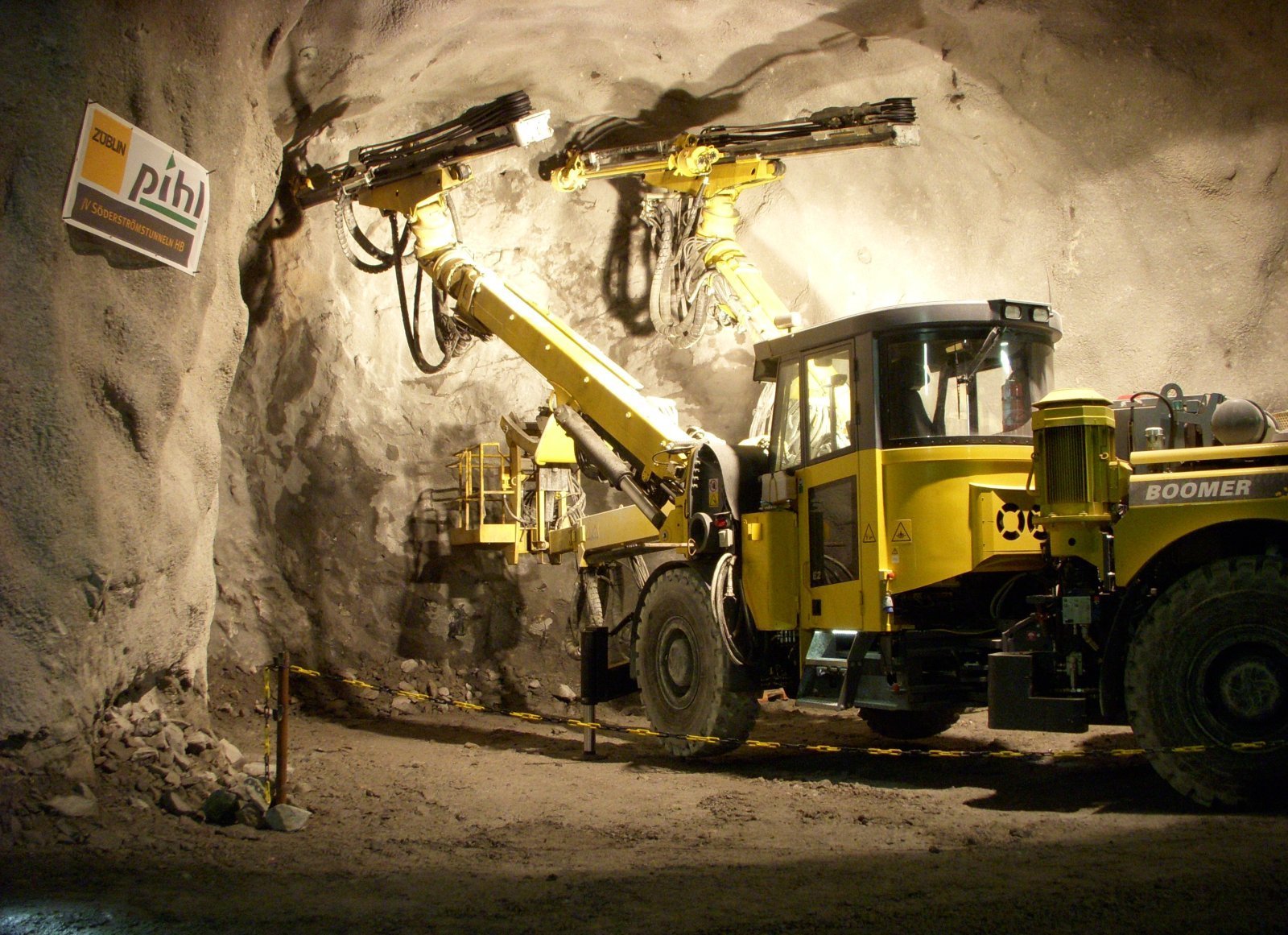
TZS 11 Billion in Idle Drilling Equipment
Tanzania's mining sector institutions are carrying TZS 11.09 billion in drilling equipment that is not being fully utilised. This is not equipment awaiting deployment on planned operations. It is equipment whose underutilisation the CAG documents as a direct operational efficiency failure reducing the sector's output and its contribution to national revenue. In a sector whose formalisation success Uchumi360 has documented extensively, idle capital of this scale represents a straightforward conversion failure: the equipment exists, the mineral resources exist, the institutional mandate to deploy the equipment on those resources exists, and the deployment is not happening at the rate the capital commitment justifies.
The 12-Year Asset Transfer
On November 15, 2013, Tanzania signed an agreement transferring assets from the Pangea mining company to STAMIGOLD, the state gold mining company. As of the 2024/25 audit, more than 12 years after that agreement was signed, assets worth TZS 22.42 billion have still not been transferred. The CAG flags this as one of the most egregious long-duration accountability failures in the entire report, not because the amount is the largest documented, but because the elapsed time against a signed legal agreement is extraordinary.
STAMIGOLD is one of Tanzania's primary instruments for converting the country's gold resource endowment into state revenue and local economic activity. An asset transfer that has taken more than 12 years to complete is an asset transfer whose delays have directly reduced STAMIGOLD's operational capacity throughout that period, with compounding consequences for its revenue contribution, its employment generation, and its role in the artisanal miner formalisation programme that the government has identified as central to the sector's development strategy.
The Sovereign Data Gap in Gas Reserve Verification
The upstream petroleum regulator, responsible for monitoring and supervising Tanzania's oil and gas sector, has no independent system for verifying the reserve estimates submitted by international oil companies for the Mnazi Bay and Songo Songo gas fields. Between 2022 and 2024, reserve estimates for both fields were based entirely on data provided by the operating companies themselves, with no independent technical verification by the regulator.
This is a data sovereignty gap with direct commercial consequences. Tanzania's gas reserve estimates, as reported in government statistics and used in national energy planning, infrastructure investment decisions, and fiscal revenue projections, are based on unverified company-provided figures. The CAG notes the risk of systematic overstatement or understatement, the possibility of misleading national reserve statistics, and the risk of investment decisions based on inaccurate data. For a country whose gas reserves are central to its energy security strategy and to the LNG export ambitions that multiple infrastructure investments are premised upon, unverified reserve data is not a minor compliance gap. It is a strategic economic risk.
The Small-to-Medium Miner Transition
The government's strategy for converting artisanal and small-scale miners into medium-scale commercially viable operations faces systemic challenges that the CAG documents without yet being able to fully quantify. The transition programme, which is the primary mechanism through which Tanzania's mineral formalisation achievement is supposed to generate broader economic value beyond transaction value statistics, is constrained by institutional capacity gaps, financing gaps, and the operational complexity of scaling individual artisanal operations into regulated commercial entities. CNG infrastructure deployment, which is relevant to the energy costs faced by mining operations across the country, is delayed, adding to the operating cost pressure on the small and medium miners the transition programme is attempting to develop.
 Uchumi360
Business Intelligence
Uchumi360
Business Intelligence
Source: Ripoti ya Mwaka ya Mdhibiti na Mkaguzi Mkuu wa Hesabu za Serikali kuhusu Ukaguzi wa Mashirika ya Umma kwa Mwaka wa Fedha 2024/25. March 30, 2026.
Uchumi360 covers business, investment, and economic policy across East, Central, and Southern Africa.
