
Tanzania's Pension Funds Are Owed TZS 1.29 Trillion by the Government. That Debt Has Been Outstanding for Approximately 18 Years. The Workers Whose Savings Are at Stake Do Not Know.
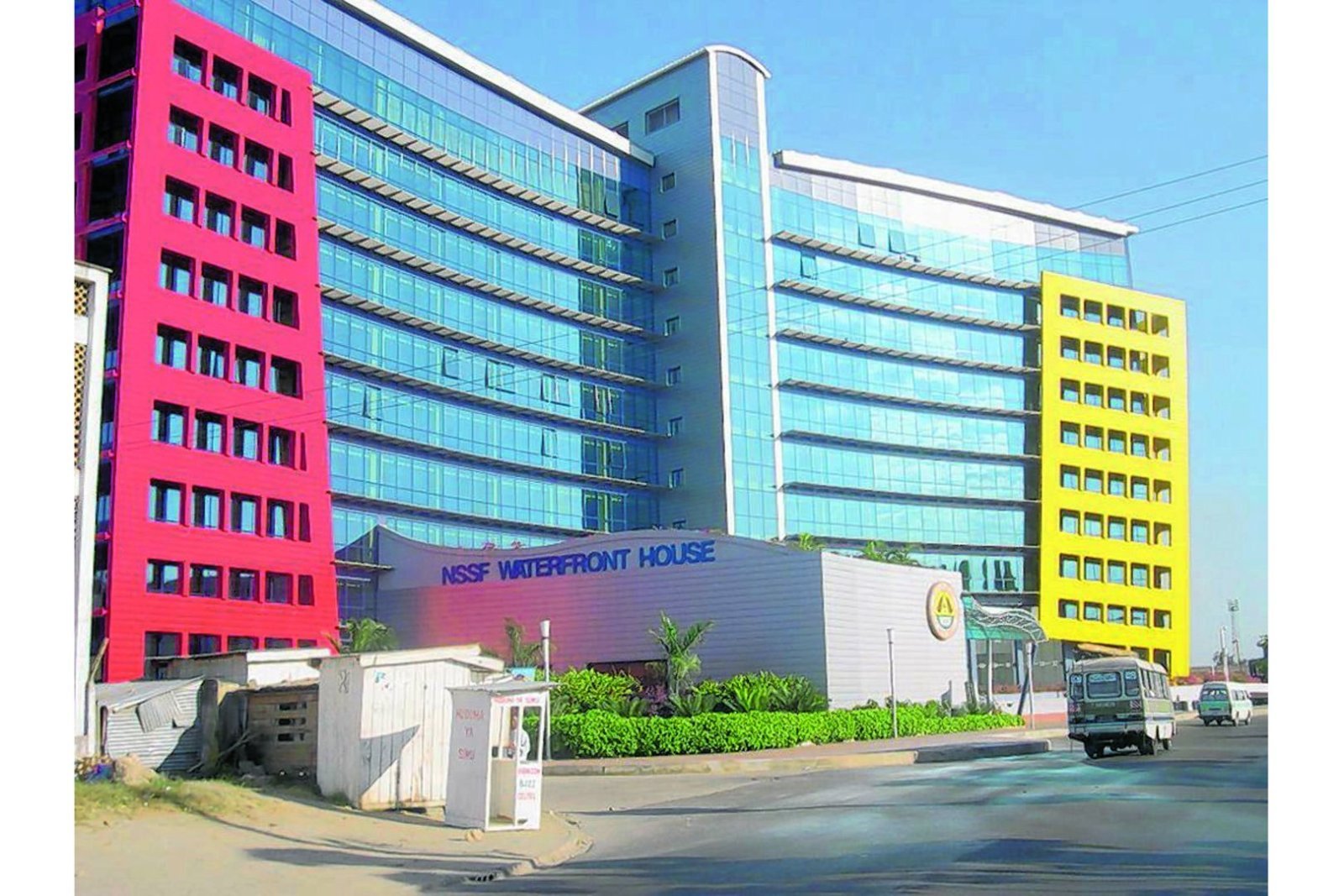
Tanzania's social security system holds the retirement savings of the country's public sector workforce. It is the most direct institutional expression of the social contract between the Tanzanian state and the people who staff its institutions, schools, hospitals, water authorities, and public enterprises. The CAG's 2024/25 audit documents two failures in this system that, taken together, represent the most consequential long-term fiscal risk in the entire report: a government debt to pension funds that has not been serviced for approximately 18 years, and TZS 3.53 trillion in uncollected member contributions that should have been remitted by employers but were not.
The 18-Year Debt
Pension and social security funds administered by Tanzania's social security institutions have outstanding loans to the government and government institutions totalling TZS 1.29 trillion. These loans were extended to the government over a period of approximately 18 years and have not been repaid. The implications are specific and serious. Social security funds lend to generate the returns that fund future pension obligations to their members. A loan that is not serviced is a loan that is not generating returns. A loan that has not been serviced for 18 years is a structural gap in the fund's asset base that accumulates across every year of non-repayment.
The CAG does not describe this as a crisis. It describes it as a condition whose long-term implications for the funds' capacity to meet their obligations warrant urgent government attention. The distinction matters analytically. A pension fund that is currently meeting its payment obligations to retirees may appear solvent at any given point while carrying a structural asset-liability mismatch that becomes visible only when payment obligations scale with an ageing workforce. Tanzania's workforce has been growing. Its public sector pension obligations will grow proportionally.
Beyond the government loan portfolio, TZS 3.53 trillion in member contributions are outstanding from employers who deducted pension contributions from workers' salaries but did not remit them to the funds. TZS 19.32 billion in statutory deductions, including pension contributions, health insurance, and workers' compensation, were not remitted by 13 public institutions in 2024/25, up from TZS 11.89 billion across 10 institutions in 2023/24, a 62 percent increase in a single year. The Dar es Salaam Water and Sewerage Authority alone accounts for TZS 15.85 billion of this total.
The human dimension of these failures is direct. Workers whose pension contributions are deducted from their salaries but not remitted are workers who will discover the gap when they retire or when they attempt to access pension services. Workers whose health insurance contributions are not remitted are workers who may find their coverage invalid when they need it. The CAG's recommendation that affected institutions develop repayment plans in coordination with the pension funds is the minimum administrative response. The structural question of why public institutions are deducting legally mandated contributions and not remitting them, and why this pattern is growing rather than contracting, is the policy question that the data demands.
Tanzania Development Bank: TZS 373 Billion in Mature Debts Unpaid
The Tanzania Development Bank, one of Tanzania's primary development finance institutions, failed to repay TZS 373.14 billion in mature debts during the audit period. The FBME Bank liquidation continues to leave TZS 256.22 billion in verified and confirmed claims from former customers unpaid. One bank exceeded the single borrower limit with a loan of TZS 7.17 billion.
The banking sector findings, taken together with the social security fund findings, describe a financial system in which the state institutions whose primary function is intermediating capital between savers and productive investments are themselves carrying significant unremediated structural weaknesses. A development bank that cannot service its mature debt obligations is a development bank whose capacity to deploy new capital is constrained by its existing liability position.
The Long-Term Fiscal Sustainability Question
Tanzania's investment surge, documented by Tiseza at USD 10.95 billion in approved capital for 2025, is generating a capital deployment challenge that will require functioning financial institutions, reliable pension systems, and solvent public enterprises to manage over the next decade. The CAG's social security and financial sector findings describe institutional foundations that are under stress at the precise moment when the demands placed on them are increasing.
The relationship between pension fund solvency, banking sector health, and Tanzania's Vision 2050 ambition is not abstract. The workers who will staff the factories, operate the infrastructure, and service the investors that Vision 2050 requires are the same workers whose pension contributions are sitting unremitted in public institutions' accounts. The institutions that will channel development capital toward the productive investments Vision 2050 requires are the same institutions whose mature debt obligations are not being serviced. The accountability deficit and the development ambition are not separate stories. They are the same story told from different analytical directions.
 Uchumi360
Business Intelligence
Uchumi360
Business Intelligence
Source: Ripoti ya Mwaka ya Mdhibiti na Mkaguzi Mkuu wa Hesabu za Serikali kuhusu Ukaguzi wa Mashirika ya Umma kwa Mwaka wa Fedha 2024/25. March 30, 2026.
Uchumi360 covers business, investment, and economic policy across East, Central, and Southern Africa.
