
The Government Underfunded 87 Public Institutions by TZS 1.29 Trillion. Those Institutions Then Failed to Collect TZS 1.32 Trillion From Their Own Sources. Tanzania Has a Compounding Fiscal Gap at the Institutional Level.
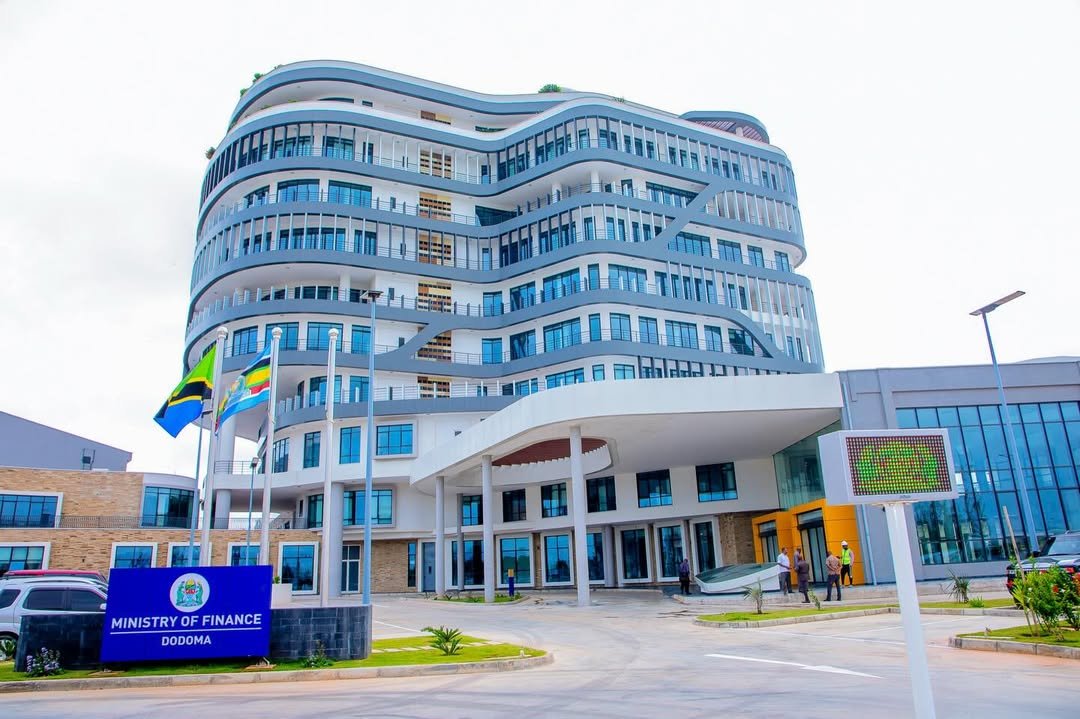
Tanzania's fiscal management challenge is typically discussed in terms of the national budget deficit, the tax-to-GDP ratio, and the government's borrowing requirements. The CAG's 2024/25 audit introduces a more granular and more operationally specific fiscal management problem: the compounding gap between what the government promises public institutions in their budgets and what it actually releases, combined with those institutions' failure to collect what their own internal revenue sources could generate. This is not a macro-fiscal problem. It is a micro-fiscal management failure that aggregates across 225 institutions into a structural drain on Tanzania's development capacity.
The Compounding Gap
Treasury released TZS 1.29 trillion less than budgeted across 87 institutions in 2024/25. These institutions responded to this funding shortfall by, in many cases, also failing to maximise their own internal revenue collection. Across 84 institutions, TZS 1.32 trillion in collectible internal revenue was not collected. The coincidence of these two failures is not accidental. Institutions operating under Treasury underfunding divert management attention toward financial crisis management rather than revenue optimisation. The underfunding shortfall and the collection failure compound each other.
Five institutions exceeded their budgets by TZS 19.85 billion without authorisation from their accounting officers or boards. Eleven institutions are not using the government's budget system. Twelve did not engage their stakeholders adequately in the budget preparation process. Three did not align their strategic plans with their budgets during the preparation cycle. The budget management failures are not isolated to individual institutions. They are distributed across the institutional landscape in a pattern that suggests systemic weaknesses in Tanzania's public sector financial planning culture.
The Tax Compliance Deficit Inside the Public Sector
Tanzania's public institutions, which are simultaneously responsible for implementing government tax policy, are themselves systematic late payers and non-remitters of tax. TZS 56.21 billion in tax obligations to TRA were delayed by between one and 331 days across eight institutions including TANESCO, the SGR railway construction project, and the University of Dar es Salaam. TZS 10.64 billion in tax was simply not remitted by 24 institutions, up from TZS 9.65 billion across 17 institutions in 2023/24.
The most analytically significant finding in the tax compliance section is the SGR railway construction project's inclusion in the list of late tax payers. An infrastructure project of national priority, receiving the full weight of government commitment and international financing, is not paying its tax withholding obligations on time. This is not a revenue management failure by a peripheral institution. It is a compliance gap inside Tanzania's most symbolically important infrastructure investment.
The Shirika la Petroli Tanzania and Kampuni ya Gesi Tanzania together have TZS 3.74 billion in employee allowance tax disputes with TRA, with both institutions arguing that their government subsidy status exempts their employees' allowances from income tax. This is a legal interpretation dispute that the Tax Appeals Board is yet to resolve. Until it does, TZS 3.74 billion in potentially assessable tax sits in a compliance limbo.
Assets Without Title Deeds
The CAG's asset management findings add a property rights dimension to the fiscal management story. One hundred and seventy-six plots of land, including open land, developed land, and agricultural holdings with a combined value of TZS 25.20 billion, are owned by 22 public institutions without title deeds. Assets without title deeds cannot be mortgaged to raise capital, cannot be sold to generate fiscal resources, cannot be defended against encroachment in courts, and cannot be included in formal asset registers at their market value.
The SabaSaba grounds dispute between the Grain and Mixed Crops Board and the Dodoma City Council, where a public asset is subject to unresolved ownership conflict between two government institutions, is an example of how asset management failures translate into operational disruptions and fiscal losses that compound over time.
The Structural Lesson
The fiscal management findings across the CAG report describe an institutional budget architecture in which the planning cycle, the release cycle, and the collection cycle are all misaligned in ways that compound to produce the debt accumulation, the unpaid obligations, and the under-delivered services that the sector-specific chapters document. This is not a leadership failure at any individual institution. It is a systemic design failure whose resolution requires the kind of structural reform agenda that MKUMBI II is beginning to address at the business environment level and that needs a parallel initiative at the public sector financial management level.
Tanzania's Vision 2050 fiscal arithmetic requires a tax-to-GDP ratio approaching and eventually exceeding 18 percent, public institutions that generate rather than consume the fiscal resources needed for development investment, and a Treasury release system that matches budgeted allocations to institutional delivery requirements with sufficient reliability to allow multi-year infrastructure programmes to be planned and executed without cash flow disruptions. The CAG's 2024/25 findings describe the distance between the current fiscal management reality and that requirement with precision and authority.
 Uchumi360
Business Intelligence
Uchumi360
Business Intelligence
Source: Ripoti ya Mwaka ya Mdhibiti na Mkaguzi Mkuu wa Hesabu za Serikali kuhusu Ukaguzi wa Mashirika ya Umma kwa Mwaka wa Fedha_2024-25. March 30, 2026.
Uchumi360 covers business, investment, and economic policy across East, Central, and Southern Africa.
