

The Chokepoints Quietly Controlling East Africa’s Economy
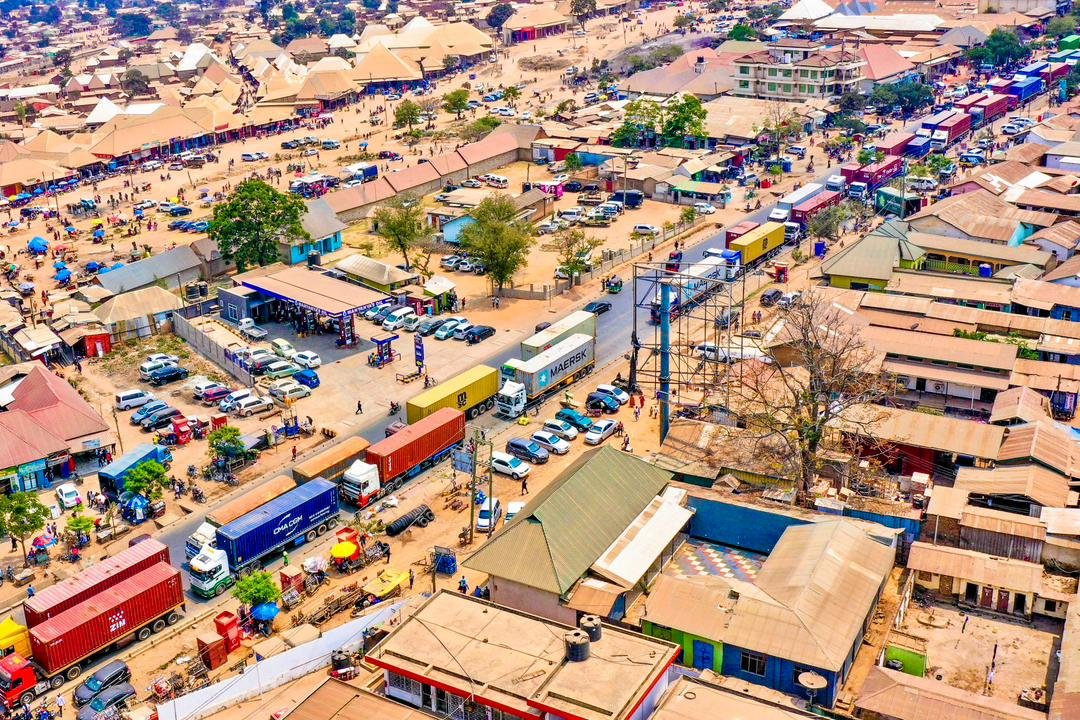
East Africa’s economy is shaped not by ocean straits but by infrastructure chokepoints. From the ports of Dar es Salaam and Mombasa to rail corridors, pipelines, lakes, and border crossings, a handful of gateways determine trade costs, supply reliability, and regional influence. Control of these nodes increasingly defines economic power within the EAC.
Global trade is shaped by narrow passages such as Hormuz or Malacca. East Africa has no famous maritime strait, yet its economic fate is determined by equally powerful bottlenecks. Instead of waterways, the region’s pressure points are ports, rail corridors, pipelines, lakes, and border nodes where goods cannot bypass.
These infrastructure chokepoints dictate fuel prices, food availability, export capacity, and long-term growth across the East African Community (EAC). Modern geoeconomic analysis shows that influence increasingly comes from controlling critical nodes that others depend on and cannot easily substitute.
For policymakers and investors, understanding these gateways is essential to understanding the region’s future.
Dar es Salaam: The Southern Gateway
The Port of Dar es Salaam is more than Tanzania’s main seaport. It serves as the maritime outlet for a vast hinterland that includes Zambia, Rwanda, Burundi, Malawi, eastern Democratic Republic of Congo, and potentially Uganda.
Most essential imports for these economies arrive through this single entry point, including fuel, fertilizer, machinery, vehicles, and consumer goods. When port congestion rises or operations slow, the effects cascade inland through higher transport costs, delayed supplies, and inflation.
Conversely, efficiency gains at Dar es Salaam generate regional economic benefits. Tanzania’s port expansion and logistics modernization are therefore strategic investments aimed at capturing long-term transit trade, not merely improving domestic infrastructure.
Mombasa: Anchor of the Northern Corridor
Mombasa remains the dominant gateway for Uganda, South Sudan, and parts of eastern DRC. For decades, it has anchored the Northern Corridor, making Kenya the principal maritime bridge between the interior and global markets.
Heavy reliance on a single route creates systemic vulnerability. Disruptions from congestion, political tensions, or infrastructure failures can affect multiple economies simultaneously.
Uganda’s efforts to develop alternative access through Tanzania reflect a rational diversification strategy. In logistics, redundancy reduces risk and strengthens negotiating leverage over transport costs and service reliability.
The Central Rail Spine: Tanzania’s SGR Corridor
Rail infrastructure determines whether inland resources can reach global markets competitively. Tanzania’s Standard Gauge Railway (SGR) is emerging as the backbone of the Southern Corridor, linking the coast to the interior.
Rail transport dramatically lowers the cost of moving bulk commodities such as minerals, agricultural produce, and construction materials. It also improves reliability compared with road transport, which is vulnerable to congestion and deterioration.
If extended to neighboring countries, the SGR could transform Dar es Salaam from a national port into a regional logistics hub. Industrial zones, warehousing clusters, and new urban centers typically develop along major rail corridors, reinforcing their strategic importance.
Lake Victoria: The Inland Maritime Network
Lake Victoria functions as an inland sea connecting Tanzania, Uganda, and Kenya. For bulky or low-value goods, water transport can be cheaper and more efficient than road haulage.
The lake supports trade in grains, fuel, cement, and manufactured products across the basin. However, limited port capacity, aging fleets, and fragmented regulation constrain its full potential.
Modernizing lake transport could create a low-cost logistics layer within the EAC, easing pressure on road networks and improving supply chain resilience across the region.
The Energy Corridor: Pipeline Leverage
Energy infrastructure concentrates high-value flows into single routes, making pipelines among the most strategic chokepoints. The East African Crude Oil Pipeline will transport Ugandan oil to Tanzania’s coast for export, creating a dedicated energy corridor.
Once operational, it will serve as the sole export channel for Uganda’s petroleum sector. Any disruption along the route would halt shipments entirely.
For Tanzania, the pipeline brings transit revenues, investment inflows, and enhanced geopolitical relevance. For the region, it highlights how energy security increasingly depends on infrastructure security.
Border Crossings: Where Trade Physically Stops
Land borders act as micro-chokepoints. Even with modern infrastructure, administrative friction can halt trade as effectively as physical barriers.
Truck queues at major crossings reflect documentation delays, inspections, informal charges, or security concerns. Because East African trade relies heavily on road transport, inefficiencies at borders amplify costs across entire supply chains.
One-Stop Border Posts have improved throughput, but capacity constraints and procedural inconsistencies remain significant bottlenecks.
Infrastructure Is East Africa’s Maritime Geometry
East Africa’s trade system is defined not by oceans but by corridors. Goods move through a sequence of gateways: ports, rail lines, highways, pipelines, lakes, and border posts. Each node represents a potential bottleneck where economic activity concentrates.
Control of these nodes creates durable advantages:
- Stable transit revenues independent of domestic production
- Influence over landlocked neighbors
- Attraction of logistics and industrial investment
- Greater resilience to external shocks
Globally, countries that manage chokepoints effectively shape economic outcomes far beyond their borders. The same principle applies within the EAC.
Strategic Implications for Tanzania and the Region
Competition between the Northern and Southern corridors is likely to intensify as infrastructure expands. Uganda’s rail ambitions, pipeline projects, and cross-border investments signal a future in which trade routes are actively contested rather than historically fixed.
For Tanzania, success would mean evolving from a coastal economy into the principal gateway for Central and East Africa. For the wider region, diversified corridors could lower transport costs, improve reliability, and accelerate economic integration.
Bottom Line
East Africa’s economic future will be determined less by political boundaries and more by control of movement.
Where goods must pass, power accumulates.
Where routes diversify, vulnerability declines.
Where infrastructure converges, economic gravity forms.
In a region dominated by landlocked economies, access to the sea is not just a logistics issue. It is strategic leverage.