

China's Mega-Dam Ambitions: Lessons for Tanzania's Hydropower Push
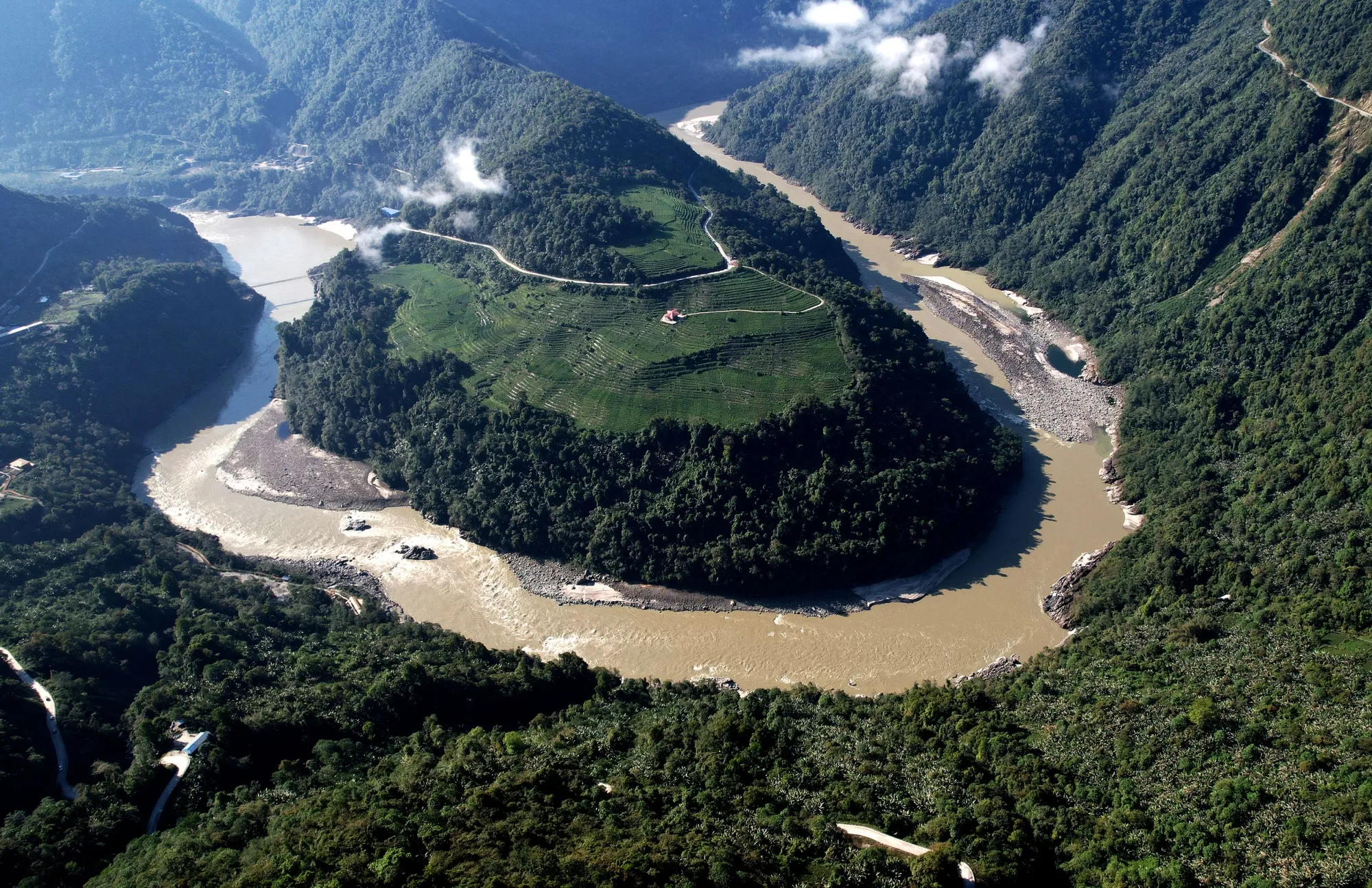
China's Motuo dam, generating 60 GW, mirrors Tanzania's Julius Nyerere project amid CCM's 8,000 MW goal. Displacement and ecology concerns highlight risks in this $15 billion infrastructure push.
By Uchumi360 Economics Desk
DAR ES SALAAM — China's announcement of the $165 billion Motuo hydropower project, set to generate 60 gigawatts on Tibet's Yarlung Tsangpo River, underscores Beijing's dominance in mega-dams, dwarfing even the Three Gorges Dam. As detailed in a September 2025 report from The Daily Galaxy, this initiative raises alarms over environmental risks, displacement, and regional water security affecting 1.8 billion people downstream in India and Bangladesh. For Tanzania, grappling with its own ambitious power goals under the Chama Cha Mapinduzi (CCM) 2025 manifesto, targeting 8,000 megawatts (MW) by 2030, China's playbook offers both inspiration and cautionary tales, especially given Beijing's deep involvement in East African hydropower.
Tanzania's energy sector mirrors China's blend of scale and urgency. The CCM manifesto highlights power generation rising from 1,602 MW in 2020 to 3,078 MW in 2024, with hydropower as a key pillar. The flagship Julius Nyerere Hydropower Project (JNHPP), formerly Stiegler's Gorge, exemplifies this: at 2,115 MW, it represents China's largest single export contract for hydropower equipment, as reported by SASAC in January 2025. Built by Egyptian firms but with significant Chinese tech, the dam began filling in 2024 and is expected to meet 40% of Tanzania's electricity needs by full operation in 2026, boosting GDP by 1-2% through industrial growth, per World Bank estimates.
China's influence extends beyond hardware. Bilateral ties, reaffirmed by Ambassador Chen Mingjian in August 2025, include training programs like the Sino-Tanzanian Silk Road Institute of Electric Power, launched in April 2025 to skill Tanzanians in hydropower management. This aligns with the CCM's goal of 100% rural electrification by 2030, up from 72% in 2024, and supports broader infrastructure like the $15 billion pipeline. The 2025 World Hydropower Outlook ranks Tanzania among the top five globally for new installed capacity in 2024, largely due to Chinese-backed projects. Economically, this could attract $5 billion in FDI annually, per African Development Bank projections, fueling sectors like mining and manufacturing.
Yet, Motuo's controversies echo Tanzania's challenges. China's project risks displacing up to one million Tibetans and destabilizing ecosystems, per the International Campaign for Tibet. Similarly, JNHPP has displaced 20,000 people and flooded parts of the UNESCO-listed Selous Game Reserve, drawing criticism from environmental groups like WWF for biodiversity loss. Tanzania's 40% debt-to-GDP ratio, exacerbated by $2 billion in dam loans, mirrors Beijing's high-stakes financing, Motuo's $165 billion cost could strain China's resources amid global slowdowns. Geopolitically, while Motuo heightens India-China tensions over water, Tanzania's dams on shared rivers like the Rufiji could spark Nile Basin disputes, though less acutely.
Lessons abound for Tanzania. China's success in renewables, installing more solar than the world combined, suggests hybrid models: integrating JNHPP with solar to mitigate hydropower's drought vulnerabilities, as seen in 2023's El Niño impacts. The CCM could adopt Beijing's community relocation strategies, criticized but scaled, to minimize displacement. Funding-wise, China's PPPs offer a template, but Tanzania must diversify lenders to avoid debt traps, as warned in Modern Diplomacy's July 2025 analysis of Chinese investments.
The horizon is promising. With China's aid, Tanzania could leapfrog to 8,000 MW, powering 1 million jobs by 2030, per Deloitte forecasts. President Samia Suluhu Hassan’s “Kazi na Utu” mantra aligns with sustainable growth, but balancing ambition with ecology is key. As Motuo redefines hydropower, Tanzania stands to gain, or risk repeating its pitfalls.