
Renewable Energy Rush: Tanzania's Path to 8,000 MW Capacity
Ready
The CCM 2025 manifesto doubles power capacity to 3,078 MW in 2024, aiming for 8,000 MW by 2030 with renewables and AI tools. Funding gaps and climate risks test this energy transformation.
By Uchumi360 Economics Desk
DAR ES SALAAM — As Tanzania steps into the economic spotlight of 2025, the Chama Cha Mapinduzi (CCM) party's manifesto positions renewable energy as a cornerstone of its growth strategy. With power generation capacity doubling from 1,602 megawatts (MW) in 2020 to 3,078 MW in 2024, driven by solar, wind, and hydropower, the plan targets 8,000 MW by 2030. This push aims to electrify rural areas, attract $10 billion in foreign direct investment (FDI), and fuel industrialization. But can this energy rush overcome funding gaps and technical bottlenecks?
The sector’s foundation reflects bold progress. The capacity surge has extended electricity to 12,318 villages in 2024 from 8,587 in 2020, powering 3.5 million new households and spurring a 15% rise in rural enterprise activity since 2022, per the Tanzania Private Sector Foundation (TPSF). Renewables now account for 40% of the mix, reducing diesel import costs that spiked during the 2023 El Niño crisis. The World Bank confirms a 92% increase in installed capacity, though actual output is hampered by 15% transmission losses, a challenge the manifesto seeks to address.
Looking ahead, the vision is transformative. The manifesto outlines plans to connect 15,000 villages by 2030, achieving 100% rural electrification, and integrate satellite technology for grid monitoring alongside AI-driven efficiency tools. This could support a manufacturing boom, with the East African Community (EAC) Secretariat estimating a 2-3% GDP uplift if power costs drop from $0.12 to $0.08 per kilowatt-hour. The African Development Bank projects that reaching 8,000 MW, double the current 3,900 MW peak demand, could attract $5 billion in FDI, particularly in energy-intensive sectors like aluminum and cement. Off-grid solar, planned for 500,000 households, aims to create 300,000 jobs.
Funding is the linchpin.
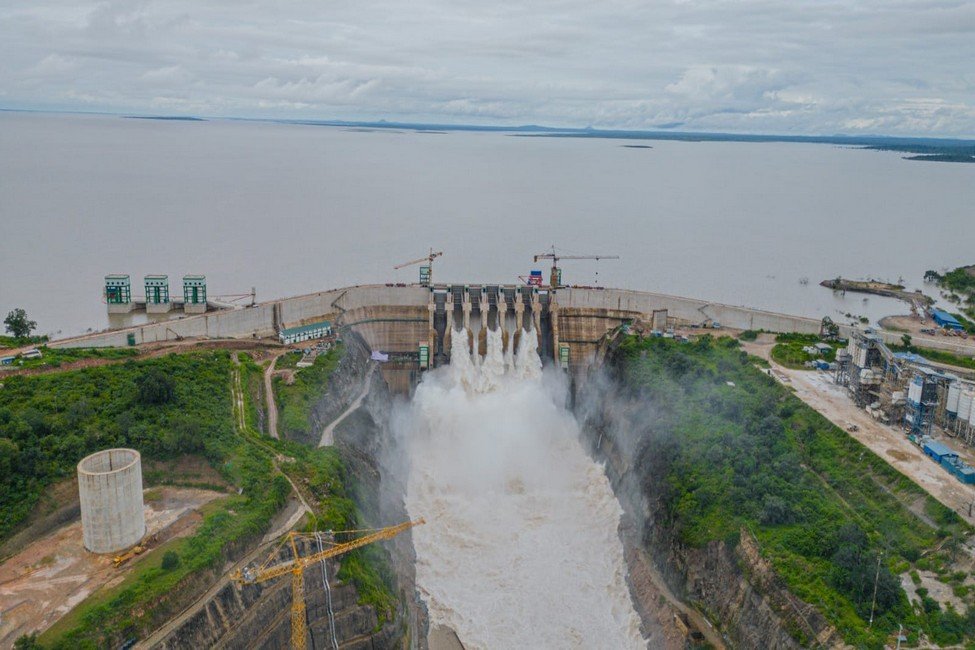
The manifesto proposes a $10 billion investment, blending government budgets, public-private partnerships (PPPs), and international loans, against a 40% debt-to-GDP ratio. The World Bank has committed $1.5 billion for renewables, but the remaining $8.5 billion hinges on private capital, with the Tanzania Investment Centre (TIC) noting 50 energy-related projects among its 901 registered in 2024. Technical hurdles include transmission losses and a skilled labor shortage, only 5% of technicians are certified, requiring $2 billion in upgrades. The International Monetary Fund (IMF) warns that cost overruns, as seen in the $600 million Rufiji hydropower project, could push debt to 45% of GDP.
Environmental and climate risks add complexity. Hydropower’s 60% share faces drought threats, with 2023’s El Niño cutting output 20%, per ministry data. The manifesto counters with climate-resilient designs and battery storage, but funding lags at $200 million allocated against a $500 million need. Greenpeace highlights potential ecosystem damage from dam expansions, urging stricter safeguards, a concern echoed by 30% of public feedback in 2024 environmental reviews.
Despite these challenges, the outlook is promising. Deloitte’s East Africa Outlook 2025 forecasts a 5.3% growth rate, with energy as a key driver, potentially powering 1 million new jobs by 2030. President Samia Suluhu Hassan’s pledge to “energize Tanzania’s future” aligns with a population where 30% lack reliable power. If CCM navigates funding and sustainability, Tanzania could emerge as East Africa’s energy hub by 09:15 PM EAT on Wednesday, September 10, 2025, fueling a sustainable economic surge.
 Uchumi360
Business Intelligence
Uchumi360
Business Intelligence
Uchumi360 covers business, investment, and economic policy across East, Central, and Southern Africa.
For the serious reader
You read to the end. That places you in a small group.
Uchumi360 is built for readers who demand precision over speed, structure over sentiment, and analysis that holds uncomfortable conclusions rather than softening them. If this work sharpens how you think about Africa's economy, help us keep building the infrastructure behind it.
Institutional Partners
Commission intelligence. Shape the conversation.
Uchumi360 works with development finance institutions, investment firms, sovereign bodies, and strategic organisations across the coverage region. Institutional partnership unlocks:
- Commissioned sector and country intelligence reports
- Branded research series under your institution's authority
- Exclusive data briefings for internal strategy teams
- Speaking and editorial presence at Uchumi360 events
- Co-published investment outlooks for your markets
Support Our Work
Independent analysis has a cost. Help us bear it.
Uchumi360 does not carry advertising. It does not take editorial direction from sponsors. Every article is produced without commercial compromise. Your contribution funds the reporting, research, and editorial infrastructure that keeps this analysis free from influence.
Secure checkout: One-time and monthly support are processed securely.
Stay Connected
Keep up with every new insight.
Follow our latest analysis, policy coverage, and market intelligence as soon as it is published. If you need something specific, reach out directly and we will point you to the right research.
