
The Opportunities of Investing in Warehouses in Tanzania’s Agricultural Regions
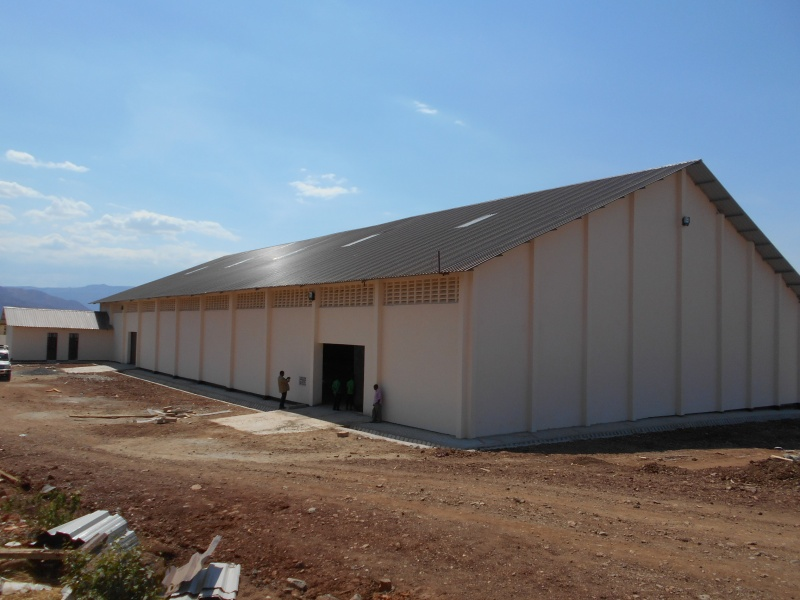
Ready
Tanzania loses between 30% and 40% of crops like maize, beans, vegetables, and rice each year due to poor traditional storage methods. Farmers often store their produce in makeshift structures that expose crops to pests, moisture, spoilage, and contamination.
Tanzania’s agricultural sector is expanding rapidly, especially in regions such as Mbeya, Rukwa, Songwe, Iringa, Morogoro, Ruvuma, Mwanza, Tabora, and Manyara, which have become major producers of cereals, horticulture, livestock products, cash crops, and agro-processed goods. Despite this strong growth, farmers across these regions still struggle with market access, post-harvest losses, and poor storage conditions. These challenges have created a massive gap and a major investment opportunity for private individuals and companies to build modern warehouses. Today, warehousing is not only a profitable business model but also a strategic pillar for supporting food security, stabilising prices, and unlocking agricultural value chains across Tanzania.
One of the strongest opportunities lies in addressing high post-harvest losses. Tanzania loses between 30% and 40% of crops like maize, beans, vegetables, and rice each year due to poor traditional storage methods. Farmers often store their produce in makeshift structures that expose crops to pests, moisture, spoilage, and contamination. Because of this, many farmers are willing to pay for modern storage solutions that protect their harvests and increase their selling power. Warehouses equipped with proper handling systems, moisture control, and security offer farmers a safe place to store their produce while investors benefit from a consistent and predictable demand throughout the year.
Seasonal price fluctuations also make warehousing a highly profitable venture.
Across Tanzania, crop prices are usually lowest immediately after harvest due to oversupply and highest during the off-season when demand rises. Farmers who lack storage are forced to sell early at low prices just to avoid spoilage or to free up space at home. Investors who build warehouses can take advantage of this cycle by storing commodities during peak production and releasing them when market conditions improve. Warehouses can also be leased to traders, cooperatives, and buyers who need space to stabilize prices, making this a highly lucrative business model when combined with commodity aggregation or grain trading.
Demand for warehouses is further strengthened by the growth of agro-processing industries and export markets
Processors for rice, maize, sunflower, fruits, spices, and horticulture products require a reliable and consistent supply throughout the year, which is only possible when storage infrastructure is available near production zones. Warehouses positioned close to farming communities make it easier for processors to access high-quality raw materials while reducing transport costs and supply disruptions. With Tanzania’s growing participation in regional and international agricultural markets, especially horticulture exports, warehouses have become essential in maintaining quality and meeting export standards.
Another major opportunity emerges through the Warehouse Receipt System (WRS)
WRS allows farmers and traders to deposit crops into certified warehouses and receive receipts that can be used as collateral for loans. Investors who establish certified warehouses within the WRS ecosystem benefit from storage fees, financing partnerships with banks, increased occupancy, and long-term contracts with cooperatives. This system not only empowers farmers to access credit but also ensures warehouses remain full and financially sustainable.
Warehouses also play a key role in logistics and distribution,
especially for Tanzania improves its transport infrastructure through road upgrades, the Standard Gauge Railway (SGR), and dry port development. Agricultural regions located along major corridors such as Songwe near Tunduma, Morogoro along the SGR, and Mbeya on the central highlands route are becoming strategic hubs for regional trade. Warehouses built along these corridors serve as aggregation centres, distribution hubs for export markets, and feeder points for industrial parks. With the growth of the African Continental Free Trade Area (AfCFTA), logistics-driven storage infrastructure represents one of the fastest-growing investment opportunities.
Beyond profits, warehouse investments stimulate local economies by creating employment and supporting small businesses. A single modern warehouse can generate hundreds of jobs for loaders, classifiers, security personnel, machine operators, and data clerks. This economic activity also attracts other businesses such as food vendors, repair workshops, agro-input dealers, and financial institutions. In this way, warehouse investments become catalysts for rural development.
Warehouses also support national food security and government operations
Entities such as the National Food Reserve Agency (NFRA) rely heavily on private warehouse owners to store emergency food reserves, especially in surplus-producing regions like Rukwa, Ruvuma, and Mbeya. Investors who build warehouses can secure long-term contracts with NFRA, millers, and institutional buyers, creating a stable and predictable revenue base.
Tanzania’s rapid urbanization and growing supermarket chains have increased the need for safe storage of fresh produce and processed food items
Cold storage warehouses, in particular, are in high demand yet remain highly underdeveloped. Investors who build such facilities can serve supermarkets, hotels, exporters, and food distributors that require a consistent, high-quality supply. Cold chain infrastructure is one of the biggest and most untapped opportunities in the agricultural value chain.
Conclusion
Investing in warehouses across agricultural regions is one of the most strategic and underexplored opportunities in Tanzania’s agro-economy. It addresses critical challenges like post-harvest losses, unstable prices, unreliable market access, and supply chain inefficiencies while enabling investors to earn strong returns. As Tanzania pushes for agricultural transformation, industrialization, and regional trade integration, the demand for modern warehouses will continue to grow. For visionary investors, agricultural warehousing stands out as a profitable, impactful, and future-proof investment.
 Uchumi360
Business Intelligence
Uchumi360
Business Intelligence
Uchumi360 covers business, investment, and economic policy across East, Central, and Southern Africa.
For the serious reader
You read to the end. That places you in a small group.
Uchumi360 is built for readers who demand precision over speed, structure over sentiment, and analysis that holds uncomfortable conclusions rather than softening them. If this work sharpens how you think about Africa's economy, help us keep building the infrastructure behind it.
Institutional Partners
Commission intelligence. Shape the conversation.
Uchumi360 works with development finance institutions, investment firms, sovereign bodies, and strategic organisations across the coverage region. Institutional partnership unlocks:
- Commissioned sector and country intelligence reports
- Branded research series under your institution's authority
- Exclusive data briefings for internal strategy teams
- Speaking and editorial presence at Uchumi360 events
- Co-published investment outlooks for your markets
Support Our Work
Independent analysis has a cost. Help us bear it.
Uchumi360 does not carry advertising. It does not take editorial direction from sponsors. Every article is produced without commercial compromise. Your contribution funds the reporting, research, and editorial infrastructure that keeps this analysis free from influence.
Secure checkout: One-time and monthly support are processed securely. Add payment credentials to enable checkout here.
Stay Connected
Keep up with every new insight.
Follow our latest analysis, policy coverage, and market intelligence as soon as it is published. If you need something specific, reach out directly and we will point you to the right research.
