
Tanzania Has 40.7 Million Cattle but Exports Just TZS 9.1 Billion in Hides and Skins as Leather Industry Struggles to Scale
Ready
Tanzania's latest official agricultural survey records more than 40.7 million cattle, 28.3 million goats and 10.2 million sheep, yet the country's hides and skins exports were worth only TZS 9.12 billion in 2025. The East African Community also imported $566 million in footwear, components and leather goods during the year despite producing approximately 370,000 tonnes of hides and skins. With Tanzania pursuing a $1 trillion economy by 2050, the leather industry offers an opportunity to expand domestic manufacturing, employment and exports, but progress depends on solving persistent problems in hide quality, collection, tanning, production costs, industrial skills and market access.
Tanzania has one of Africa's largest livestock populations, with more than 40.7 million cattle, 28.3 million goats and 10.2 million sheep, yet the country continues to capture relatively little industrial value from the hides and skins generated by its livestock sector. According to the government's 2025 Economic Survey, Tanzania produced 57,208 tonnes of hides and skins during the year, but recorded exports of only 7,243 tonnes valued at TZS 9.12 billion. The figures expose a longstanding industrial weakness in an economy that possesses abundant agricultural raw materials but has struggled to turn them into manufactured products capable of competing in domestic, regional and international markets.
The disparity becomes more pronounced when Tanzania is considered within the wider East African market. The East African Business Council reported in October 2026 that the region produces approximately 370,000 tonnes of hides and skins annually but imported footwear, footwear components and leather goods worth $566 million in 2025. During the same period, exports of hides and partly processed leather amounted to approximately $46 million. East African countries are therefore producing substantial quantities of the primary materials used in leather manufacturing while continuing to purchase large volumes of finished products from foreign manufacturers.
For Tanzania, this creates an industrial opportunity with implications for manufacturing, employment, exports and regional trade. The country already possesses the livestock base, an established domestic market for footwear, leather processing experience and institutions capable of supporting technical training. Its Development Vision 2050 targets a $1 trillion economy built around higher productivity, industrialisation and greater domestic value addition. The leather industry offers one example of how agricultural production could support those objectives, provided the country can build the commercial systems required to convert animal hides into finished leather, shoes, bags, belts, protective equipment and other manufactured products.
Tanzania's Livestock Population Has Expanded Faster Than Its Leather Industry
Tanzania's livestock resource base has grown steadily over the past five years. The 2025 Economic Survey recorded 40,569,621 cattle, 29,598,648 goats and 9,944,352 sheep, compared with 35,256,637 cattle, 25,574,446 goats and 8,802,462 sheep in 2021. The National Bureau of Statistics subsequently published its October 2026 Annual Agricultural Sample Survey, which estimated 40,759,248 cattle, 28,381,442 goats and 10,241,004 sheep as of 1 October 2025. The two official datasets use different statistical approaches and reporting arrangements, but both establish that Tanzania's cattle population exceeds 40 million.
The latest agricultural survey also found that approximately 7.65 million agricultural households were involved in livestock rearing, representing 76.9 percent of agricultural households. Livestock activities contributed 6.7 percent of GDP in 2025, while the sector recorded growth of 5.3 percent. The scale of household participation illustrates the potential reach of industrial investment into rural economies, particularly where better collection systems and pricing mechanisms allow livestock keepers to earn more from hides and skins that are currently undervalued, damaged or lost before reaching industrial processors.
Despite the expansion in livestock numbers, the production of hides and skins has increased relatively slowly. Official output rose from 51,113 tonnes in 2021 to 57,208 tonnes in 2025, an increase of approximately 11.9 percent over four years. Cattle hides accounted for 22,748 tonnes in 2025, while goat and sheep skins contributed 34,460 tonnes. Production increased only 3.2 percent from 2024, even as the livestock population continued expanding.
The economic limitations become clearer in export performance. Tanzania exported 7,243 tonnes of hides and skins in 2025, compared with 6,689 tonnes in 2024, while export earnings increased from TZS 8.06 billion to TZS 9.12 billion. These exports represented approximately 12.7 percent of recorded annual hides and skins production by weight, although that comparison does not establish how the remaining material was distributed between domestic processing, local consumption, inventories, losses and other uses.
The export figures should also be interpreted carefully because the hides and skins category does not measure the entire domestic leather manufacturing industry. It excludes much of the value that would appear under finished footwear, leather bags, apparel and other manufactured product classifications. Nevertheless, the official statistics show how small the country's recorded trade in primary leather materials remains relative to the livestock base.
Tanzania's difficulty begins well before leather reaches a factory. Livestock population is a measure of animals alive at a particular point, while leather supply depends on the number slaughtered, the ability to recover hides without damaging them, preservation methods, collection networks and the proportion suitable for industrial processing. A country can possess millions of cattle while producing a much smaller quantity of commercially usable leather if slaughtering, collection and handling systems are fragmented.
The concentration of livestock across different regions also introduces logistical costs. The latest NBS survey identifies Manyara, Tabora and Tanga among the largest cattle producing regions, with substantial populations also in Arusha, Mara, Singida, Dodoma, Shinyanga and Simiyu. A footwear factory cannot depend on national herd numbers alone. It requires a predictable supply of hides meeting specific quality, size and thickness standards, delivered regularly and at prices that support competitive production.
The Biggest Industrial Loss Begins Before Tanning
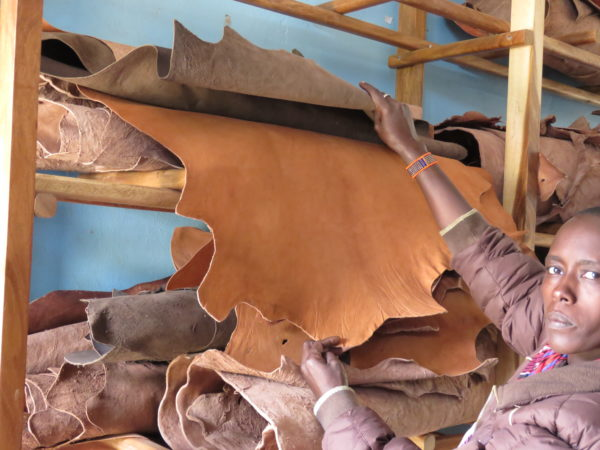
One of the principal constraints on Tanzania's leather industry is the condition of hides and skins before they reach processing facilities. Animals may suffer branding marks, scratches, tick damage and other defects during rearing, while poor slaughtering techniques can introduce cuts and holes that lower the value of the material. Inadequate preservation, delays in collection and unsuitable storage can cause further deterioration.
Research published in November 2025 examined rejected hides and skins at a slaughterhouse and tannery in Morogoro. At the slaughterhouse, 41 percent of hides and 38 percent of skins examined were classified as rejects, while the tannery recorded rejection rates of 35 percent for hides and 26.5 percent for skins. Physical damage was identified as a major cause of poor quality. These figures describe the facilities studied rather than a nationally representative rejection rate, but they demonstrate how substantial losses can occur before leather manufacturing begins.
The economic consequences extend across the production chain. A damaged hide may be downgraded into a lower value leather grade or rejected entirely, reducing the return available to livestock keepers, traders and tanneries. Manufacturers requiring consistent material quality may then face shortages even in a country with abundant livestock. A footwear producer serving a formal retail chain needs reliable colour, thickness, texture and durability across repeated orders, while an exporter must meet product specifications and quality requirements that cannot be satisfied through irregular supplies of damaged raw materials.
Improving hide recovery therefore requires investment in livestock management, organised slaughterhouses, trained flayers, grading systems, preservation chemicals, storage facilities and collection networks. Farmers and traders also need financial incentives to protect the quality of hides, which will remain difficult if a well preserved hide receives little more than a damaged one at the point of sale.
The government has already identified parts of this problem. Its 2025 Economic Survey attributes improvements in production partly to training in proper livestock slaughter and awareness programmes aimed at livestock keepers. The Bank of Tanzania has similarly linked improvements in raw hide trading to training in skinning and preservation methods. The challenge is expanding these interventions into commercially consistent supply systems connecting livestock producing districts with tanneries and manufacturers.
Italy Demonstrates the Value of Manufacturing, Design and Market Access
Italy provides a useful comparison because its position in the global footwear industry is built around manufacturing capabilities, design, industrial specialisation and access to premium consumer markets rather than the size of its domestic livestock population.
According to Assocalzaturifici, the Italian footwear manufacturers' association, Italy produced approximately 118.4 million pairs of shoes in 2025 and remained the largest footwear producer in the European Union. Industry turnover reached approximately €12.84 billion, while footwear exports were valued at about €11.5 billion. The sector employed more than 68,000 people across roughly 3,200 companies, with around 85 percent of production destined for export markets.
Italy's position illustrates the economic distinction between possessing raw materials and controlling the manufacturing activities that convert them into products consumers are willing to purchase at higher prices. A finished pair of shoes incorporates leather, but its commercial price also reflects design, production technology, branding, skilled labour, components, distribution, marketing and retailer margins. The value is created across several stages, many of which are independent of where the original animal was raised.
Tanzania does not need to reproduce Italy's luxury footwear industry to benefit from this model. Building competitiveness in school shoes, formal footwear, work boots, safety equipment, sandals, bags and other products could provide an industrial foundation more closely aligned with the country's present manufacturing capabilities and the purchasing power of regional consumers. Higher value fashion products could develop as firms acquire stronger design capabilities, consistent quality and access to more demanding export markets.
Italy's experience also demonstrates why the claim that processed leather is automatically worth ten times more than raw hides requires qualification. Finished products command higher selling prices partly because manufacturers invest additional capital, labour, equipment and materials. The difference between the price of a raw hide and the retail price of a finished shoe cannot be treated entirely as additional profit or GDP generated from leather.
Tanzania's potential industrial gain must therefore be measured through domestic value added, wages, operating profits, investment and export earnings after accounting for imported machinery, footwear components, chemicals, packaging and other production inputs.
East Africa Already Offers a $566 Million Market for Footwear and Leather Goods Imports
The strongest near term commercial opportunity may be closer to Tanzania than the luxury markets of Europe. The East African Business Council's October 2026 figures show that EAC economies imported approximately $566 million in footwear, footwear components and leather goods in 2025 despite collectively producing about 370,000 tonnes of hides and skins annually. The regional trade imbalance indicates demand for manufactured products that local industries have not been able to satisfy fully.
That market includes products with different price points, materials and specifications. School shoes, protective boots, sandals, formal footwear, handbags, belts and other leather products address different consumer needs, while some imported footwear is made partly or entirely from synthetic materials. Tanzanian manufacturers would therefore be competing not only against foreign leather producers but also against large Asian footwear factories that benefit from considerable production scale and highly integrated supply chains.
Capturing even a modest share of the regional import market could support a meaningful expansion in Tanzanian manufacturing. If domestic producers replaced 10 percent of the EAC's recorded $566 million import bill, that would represent approximately $56.6 million in annual sales at the equivalent import value, assuming product comparability and unchanged market conditions. A 20 percent share would represent roughly $113.2 million. These are illustrative market opportunities rather than forecasts, and the resulting contribution to GDP would be smaller than gross sales because manufacturing requires intermediate goods and other inputs.
The African Continental Free Trade Area provides another potential route for expansion, but preferential market access alone will not make Tanzanian products competitive. Manufacturers must satisfy rules of origin, meet quality standards, manage distribution costs and offer prices that compare favourably with imports. Regional supply chains may eventually allow some countries to specialise in hides, others in tanning or components, and others in final manufacturing, provided trade arrangements and transport systems make such specialisation commercially worthwhile.
Tanzania's domestic market also offers a potential foundation. Schools, government institutions, security services, hospitals, factories, construction companies and households purchase footwear and leather products repeatedly. Domestic procurement could help manufacturers establish predictable demand, particularly for standardised products such as school shoes and protective boots, but purchasing policies would need to reward quality and competitive pricing rather than shelter inefficient production indefinitely.
Tanzania Has Invested in Leather Manufacturing Before
The country is not starting from an entirely undeveloped industrial base. One of its most visible projects is Kilimanjaro International Leather Industries Company Limited, located in Moshi, which was established through a joint venture between the Public Service Social Security Fund and the Prisons Corporation Sole in 2017.
According to the Tanzania Investment Centre's April 2023 investment bulletin, the project was developed around the former Karanga leather operations and included investment in footwear manufacturing equipment, tanneries, laboratories, training facilities, warehouses and an effluent treatment plant. TIC reported that daily footwear production had increased from 150 to approximately 400 pairs following the installation of modern equipment, although that figure represented operating output at the time rather than the facility's ultimate installed capacity. The project was also being promoted to investors requiring working capital and commercial partnerships.
In February 2025, the Prime Minister's Office reported that the parliamentary committee responsible for public investment had inspected the facility and discussed its potential employment contribution. Officials projected that the project could eventually create 3,000 direct and 4,000 indirect jobs once fully completed. Those figures remain project expectations, and should not be interpreted as employment already realised.
The Moshi experience illustrates a recurring difficulty in industrial policy. Public investment can establish buildings, machinery and production capacity, but commercial performance depends on continuing working capital, reliable suppliers, maintenance, qualified management, sufficient orders and the ability to sell finished products competitively.
A modern tannery cannot operate at its economic capacity without consistent high quality hides, while a footwear assembly line cannot achieve competitive unit costs if production volumes remain low and its machinery spends much of the year idle. A factory may therefore possess substantial installed capacity without generating the revenues, employment and exports originally anticipated in its investment plan.
This makes the performance of existing investments particularly relevant to future policy. Before establishing additional large manufacturing facilities, Tanzania needs transparent information on the capacity, utilisation, operating costs, sales, financial performance and constraints of the plants it already possesses. Expanding machinery capacity without resolving the supply and market problems that affected earlier investments could reproduce the same weaknesses on a larger scale.
What Would a Billion Dollar Leather Industry Actually Require?
The global market creates a large theoretical opportunity, although estimates vary considerably depending on how leather goods are defined. Grand View Research estimates that the global leather goods market was worth approximately $282.1 billion in 2025, rising toward $299.9 billion in 2026, while Fortune Business Insights uses a broader industry estimate of $531.1 billion for 2025. These figures cannot be treated as interchangeable because market definitions differ, including the treatment of synthetic leather, footwear, accessories and other product categories.
Using the more conservative $282.1 billion estimate, a one percent share would represent approximately $2.82 billion in annual market sales. That is arithmetically possible as a market share calculation, but it would not follow automatically from Tanzania processing more of its existing hides. Such a business would require production at commercial scale, competitive factories, extensive distribution, access to overseas customers, imported and locally sourced manufacturing inputs, and potentially additional leather supplies from outside Tanzania.
The distinction between available hides and finished product value is central to any serious industrial forecast. Tanzania produced 57,208 tonnes of hides and skins in 2025, which is an input to leather manufacturing rather than a direct measure of potential finished product sales. The quantity of usable leather depends on material quality, tanning yields, wastage and processing technology, while the number of shoes or bags that can be manufactured depends on product specifications and additional components.
Consequently, a projection that processing half of Tanzania's hides would produce $1.5 billion in exports cannot be substantiated without a model of available material, recovery rates, manufacturing yields, product mix, unit selling prices, factory capacity, production costs and market demand.
There is, however, a realistic industrial development argument that does not depend on assuming immediate billion dollar exports. Tanzania could begin by increasing the share of recoverable hides reaching formal processors, improving the proportion suitable for higher quality leather, expanding production of standardised footwear for domestic and regional customers, and helping existing producers enter larger supply contracts. Higher value products and larger export ambitions could follow once the country establishes consistent manufacturing capabilities and demonstrates commercial demand.
Industrial Employment Depends on Factories That Can Sell Consistently
Leather manufacturing could create employment across a relatively wide range of skills. Livestock keepers, abattoir workers, hide collectors, preservation specialists, transporters, tannery operators, cutting technicians, machine operators, designers, quality inspectors, logistics workers and sales distributors all participate at different points in the production chain.
The opportunity is particularly relevant because Tanzania's livestock economy already involves millions of agricultural households, while much of the country's workforce operates outside formal employment. Expanding commercial processing and manufacturing could create additional sources of earnings in livestock producing regions as well as factory jobs in established industrial centres.
The employment impact would depend on the scale and type of investment. A modern tannery is relatively capital intensive and requires substantial spending on processing equipment, water treatment, chemicals, power and environmental compliance. Footwear production can be more labour intensive, particularly in cutting, stitching, assembly and finishing, although automation and production technology influence labour requirements.
The geography of industrial development would also matter. Regions such as Manyara, Tabora, Tanga, Arusha and Shinyanga could benefit from stronger hide collection and grading systems because of their livestock populations. Mwanza, Moshi, Morogoro and Dar es Salaam offer different advantages in manufacturing skills, industrial infrastructure, transport connections and access to domestic or export markets.
Training institutions including the Dar es Salaam Institute of Technology, its Mwanza campus and the Small Industries Development Organisation could support technical skills development, product design, quality assurance and small manufacturer upgrading. Tanzania's investment promotion materials have previously identified the rehabilitation and strengthening of leather technology training, industrial villages and programmes supporting domestic leather goods manufacturing as priorities.
Training would need to reflect the requirements of actual employers. Modern leather manufacturing requires knowledge of cutting efficiency, material grading, production planning, industrial stitching, computer assisted design, finishing, quality inspection and the management of chemical processes. Small workshops can also improve productivity through shared machinery, procurement arrangements and access to technical services that would otherwise be too expensive for individual businesses.
Environmental Standards Could Determine Access to Export Markets
Leather processing carries environmental costs that cannot be ignored in the pursuit of higher value exports. Tanning can consume substantial quantities of water and generate wastewater containing organic matter, salts, processing chemicals and, depending on the technology used, chromium compounds. Improper handling creates environmental and public health risks, while poorly managed production facilities can struggle to meet the expectations of international customers.
This means Tanzania cannot assess leather industrialisation solely through factory construction costs and expected sales. Modern tanneries require suitable wastewater treatment systems, chemical management, reliable water and electricity supplies, waste recovery arrangements and monitoring of environmental performance.
The investment in effluent treatment facilities at Kilimanjaro International Leather Industries demonstrates that these requirements are already recognised within existing industrial projects, although the presence of treatment infrastructure does not by itself establish compliance or operating effectiveness.
International buyers increasingly require traceability, environmental documentation and consistent production standards. A manufacturer exporting leather for premium footwear or upholstery may face requirements covering chemical residues, material specifications, labour conditions and the source of animal hides.
Environmental compliance therefore has a commercial function beyond regulatory obligations. Producers unable to satisfy the requirements of target markets may remain confined to lower value buyers even after investing in finished leather production. Tanzania's industrial strategy would need to integrate environmental standards from the beginning rather than treating compliance as a later addition once export orders have been secured.
Tanzania's Leather Policy Must Connect Supply With Demand
Tanzania already regulates the hides, skins and leather trade under the Hides, Skins and Leather Trade Act, Chapter 120, which provides for the development, preservation and trade of these materials. The government has also used different export restrictions and levies over time to encourage domestic processing, although the 2025 Economic Survey specifically identifies the removal of export permit levies as one factor behind increased exports of hides and skins.
The experience demonstrates the limits of treating restrictions on raw material exports as the principal industrial policy instrument. Requiring hides to remain in the country may improve access to raw materials for local tanneries, but it does not guarantee that those materials can be processed profitably. If domestic factories lack working capital, adequate technology or reliable buyers, restrictions can reduce the price received by livestock keepers without generating equivalent manufacturing activity.
A commercially focused policy would begin with predictable material collection and grading, supported by reliable market information and contracts between suppliers and processors. Investments in slaughterhouse practices, preservation and transport should be linked to the quality requirements of tanneries rather than delivered as isolated agricultural interventions.
Existing tanneries and footwear factories would need an assessment of actual production capacity, technology requirements, working capital needs and customer demand. Financing arrangements could support equipment upgrades and factory expansion where businesses have credible orders and demonstrate the ability to repay, while credit guarantees and equipment leasing could help smaller manufacturers whose main constraint is access to machinery rather than a lack of customers.
Public procurement could also provide an initial market for selected products, particularly school footwear, safety boots and standardised institutional supplies, but contracts should be competitive, transparent and tied to measurable quality standards. Such procurement would be most useful where it allows local manufacturers to reach consistent production volumes, reduce unit costs and eventually compete for private sector and export orders without permanent dependence on government purchasing.
Export development would require a similar emphasis on commercial performance. Regional distribution partners, product certification, buyer relationships and participation in trade fairs can help manufacturers enter new markets, but sustained export growth will depend on reliability, price and the ability to deliver repeated orders at consistent specifications.
The sector would also benefit from stronger statistical reporting. Official data should distinguish raw hides, wet blue leather, crust leather, finished leather, footwear and other manufactured leather products, while recording installed and operational processing capacity. Without those distinctions, policymakers cannot reliably determine how much raw material is lost, how much is processed domestically and which stages of manufacturing generate the highest economic returns.
Leather Could Support the $1 Trillion Economy, but Its Contribution Must Be Earned
Tanzania's Development Vision 2050 seeks to establish an industrialised upper middle income economy with GDP reaching $1 trillion and average income per person of approximately $7,000. Achieving that ambition will require sustained increases in productivity across agriculture, manufacturing and services, as well as a larger contribution from industries capable of producing goods for domestic and international markets.
Leather manufacturing could contribute to that process by connecting an existing rural production base with modern industrial activity. Higher quality hides would increase returns to livestock suppliers, efficient tanneries would convert agricultural byproducts into industrial materials, footwear and leather goods factories would create additional demand for skilled labour, and competitive manufacturers could replace some imports while developing new export markets.
The opportunity should nevertheless be assessed against the scale of the current industry. Tanzania's recorded hides and skins exports of TZS 9.12 billion in 2025 are still far removed from the annual revenues required to support a billion dollar manufacturing industry. The country's livestock population provides a valuable supply foundation, but industrial competitiveness will depend on the amount of usable material recovered, the productivity of factories, the prices buyers are prepared to pay and the ability of companies to produce consistently at scale.
The country has already demonstrated that it can expand livestock production. The next stage is to convert a greater share of that production into commercially viable manufacturing activity, beginning with the quality of hides at slaughterhouses and continuing through tanning, footwear assembly, design, distribution and export sales.
The experience of Italy shows how much value can be created once manufacturing capability, design and market access are established. The experience of Tanzania's own leather investments shows that machinery and raw materials alone cannot secure commercial success. With more than 40 million cattle and a regional market importing hundreds of millions of dollars in footwear and leather products annually, Tanzania has a substantial foundation for industrial expansion, but the next measure of progress will be the performance of its factories rather than another increase in livestock numbers.
 Uchumi360
Business Intelligence
- Note to the reader: This article has been updated on 4th November 2026 to reflect current data
Uchumi360 covers business, investment, and economic policy across East, Central, and Southern Africa.
For the serious reader
You read to the end. That places you in a small group.
Uchumi360 is built for readers who demand precision over speed, structure over sentiment, and analysis that holds uncomfortable conclusions rather than softening them. If this work sharpens how you think about Africa's economy, help us keep building the infrastructure behind it.
Institutional Partners
Commission intelligence. Shape the conversation.
Uchumi360 works with development finance institutions, investment firms, sovereign bodies, and strategic organisations across the coverage region. Institutional partnership unlocks:
- Commissioned sector and country intelligence reports
- Branded research series under your institution's authority
- Exclusive data briefings for internal strategy teams
- Speaking and editorial presence at Uchumi360 events
- Co-published investment outlooks for your markets
Support Our Work
Independent analysis has a cost. Help us bear it.
Uchumi360 does not carry advertising. It does not take editorial direction from sponsors. Every article is produced without commercial compromise. Your contribution funds the reporting, research, and editorial infrastructure that keeps this analysis free from influence.
Secure checkout: One-time and monthly support are processed securely. Add payment credentials to enable checkout here.
Stay Connected
Keep up with every new insight.
Follow our latest analysis, policy coverage, and market intelligence as soon as it is published. If you need something specific, reach out directly and we will point you to the right research.
