
Power Decides Prosperity: Why Electricity Generation Predicts a Nation’s Economic Future
Ready
Electricity is the most accurate predictor of a nation’s economic destiny. Countries that generate abundant, reliable power grow faster, attract more investment and build stronger industries. Tanzania’s expanding energy capacity marks a turning point, while nations like South Africa and Kenya show how electricity shapes competitiveness. A country can only rise as high as its power supply allows.
The relationship between electricity generation and economic growth is not poetry or metaphor. It is a measurable, unforgiving equation that decides which nations rise and which remain stuck at the bottom of the global value chain. Every country’s economic size and future potential can be predicted with surprising accuracy by looking at one thing: how much electricity it produces per capita and how stable that supply is.
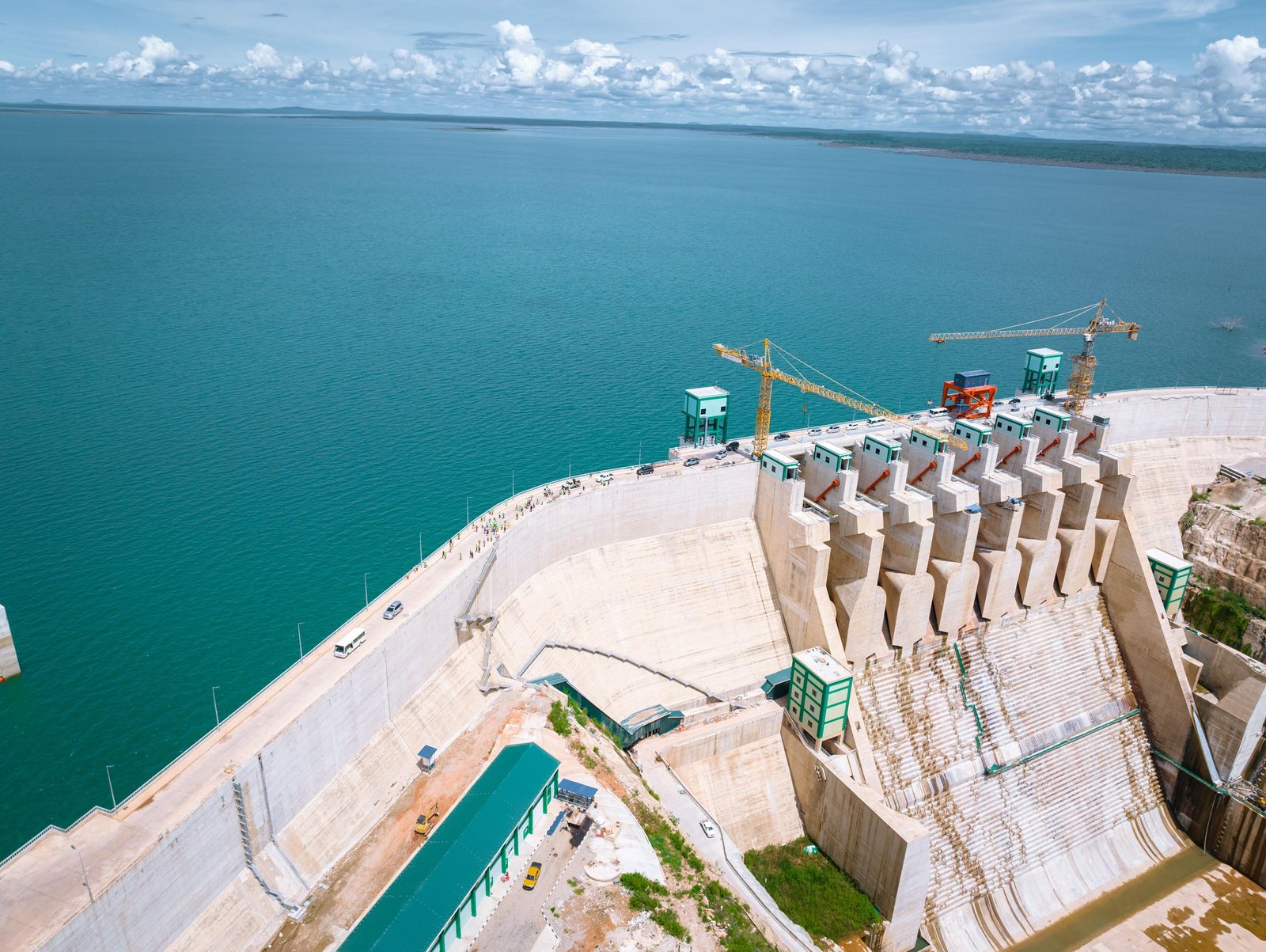
Tanzania now produces about 4 gigawatts for a population of more than 65 million people. South Africa produces over 50 gigawatts for a population of roughly 60 million, which is why its economy operates at a fundamentally different scale. Kenya, with about 2.3 gigawatts, generates far less than Tanzania, and that difference shapes the industrial choices available to each country. What matters is not just installed capacity but the ability to deliver that power consistently. These differences are not accidental. They reflect the economic physics of development: the nations that generate the most reliable electricity are the nations that unlock the highest productivity.
Electricity is productivity in its purest form. A modern industry cannot function without it. A cold chain collapses without it. Hospitals, schools, logistics, data centers, mining, irrigation, manufacturing all depend on reliable, abundant power. A country with inadequate generation is essentially choosing to limit its own GDP ceiling. Growth becomes a theoretical ambition instead of an achievable plan.
When power generation stays low, industries stay small. When industries stay small, exports remain weak. When exports remain weak, the shilling weakens. When the shilling weakens, the cost of living rises. The entire economy becomes a circle of frustration driven by one underlying constraint: not enough electricity to fuel a modern economy.
The trend across Africa is clear. Nations that grow their generation capacity the fastest also grow their GDP the fastest. Ethiopia expanded generation aggressively over the past decade and saw rapid industrialisation. Rwanda invested in energy stability and became a regional services hub. Even in Tanzania, whenever electricity production increases, manufacturing output rises, construction accelerates, ICT usage climbs and foreign investors show renewed interest. The opposite is equally true. Every blackout slows economic activity. Every shortage limits investment. Every kilowatt missing is a lost opportunity.
Economic potential is meaningless without the power to convert it. Tanzania has the population size, natural resources, geographical location and market access to become an economic heavyweight in East Africa. But without dramatically increasing electricity generation, that potential remains locked. A country of 65 million people targeting middle income status cannot operate on power levels suitable for a nation one third its size.
The future belongs to countries that treat electricity the way Singapore treated ports, the way Dubai treated aviation and the way South Korea treated education: as the primary engine of national transformation. Tanzania’s industrialisation agenda, digital economy ambitions, mining expansion and agricultural value addition depend on one strategic move. The country must generate far more electricity than it currently consumes. Only surplus power creates confidence for investors. Only surplus power enables competitive manufacturing. Only surplus power transforms an economy.
The global economy rewards nations that can power themselves reliably. Everything else is commentary.
 Uchumi360
Business Intelligence
Uchumi360 covers business, investment, and economic policy across East, Central, and Southern Africa.
For the serious reader
You read to the end. That places you in a small group.
Uchumi360 is built for readers who demand precision over speed, structure over sentiment, and analysis that holds uncomfortable conclusions rather than softening them. If this work sharpens how you think about Africa's economy, help us keep building the infrastructure behind it.
Institutional Partners
Commission intelligence. Shape the conversation.
Uchumi360 works with development finance institutions, investment firms, sovereign bodies, and strategic organisations across the coverage region. Institutional partnership unlocks:
- Commissioned sector and country intelligence reports
- Branded research series under your institution's authority
- Exclusive data briefings for internal strategy teams
- Speaking and editorial presence at Uchumi360 events
- Co-published investment outlooks for your markets
Support Our Work
Independent analysis has a cost. Help us bear it.
Uchumi360 does not carry advertising. It does not take editorial direction from sponsors. Every article is produced without commercial compromise. Your contribution funds the reporting, research, and editorial infrastructure that keeps this analysis free from influence.
Secure checkout: One-time and monthly support are processed securely. Add payment credentials to enable checkout here.
Stay Connected
Keep up with every new insight.
Follow our latest analysis, policy coverage, and market intelligence as soon as it is published. If you need something specific, reach out directly and we will point you to the right research.
