
Rift Valley Energy: How Rural Mini-Grids Are Transforming Tanzania’s Energy Landscape
Ready
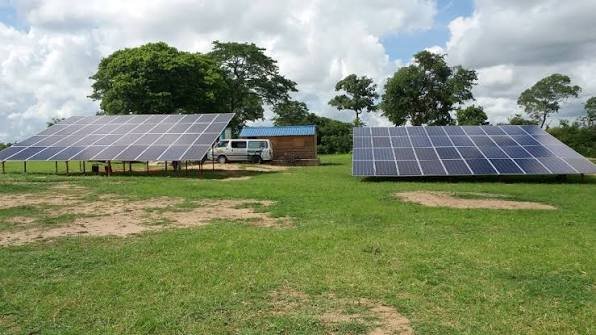
Tanzania's Rift Valley Energy is expanding access to electricity in underserved rural communities through a decentralised model combining hydropower, wind generation and local distribution networks. Backed by French infrastructure investor Meridiam and a $15 million financing commitment from British International Investment, the company supplies power to 44 villages, agricultural processors, schools and small businesses. Its approach demonstrates how renewable energy investment can support rural industries, productive employment and economic development while addressing the financial challenges of electrifying communities beyond the national grid.
Across rural Africa, access to reliable electricity remains one of the principal obstacles to economic development. In Tanzania, renewable energy company Rift Valley Energy is demonstrating how decentralised electricity generation and distribution can help overcome that challenge. Backed by French infrastructure investor Meridiam, its model combines hydropower, wind generation and local distribution networks to bring electricity to underserved communities while supporting the development of rural businesses and industries.
Around 600 million people in Africa still lack access to electricity, according to the International Energy Agency. Despite considerable progress in recent decades, electrification has struggled to keep pace with population growth, particularly in rural areas where the costs of extending national electricity networks can be prohibitive. The consequences extend far beyond households without lighting, with limited access to reliable electricity restricting agricultural productivity, preventing businesses from investing in modern equipment and undermining the development of local industries. Schools, healthcare facilities and other essential services face similar difficulties.
Addressing these challenges requires more than simply increasing national electricity generation; it means developing infrastructure capable of delivering affordable power to communities located far from major urban centres. In Tanzania, Rift Valley Energy (RVE) offers an example of how this can be achieved. Operating in the country's Southern Highlands, the company has developed renewable generation facilities and rural distribution networks that serve households, businesses and industrial customers. Since its acquisition by French infrastructure investor Meridiam in 2023, RVE has embarked on a new phase of development, supported by additional financing intended to expand renewable generation and improve electricity access.
A decentralised model for rural electrification
Established in 2009, Rift Valley Energy initially developed renewable electricity infrastructure to serve agricultural and industrial activities in southern Tanzania. Its first major project, the 4 MW Mwenga hydropower plant, began operating in 2012. Located in the Iringa region, the facility was developed to supply electricity to a tea plantation while extending power connections to neighbouring villages.
This approach established the foundations of RVE's business model: combining industrial customers with rural electricity distribution to make infrastructure investments economically viable. As RVE co-founder Franz Kottulinsky explained to Sustainable Energy for All, the company follows an approach that prioritises anchor customers, such as the national electricity utility or major industrial users, before extending connections to other businesses and surrounding communities, “based on the ABC model”.
This works by securing demand from relatively large consumers. RVE can then support the financial viability of its infrastructure while making electricity available to smaller customers who might otherwise remain unconnected. Over time, the company has diversified its generation capacity. In 2020, it commissioned Tanzania's first operational wind farm at Mwenga, adding 2.4 MW of capacity to complement its hydropower operations.
The combination is particularly valuable because wind generation can compensate for seasonal fluctuations in hydropower production. During the dry season, when river flows decline, stronger winds can help maintain electricity supply. RVE has also developed a flexible distribution model. Its networks can operate independently from the national grid when necessary while remaining capable of exchanging electricity with the wider system.
As former RVE managing director Mike Gratwicke explained in 2021, “In the event that the main grid is down for any reason, we can run as an isolated mini-grid until it returns.” According to Meridiam's 2025 impact report, RVE operates two hydropower plants with capacities of 4 MW and 1 MW respectively, alongside its 2.4 MW wind farm. Its two rural distribution networks supply 44 villages, illustrating how relatively modest renewable generation assets can support electricity access across geographically dispersed communities.
Electricity as a driver of rural economic development
RVE's significance extends beyond the number of households connected to electricity. Its infrastructure also supports productive economic activities, from agricultural processing and manufacturing to small businesses and essential public services. The company's distribution networks supply two tea factories, a dairy farm, two sawmills and 48 primary and secondary schools. They also power eight water pumps providing clean water to approximately 3,000 households. Dozens of small businesses and workshops connected to the networks also operate more than 400 electrical devices used for productive activities, illustrating the wider economic benefits of reliable electricity.
Electricity access can therefore contribute to the emergence of local economic activity while strengthening existing agricultural and industrial value chains. However, connecting a business to electricity does not automatically guarantee increased productivity. Entrepreneurs must also be able to afford the equipment needed to take advantage of the new infrastructure. Recognising this challenge, RVE established a revolving financing fund in 2018 to help customers purchase electrical appliances and productive-use equipment. The initiative reflects an approach in which electricity provision is accompanied by efforts to stimulate demand and support local enterprise.
This relationship between energy access and economic development is increasingly recognised by international institutions. The IEA's 2025 report on Africa's industrial development identifies reliable energy access as an important condition for improving productivity and attracting investment, particularly in rural economies dependent on agriculture. For Tanzania, where agricultural activities remain central to the economy, decentralised electricity infrastructure could therefore play an important role in supporting local processing industries and reducing dependence on imported or fossil-fuel-based energy solutions.
Meridiam's investment: Scaling up a proven model
Rift Valley Energy's development entered a new phase in July 2023, when Meridiam completed its acquisition of the company. The transaction brought RVE into the portfolio of an infrastructure investor specialising in the development, financing and long-term management of sustainable assets. At the time of the acquisition, RVE held a portfolio of approximately 30 MW of renewable generation projects across operational, construction and development stages, alongside two rural distribution networks extending approximately 460 kilometres.
For Meridiam, the investment offered an opportunity to support the expansion of an established local operator while strengthening its renewable energy activities in East Africa. The company's strategy is particularly relevant to smaller-scale infrastructure projects, which can deliver substantial local benefits but often struggle to attract conventional commercial financing. As Fadi Selwan, Partner and Deputy CEO at Meridiam, explained in the group's 2025 publication, “Because we invest for the long term, we can take an interest in smaller-scale assets with proportionately large impacts and support them in their development, leveraging their benefits.”
A further milestone followed in June 2024, when British International Investment (BII), the UK's development finance institution, announced a $15 million financing agreement with RVE, with the possibility of increasing the facility to $25 million. The financing was intended to support an additional 7.6 MW of renewable generation capacity, including new wind and hydropower projects. According to the original announcement, these investments were expected to provide electricity benefiting approximately 170,000 people annually and connect another 4,000 households and businesses to the grid for the first time. They were also projected to support approximately 1,800 jobs and avoid up to 17,000 tonnes of carbon emissions annually by the end of 2027.
These figures remain projected outcomes rather than confirmed results, but they demonstrate the scale of the development ambitions associated with the investment. The partnership also reflects a wider effort to mobilise long-term capital for African electricity infrastructure. According to the IEA, approximately $150 billion will be required to achieve universal electricity access across Africa over the coming decade. Meanwhile, the World Bank and African Development Bank's Mission 300 initiative aims to connect 300 million Africans to electricity by 2030, combining national grid expansion with decentralised solutions.
Tanzania has emerged as an important participant in this effort. In June 2026, the World Bank reported that approximately 7.5 million people in the country had gained electricity access under Mission 300. Nevertheless, challenges remain. Rural electricity projects must balance affordability with financial sustainability, while developers face regulatory uncertainty, high financing costs and the need to coordinate with expanding national networks.
 Uchumi360
Business Intelligence
Uchumi360 covers business, investment, and economic policy across East, Central, and Southern Africa.
For the serious reader
You read to the end. That places you in a small group.
Uchumi360 is built for readers who demand precision over speed, structure over sentiment, and analysis that holds uncomfortable conclusions rather than softening them. If this work sharpens how you think about Africa's economy, help us keep building the infrastructure behind it.
Institutional Partners
Commission intelligence. Shape the conversation.
Uchumi360 works with development finance institutions, investment firms, sovereign bodies, and strategic organisations across the coverage region. Institutional partnership unlocks:
- Commissioned sector and country intelligence reports
- Branded research series under your institution's authority
- Exclusive data briefings for internal strategy teams
- Speaking and editorial presence at Uchumi360 events
- Co-published investment outlooks for your markets
Support Our Work
Independent analysis has a cost. Help us bear it.
Uchumi360 does not carry advertising. It does not take editorial direction from sponsors. Every article is produced without commercial compromise. Your contribution funds the reporting, research, and editorial infrastructure that keeps this analysis free from influence.
Secure checkout: One-time and monthly support are processed securely. Add payment credentials to enable checkout here.
Stay Connected
Keep up with every new insight.
Follow our latest analysis, policy coverage, and market intelligence as soon as it is published. If you need something specific, reach out directly and we will point you to the right research.
