
Tanzania Deepens State Control of Gas as TPDC Takes Over Songo Songo
Ready
Tanzania is preparing TPDC to assume control of the Songo Songo gas field while giving the national oil company independent exploration licences over four blocks for the first time. The shift gives the state greater control over upstream petroleum, but it comes amid a disputed licence expiry, international arbitration and an attempted Orca Energy sale that remains under appeal.
Tanzania is preparing to transfer operational control of the Songo Songo gas field to the Tanzania Petroleum Development Corporation while simultaneously granting the state company independent exploration rights over four oil and gas blocks, marking one of the clearest shifts yet toward a larger direct state role in upstream petroleum development.
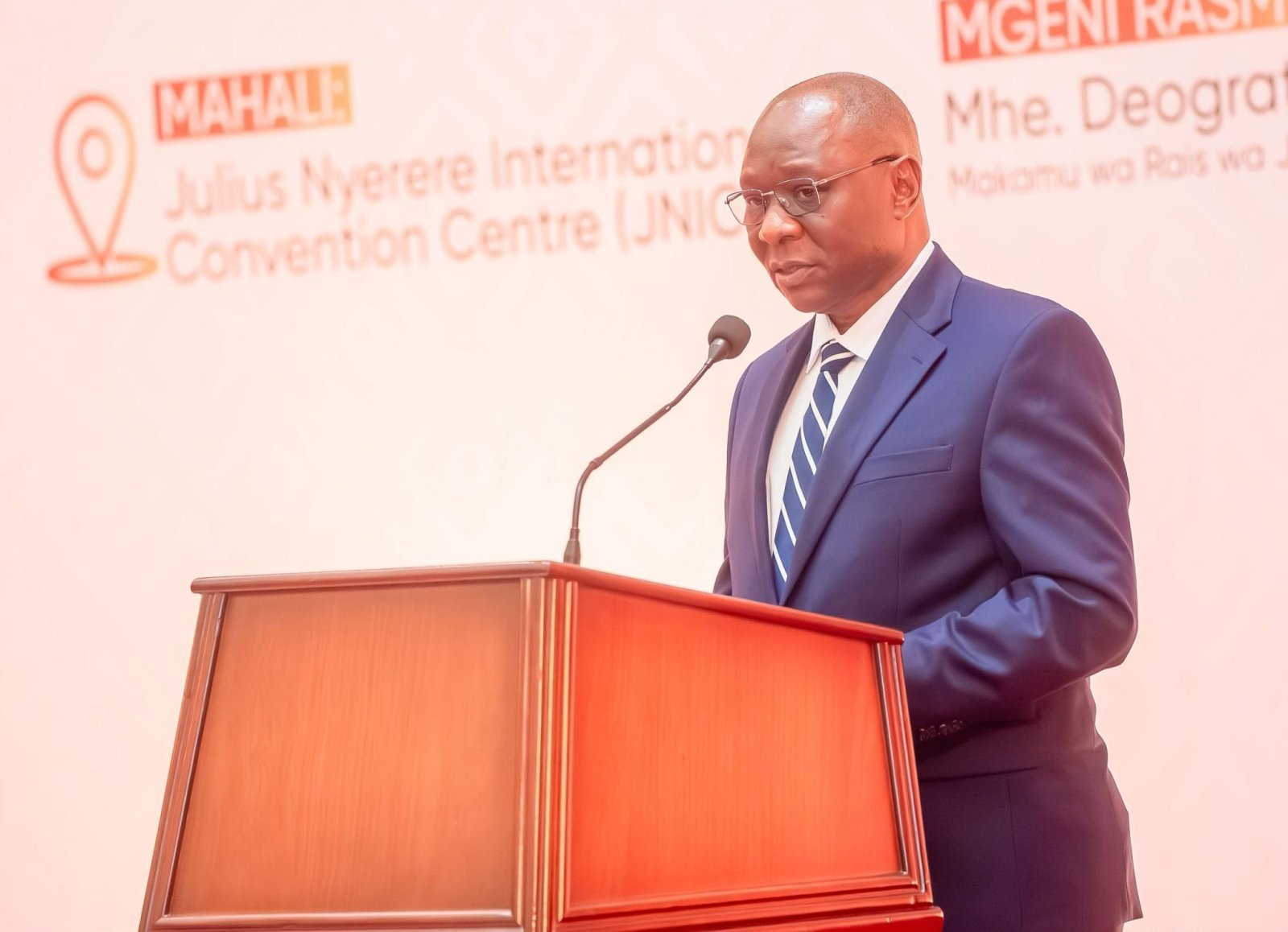
The government signed exploration licences covering Mnazi Bay North, West Songo Songo, Eyasi Wembere and Lindi Mtwara on October 28, giving TPDC petroleum exploration rights in its own name for the first time rather than requiring the corporation to participate principally alongside an international operator. Vice President Deogratius Ndejembi described the move as an important step in strengthening TPDC’s ability to participate across the petroleum value chain, while Permanent Secretary for Petroleum and Natural Gas James Mataragio said the corporation had developed enough technical capability to receive the blocks directly and could subsequently bring in investors with the capital and technology required to advance exploration.
“The signing of these licences is an important step towards strengthening TPDC’s capacity to fulfil that responsibility and participate fully in the entire petroleum value chain,” Ndejembi said at the signing ceremony. Mataragio said the model would allow the government to accelerate exploration while building the capability of TPDC and Tanzanian companies rather than leaving the national company permanently dependent on foreign operators.
The more consequential development, however, is occurring at Songo Songo, where the government is preparing TPDC to assume responsibility for one of Tanzania’s most important producing gas assets after the expiry of the existing development arrangement involving PanAfrican Energy Tanzania, the local subsidiary of Orca Energy Group. Government officials say the handover is expected to be completed by November 29, 2026, after which TPDC is expected to assume operational responsibility for the field.
That transition places Tanzania at the intersection of two competing policy objectives. On one side is the government’s ambition to deepen national ownership of upstream petroleum assets and develop TPDC into a company capable of exploring, producing and operating strategic fields directly. On the other is the need to preserve gas supply, operational continuity and investor confidence at a field that has been operated by a private investor for more than two decades and remains entangled in disputes over licence terms, arbitration claims and an attempted sale that has been blocked by Tanzania’s competition regulator.
Songo Songo Is Too Important for a Disruptive Transition
Songo Songo was Tanzania’s first commercial natural gas development and remains deeply connected to the country’s electricity and industrial economy. PanAfrican Energy says the field has supplied more than 500 billion cubic feet of gas since production began in 2004, while current output is delivered through processing and pipeline infrastructure connecting the island to Dar es Salaam, where gas is consumed by power producers and industrial customers.
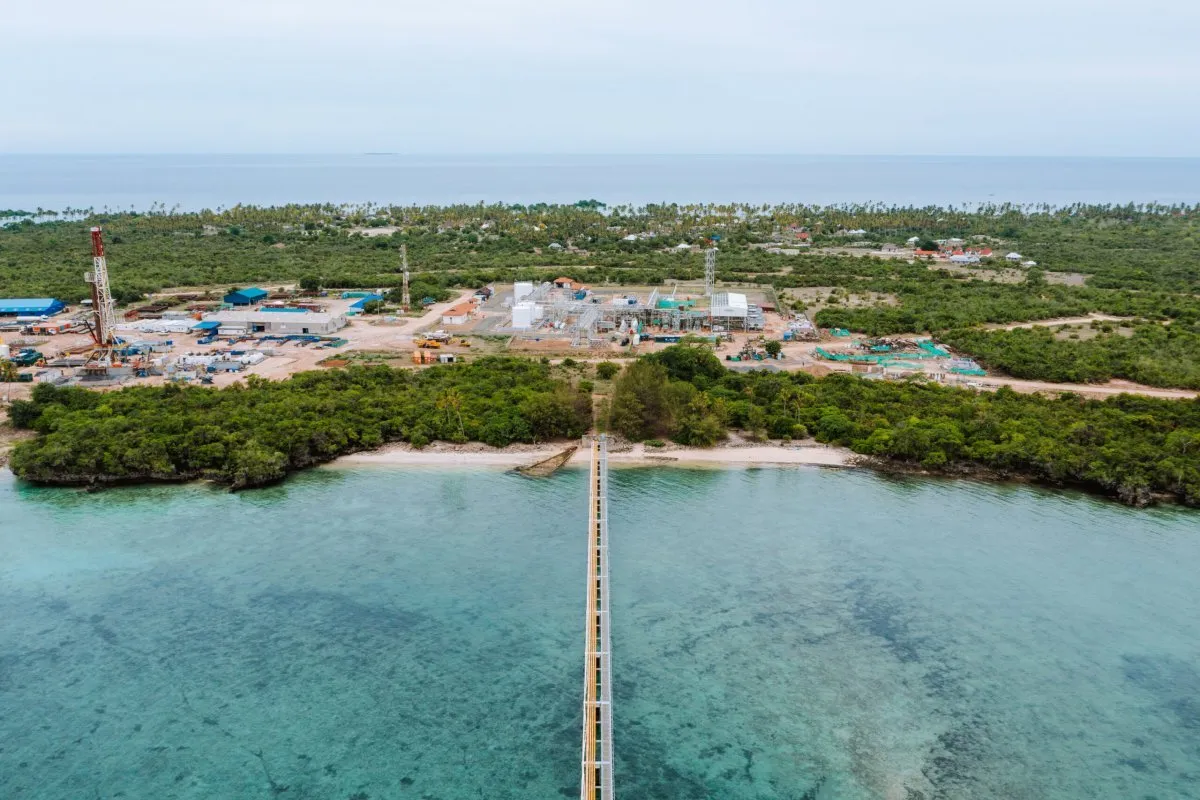 Songosongo gas field
Orca describes the field as supplying about 54 percent of Tanzania’s daily natural gas production, with proved and probable reserves of approximately 293 billion cubic feet and productive capacity of around 165 million standard cubic feet per day. Those figures are company estimates rather than government statistics, but they underline why the transition cannot be treated simply as an administrative transfer of a licence. Any operational interruption would immediately raise questions for electricity generation, industrial fuel supply and companies that depend on natural gas as a lower cost alternative to imported petroleum products.
The field’s strategic value also explains why TPDC’s planned takeover represents more than a change of operator. If the corporation manages the transition successfully, Tanzania would gain direct operating experience over a mature producing field at a time when the government is trying to develop TPDC into a stronger upstream company. That experience could become relevant to future projects at Mnazi Bay North, West Songo Songo, Eyasi Wembere, Lindi Mtwara and other areas where the government wants the national company to hold a larger technical and commercial role.
The government has already linked the new licences to that broader industrial objective. Mataragio said TPDC will still be able to seek strategic partners where projects require substantial financing or specialist technology, suggesting the state is not abandoning private participation but changing the point at which private capital enters the project structure. Under the emerging model, TPDC first holds the acreage, then negotiates partnerships from a stronger ownership position rather than entering as a minority participant in acreage controlled by another operator.
The Handover Comes in the Middle of a Commercial Dispute
The Songo Songo transition is occurring against a much more difficult commercial background than the government’s new exploration licences.
PanAfrican Energy sought an extension of the Songo Songo development licence beginning in 2023 but later rejected the terms proposed by the government, describing them as commercially and fiscally unacceptable. On October 9, 2026, PAET said it was prepared to continue operating temporarily under the existing contractual framework during a transition period but intended to cease operating the field by November 29 unless TPDC and Songas indicated they were ready to assume responsibility earlier.
The dispute predates the current transition. Orca subsidiaries issued a notice of dispute in August 2024 alleging breaches of their production sharing, gas and investment treaty rights and valued the project at more than USD1.2 billion. Formal arbitration proceedings followed in 2025, with PanAfrican Energy entities bringing claims against Tanzania and TPDC. Orca said at the time that the precise damages would be determined through arbitration and that the USD1.2 billion figure represented its valuation of the project rather than an adjudicated liability.
That distinction matters because the dispute remains a legal claim rather than a proven debt owed by Tanzania, but it still creates a significant investment risk around the transition. International oil and gas investors pay close attention to licence renewal processes, contract enforcement and the treatment of sunk capital because exploration projects require large amounts of money long before commercial production begins. Tanzania can strengthen national participation while still preserving investment credibility, but achieving both requires predictable rules around how operating rights expire, how assets transfer and how disputes are resolved.
A USD10 Sale Became Part of the Same Transition
The corporate exit has become even more complicated because Orca attempted to sell its Tanzanian business to Taifa Gas and UAE registered Amber Energy Investment for a nominal USD10.
Under the proposed transaction, Taifa Gas would acquire 49 percent of Orca’s Mauritian holding company PAE PanAfrican Energy Corporation and Amber would take 51 percent, giving the buyers indirect ownership of PanAfrican Energy Tanzania. The USD10 price did not imply that the field itself was worth only ten dollars. Orca had concluded that its remaining corporate interest had little residual value because geological data belong to the Tanzanian government, key fixed assets transfer to TPDC when the contractual arrangements expire, and the purchaser would assume contingent liabilities and exposure associated with the business.
Tanzania’s Fair Competition Commission prohibited the proposed merger on October 5. The buyers appealed that decision to the Fair Competition Tribunal on October 20, and Orca confirmed on October 22 that the transaction had not been terminated and remained subject to regulatory and other closing conditions.
The appeal now sits alongside the licence transition, creating an unusual situation in which the current operator is preparing to stop operating the field, its parent company is trying to sell the business, the proposed buyers are challenging a regulatory rejection, and the government is simultaneously preparing the state company to take over the asset.
For investors, the outcome will matter beyond Orca. It will help define how Tanzania handles the transition from private to state operation when a petroleum licence reaches the end of its term, particularly where the investor disputes the commercial terms offered for continued participation.
TPDC Is Being Pushed From Partner to Operator
The four newly awarded exploration licences show that the government’s ambitions for TPDC extend beyond Songo Songo. Mnazi Bay North, West Songo Songo, Eyasi Wembere and Lindi Mtwara together give the corporation exposure to very different geological areas and place it directly inside Tanzania’s next exploration cycle.
The government has already conducted preparatory work in several of these areas. At Mnazi Bay North, earlier three dimensional seismic data identified indications of hydrocarbon potential and drilling preparations had been developed, while West Songo Songo has been undergoing environmental and geological assessment. Seismic programmes are also progressing at Eyasi Wembere and Lindi Mtwara.
The economic logic is clear. Tanzania has discovered roughly 57 trillion cubic feet of natural gas, but large volumes remain undeveloped, while domestic demand is increasing through electricity generation, industrial use, compressed natural gas and planned petrochemical activity. Between March 2021 and March 2025, the country produced more than 301 billion cubic feet of gas, demonstrating the commercial importance of existing fields but also the relatively small share of the total resource base that has so far been monetised.
The government therefore wants TPDC to become capable of doing more than collecting a participating interest in projects developed by others. Owning acreage directly gives the company greater influence over exploration timing, partner selection, commercial structures and the eventual development of discovered resources.
That model could also improve the state’s bargaining position if TPDC develops credible technical capacity, but it exposes the corporation to risks previously carried more heavily by private investors. Exploration wells can cost tens of millions of dollars and still produce no commercial discovery, while development costs can run into hundreds of millions or billions depending on the field and infrastructure required. A larger state role therefore increases potential returns but also places more geological, financing and execution risk onto the public balance sheet.
The State Still Needs Private Capital
The latest decisions should therefore not be interpreted as Tanzania closing the petroleum sector to international investors. Mataragio explicitly said TPDC would seek investors with financial and technological capability to support exploration in the newly awarded blocks, while current government planning continues to depend heavily on private capital for large developments, including the proposed LNG project and upstream gas discoveries.
The model appears closer to state led partnership than outright nationalisation, with TPDC controlling strategic licences while bringing in technical or financial partners when required. That structure is common in resource producing economies where national oil companies hold acreage and invite international companies to participate through production sharing agreements, joint ventures or service arrangements.
The success of the approach will depend on whether TPDC can negotiate partnerships that attract capital without recreating the same disputes now surrounding Songo Songo. Investors will want clarity on cost recovery, taxation, production sharing, licence duration, asset ownership and dispute resolution before committing large sums to exploration acreage held by the state company.
Songo Songo Will Be the First Test of the New Strategy
The Songo Songo handover will therefore be watched as a test of whether Tanzania can expand state participation without disrupting production or weakening confidence in upstream investment.
TPDC inherits an asset with operating history, established customers and existing infrastructure rather than an undeveloped exploration block, which gives it an opportunity to prove that domestic institutional capability has matured enough to operate a strategic gas field directly. At the same time, the transition comes with technical, contractual and legal complexity that will make operational continuity more difficult than simply receiving a licence.
The government’s timing also coincides with wider expansion across the gas sector. Tanzania has just announced a 223 billion cubic foot discovery at Mnazi Bay, work is progressing toward first production from Ntorya, and the government says output there could reach around 40 million cubic feet per day when production begins. Meanwhile, planned LNG development would require a completely different scale of capital and international participation.
This creates a petroleum strategy with two increasingly visible tracks. Tanzania wants greater national ownership and operating capability through TPDC, while still needing foreign capital and technology to commercialise resources that the state cannot finance alone.
The transition at Songo Songo will show whether those objectives can reinforce each other. If TPDC maintains production, builds technical capacity and attracts credible partners into the new blocks, the handover could become the point at which Tanzania’s national oil company began moving from participant to operator. If production weakens, legal disputes escalate or investors interpret the transition as evidence of greater contractual uncertainty, the same move could make financing future exploration more difficult.
For Tanzania, control over a producing gas field has economic value, but so does the confidence required to finance the next one.
 Uchumi360
Business Intelligence
Uchumi360 covers business, investment, and economic policy across East, Central, and Southern Africa.
For the serious reader
You read to the end. That places you in a small group.
Uchumi360 is built for readers who demand precision over speed, structure over sentiment, and analysis that holds uncomfortable conclusions rather than softening them. If this work sharpens how you think about Africa's economy, help us keep building the infrastructure behind it.
Institutional Partners
Commission intelligence. Shape the conversation.
Uchumi360 works with development finance institutions, investment firms, sovereign bodies, and strategic organisations across the coverage region. Institutional partnership unlocks:
- Commissioned sector and country intelligence reports
- Branded research series under your institution's authority
- Exclusive data briefings for internal strategy teams
- Speaking and editorial presence at Uchumi360 events
- Co-published investment outlooks for your markets
Support Our Work
Independent analysis has a cost. Help us bear it.
Uchumi360 does not carry advertising. It does not take editorial direction from sponsors. Every article is produced without commercial compromise. Your contribution funds the reporting, research, and editorial infrastructure that keeps this analysis free from influence.
Secure checkout: One-time and monthly support are processed securely. Add payment credentials to enable checkout here.
Stay Connected
Keep up with every new insight.
Follow our latest analysis, policy coverage, and market intelligence as soon as it is published. If you need something specific, reach out directly and we will point you to the right research.
