
Tanzania Has Electrified 71% of Homes. Many Still Use Too Little Power to Change Their Economics
Ready
Tanzania has connected more households to electricity, but the country’s first comprehensive household energy survey shows that many families remain unable to consume enough power to unlock its full economic value. The country has expanded household electricity access to 71.2 percent, but low monthly consumption, continued dependence on biomass and a wide rural urban divide show that the next stage of the country’s energy transition will depend on affordability and productive use.
Tanzania has expanded electricity access to more than seven in every ten households in Mainland Tanzania, but the country’s first comprehensive survey of household energy consumption suggests that connection rates are now running ahead of actual energy use, leaving a large share of households technically electrified but still consuming too little power to materially change household productivity, incomes or living standards.
The Household Energy Consumption Survey Report 2023: Mainland Tanzania, prepared by the National Bureau of Statistics and the Ministry of Energy and published in September 2025, found that 71.2 percent of households had access to electricity, with access reaching 84 percent in urban areas and 61 percent in rural Tanzania. The expansion represents a significant improvement in the reach of modern energy infrastructure, but the same report cautions that access alone provides an incomplete measure of progress because many households remain unable to consume electricity beyond basic needs.
That limitation becomes clearer when household spending is examined. More than 72.5 percent of households using electricity spend less than TZS 10,000 a month, including 45.6 percent spending between TZS 5,000 and TZS 10,000 and another substantial share spending below TZS 5,000. The survey associates this expenditure pattern with modest electricity consumption and the widespread use of Tanzania’s subsidised D1 lifeline tariff, which is designed for lower income households consuming relatively small amounts of electricity.
The report goes further by warning that low expenditure should not automatically be interpreted as evidence that households have become more energy efficient or that electricity has become sufficiently affordable. Its executive findings state that modest household energy expenditure reflects limited purchasing power and constrained consumption, concluding that some households remain effectively “energy poor” despite having an electricity connection.
The distinction has important economic consequences because the development value of electrification depends heavily on what households are able to do with electricity after connection. Lighting a home, charging a mobile phone and powering a television represent meaningful improvements in welfare, but electricity produces larger economic gains when households can operate refrigerators, freezers, irrigation pumps, food processing machines, sewing equipment, workshop tools, computers and other appliances that support income generating activity. Where consumption remains concentrated at very low levels, the country may have successfully expanded the physical electricity network without yet capturing the full productivity return from the infrastructure.
The survey’s own consumption data supports that conclusion. Most households remain concentrated within the lowest electricity consumption bands of between 1 and 20 kilowatt hours and 21 to 40 kilowatt hours per month, while relatively few households consume above 60 kilowatt hours. The pattern is particularly pronounced outside the major urban centres, reinforcing the view that a large number of electricity connections remain low intensity connections rather than platforms for substantial household or microenterprise energy use.
Rural Electrification Is Increasingly a Solar Story
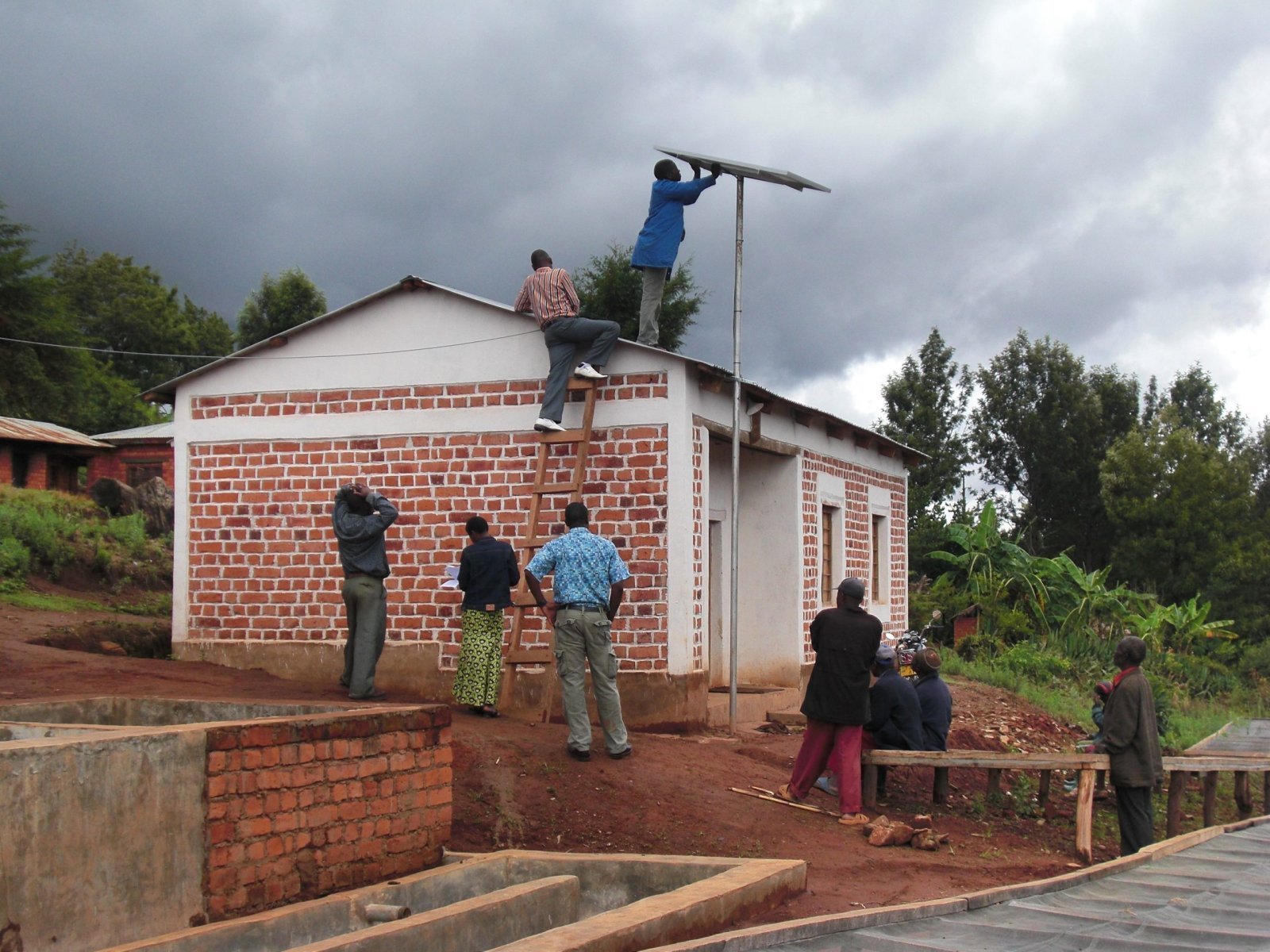
The expansion of electricity access has also produced a more diverse electricity system than one based entirely on the national grid. The Household Energy Consumption Survey found that 59.7 percent of rural households with electricity depend on off grid solar systems, highlighting how solar technology has become one of the principal mechanisms through which Tanzania has extended electricity beyond areas where conventional grid expansion is more difficult or expensive.
That achievement is significant because decentralised energy allows households to gain access without waiting for transmission and distribution infrastructure to reach every settlement. It also creates commercial opportunities for solar equipment suppliers, mini grid operators, financing companies, battery providers and appliance manufacturers. Yet off grid access can also vary significantly in quality because small solar systems may provide enough electricity for lighting and phone charging while remaining inadequate for refrigerators, machinery or other higher load appliances.
This creates a second stage of the rural electrification challenge. Tanzania has increasingly solved the problem of whether electricity is available at all, but it must now address whether the electricity available to rural households is sufficient, reliable and affordable enough to support productive activity. The report recommends continued investment in solar mini grids and maintaining off grid solar as a central component of rural electrification policy, reflecting the continuing importance of decentralised generation in areas where grid economics remain difficult.
The policy implication is that rural electricity planning may increasingly need to distinguish between basic access and productive access. A household solar system capable of powering several lights should not necessarily be treated as economically equivalent to a connection capable of supporting refrigeration, irrigation, processing or a commercial enterprise, even though both households may appear within the same national electricity access statistics.
Cooking Shows How Far the Energy Transition Still Has to Go
The gap between infrastructure access and actual household energy transformation is even more visible in cooking. Tanzania had approximately 14.5 million households during the survey period, and traditional biomass remained dominant across much of the country. About 9.56 million households, equivalent to roughly 66 percent, used firewood, while 6.44 million households used charcoal and 3.61 million used LPG.
When measured as the share of households reporting different cooking fuels, firewood accounted for 65.5 percent, charcoal 44 percent and LPG 24.6 percent, while only about 2 percent of households used electricity for cooking. Biogas and bioethanol remained almost absent from the household energy mix.
The rural and urban divide is substantial. In rural Tanzania, 89.6 percent of households reported using firewood for cooking and only 7.5 percent used LPG. In urban areas, charcoal remained widespread at 68.9 percent, while LPG reached 46.2 percent and electricity remained limited at about 3.4 percent.
The difference shows that Tanzania’s energy transition is progressing at different speeds depending on both geography and household income. Urban households have gradually diversified away from firewood toward charcoal and LPG, while rural households remain overwhelmingly dependent on traditional biomass. Even in cities, however, charcoal continues to occupy a major position in household cooking because the economics of fuel choice extend beyond whether cleaner alternatives are available. Upfront equipment costs, fuel prices, household size and purchasing patterns all influence adoption.
The survey found, for example, that smaller urban households were considerably more likely to use LPG. Among single person urban households, 59 percent used LPG, while use fell sharply as household size increased. For households with 11 or more members, LPG use dropped to only 4 percent while firewood remained dominant. The report interprets this as evidence that larger households face stronger financial and logistical barriers to cleaner fuel adoption.
This has implications for Tanzania’s clean cooking strategy because simply expanding the availability of LPG will not necessarily produce a uniform shift away from biomass. The cost of cylinders, stoves and refills must compete with fuels whose financial cost may be lower or whose cost is partly paid through household labour rather than cash. In many rural communities, firewood remains accessible without the same upfront cash requirement associated with modern fuels, even though its wider economic, environmental and health costs are substantial.
The report identifies deforestation, indoor air pollution and gender based time poverty among the consequences of continued biomass dependence. It recommends fiscal incentives for cleaner cooking technologies, lower entry costs for LPG equipment, wider availability of improved cookstoves and greater involvement of women as entrepreneurs and distributors within clean cooking supply chains.
Electricity Access Now Has to Become Economic Access
The findings suggest that Tanzania is moving into a different phase of energy policy. The country’s earlier challenge was extending infrastructure to households that had no modern energy access. As that connection gap narrows, the focus increasingly shifts toward affordability, reliability, appliance ownership and productive consumption.
The D1 lifeline tariff has played an important role in making small quantities of electricity affordable to lower income households, but the data also raises a policy question about what happens after a household becomes connected. If the tariff structure and household incomes keep consumption permanently at subsistence levels, Tanzania may achieve impressive access rates without generating the corresponding improvements in household productivity that electrification can support.
The Household Energy Consumption Survey therefore recommends policies that could increase the ability of households to convert electricity access into higher welfare and economic activity, including microfinance for appliances and clean cooking equipment as well as pricing approaches that encourage productive electricity use among lower income consumers.
Such financing could become particularly important because the cost of electricity itself is only one component of productive energy access. A household cannot refrigerate agricultural produce, operate machinery or establish an electricity powered business simply because power reaches the property. It also needs capital to purchase the appliance or equipment that converts electricity into economic output.
This creates an opportunity for banks, microfinance institutions, solar companies, appliance suppliers and energy service firms to develop financing models tied specifically to productive energy equipment. The economic impact of the electricity network could therefore become significantly larger if households can purchase refrigerators, irrigation equipment, electric cookers, processing machinery and other productive assets through instalments rather than requiring full upfront payment.
The Next Energy Metric Will Have to Go Beyond Connections
Tanzania’s electricity expansion remains a major infrastructure achievement, particularly because the country has combined grid extension with off grid technologies capable of reaching dispersed rural communities. The Household Energy Consumption Survey nevertheless shows that connection statistics increasingly need to be interpreted alongside consumption, affordability and household energy use.
A household that has electricity but consumes only a few kilowatt hours each month occupies a very different economic position from one using power for refrigeration, machinery, digital work or commercial production. Likewise, a household with electricity that continues cooking almost entirely with firewood or charcoal has only partially transitioned toward modern energy.
The economic objective of the next phase of Tanzania’s energy transition should therefore be broader than universal connection. It should aim for electricity that households can afford to consume, equipment they can afford to purchase and cleaner fuels they can realistically substitute for traditional biomass. The infrastructure is reaching more Tanzanians; the next test is whether households can use enough energy to turn that infrastructure into higher productivity, incomes and living standards.
 Uchumi360
Business Intelligence
- Source: National Bureau of Statistics and Ministry of Energy, Household Energy Consumption Survey Report 2023: Mainland Tanzania, September 2025
Uchumi360 covers business, investment, and economic policy across East, Central, and Southern Africa.
For the serious reader
You read to the end. That places you in a small group.
Uchumi360 is built for readers who demand precision over speed, structure over sentiment, and analysis that holds uncomfortable conclusions rather than softening them. If this work sharpens how you think about Africa's economy, help us keep building the infrastructure behind it.
Institutional Partners
Commission intelligence. Shape the conversation.
Uchumi360 works with development finance institutions, investment firms, sovereign bodies, and strategic organisations across the coverage region. Institutional partnership unlocks:
- Commissioned sector and country intelligence reports
- Branded research series under your institution's authority
- Exclusive data briefings for internal strategy teams
- Speaking and editorial presence at Uchumi360 events
- Co-published investment outlooks for your markets
Support Our Work
Independent analysis has a cost. Help us bear it.
Uchumi360 does not carry advertising. It does not take editorial direction from sponsors. Every article is produced without commercial compromise. Your contribution funds the reporting, research, and editorial infrastructure that keeps this analysis free from influence.
Secure checkout: One-time and monthly support are processed securely. Add payment credentials to enable checkout here.
Stay Connected
Keep up with every new insight.
Follow our latest analysis, policy coverage, and market intelligence as soon as it is published. If you need something specific, reach out directly and we will point you to the right research.
