
Tanzania Finds 223 Billion Cubic Feet of Gas in Mtwara as Mnazi Bay Production Expands
Ready
Tanzania has discovered 223 billion cubic feet of natural gas at the Kasa 1X ST2 well in Mtwara, the country’s first reported new gas discovery in more than a decade. The find is small relative to Tanzania’s 57.5 trillion cubic foot resource base, but its location inside the producing Mnazi Bay Block means the gas could reach the domestic power and industrial market much faster than the country’s larger offshore discoveries.
Tanzania has discovered an estimated 223 billion cubic feet of natural gas at the Mnazi Bay Block in Mtwara, the country’s first reported new gas discovery in more than a decade, adding fresh momentum to efforts to raise domestic gas production, support electricity generation and expand industrial uses of the resource.
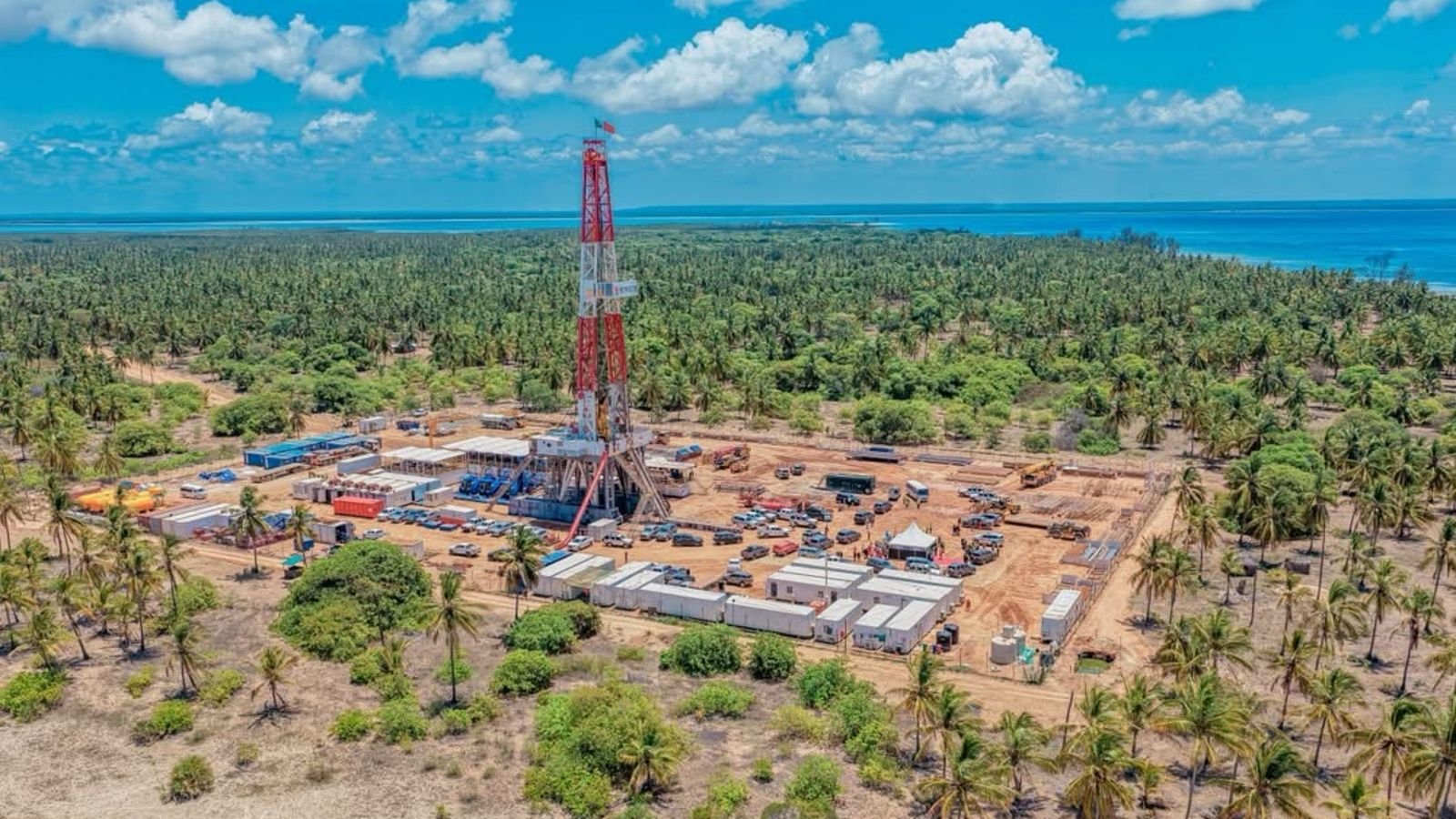
Energy Minister Juma Zuberi Homera announced the discovery on October 27 following drilling of the Kasa 1X ST2 exploration well by the Tanzania Petroleum Development Corporation in partnership with French producer Maurel & Prom. The find comes after two other wells, MB 5 and MS 2, were drilled in the same block, increasing output by more than 65 million cubic feet per day, while Kasa 1X ST2 is expected to produce about 30 million cubic feet per day for at least 10 years.
“The discovery is important in ensuring the country has reliable, clean and safe energy at affordable costs, particularly at a time when demand is increasing due to industrial growth and other economic activities,” Homera said.
The discovery is modest relative to Tanzania’s much larger offshore gas base, but its location at an existing producing block gives it immediate commercial relevance. More than 80 percent of gas produced at Mnazi Bay is already used to supply Tanzania Electric Supply Company power plants in Mtwara and Dar es Salaam, meaning additional production can feed directly into an established domestic energy system rather than waiting for the development of a new export project.
The Discovery Adds to a 57.5 Trillion Cubic Foot Resource Base
Before the latest announcement, Tanzania’s discovered natural gas resources stood at about 57.54 trillion standard cubic feet, according to the country’s energy authorities. Most of that resource is located offshore and remains central to the proposed USD42 billion Tanzania LNG project, while Mnazi Bay and Songo Songo provide the foundation of the domestic gas market.
The 223 billion cubic foot discovery therefore increases the national resource base only marginally in percentage terms, but the economics are different from a deepwater discovery that may take years and billions of dollars to commercialise. Mnazi Bay is already connected to processing and transmission infrastructure, and the new well is expected to enter production quickly. Maurel & Prom has indicated that first gas from the latest drilling programme could begin as early as November.
That distinction matters because Tanzania is trying to increase gas supply for domestic power generation and industrial consumption at the same time that it continues negotiating the much larger LNG development in Lindi. A smaller onshore discovery that can reach the market rapidly can therefore have a more immediate effect on electricity supply and industrial fuel availability than a much larger offshore field that remains years from production.
Mnazi Bay Is Becoming More Important to Tanzania’s Power System
Natural gas already plays a significant role in Tanzania’s electricity system, particularly through plants supplied from the southern gas fields and connected to Dar es Salaam through the national gas pipeline. The latest Mnazi Bay wells increase the amount of gas available to that system at a time when electricity demand is rising alongside industrial growth and broader efforts to expand access.
Homera said the additional production would help reduce dependence on imported energy products whose prices and availability remain exposed to international markets and geopolitical disruption. He also linked the discovery to lower energy costs for industries and households and to wider economic activity in Mtwara.
The three newly drilled wells are therefore more important collectively than the headline discovery figure alone suggests. MB 5 and MS 2 have already added more than 65 million cubic feet per day, while Kasa 1X ST2 is expected to contribute another 30 million cubic feet per day, potentially taking the incremental production from the drilling programme to roughly 95 million cubic feet per day.
For Tanzania, that additional supply creates more room to use gas as a balancing fuel alongside hydropower, solar and other generation sources, while also supporting industries that require dependable thermal energy. The government has been trying to nearly double national power generation capacity to about 8,000 megawatts by 2030, and natural gas remains part of that expansion even as hydropower and renewables take a larger share of the generation mix.
Tanzania Is Trying to Move Gas Beyond Electricity
The government is also trying to broaden the domestic market for natural gas beyond power generation. Homera said the resource could be used as a feedstock for petrochemical products, including fertilisers and plastics, while TPDC is already discussing small-scale liquefied natural gas projects with four investors, three of which are expected to be developed in Mtwara.
Those projects could expand the geographical reach of Tanzanian gas because LNG can be transported to areas that are not connected to the main pipeline network. The government also wants to increase the use of compressed or liquefied natural gas in transport as an alternative to petrol and diesel, creating another domestic demand source and potentially reducing the country’s exposure to imported refined petroleum products.
This is where the latest discovery becomes more strategically useful. Tanzania’s domestic gas market has historically been constrained not only by supply but by infrastructure and demand concentration. Additional production strengthens the case for investing in new distribution systems, industrial connections, vehicle conversion and small-scale LNG because these projects become more viable when producers can point to a larger and more dependable supply base.
The government is also seeking a larger fiscal return from Mnazi Bay. TPDC increased its participating interest in the block from 20 percent to 40 percent in 2024, giving the state a greater share of production economics and more influence over strategic decisions. Homera said the latest discovery should therefore increase government revenue through profit gas allocations, TPDC earnings and taxation.
The Discovery Comes as Tanzania Tries to Unlock Its Much Larger LNG Project
The Mnazi Bay announcement comes less than two weeks after Finance Minister Khamis Mussa Omar said Tanzania was close to finalising agreements for its long delayed USD42 billion LNG project, which would commercialise about 47.13 trillion cubic feet of offshore gas led by Equinor and Shell alongside ExxonMobil, MedcoEnergi, Pavilion Energy and TPDC.
The LNG development is far larger than Mnazi Bay and could turn Tanzania into a major exporter of liquefied natural gas to international markets, but it remains dependent on the completion of legal agreements, government approvals and a final investment decision. Commercial, fiscal and revenue sharing negotiations have largely been completed, while legal teams continue working on the Host Government Agreement and the legislation that would govern implementation.
The contrast between the two projects captures Tanzania’s current gas strategy. Mnazi Bay provides incremental domestic supply from infrastructure that already exists, while the LNG project represents the much larger long-term export opportunity. One supports near-term electricity and industrial demand; the other could reshape Tanzania’s foreign exchange earnings, investment profile and position in global gas markets if it reaches construction.
The latest discovery also demonstrates that Tanzania’s gas story is not limited to offshore megaprojects. The government continues to pursue exploration in Mnazi Bay, Ruvuma, Songo Songo and other areas, while new seismic interpretation in the Ruvuma Block has suggested potential resources of about 3.45 trillion cubic feet compared with an earlier estimate of 1.87 trillion cubic feet.
Local Content Is Already Becoming Part of the Economics
The government is also using the Mnazi Bay programme to demonstrate the domestic participation it wants from future oil and gas investment. Homera said around 200 Tanzanians had secured employment through local companies involved in the drilling programme, while 35 contracts worth more than TZS20 billion had been awarded to local firms. Tanzanians account for about 95 percent of employees involved in gas production and processing at the project, while the Madimba Gas Processing Plant is operated entirely by Tanzanians.
These figures matter because the economic value of natural gas depends on more than production volumes and government revenue. Engineering services, maintenance, logistics, fabrication, drilling support and technical employment can retain a larger share of project spending inside the country if local firms and workers are able to meet industry standards.
That question will become considerably larger if the USD42 billion LNG project moves forward. The government is already preparing a local content strategy for the development, with employment, procurement and skills transfer expected to become major parts of negotiations around how much value remains in Tanzania once construction begins.
The 223 Billion Cubic Feet Matter Because It Can Be Used Quickly
The discovery does not materially change Tanzania’s ranking among Africa’s major gas resource holders, and it is small beside the tens of trillions of cubic feet already discovered offshore. Its importance is instead concentrated in where the gas was found, the infrastructure already available and how quickly it can be brought into production.
Mnazi Bay already supplies power plants, already has processing infrastructure and already connects into Tanzania’s domestic gas network. The Kasa 1X ST2 well therefore adds supply to a system that can absorb it immediately, while the additional MB 5 and MS 2 production expands the same base.
For Tanzania, the commercial value of the discovery will ultimately be measured less by the 223 billion cubic feet headline than by how much additional electricity, industrial fuel, government revenue and domestic investment it produces. The country already possesses a very large gas resource base. The harder task has always been converting those molecules underground into affordable energy, industrial output and export income above ground.
 Uchumi360
Business Intelligence
Uchumi360 covers business, investment, and economic policy across East, Central, and Southern Africa.
For the serious reader
You read to the end. That places you in a small group.
Uchumi360 is built for readers who demand precision over speed, structure over sentiment, and analysis that holds uncomfortable conclusions rather than softening them. If this work sharpens how you think about Africa's economy, help us keep building the infrastructure behind it.
Institutional Partners
Commission intelligence. Shape the conversation.
Uchumi360 works with development finance institutions, investment firms, sovereign bodies, and strategic organisations across the coverage region. Institutional partnership unlocks:
- Commissioned sector and country intelligence reports
- Branded research series under your institution's authority
- Exclusive data briefings for internal strategy teams
- Speaking and editorial presence at Uchumi360 events
- Co-published investment outlooks for your markets
Support Our Work
Independent analysis has a cost. Help us bear it.
Uchumi360 does not carry advertising. It does not take editorial direction from sponsors. Every article is produced without commercial compromise. Your contribution funds the reporting, research, and editorial infrastructure that keeps this analysis free from influence.
Secure checkout: One-time and monthly support are processed securely. Add payment credentials to enable checkout here.
Stay Connected
Keep up with every new insight.
Follow our latest analysis, policy coverage, and market intelligence as soon as it is published. If you need something specific, reach out directly and we will point you to the right research.
