
Tanzania Turns to Private Capital as Electricity Surplus Exposes Grid Bottleneck
Ready
The country’s new clean-power action plan targets up to five priority transmission lines, a privately financed pilot grid project, and a renewable-energy tender framework. It is an important project-preparation commitment, but it does not yet provide construction finance or award any contracts.
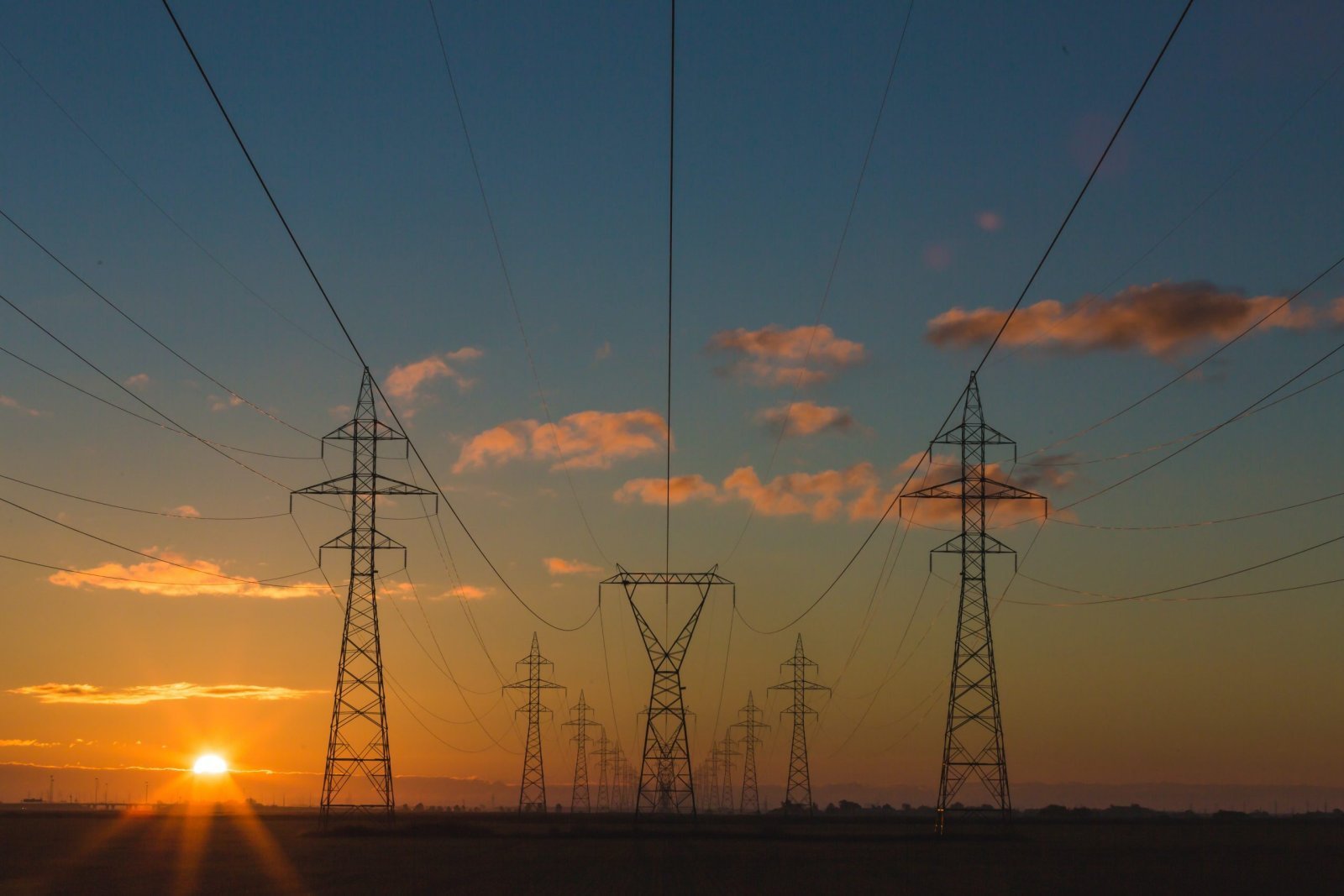
Tanzania is preparing to open more of its electricity-transmission and renewable-generation pipeline to private capital, marking a shift from expanding generation capacity towards building the infrastructure needed to deliver, trade and commercially use the electricity now available.
A Tanzania–Global Clean Power Alliance Finance Mission action plan, updated on 10 November 2026, commits the alliance and its partners to help the government prepare three to five priority transmission lines, including one regional interconnector.
The plan also provides for a pilot independent transmission project on Mainland Tanzania, a pilot renewable-generation project in Zanzibar and a public-private partnership tender framework for future renewable-energy projects. Support is scheduled to cover an initial programme of work during 2026 and 2027.
This is not an announcement that financing has been secured for the lines. No capital value, named transmission routes, investors or procurement dates were disclosed. The immediate commitment is to project preparation: legal and regulatory reviews, financial analysis, market testing, risk-allocation design, tender documentation and transaction advice.
That distinction matters. Tanzania has previously announced numerous energy-investment opportunities, but projects generally become investable only after questions about revenue, tariffs, government support, land, procurement and payment security have been resolved.
From a generation shortage to a delivery problem
The action plan arrives after the completion of the 2,115-megawatt Julius Nyerere Hydropower Project substantially increased Tanzania’s electricity supply.
On 10 November, Prime Minister Mwigulu Nchemba said the project had strengthened energy security and enabled the country to generate surplus electricity. The Ministry of Energy has previously placed installed capacity at approximately 4,646MW against peak demand of 2,271MW, implying a nominal surplus of about 2,375MW.
A generation surplus, however, is not automatically the same as usable or commercially valuable power.
Electricity must be transported from generating stations to industrial zones, cities, mines, farms and export interconnectors. Insufficient transmission capacity can leave generation underutilised in one part of the system while consumers elsewhere face weak voltage, congestion or outages.
Tanzania’s economic challenge is therefore changing. The immediate constraint is increasingly the ability to connect large consumers, reinforce the national grid and sell electricity across borders—not simply the ability to produce more megawatts.
This is particularly important for energy-intensive investments such as mineral processing, fertiliser production, steel, cement, data centres, cold storage and large irrigation schemes. Investors in these sectors require more than a national surplus figure: they need dependable connections, predictable tariffs and evidence that the grid serving their sites can carry the required load.
What the new framework proposes
The action plan would support a review of Tanzania’s legal, regulatory and policy framework for transmission PPPs. It specifically calls for work on the remuneration of private transmission investors, risk-sharing instruments and legal arrangements that could support wholesale electricity competition and greater participation in the Eastern Africa Power Pool.
At project level, assistance may cover the selection of three to five priority lines, development of bankable independent-transmission structures, financial modelling, investor consultations and preparation of procurement documents.
The pilot Mainland project could provide a test case for private participation in a segment that remains dominated by the state-owned Tanzania Electric Supply Company. EWURA describes TANESCO as a vertically integrated utility responsible for much of generation, transmission, distribution and supply.
Under an independent-transmission model, a private investor may finance, construct and maintain a line under a long-term agreement, receiving regulated or contracted payments for making the infrastructure available. The precise model for Tanzania has not been decided publicly.
The action plan also proposes support for a renewable-energy PPP tender framework. That work could standardise bidding documents, power-purchase agreements, payment guarantees and risk allocation—issues that materially affect the price investors demand and whether projects reach financial close.
For Zanzibar, the proposed pilot renewable-generation project could provide a reference transaction for attracting private power investment while reducing dependence on electricity supplied through subsea cables from the Mainland. No technology, capacity or location has yet been announced.
Regional electricity trade strengthens the case
Tanzania’s grid investment also has a regional dimension.
The World Bank approved a $1.6 billion, 10-year Regional Energy Transmission, Trade and Decarbonization programme for Eastern Africa in June. Its first phase includes $250 million in concessional financing for the Ugandan section of the Uganda–Tanzania interconnector.
The planned 400-kilovolt line on the Ugandan side would have a transfer capacity of 1,000MW. The World Bank expects at least 452 gigawatt-hours of electricity to be traded between Uganda and Tanzania annually by 2031. The programme also supports the Eastern Africa Power Pool’s proposed day-ahead electricity market.
The interconnector referred to in the new Tanzania action plan has not been identified, and it should not automatically be assumed to be the Uganda link. Nevertheless, the regional programme illustrates the wider commercial opportunity: transmission infrastructure can allow Tanzania to import cheaper electricity when advantageous and export surplus power when domestic production exceeds demand.
Cross-border trading could also improve resilience during droughts, plant maintenance or unexpected demand increases. Hydropower-dominant systems are particularly exposed to rainfall variation, making access to a diversified regional market economically valuable.
The investment opportunity and the unresolved risks
The emerging pipeline could create opportunities for infrastructure funds, pension capital, development financiers, engineering firms, equipment suppliers, insurers, legal advisers and local contractors.
It could also generate work in environmental assessment, land acquisition, grid-control technology, substations, conductors, towers, battery storage and renewable-energy development.
But bankability will depend on details that remain unresolved.
Investors will want clarity on whether payments will come from TANESCO, the government, transmission tariffs or a separate market mechanism. They will also assess currency risk, payment guarantees, termination compensation, access to land, procurement transparency and the treatment of cost overruns.
For electricity users, private capital is not automatically synonymous with cheaper power. Well-structured projects could accelerate grid construction and reduce outages, but poorly allocated risks could produce expensive availability payments or government liabilities. Competitive procurement and transparent tariff treatment will be essential.
The most important next disclosure will be the identity and estimated cost of the three to five priority lines. Businesses should also watch for the selection of the pilot independent-transmission project, amendments to electricity and PPP rules, market-sounding exercises, tender notices and details of any government guarantees.
Tanzania has successfully increased generation. The next test is whether it can turn surplus capacity into reliable industrial power, higher domestic consumption and profitable regional exports without creating unaffordable obligations for taxpayers or electricity customers.
 Uchumi360
Business Intelligence
Uchumi360 covers business, investment, and economic policy across East, Central, and Southern Africa.
For the serious reader
You read to the end. That places you in a small group.
Uchumi360 is built for readers who demand precision over speed, structure over sentiment, and analysis that holds uncomfortable conclusions rather than softening them. If this work sharpens how you think about Africa's economy, help us keep building the infrastructure behind it.
Institutional Partners
Commission intelligence. Shape the conversation.
Uchumi360 works with development finance institutions, investment firms, sovereign bodies, and strategic organisations across the coverage region. Institutional partnership unlocks:
- Commissioned sector and country intelligence reports
- Branded research series under your institution's authority
- Exclusive data briefings for internal strategy teams
- Speaking and editorial presence at Uchumi360 events
- Co-published investment outlooks for your markets
Support Our Work
Independent analysis has a cost. Help us bear it.
Uchumi360 does not carry advertising. It does not take editorial direction from sponsors. Every article is produced without commercial compromise. Your contribution funds the reporting, research, and editorial infrastructure that keeps this analysis free from influence.
Secure checkout: One-time and monthly support are processed securely. Add payment credentials to enable checkout here.
Stay Connected
Keep up with every new insight.
Follow our latest analysis, policy coverage, and market intelligence as soon as it is published. If you need something specific, reach out directly and we will point you to the right research.
