
Tanzania’s TZS 120 Billion Gas Pipeline Nears Completion as Ntorya Targets First Production in December
Ready
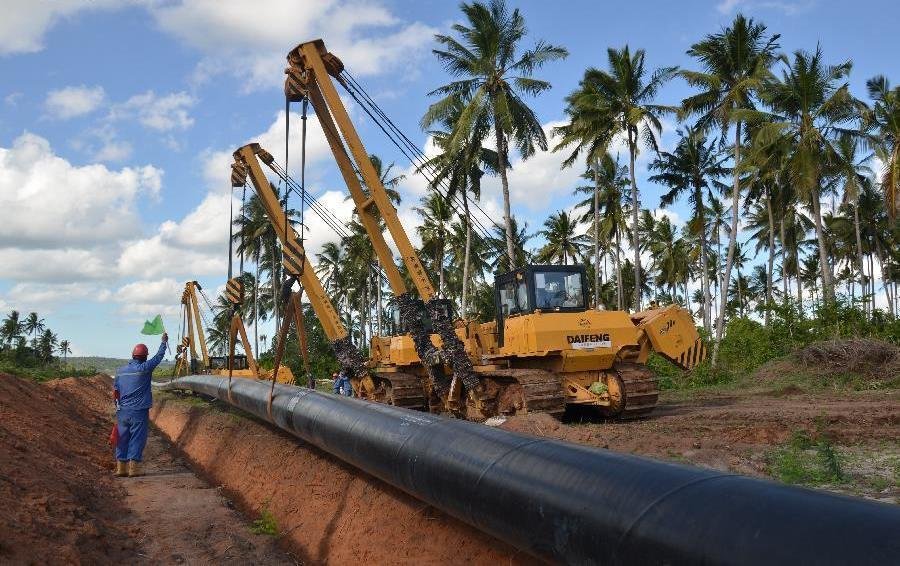
Tanzania's TZS 120 billion Ntorya to Madimba natural gas pipeline in Mtwara is approaching completion, with Vice President Deogratius Ndejembi confirming on November 13, 2026, that pipeline installation has been completed and final connection works are underway. The 34.2 kilometre pipeline is designed to transport up to 140 million cubic feet of gas daily from the Ntorya field, where TPDC estimates resources of approximately 1.6 trillion cubic feet. The field's operator, ARA Petroleum Tanzania, is preparing to begin production in December, following revisions to earlier schedules and delays affecting well testing and equipment mobilisation. The project could strengthen gas supplies for electricity generation, manufacturing and other domestic uses, although commercial benefits will depend on successful commissioning and the expansion of field production.
Vice President Deogratius Ndejembi has inspected the 34.2 kilometre Ntorya to Madimba gas pipeline in Mtwara as contractors complete the final connections to Tanzania's natural gas processing network. The pipeline is designed to transport up to 140 million cubic feet of gas daily, potentially supporting the equivalent of approximately 700 megawatts of gas fired electricity generation at full capacity. However, commercial production will depend on completing well testing, processing facilities and field development works, with the first gas now targeted for December 2026.
Tanzania is approaching completion of the TZS 120 billion Ntorya to Madimba natural gas pipeline in Mtwara, a strategic investment intended to connect one of the country's undeveloped onshore gas fields to its existing processing and transmission infrastructure. Vice President Deogratius John Ndejembi inspected the project on November 13, 2026, confirming that installation of the approximately 34 kilometre pipeline had been completed and contractors were undertaking the final connections required to transport gas from the Ntorya field to the Madimba Natural Gas Processing Plant. The development comes as the field's operator, ARA Petroleum Tanzania, prepares to begin production from Ntorya in December, potentially introducing additional domestic gas supplies into an energy system supporting electricity generation, manufacturing, transport and household consumption.
According to Daily News' November 13 report, Ndejembi expressed satisfaction with the construction progress during his working visit to Mtwara, describing the investment as an opportunity to strengthen economic activity in the region and expand the availability of domestically produced energy. The project is being implemented by the Tanzania Petroleum Development Corporation (TPDC), which awarded the engineering, procurement and construction contract to a consortium comprising China Petroleum Pipeline Engineering Company and China Petroleum Technology & Development Corporation in July 2025. The high-pressure pipeline extends 34.2 kilometres across 11 villages, connecting the Ntorya gas field with the existing Madimba facility.
The investment is relatively small when compared with Tanzania's larger electricity and transport infrastructure programmes, but its commercial importance extends beyond the length of the pipeline. The Ntorya field contains estimated gas resources of approximately 1.6 trillion cubic feet, according to TPDC, with an initial production programme targeting between 40 million and 60 million standard cubic feet daily and subsequent expansion intended to increase output to 140 million cubic feet. Bringing those resources into the domestic gas system could support additional electricity generation and industrial activity, provided that the field's production wells, processing arrangements and commercial agreements are completed as planned.
The pipeline has been designed with a diameter of 14 inches and a transportation capacity of 140 million standard cubic feet per day. During the contract signing on July 3, 2025, TPDC Managing Director Mussa Makame said the planned capacity could support approximately 700 megawatts of gas fired electricity generation, depending on the amount of gas allocated to power producers and the technical performance of generating facilities. That figure represents an estimate of generation potentially supported by gas transported through the pipeline at its maximum design capacity, rather than 700 megawatts of electricity infrastructure already constructed or approved.
The pipeline's completion would also represent a step towards commercialising a resource whose development has taken several years. The Ntorya field forms part of the Ruvuma production sharing area, where Tanzania has sought to develop additional domestic natural gas resources to support growing energy demand. The government granted a 25 year development licence in May 2024, following exploration and appraisal work that established the field's resource potential. A gas sales agreement was signed in January 2024, providing part of the commercial framework needed to bring production into the domestic market. However, the extraction and sale of gas can commence only after the necessary wells, surface facilities and connections have been commissioned.
The difference between completed pipeline construction and operational gas production is central to the project's current status. Although the government reports that the pipeline has been laid and final connections are underway, ARA Petroleum Tanzania is still undertaking well preparation, testing and other field development works. The operator's latest programme targets first production in December 2026, with subsequent drilling intended to expand output over the following years. The economic benefits associated with higher gas supply will therefore depend on the completion of activities both at Ntorya and within the processing and transmission system.
Ntorya’s First Gas Has Moved From September to December
The pipeline has progressed rapidly during 2026, but the development timetable has changed several times. When Ndejembi visited the project as Minister for Energy on March 1, construction was approximately 35% complete and the government was targeting gas production by September. Speaking during that visit, he instructed TPDC to maintain close supervision of the contractors and ensure that the programme progressed without unnecessary delays. “There should be no excuses. This requires strong supervision and TPDC must remain on site to ensure timely delivery,” he said, according to Daily News. The statement reflected the government's intention to accelerate commercialisation of Ntorya's resources, although the September production deadline was subsequently revised.
By September, construction had reached an advanced stage, with approximately 95% of pipeline laying and backfilling completed. In a regulatory announcement published on September 23, Aminex, the London listed company participating in the Ruvuma production sharing arrangement through Ndovu Resources, confirmed that connection and metering works were continuing at Madimba and that the pipeline was scheduled to be ready in December. Its September 25 financial report repeated the target, while identifying outstanding work involving production wells, flowlines and gas processing equipment. The November 13 inspection confirms further progress on the pipeline itself, but does not establish that commissioning has been completed or that commercial gas deliveries have begun.
The revised timetable followed disagreements over the sequencing of field development activities. On August 26, the Ministry of Energy convened representatives of TPDC, the Petroleum Upstream Regulatory Authority, ARA Petroleum Tanzania and Aminex to examine the operator's proposed work programme. According to Aminex's September 2 regulatory announcement, the government rejected a proposal to extend the development timetable, and the parties subsequently agreed to an accelerated programme involving preparation of Ntorya 1, testing of Ntorya 2 and drilling an additional development well. The agreement followed a notice of dispute issued in August, indicating that the schedule had become a contractual and commercial concern rather than simply an engineering matter.
Under the latest programme, Ntorya 2 is expected to provide the first gas entering the pipeline. However, a November 9 operational announcement by Aminex indicates that some activities have experienced further delays. Maintenance of the NT 2 wellhead had been completed, but removal of the bridge plug was awaiting equipment delivery and was rescheduled for late November. Testing remained targeted for December, subject to finalisation of the gas processing unit contract and timely mobilisation of the equipment. Maintenance of Ntorya 1 was also awaiting replacement valves, while construction work associated with the next development well remained underway. TPDC nevertheless confirmed that the main pipeline remained on schedule for completion in December.
The changes demonstrate why completing a gas pipeline does not necessarily translate into immediate production. A commercial gas development requires wells capable of delivering agreed volumes, field processing facilities, connecting flowlines, metering equipment and transportation infrastructure that can operate safely as an integrated system. Each component has its own procurement requirements, technical risks and commissioning procedures. If the main pipeline is completed before the upstream facilities are ready, it may remain unused until production begins. Conversely, wells capable of producing gas cannot deliver commercial revenue without a functioning route to the processing plant and customers.
The immediate significance of the November inspection is therefore that the publicly financed transportation infrastructure has reached its final construction stage while the upstream operator prepares for first production. Whether the December target can be achieved will depend on the remaining well interventions, equipment deliveries and testing results.
A 140 Million Cubic Foot Pipeline Does Not Mean 140 Million Cubic Feet of Immediate Production
The Ntorya development has been structured to expand gas production in stages. According to TPDC's official field development information, the first phase targets approximately 40 million to 60 million standard cubic feet daily, initially drawing on existing wells and additional development drilling. A subsequent phase is intended to increase production to approximately 140 million cubic feet daily through further wells and supporting infrastructure. The pipeline has been designed to accommodate that larger volume, allowing transportation capacity to support field expansion without requiring a completely new connection between Ntorya and Madimba.
This distinction is economically consequential because the transportation system's maximum capacity will not necessarily be used during its first months of operation. At an initial production rate of 40 million cubic feet daily, the pipeline would carry approximately 29% of its designed maximum volume. At 60 million cubic feet, utilisation would reach approximately 43%, before accounting for operational interruptions and actual demand. Such spare capacity is not inherently inefficient when infrastructure has been built to accommodate future production growth, but its commercial value depends on whether the field can eventually supply larger volumes and whether the domestic market can absorb them.
Ntoryaa Development: Capacity and Production
34.2 km
Pipeline length
140 MMscfd
Maximum designed transport capacity
40–60 MMscfd
Initial field production target
1.6 Tcf
Estimated Ntorya gas resource
Source: TPDC project and field development information. MMscfd means million standard cubic feet per day. The resource estimate is not equivalent to certified commercially recoverable reserves.
The investment also has implications for the utilisation of the existing Madimba Natural Gas Processing Plant. According to EWURA's natural gas regulatory reporting, the facility has an installed processing capacity of approximately 210 million standard cubic feet daily, making it an important component of Tanzania's existing domestic gas infrastructure. The plant receives gas from production sources in southern Tanzania and forms part of the system supplying consumers through the national pipeline network. Additional feedstock from Ntorya could improve the availability of gas for processing, although the actual capacity available for new volumes depends on existing supply arrangements, operating conditions and the compatibility of the incoming gas with the plant's processing requirements.
Ntorya's estimated resource of 1.6 trillion cubic feet provides a basis for further field development, but the number should not be treated as an assurance that the entire volume can be produced economically. Gas resource estimates depend on geological interpretation, reservoir characteristics, drilling results and assumptions about recoverability. The volume that can ultimately be commercialised will depend on additional wells, investment expenditure, gas prices and the market available for production.
The commercial framework has advanced alongside construction. The government granted the development licence in May 2024, following a gas sales agreement signed earlier that year. ARA Petroleum Tanzania operates the Ruvuma project, while Aminex participates through Ndovu Resources and TPDC represents the Tanzanian state's interests under the applicable arrangements. In September 2026, the joint venture approved work programmes anticipating up to $75 million in gross expenditure across the remainder of 2026 and 2027. This spending concerns field development activities and should not be confused with the TZS 120 billion pipeline construction cost funded through TPDC.
The Economic Value Lies in Electricity, Industrial Gas Demand and Better Use of Existing Infrastructure
Natural gas continues to play an important role in Tanzania's electricity system despite the substantial expansion of hydropower generation associated with the Julius Nyerere Hydropower Project. According to the Energy and Water Utilities Regulatory Authority's electricity performance figures for July to December 2025, natural gas accounted for approximately 2,754 gigawatt hours, equivalent to 32.53% of reported electricity generation and imports during the period. Hydropower contributed approximately 54.99%, while the remaining supply came from petroleum products, coal, biomass, smaller renewable sources and cross border imports. These figures show that gas remains a major electricity source even as hydropower has increased its contribution to the national generation mix.
The government's ambition to increase national generation capacity towards 8,000 megawatts by 2030 creates a potential market for additional domestic gas, particularly where generation projects require dependable fuel supplies and can support demand from industrial consumers. During his March visit, Ndejembi linked the Ntorya pipeline to electricity expansion and industrial development, arguing that increased natural gas production could attract factories and support more reliable power for businesses. However, the estimated 700 megawatts associated with the pipeline's maximum capacity should not be interpreted as electricity generation that will automatically become available once the pipeline is commissioned. New gas fired generating capacity would require separate investments in power plants, transmission connections and commercial agreements.
The economics of domestic gas extend beyond power generation. Industrial users may employ natural gas directly for heat, steam and manufacturing processes, potentially replacing more expensive or less efficient fuels where a reliable pipeline supply is available. Natural gas can also be used in compressed natural gas vehicles, while distribution networks can provide an alternative cooking fuel for connected households and commercial establishments. The viability of these applications depends on tariffs, the cost of extending distribution networks, equipment conversion and the location of customers relative to existing infrastructure.
For Mtwara, the project creates an opportunity to connect locally produced resources with industrial activity, but the economic benefits will depend on where gas is ultimately consumed. A pipeline transporting gas from Ntorya to Madimba does not itself establish new factories or guarantee local household connections. Industrial customers require accessible distribution infrastructure, reliable electricity, land, transport services and sufficient market demand to justify investment. Local employment during construction may also differ substantially from the number of permanent jobs supported after the pipeline enters operation.
TPDC has been examining ways to extend gas use beyond the areas currently connected by conventional pipelines. In recent reporting, the corporation outlined discussions with potential investors concerning smaller scale liquefied natural gas transportation, under which gas could be processed and moved by specialised trucks to consumers situated hundreds of kilometres from existing infrastructure. This approach may offer opportunities for industrial and commercial customers in locations where constructing a dedicated pipeline is not economically justified, although the cost of liquefaction, road transport, storage and regasification would influence competitiveness.
The value of Ntorya must therefore be considered within Tanzania's wider energy investment programme. The government is expanding electricity generation, strengthening transmission infrastructure and seeking to improve gas distribution, while industries require energy at commercially competitive and predictable prices. Additional production can help strengthen supply security, but the effect on industrial tariffs and household energy costs will depend on gas production expenses, transportation charges, commercial contracts and the financial condition of electricity purchasers.
There is also a longer term distinction between domestic gas development and Tanzania's proposed liquefied natural gas export industry. Ntorya is an onshore development intended to supply the domestic gas network, while the proposed multibillion dollar LNG project concerns large offshore resources and international export markets. Although both form part of Tanzania's petroleum sector, they involve different investors, financing requirements, construction schedules and customers. Ntorya's smaller scale and proximity to existing processing infrastructure provide a potentially shorter route to commercial production, but its development remains subject to upstream operational milestones.
The final stages of the Ntorya to Madimba project will consequently be measured by more than the completion of the 34.2 kilometre pipeline. The key milestones are successful commissioning, the beginning of gas production from the Ntorya wells, transportation through Madimba and actual deliveries to customers. As field production increases, subsequent investments in additional wells and distribution infrastructure will determine whether the pipeline operates closer to its designed capacity and whether Tanzania captures the wider commercial benefits associated with its gas resources.
The November 13 inspection confirms that the government funded transportation component has reached an advanced stage and that final connections are underway. The December production target remains dependent on further technical activities, but successful commissioning would bring Tanzania closer to commercialising another of its southern gas discoveries and strengthening the supply available to electricity producers and industrial consumers.
 Uchumi360
Business Intelligence
Uchumi360 covers business, investment, and economic policy across East, Central, and Southern Africa.
For the serious reader
You read to the end. That places you in a small group.
Uchumi360 is built for readers who demand precision over speed, structure over sentiment, and analysis that holds uncomfortable conclusions rather than softening them. If this work sharpens how you think about Africa's economy, help us keep building the infrastructure behind it.
Institutional Partners
Commission intelligence. Shape the conversation.
Uchumi360 works with development finance institutions, investment firms, sovereign bodies, and strategic organisations across the coverage region. Institutional partnership unlocks:
- Commissioned sector and country intelligence reports
- Branded research series under your institution's authority
- Exclusive data briefings for internal strategy teams
- Speaking and editorial presence at Uchumi360 events
- Co-published investment outlooks for your markets
Support Our Work
Independent analysis has a cost. Help us bear it.
Uchumi360 does not carry advertising. It does not take editorial direction from sponsors. Every article is produced without commercial compromise. Your contribution funds the reporting, research, and editorial infrastructure that keeps this analysis free from influence.
Secure checkout: One-time and monthly support are processed securely. Add payment credentials to enable checkout here.
Stay Connected
Keep up with every new insight.
Follow our latest analysis, policy coverage, and market intelligence as soon as it is published. If you need something specific, reach out directly and we will point you to the right research.
