
TAZAMA Expansion Talks Advance as Tanzania and Zambia Prepare a Larger Fuel Corridor
Ready
The two countries are seeking transaction advice for a new multi-product petroleum pipeline and the rehabilitation of the existing TAZAMA line. The proposed capacity increase could strengthen Dar es Salaam’s regional energy role, but financing and final investment approval remain outstanding.
Tanzania and Zambia are moving the TAZAMA petroleum corridor from broad political ambition towards formal project preparation, with shareholder discussions now running alongside a government tender for transaction-advisory services.
On 9 November, Tanzania Treasury Registrar Nehemiah Mchechu met TAZAMA Pipelines Acting Managing Director Ian Mutale in Dar es Salaam to discuss the company’s strategic direction, competitiveness and possible expansion in Tanzania.
The talks took place as new routes, including the Atlantic-facing Lobito Corridor, reshape competition for fuel and cargo serving Zambia and the Democratic Republic of Congo.
Mutale argued that Tanzania represented a natural area for TAZAMA’s expansion because the company already has operational infrastructure in the country. Tanzania owns 33.3 per cent of TAZAMA, while Zambia holds 66.7 per cent.
The meeting did not constitute approval of a new investment. No final project cost, financing package or construction timetable was announced.
Governments seek transaction advice
The more concrete development is an official tender issued by Tanzania’s Ministry of Energy for a transaction adviser to assist both governments and TAZAMA.
The assignment covers the proposed construction of a new multi-product petroleum pipeline and the rehabilitation of the existing line. Zambia’s Ministry of Energy has said the proposed new pipeline would have capacity of seven million tonnes a year, while the existing TAZAMA system would be upgraded from approximately 800,000 tonnes to four million tonnes annually.
These are proposed capacity targets, not completed investments. The adviser will be important in determining the project structure, commercial viability, financing options, risk allocation and implementation pathway.
The process will also need to address environmental and social approvals, land requirements, petroleum-product specifications, storage connections, tariffs and long-term commitments from fuel suppliers and buyers.
Existing pipeline remains strategically important
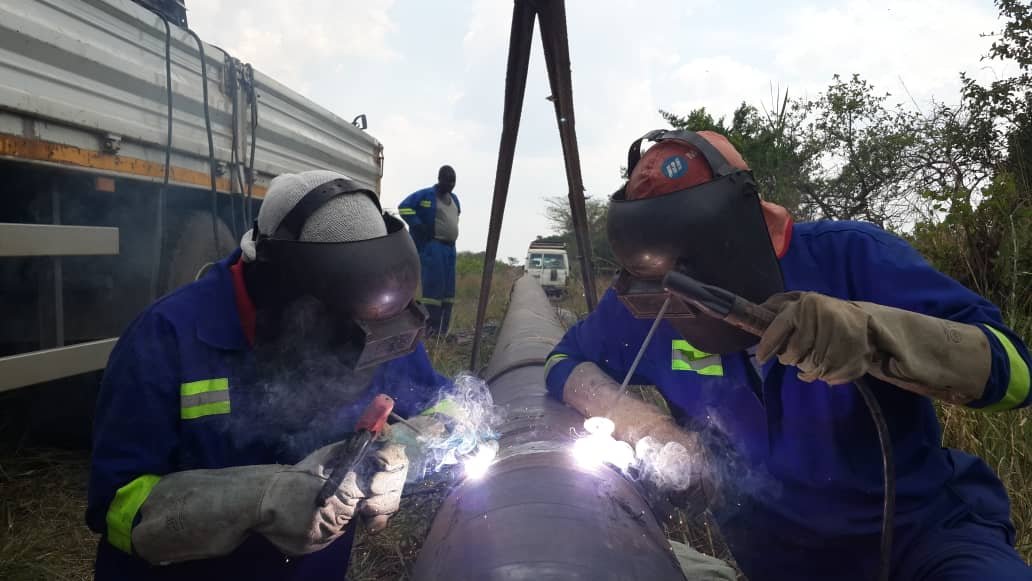
TAZAMA operates a 1,710-kilometre pipeline running from Dar es Salaam to Ndola in Zambia. Its installed capacity is approximately 1.1 million tonnes a year, although current throughput is around 800,000 tonnes.
The system was converted from transporting crude oil to carrying low-sulphur diesel in March 2023. TAZAMA also operates six storage tanks at Kigamboni with a combined capacity of 231,000 cubic metres, alongside seven pumping stations, five in Tanzania and two in Zambia.
Zambia’s Ministry of Energy says the corridor currently delivers approximately 3.6 million litres of diesel a day, meeting around 67 per cent of the country’s diesel demand.
That concentration demonstrates TAZAMA’s value, but it also exposes Zambia to disruptions along a single supply route. Lusaka has consequently been examining complementary import options through Namibia, Mozambique and the Lobito Corridor.
This does not necessarily mean that traffic will abandon Tanzania. Rapid growth in mining, construction and transport across Zambia and southern DRC could support several corridors. The commercial contest will be decided by reliability, delivery time, tariff levels, storage availability and the ability to guarantee product supply.
Tanzania could capture more than pipeline revenue
A larger petroleum corridor would have implications extending beyond TAZAMA itself.
Additional throughput could increase tanker traffic and storage activity around Dar es Salaam and Kigamboni, generate demand for engineering and maintenance services, and expand business for banks, insurers, inspection companies, freight agents and local suppliers.
Moving more fuel through pipelines could also reduce the dependence on long-distance road tankers. This may lower accident exposure, road deterioration, congestion and the cost of delivering fuel inland—provided pipeline tariffs remain competitive, and the system operates reliably.
For Tanzania, the strategic value lies in reinforcing Dar es Salaam as a gateway for Zambia and the mineral-rich Copperbelt. Fuel infrastructure can anchor cargo flows that also support railways, dry ports, warehouses and other logistics services.
The corridor could become even more valuable if investment in the TAZARA railway and Dar es Salaam port improves the movement of copper, machinery, industrial inputs and consumer goods in both directions.
Scale will require credible demand and finance
The proposed capacity increase is substantial. A seven-million-tonne new line, combined with an upgraded existing system, would serve a market far larger than TAZAMA’s present throughput.
That ambition will need firm demand commitments. Governments and financiers will want evidence that petroleum consumption, mining expansion and regional distribution volumes can support the investment over its operating life.
The project will also compete for capital with refineries, storage terminals, railways and alternative fuel-import routes. Its bankability may depend on long-term supply and transportation agreements, predictable regulation and a tariff framework that balances affordability with recovery of construction and maintenance costs.
The structure of government participation will be equally important. Direct sovereign borrowing, guarantees and public-private partnership arrangements carry different implications for fiscal risk and investor returns.
What comes next
The award and findings of the transaction-advisory assignment will be the next major test. They should clarify whether the new pipeline and rehabilitation will proceed as one integrated programme, the likely financing structure and how capacity will be phased.
Other milestones include feasibility studies, environmental approvals, engineering designs, product-offtake commitments and the publication of a credible project timetable.
Until those steps are completed, the expansion should be treated as a project under preparation rather than an approved construction programme.
What is already clear is that regional energy logistics are becoming more competitive. Tanzania possesses an established operational corridor and Indian Ocean access. Converting that advantage into lasting market share will require investment, dependable infrastructure and commercially attractive service, not geography alone.
 Uchumi360
Business Intelligence
Uchumi360 covers business, investment, and economic policy across East, Central, and Southern Africa.
For the serious reader
You read to the end. That places you in a small group.
Uchumi360 is built for readers who demand precision over speed, structure over sentiment, and analysis that holds uncomfortable conclusions rather than softening them. If this work sharpens how you think about Africa's economy, help us keep building the infrastructure behind it.
Institutional Partners
Commission intelligence. Shape the conversation.
Uchumi360 works with development finance institutions, investment firms, sovereign bodies, and strategic organisations across the coverage region. Institutional partnership unlocks:
- Commissioned sector and country intelligence reports
- Branded research series under your institution's authority
- Exclusive data briefings for internal strategy teams
- Speaking and editorial presence at Uchumi360 events
- Co-published investment outlooks for your markets
Support Our Work
Independent analysis has a cost. Help us bear it.
Uchumi360 does not carry advertising. It does not take editorial direction from sponsors. Every article is produced without commercial compromise. Your contribution funds the reporting, research, and editorial infrastructure that keeps this analysis free from influence.
Secure checkout: One-time and monthly support are processed securely. Add payment credentials to enable checkout here.
Stay Connected
Keep up with every new insight.
Follow our latest analysis, policy coverage, and market intelligence as soon as it is published. If you need something specific, reach out directly and we will point you to the right research.
