
Uganda Has Been Promising First Oil for 20 Years. Now the Deadline Is June 2027
Ready
Uganda has postponed commercial oil production to June 2027, extending a series of missed deadlines stretching back to its first commercial oil discoveries in 2006. Although the $5 billion East African Crude Oil Pipeline is reportedly 96% complete, construction of the marine terminal at Tanga remains below 80%, with pumping stations, processing facilities and commissioning activities still unfinished. Uganda's 2026/27 budget anticipates approximately $380 million in petroleum revenue, raising questions about the fiscal consequences of further delays. For Tanzania, the postponement defers anticipated pipeline transportation income and crude export activity at Tanga. The first commercial shipment could follow production by several months, making the June 2027 announcement another target rather than confirmation that Uganda's oil will finally reach international markets.
Uganda discovered commercially viable oil in 2006 and has since announced production targets stretching from 2013 to 2027. Its latest timetable places first commercial production before June 30, 2027, with crude exports through Tanzania's Port of Tanga expected to follow. Although the $5 billion East African Crude Oil Pipeline is reportedly 96% complete, unfinished facilities, commissioning requirements and another delayed production schedule threaten petroleum revenue already incorporated into Uganda's national budget.
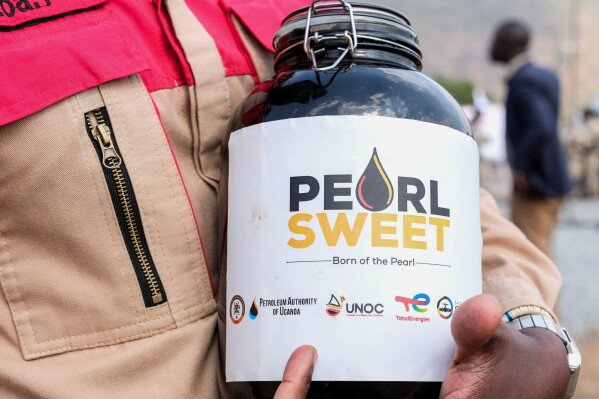
Uganda has postponed the start of commercial oil production to June 2027, extending a succession of missed deadlines that began more than a decade ago and leaving the East African country approaching the twenty-first anniversary of its first major commercial oil discovery without having exported a barrel of crude. The latest timetable, confirmed by Uganda National Oil Company (UNOC) officials and reinforced by new construction updates from the East African Crude Oil Pipeline (EACOP), moves the anticipated beginning of production into the final month of Uganda's 2026/27 financial year, with the first crude shipments through Tanzania's Port of Tanga potentially following several months later.
The postponement comes despite substantial investment in Uganda's Tilenga and Kingfisher oilfields and the 1,443 kilometre heated pipeline being constructed through Tanzania. EACOP Deputy Managing Director John Bosco Habumugisha said on November 12 that the approximately $5 billion pipeline project had reached 96% completion and was expected to be finished by the end of February 2027. However, the pumping stations, pressure regulation facilities and marine export terminal remain at different stages of construction, meaning the physical completion of the pipeline will not automatically enable commercial crude transportation.
According to The EastAfrican's November 14 report, the latest delays could affect Uganda's national budget, which anticipated approximately $380 million in petroleum revenue during the 2026/27 financial year. Finance Minister Henry Musasizi had incorporated petroleum receipts into the government's Ush84.39 trillion spending programme on the assumption that limited production would begin before the end of 2026. With commercial production now expected towards the end of the financial year and export shipments potentially occurring afterwards, the timing and composition of those anticipated receipts have become increasingly uncertain.
The financial consequences are particularly relevant because Uganda has repeatedly presented commercial oil production as a major source of future economic growth, export earnings and public revenue. President Yoweri Museveni told Parliament during the June 2026 budget presentation that the country is expected to earn approximately $1.5 billion annually from its share of oil revenues once production is established, with part of the proceeds intended for long-term investment and infrastructure development. That figure represents an ambition for future production rather than revenue already earned, and the eventual amount will depend on output, international oil prices, production costs and the government's contractual share.
For Tanzania, the latest postponement also delays the transition of EACOP from a construction project into a revenue-generating transport operation. Approximately 1,147 kilometres of the pipeline run through Tanzanian territory before reaching the marine export facilities at Chongoleani, Tanga. The project has already created construction activity, employment and procurement opportunities, but the longer-term commercial benefits associated with pipeline operation, crude handling and maritime services will depend on Uganda producing sufficient oil and the entire export system entering service.
The central question is therefore becoming more difficult for Uganda's government to answer: after twenty years of discoveries, negotiations, production licences, investment decisions and construction, when will Ugandan oil actually enter the international market?
Uganda's Oil Has Been Coming Since 2013
Uganda's long wait began with the discovery of commercially viable petroleum resources in the Albertine Graben in 2006. Exploration companies including Hardman Resources, Energy Africa, Heritage Oil and Tullow Oil helped establish the presence of substantial oil deposits near Lake Albert, creating expectations that petroleum exports would become an important source of foreign exchange and government revenue. Subsequent exploration identified approximately 6.5 billion barrels of oil initially in place, with about 1.4 billion barrels estimated to be recoverable, according to Uganda's extractive industry reporting. The distinction matters because the larger figure describes oil estimated to exist within geological formations, while the smaller figure represents volumes considered recoverable under prevailing technical and economic assumptions.
Initially, Uganda expected to begin commercial production in 2013. That target subsequently moved to 2015 or 2016, then to 2018, before further revisions pushed the anticipated start into the following decade. In February 2019, then Speaker of Parliament Rebecca Kadaga publicly questioned the repeated changes after Energy Minister Irene Muloni indicated that first oil could be delayed until late 2021 or early 2022. The Daily Monitor reported that officials had already announced several different production dates by the end of 2018, illustrating that the problem was well established before construction of EACOP began.
The earlier delays were connected to fundamental commercial disagreements. Uganda needed to determine how its crude would be produced, transported, refined and exported, while the government and international oil companies negotiated investment terms, taxes, ownership arrangements and the allocation of petroleum revenues. The country also had to decide whether its crude would reach international markets through Kenya or Tanzania, an infrastructure choice with implications for construction costs, transit arrangements and the security of future exports.
The decision to develop the export pipeline through Tanzania was agreed in 2016, followed by an intergovernmental agreement in May 2017. That decision provided a route to the Indian Ocean, but financing and commercial negotiations continued. In 2019, negotiations surrounding Tullow Oil's proposed sale of interests in Uganda collapsed, creating another obstacle to an investment decision. Tullow subsequently agreed in 2020 to sell its Ugandan interests to TotalEnergies, helping reorganise project ownership and advance the development programme.
A major breakthrough finally occurred on February 1, 2022, when TotalEnergies, CNOOC, UNOC and Tanzania Petroleum Development Corporation announced the Final Investment Decision for the Lake Albert development. The decision authorised the transition into large scale engineering, procurement and construction for the oilfields and the export pipeline. EACOP's own milestone records associated the investment decision with a commitment to deliver first oil in 2026, while other contemporaneous industry and government projections targeted 2025. Neither target was achieved.
The production timetable continued shifting as construction progressed. In May 2025, Uganda's Energy Ministry moved the target to June 2026. By March 2026, the Petroleum Authority of Uganda was telling Parliament that production could begin by the end of July. That deadline passed, and in September officials informed legislators that first commercial oil was now expected before June 30, 2027. The latest announcement therefore marks another revision of a timetable that has changed repeatedly through several phases of the petroleum development programme.
How Uganda's first oil deadlines have shifted
| Period | Announced or anticipated milestone | Outcome |
| 2006 | Commercial oil discoveries | Resources identified |
| 2013 | Early first oil target | Missed |
| 2015 to 2016 | Revised production expectations | Missed |
| 2018 | Further first oil target | Missed |
| 2021 to 2022 | Revised expectations before investment decision | Missed |
| February 2022 | Final Investment Decision | Achieved |
| 2025 | Post investment production target | Missed |
| July 2026 | Revised production target | Missed |
| February 2027 | Latest EACOP construction completion target | Pending |
| By June 2027 | Latest first commercial oil target | Pending |
| Later in 2027 | Anticipated first crude export shipment | Pending |
Sources: Uganda Ministry of Energy petroleum history, Parliament reporting, EACOP milestones, Uganda Radio Network and The EastAfrican. Earlier targets represent public expectations and official projections made at different points, not a single continuously binding contractual schedule.
The historical record demonstrates that Uganda's delay has involved two different problems. Before 2022, the principal constraints included resolving commercial agreements, ownership changes, the export route and financing arrangements required before major construction could begin. Since the Final Investment Decision, the challenge has increasingly involved the execution and coordination of a technically demanding development programme whose oilfields, processing facilities, pipeline and marine terminal must become operational together.
The distinction is essential because the current delays are occurring after billions of dollars have already been committed and substantial parts of the physical infrastructure have been constructed. Uganda is closer to commercial oil production than it was during earlier periods of negotiations, but the remaining requirements are also those that determine whether the investment can begin generating revenue. The latest construction figures show why a project described as 96% complete may still require several months before operations begin. According to Habumugisha, construction of the six pumping stations has reached approximately 90%, while the two pressure reduction stations are 95% complete. At the Tanzanian end of the pipeline, the marine terminal remains below 80% completion, although crude storage tanks have reached approximately 95% and the export jetty 97%. The remaining works are concentrated in facilities required to receive, regulate, store and load crude, making them essential to the commercial functioning of the entire system.
EACOP is designed to carry crude from Kabaale in Uganda's Hoima district to Chongoleani on Tanzania's Indian Ocean coast. Of its 1,443 kilometres, 296 kilometres are in Uganda and 1,147 kilometres are in Tanzania, passing through eight Tanzanian regions. The line will transport crude from two principal upstream developments: Tilenga, operated by TotalEnergies, and Kingfisher, operated by China's CNOOC. At planned peak production, Tilenga is designed to deliver approximately 190,000 barrels daily and Kingfisher approximately 40,000 barrels, creating a combined production capacity of around 230,000 barrels per day before considering actual field performance and any crude allocated for domestic processing.
The pipeline has an unusual technical requirement because Uganda's crude contains substantial wax and has a high pour point. According to the International Energy Agency's 2023 review of Uganda's energy sector, the crude can begin to solidify at temperatures around 40°C, requiring the transportation system to maintain sufficient heat to keep oil flowing. EACOP consequently incorporates insulation and electrical heating, alongside pumping and pressure regulation infrastructure. Unlike pipelines carrying lighter crude that remains fluid at ordinary temperatures, the system must maintain the thermal conditions needed for continuous transportation.
This requirement creates operational complications beyond the construction of a buried steel pipeline. Heating systems, electricity supply, pumps, instrumentation, controls, storage tanks and marine loading equipment must operate together. Commissioning involves testing these systems, identifying defects, establishing safe operating conditions and gradually introducing crude. A pipeline may be mechanically complete while still requiring extensive technical preparation before it can accept sustained commercial volumes.
The timetable for the first export shipment therefore cannot be inferred directly from the date on which commercial oil production begins. The EastAfrican reports that the initial process of filling and commissioning the pipeline could take approximately three months, meaning production beginning in June 2027 might be followed by a first cargo around September or October. This is a reported planning assumption rather than a verified minimum physical transit time for every barrel of oil. Once the pipeline is filled and operating normally, the transportation cycle will differ from its initial commissioning period.
Uganda National Oil Company Head of Compliance Kristina Kasebayo made this distinction during African Energy Week in Cape Town on October 16. She said first oil would begin before the end of the financial year in June 2027 and that exports through EACOP would follow. Her statement, reported by New Vision, described a deadline extending to June 30 rather than confirming June 1, or any other particular day, as the date of first production. She also reported that EACOP was 92% complete at the time, compared with the 96% subsequently reported in November.
The increase in reported construction progress is encouraging for investors, but construction percentages alone are an imperfect measure of the time remaining. The final stages of an infrastructure project frequently involve testing, integration, certification and correction of defects, activities that may account for a relatively small proportion of physical construction while determining whether the system is ready for commercial operations.
The upstream developments also remain relevant. In September, CNOOC Uganda President Liu Xiangdong said the Kingfisher central processing facility had achieved mechanical completion on August 24, allowing precommissioning activities to advance. TotalEnergies, meanwhile, reported that 277 wells had been drilled across 22 completed well pads at Tilenga by September 30, with construction of its central processing facilities and associated equipment continuing. Those figures establish substantial development progress, although neither mechanical completion of a processing plant nor the number of wells drilled is equivalent to sustained commercial oil production.
The remaining challenge is to align the completion of these upstream facilities with the pipeline's pumping, heating, storage and export systems. If one essential component is delayed, other completed facilities may remain idle until the entire chain is ready.
Uganda's Oil Delays Have Become a Budget Problem
The repeated postponements have become increasingly consequential because the government is now incorporating anticipated oil revenues into its fiscal and economic planning. Uganda's June 2026 budget projected total resources of Ush84.39 trillion for the 2026/27 financial year, including Ush1.44 trillion in petroleum revenue. Finance Minister Henry Musasizi associated the budget with a projected economic growth rate of 10.2%, supported partly by the expected commencement of commercial oil production.
The petroleum revenue figure translates to approximately $380 million at the exchange rate used in the November reporting, although its composition requires care. Budgeted petroleum revenue can include taxes and other petroleum related receipts that do not necessarily depend on a first crude export shipment occurring in the same period. Consequently, postponing production does not automatically eliminate every shilling in the petroleum revenue allocation, but it places the portion tied to crude production and sales at risk.
That distinction matters because Uganda has already experienced substantial fiscal pressure from debt servicing, infrastructure expenditure and other commitments. The country has sought to increase public investment while managing rising financing requirements, and petroleum revenue has been presented as an additional source of resources capable of supporting economic development. Delaying those receipts can require the government to adjust expenditure, seek alternative financing or revise its assumptions about the timing of future revenues.
There is also a broader difference between anticipated export sales and the government's actual fiscal receipts. The total value of crude sold internationally will be divided among the relevant participants according to production sharing arrangements, taxes, cost recovery and other contractual obligations. The government's revenue will therefore depend on more than the price of oil and the number of barrels produced. Capital expenditure, operating costs and the applicable fiscal terms influence when and how much revenue becomes available to the public budget.
In June, President Museveni expressed confidence that commercial oil production would generate approximately $1.5 billion annually for Uganda's government once established. Industry and government officials have also discussed potential annual revenue of up to $2 billion under selected production and price assumptions. Those figures relate to a future operating industry and cannot be treated as guaranteed annual receipts, particularly while the fields and export infrastructure remain uncommissioned.
The fiscal consequence of another delay is especially relevant because Uganda's economic projections have incorporated the contribution expected from petroleum production. The government has pursued a strategy to expand the country's economy to approximately $500 billion by 2040, with oil development among the activities expected to stimulate output, government revenue, infrastructure and related investment. Petroleum production could increase measured GDP substantially when commercial extraction begins, but the broader development effect will depend on the share of expenditure and profits retained in Uganda and the government's management of the revenue generated.
The repeated changes in first oil forecasts also create a credibility problem for fiscal planning. Where budget assumptions rely on production schedules that have frequently been revised, projected petroleum receipts should be accompanied by scenarios showing the consequences of alternative start dates and oil prices. This would allow public expenditure commitments to be managed without assuming that a technically demanding project will necessarily achieve its most optimistic timetable.
Tanzania Has Built an Oil Export Corridor, but Revenue Depends on Uganda's Production
Tanzania's economic exposure to Uganda's first oil delays differs from that of Uganda itself. Uganda owns the petroleum resources and expects to earn revenue through crude production, taxation and its participation in the oil sector. Tanzania provides the principal export corridor and holds an equity interest in the pipeline company through the Tanzania Petroleum Development Corporation (TPDC). The benefits available to Tanzania therefore arise from construction activity, local procurement, pipeline operations, employment, associated services and potential returns on its investment in EACOP.
According to EACOP's official shareholder records, TotalEnergies owns 62% of the pipeline company, while UNOC and TPDC each hold 15% and CNOOC holds the remaining 8%. The project's commercial framework includes tariff arrangements governing the transportation of Ugandan crude. Tanzania's 15% equity interest provides participation in the pipeline business, but it does not entitle the country to 15% of the value of Uganda's crude oil exports. Any distributions to shareholders will depend on transportation revenues, operating expenses, financing obligations and the company's financial performance.
The distinction is essential when evaluating the project as a national economic investment. The full value of oil exported through Tanga will not become Tanzanian export earnings simply because the crude passes through Tanzanian territory. Uganda remains the source of the petroleum, and the value accruing to Tanzania will depend on the services provided and its financial participation in the transportation infrastructure. International trade statistics and balance of payments treatment will distinguish the movement of transit crude from the income earned by Tanzanian entities.
Tanga's marine terminal will be particularly important once commercial operations commence. The facility is being constructed to receive crude from the pipeline, store it and load it onto tankers for export. This should generate demand for specialised marine services, terminal operations, equipment maintenance, security and other supporting activities. Local businesses may also benefit from demand associated with personnel, logistics and the operation of the terminal, although the magnitude of those benefits will depend on procurement arrangements and the number of permanent jobs required once construction ends.
Tanzania has already received measurable economic activity during the construction period. According to TotalEnergies' project progress disclosures, the combined Tilenga and EACOP construction programmes had generated 34,021 direct jobs by July 31, 2026, while approximately $2 billion had been spent with businesses in Uganda and Tanzania. The figures cover the two countries and the relevant projects together; they should not be presented as jobs or expenditure attributable exclusively to Tanzania.
The construction phase has also created opportunities for Tanzanian contractors, transport companies, suppliers and technical service providers along the pipeline route. EACOP passes through regions including Kagera, Geita, Shinyanga, Tabora, Singida, Dodoma, Manyara and Tanga, requiring land acquisition, logistics, construction support and specialised engineering activities over a large geographical area. However, construction employment is temporary by nature, and the eventual operating workforce is likely to be considerably smaller than the number of workers engaged during peak construction.
The delays therefore have two different economic effects. Some continued construction activity can sustain demand for contractors and suppliers in the short term, but postponement also delays the commencement of commercial pipeline services and any associated operating cash flows. Extended construction may additionally increase financing and administrative costs, depending on the contract terms, the causes of delay and whether the original project budget includes sufficient allowances for changes to the schedule.
For Tanzania, these developments underline the value of evaluating EACOP as a long term transportation business rather than relying solely on the anticipated volume of crude passing through its territory. The pipeline's commercial performance will depend on the volume of oil delivered, the tariff structure, operating reliability, financing costs and the duration of production from Uganda's oilfields.
Environmental Disputes and Financing Complications Have Added to the Project's Difficulties
Uganda's petroleum development has also faced persistent opposition from environmental and human rights organisations concerned about the consequences of oil extraction and pipeline construction. The projects cross or affect areas containing agricultural settlements, water resources and environmentally sensitive habitats, including the wider Lake Albert region and areas associated with Murchison Falls National Park. Critics have questioned the implications for biodiversity, the climate and communities whose land or livelihoods have been affected by development activities.
These concerns have influenced the financing environment surrounding EACOP. A number of international financial institutions have declined to participate in the project, while campaigners have encouraged banks and insurers to withdraw support. Project supporters, meanwhile, argue that the infrastructure is being developed under national regulatory frameworks and international environmental and social standards, with mitigation measures, compensation arrangements and monitoring systems intended to address identified risks.
Financing remained a major commercial milestone after the 2022 investment decision. On March 26, 2025, EACOP announced the closing of its first tranche of external financing, involving institutions including Afreximbank, Standard Bank, Stanbic Bank Uganda, KCB Bank Uganda and the Islamic Corporation for the Development of the Private Sector. The announcement demonstrated that the project had secured support from a group of regional and international financial institutions, although it did not by itself establish that all financing requirements had been eliminated.
Land acquisition and compensation have also required extensive implementation work. TotalEnergies reports that the Tilenga and EACOP projects have affected 19,558 households through the acquisition of approximately 6,400 hectares of land, including households required to relocate and others whose assets or economic activities have been affected. As of September 30, 2026, the company reported that approximately 99% of compensation agreements had been signed and paid, while 94% of recorded grievances had been closed. These figures are company disclosures, and their interpretation should distinguish the signing or payment of compensation from independent assessments of whether affected households have fully restored their livelihoods.
The Petroleum Authority of Uganda has attributed part of the latest schedule disruption to international supply chain problems arising from conflict in the Middle East. According to officials cited by The EastAfrican, specialised equipment intended for the upstream facilities and pipeline required rerouting, affecting delivery schedules and the sequence of installation and commissioning. The explanation identifies a recent external disruption, but it cannot account for the full history of delays stretching back to 2006, much of which occurred before construction and arose from commercial negotiations, ownership changes, regulatory decisions and infrastructure planning.
The project has therefore faced several distinct classes of risk over its development history. Commercial and regulatory negotiations delayed investment decisions, environmental concerns complicated access to financing and public acceptance, land acquisition required extensive compensation processes, and the engineering programme has encountered procurement and construction challenges. Understanding these separate causes is necessary when examining why Uganda's production targets have repeatedly changed.
The latest announcements indicate that the government and its investors have made substantial progress towards completing the development. They also demonstrate that schedules remain exposed to delays where specialised equipment, complex facilities and regulatory approvals must be coordinated across two countries.
First Oil, First Export and First Revenue Are Three Different Dates
Uganda's latest production announcement leaves several important questions unresolved. The first concerns when oil will begin flowing commercially from the Tilenga and Kingfisher developments. UNOC has stated that the country expects to achieve first oil before the end of June 2027, but it has not publicly established an exact production date supported by a complete commissioning schedule.
The second concerns when EACOP will be ready to receive and transport crude. Construction is now expected to be completed by the end of February 2027, but the system must undergo commissioning, including verification of pumping, heating, pressure regulation and marine terminal operations. The condition of the individual facilities matters because the pipeline cannot function as an export system until all critical components have been integrated.
The third concerns when the first tanker will depart Tanga carrying commercially produced Ugandan crude. A June 2027 production start does not guarantee a shipment during the same month, particularly given the initial pipeline filling requirements. The first cargo could follow later in the year, with September or October identified as a possible period in the November reporting. That remains a projection rather than a confirmed export schedule.
A fourth distinction concerns revenue recognition and payment. The departure of a tanker does not necessarily mean that the Ugandan Treasury receives its full share of petroleum proceeds immediately. Export sales are subject to commercial settlement arrangements, while taxes, production sharing receipts, cost recovery and other obligations operate according to their respective contracts and fiscal rules.
These differences have been blurred repeatedly in public discussions of Uganda's petroleum sector, where a declared first oil date can be interpreted as the beginning of production, international exports and substantial government revenue at the same time. Each milestone requires different technical and commercial conditions, and each can occur on a different date.
Uganda's oil industry has made substantial progress since the first commercial discoveries in 2006. The country has established a petroleum regulatory framework, negotiated production sharing and transportation agreements, attracted international investors, completed significant upstream development and constructed most of the infrastructure needed to reach the Indian Ocean. The physical progress now being reported is substantially different from earlier years when the project remained constrained by unresolved financing and commercial arrangements.
Nevertheless, the latest revision means that Uganda is approaching twenty one years since its commercial oil discovery without having achieved the export milestone that has been repeatedly promised. Its 2026/27 national budget already includes petroleum revenue expectations that may need reconsideration, while Tanzania's pipeline and marine terminal remain dependent on the completion of the Ugandan production system.
The February 2027 pipeline construction deadline and the June 2027 first oil target now provide the next measurable tests. Their credibility will be established through completed facilities, successful commissioning, actual crude production and the loading of the first commercial export cargo at Tanga. Until those events occur, the dates remain targets, however advanced the construction appears.
 Uchumi360
Business Intelligence
Uchumi360 covers business, investment, and economic policy across East, Central, and Southern Africa.
For the serious reader
You read to the end. That places you in a small group.
Uchumi360 is built for readers who demand precision over speed, structure over sentiment, and analysis that holds uncomfortable conclusions rather than softening them. If this work sharpens how you think about Africa's economy, help us keep building the infrastructure behind it.
Institutional Partners
Commission intelligence. Shape the conversation.
Uchumi360 works with development finance institutions, investment firms, sovereign bodies, and strategic organisations across the coverage region. Institutional partnership unlocks:
- Commissioned sector and country intelligence reports
- Branded research series under your institution's authority
- Exclusive data briefings for internal strategy teams
- Speaking and editorial presence at Uchumi360 events
- Co-published investment outlooks for your markets
Support Our Work
Independent analysis has a cost. Help us bear it.
Uchumi360 does not carry advertising. It does not take editorial direction from sponsors. Every article is produced without commercial compromise. Your contribution funds the reporting, research, and editorial infrastructure that keeps this analysis free from influence.
Secure checkout: One-time and monthly support are processed securely. Add payment credentials to enable checkout here.
Stay Connected
Keep up with every new insight.
Follow our latest analysis, policy coverage, and market intelligence as soon as it is published. If you need something specific, reach out directly and we will point you to the right research.
