
Ethiopia's Kurmuk Gold Mine Nears First Production as China's Zijin Moves to Acquire Its Owner
Ready
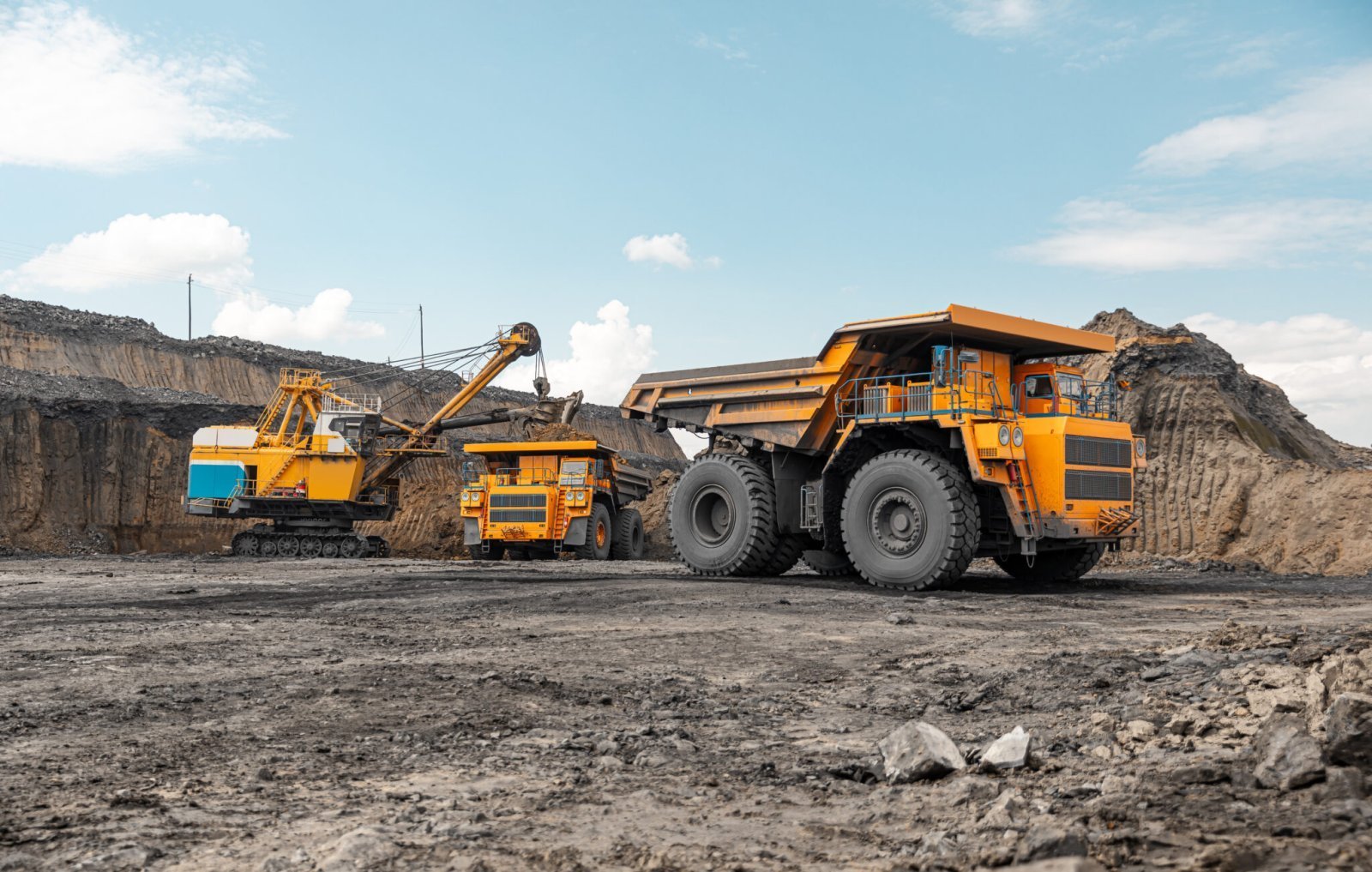
Ethiopia's Kurmuk Gold Project, the country's first large-scale industrial gold mine, is nearing first production in western Ethiopia's Benishangul-Gumuz region, targeting roughly 290,000 ounces annually in its early years. But the more consequential story unfolding around Kurmuk right now isn't the mine itself. It's who will own it. Canadian operator Allied Gold is in the process of being acquired by China's Zijin Gold International in an all-cash deal worth approximately C$5.5 billion, and Ethiopian authorities have reportedly signalled they'd welcome Zijin as Kurmuk's long-term owner, adding a new, still-developing chapter to Ethiopia's deepening "all-weather strategic partnership" with China. The Ethiopian government holds a 7% stake in the project directly, meaning how this acquisition resolves will shape not just who profits from Ethiopia's gold boom, but who Ethiopia is now doing business with as a mining partner.
ADDIS ABABA — Ethiopia is closing in on a genuine milestone in its mining industry: first gold production at the Kurmuk Gold Project, the country's first large-scale industrial gold mine, located in the Asosa zone of the Benishangul-Gumuz region near the Sudanese border, roughly 700 kilometres west of Addis Ababa. But the more consequential story developing around Kurmuk right now isn't about gold coming out of the ground. It's about who will actually own the mine once it does.
How Much Gold Will Kurmuk Actually Produce?
Kurmuk is designed to produce approximately 290,000 ounces of gold annually during its first five years, sustaining an average of more than 240,000 ounces annually across a 10-year window within an overall 15-year mine life, processing 6.4 million tonnes of ore per year, up from an original design of 4.4 million tonnes, at an all-in sustaining cost of $950 per ounce. The project combines two deposits, Dish Mountain and Ashashire, with a combined feasibility study completed in December 2022, and holds proven and probable reserves of 60.53 million tonnes grading 1.41 grams per tonne, containing 2.74 million ounces of gold as of December 2023, across a broader 1,450 square kilometre exploration territory that Allied Gold sees as having potential well beyond the current mine plan.
Total capital investment in the project is most commonly cited at approximately $500 million, though a more recent July 2026 estimate puts the figure closer to $620 million, and Allied Gold's own SEC filings show more than $187 million already spent in the nine months leading up to October 2025 alone. Mining contractor Mota-Engil was awarded the operating contract in November 2024, and a power purchase agreement with state utility Ethiopian Electric Power secures reliable hydroelectric grid power, expected to be connected ahead of first production. As of July 2026 reporting, the company described first gold as targeted "within weeks," with the project reported on budget and on schedule.
Who Actually Owns Kurmuk, and Who's Trying to Buy In?
This is where the story genuinely shifts beyond a straightforward mining milestone. Kurmuk is operated by Allied Gold, a Canadian mining company, through its wholly owned Ethiopian subsidiary Kurmuk Gold Mining PLC, which holds a 20-year mining concession. The Ethiopian government itself holds a 7% direct equity stake in the project, giving Addis Ababa a genuine financial interest in the mine's performance beyond tax and royalty revenue alone.
In early 2026, China's Zijin Gold International announced an all-cash acquisition of Allied Gold valued at approximately C$5.5 billion, a deal that would place Kurmuk, described by Allied itself as "a key growth asset within its African portfolio" as the company targets group-wide production above 800,000 ounces by 2029, inside the portfolio of one of the world's most aggressive mining conglomerates. Reporting from July 2026 indicates Ethiopian authorities have signalled they would welcome Zijin as Kurmuk's long-term owner, with the two governments described as showing considerable alignment on the project's future, and discussions reportedly extending beyond this single acquisition toward what additional Chinese investment could follow.
That alignment isn't happening in isolation. Ethiopia and China upgraded their relationship to an "all-weather strategic partnership" in 2023, Ethiopia joined BRICS the following year, and bilateral trade between the two countries has grown to more than $13 billion, with Chinese firms already having financed and built major Ethiopian infrastructure ranging from the Addis Ababa-Djibouti railway to multiple industrial parks. If the Zijin acquisition closes, Kurmuk would become less a standalone Ethiopian mining success story and more the latest, and arguably most strategically significant, entry in that longer pattern of Chinese capital embedding itself in Ethiopia's productive economy. Following the transaction as structured, Zijin's ownership share would sit at roughly 93%, with the Ethiopian government's 7% stake remaining intact regardless of who holds the remaining equity.
Why Does Kurmuk's History Actually Start With Egypt, Not Canada?
Before Allied Gold entered the picture, the Kurmuk concessions were held by Asec Company for Mining, an Egyptian conglomerate with strong ties to the Egyptian government, until Allied acquired the project in 2018, almost a decade before the company now expects to reach first production. That earlier chapter is worth remembering precisely because it illustrates how long large mining concessions can sit with one owner before the capital and technical capacity needed to actually build a mine materialises, and how much can change in ownership, strategy and geopolitical alignment across that gap.
How Has Ethiopia's Gold Export Economy Changed Already, Before Kurmuk Even Opens?
The scale of the shift already underway is genuinely remarkable on its own terms. Ethiopia's gold export earnings rose from just $27 million in 2018 to more than $1 billion today, a shift that has taken place alongside deliberate government efforts to formalise the mining sector and increase production from both artisanal and industrial operations. Gold has now overtaken coffee as Ethiopia's leading export by value, a significant development for a country where coffee has long served as one of its most globally recognised export commodities. That shift illustrates something important about minerals versus agriculture as export categories: gold can generate substantial foreign exchange from relatively small physical volumes in a way most agricultural exports simply cannot match.
Could Kurmuk Actually Make Ethiopia a Major African Gold Producer?
Kurmuk alone won't place Ethiopia alongside Ghana, South Africa or Mali in total production; those countries operate much larger, more established mining industries with multiple major producing operations running simultaneously. But Kurmuk could meaningfully change Ethiopia's position within the regional mining landscape. It's the country's first large-scale gold development with industrial mining and processing genuinely integrated into one operation, and its projected output alone could roughly double Ethiopia's known gold production. Addis Insight has described the shift bluntly: with production targeted at roughly 290,000 ounces annually in its first five years, Ethiopia could join Africa's mid-tier gold producers almost overnight once the mine reaches full output.
The larger significance sits in what comes after Kurmuk, not the mine itself. A successful large-scale operation gives international investors concrete evidence that Ethiopia has the geological resources, infrastructure and institutional capacity required for major mining projects, evidence that tends to shape future investment decisions well beyond any single mine's own production figures. Mining investors rarely evaluate one project in complete isolation; a successful operation typically increases interest in the surrounding geological area and encourages further exploration spending, which is how individual mines become the seed of larger mining districts over time.
What Could $1.2 Billion in Annual Gold Production Actually Mean for Ethiopia?
At an indicative value of nearly $1.2 billion for 290,000 ounces at current gold prices, Kurmuk alone could materially increase Ethiopia's total mineral export revenue on top of the roughly $1 billion the country already earns from gold. But the effect wouldn't be measured in export receipts alone. Large-scale mining creates sustained demand for engineering, construction, transport, security, accommodation, maintenance and energy services, and it can build skilled employment and technical capabilities that remain embedded in the local economy well beyond a single project's lifespan. The government can also capture value directly through taxes, royalties and its own 7% equity stake in the project. The real economic question isn't simply how much gold Kurmuk produces. It's how much of the value that gold generates actually stays inside Ethiopia rather than flowing straight back out to shareholders and foreign suppliers.
Why Does On-Site Processing at Kurmuk Actually Matter?
Kurmuk includes a processing plant located directly at the mine site, which matters because Ethiopia has historically relied heavily on artisanal and smaller-scale gold production rather than large integrated industrial operations. That distinction allows more of the mining value chain to happen inside Ethiopia rather than exporting unprocessed ore for someone else to refine elsewhere. The broader opportunity lies in moving beyond extraction alone: mining creates stronger domestic economic effects when local companies participate in supplying equipment, construction, transport, maintenance and engineering services around the operation, rather than importing nearly everything and running the mine as an isolated enclave disconnected from the surrounding economy. Building that local supplier ecosystem takes deliberate policy choices; it doesn't happen automatically just because a large mine exists nearby.
What Could Actually Go Wrong at Kurmuk?
The scale of the opportunity carries real, specific risks alongside it. Mining projects of this size require reliable infrastructure, electricity, security and logistics, and Benishangul-Gumuz has experienced genuine historical instability, meaning sustained engagement with surrounding communities and artisanal miners will be essential for whoever ultimately owns the deposit. It's also worth noting candidly that Allied Gold's largest current producing asset, Sadiola in Mali, operates in a jurisdiction whose well-documented difficulties for foreign mining operators are exactly the kind of frontier-market risk Kurmuk's owners will need to navigate successfully in Ethiopia. There's also a naming coincidence worth clearing up directly: reporting on the mine has occasionally been confused with an unrelated Sudanese town also called Kurmuk, located across the border in Sudan's Blue Nile state, where that country's civil war has spread; the two are geographically distinct and unconnected beyond sharing a name.
Ethiopia's broader experience with gold also underscores why formalisation matters as much as any single mine's success. A significant share of the country's gold production still occurs outside industrial operations entirely, making traceability and regulation genuinely critical to ensuring rising production actually translates into official export earnings and public revenue rather than leaking into informal channels.
What Happens If Kurmuk Succeeds, and Ownership Settles?
A successful Kurmuk operation, under whichever ownership structure ultimately emerges from the Zijin transaction, could meaningfully change how international investors view Ethiopia's mining sector as a whole. The project demonstrates that large commercial mining is achievable in a country better known internationally for agriculture, manufacturing ambitions and its large domestic market, and if production reaches projected levels, Ethiopia gains a substantial new foreign exchange source while potentially building genuine industrial capacity around mining rather than a single isolated project.
Is Ethiopia's Gold Story Still Small, or Has That Already Changed?
Ethiopia remains well behind Africa's established gold producers in total volume, but its trajectory has already shifted more than the raw numbers alone might suggest. Gold export earnings have climbed from $27 million in 2018 to more than $1 billion today, overtaking coffee as the country's leading export by value, and Kurmuk is expected to add roughly 290,000 ounces of annual production in its early years, once first gold, reportedly imminent as of mid-2026, actually arrives. Layered on top of that production story is now a genuine geopolitical one: whether Ethiopia's most significant mining asset ends up controlled by a Chinese state-linked mining giant, with Addis Ababa's own government apparently comfortable with that outcome, will say as much about Ethiopia's evolving international alignment as it does about the country's mining sector specifically. The immediate opportunity is foreign exchange. The larger, still-unresolved question is whether Ethiopia can turn that mineral wealth, and whoever ends up extracting it, into a genuinely broader economic advantage rather than simply a bigger export line financed and owned from somewhere else.
FAQ
Who operates the Kurmuk Gold Project? Canada's Allied Gold Corporation, through its wholly owned Ethiopian subsidiary Kurmuk Gold Mining PLC, which holds a 20-year mining concession. The Ethiopian government holds a separate 7% direct equity stake in the project.
Is Kurmuk's ownership about to change? Potentially, yes. China's Zijin Gold International announced an all-cash acquisition of Allied Gold worth approximately C$5.5 billion in early 2026, and Ethiopian authorities have reportedly signalled they would welcome Zijin as Kurmuk's long-term owner.
How much will Kurmuk actually cost to build? Estimates range from approximately $500 million, the most commonly cited figure, to a more recent $620 million estimate reported in July 2026, with more than $187 million already spent by October 2025 according to Allied Gold's own SEC filings.
When will Kurmuk actually start producing gold? The project has targeted mid-2026 for first production, and as of July 2026 reporting, the company described first gold as expected "within weeks," with the project reported on budget and on schedule.
How does Kurmuk connect to Ethiopia's broader relationship with China? Ethiopia upgraded ties with China to an "all-weather strategic partnership" in 2023 and joined BRICS in 2024, with bilateral trade now exceeding $13 billion. Ethiopia's reported welcome of Zijin's acquisition of Kurmuk's operator fits that broader pattern of deepening Chinese economic involvement in the country.
Who owned the Kurmuk concession before Allied Gold? Asec Company for Mining, an Egyptian conglomerate with strong ties to the Egyptian government, held the concessions before Allied Gold acquired the project in 2018.
 Uchumi360
Business Intelligence
Uchumi360
Business Intelligence
Uchumi360 covers business, investment, and economic policy across East, Central, and Southern Africa.
For the serious reader
You read to the end. That places you in a small group.
Uchumi360 is built for readers who demand precision over speed, structure over sentiment, and analysis that holds uncomfortable conclusions rather than softening them. If this work sharpens how you think about Africa's economy, help us keep building the infrastructure behind it.
Institutional Partners
Commission intelligence. Shape the conversation.
Uchumi360 works with development finance institutions, investment firms, sovereign bodies, and strategic organisations across the coverage region. Institutional partnership unlocks:
- Commissioned sector and country intelligence reports
- Branded research series under your institution's authority
- Exclusive data briefings for internal strategy teams
- Speaking and editorial presence at Uchumi360 events
- Co-published investment outlooks for your markets
Support Our Work
Independent analysis has a cost. Help us bear it.
Uchumi360 does not carry advertising. It does not take editorial direction from sponsors. Every article is produced without commercial compromise. Your contribution funds the reporting, research, and editorial infrastructure that keeps this analysis free from influence.
Secure checkout: One-time and monthly support are processed securely. Add payment credentials to enable checkout here.
Stay Connected
Keep up with every new insight.
Follow our latest analysis, policy coverage, and market intelligence as soon as it is published. If you need something specific, reach out directly and we will point you to the right research.
