
Rosatom Says 3D Printing Could Cut Tanzania's Mining Supply Chains From Months to Hours
Ready
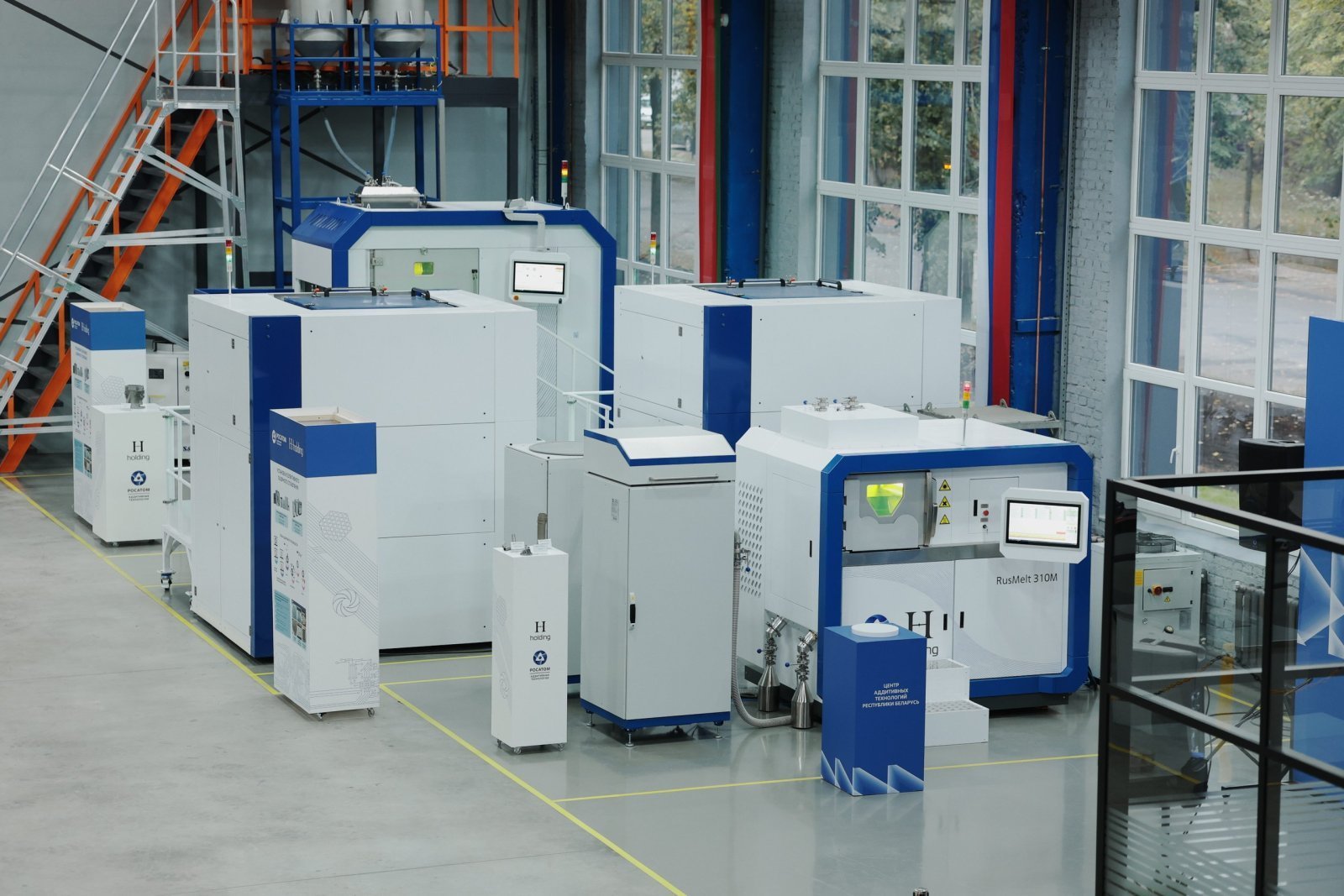
Russia's state nuclear corporation Rosatom says industrial 3D printing could let Tanzania's mining industry produce complex spare parts in hours rather than months, an idea presented following an August 2026 visit to Rosatom's Moscow Additive Technologies Centre and pitched specifically around Tanzania's expanding uranium sector. The technical case is genuine: additive manufacturing can meaningfully shorten supply chains for remote, equipment-dependent industries. What's worth knowing before taking Rosatom's framing at face value is that the company's flagship Tanzanian project, the Mkuju River uranium mine, is reportedly caught in a dispute serious enough that a Tanzanian MP says the government filed a formal default notice against Rosatom, at a moment when Tanzania's government is navigating real diplomatic isolation from Western partners.
DAR ES SALAAM — Russia's state nuclear corporation Rosatom says Tanzania's mining industry could cut the time needed to obtain complex spare parts from months to hours, if industrial 3D printing technology is deployed closer to mining operations. The pitch, presented following an August 2026 visit to Rosatom's Moscow Additive Technologies Centre, ties directly to Tanzania's expanding uranium sector, and it's worth examining on its own technical merits before turning to the more complicated relationship it's emerging from.
How Would 3D Printing Actually Change Tanzania's Mining Supply Chains?
Industrial 3D printing, or additive manufacturing, produces components by building them layer by layer from digital designs, changing the underlying economics of producing certain industrial parts. Conventional manufacturing often requires tooling, casting, moulds and extensive machining before a component is ready, expensive and slow processes for complex components needed only in small quantities. Additive manufacturing can remove much of that preparation: a digital design can be sent directly to a suitable industrial printer, allowing production without conventional tooling, particularly useful when a mining operation needs a specialised part urgently or when the original manufacturer no longer produces it.
For a remote mine, the potential benefit is real. Instead of waiting for a component to be manufactured abroad, shipped to Tanzania and transported to site, selected parts could eventually be produced closer to where they're actually needed, with the economic value coming from reduced waiting time as much as reduced production cost.
How Fast Can Complex Industrial Components Actually Be Produced?
Rosatom has demonstrated the technology's potential using components built for demanding nuclear industry applications. One example the company cites is a spacer grid used in a nuclear fuel assembly, a structure that traditionally required months of manual work, produced through 3D printing in approximately 10 to 11 hours. Rosatom has also demonstrated a one-piece anti-debris filter for a next-generation fuel assembly, replacing a conventional design of 55 separate parts with a single seamless structure.
These specific examples come from Rosatom's nuclear business rather than mining directly, and their relevance to Tanzania lies in the manufacturing principle rather than a direct application: complex industrial components don't always require lengthy conventional processes, and digital manufacturing can reduce part counts, eliminate manufacturing stages, and allow complicated geometries traditional methods struggle to produce.
Why Would This Matter for Tanzania's Mining Industry Specifically?
Mining operations depend on continuous equipment availability, and a failed pump, specialised fitting or other critical component can interrupt operations while a replacement is sourced and transported, a delay whose cost can considerably exceed the value of the part itself. That's particularly relevant for mines located far from major industrial centres, where imported components may travel long distances before reaching the site. A local additive manufacturing centre could eventually supply selected replacement parts without requiring every possible component to be stocked in advance, potentially changing how mining companies think about spare parts entirely, from maintaining large inventories of every possible component toward maintaining digital designs for approved parts and producing them as needed. That wouldn't eliminate conventional supply chains; it would create another option specifically for parts where speed and flexibility matter more than mass production economics.
Could 3D Printing Actually Support Tanzania's Uranium Industry?
Rosatom's pitch becomes particularly interesting set against Tanzania's expanding uranium sector, and here's where the independent facts and the company's framing need to be held separately.
What's independently confirmed: The Mkuju River uranium project in Tanzania's Ruvuma Region is being developed by Mantra Tanzania Limited, a subsidiary of Uranium One Group, itself wholly owned by Rosatom since Uranium One, formerly a publicly traded Canadian company, was acquired and taken private in 2013. The project's Nyota deposit holds reserves estimated at 152 million tonnes of ore according to Rosatom's own figures, or 182.1 million tonnes grading 0.025% uranium per independent Wikipedia sourcing, among the largest uranium projects globally by that measure. A pilot processing plant was commissioned in mid-2025, gathering data for the main facility, with construction of that main complex beginning in early 2026 and commissioning now targeted for 2029, reaching a planned capacity of up to 3,000 tonnes of uranium annually. Total investment is estimated at $1 billion, and full-scale development is expected to create more than 4,000 jobs, alongside infrastructure improvements including upgrades to the Namtumbo district road network.
What's Rosatom's own framing: The company describes Mkuju River as "a world-class uranium development project" and says "every key decision is taken with due regard for Tanzania's interests as a partner country and for the sustainable development of the region." It's within that same partnership framing that Rosatom is now pitching additive manufacturing, specifically for producing selected spare parts, tools and specialised components closer to the point of use, potentially supported by 3D scanning and reverse engineering capabilities that could let technicians capture the geometry of an existing component and produce a replacement where original parts are difficult to source.
What complicates that framing considerably: According to The Africa Report, which spoke to a senior Tanzanian MP on the parliamentary budget committee on condition of anonymity, the Tanzanian government deliberately served a formal default notice on Rosatom over the Mkuju River project's delays, specifically intended to capture Moscow's attention after years of stalled progress, more than a decade of delay by some accounts. That report frames the project as having drawn Tanzania into a direct geopolitical position between Russia and Western partners, at a moment when, according to the same reporting, President Samia Suluhu Hassan's government faces serious international isolation over "the bloodshed and forced disappearances of October 2025." Separate reporting on President Samia's June 2026 visit to Russia's St. Petersburg International Economic Forum describes the trip as part of a broader push to deepen nuclear cooperation with Rosatom, including interest in small modular reactors and floating nuclear power units, alongside continued discussion of the uranium project. Whether that visit reflects renewed confidence in the Rosatom relationship or exactly the kind of leverage-seeking behaviour the anonymous MP described is a genuinely open question this analysis cannot resolve, but it's the context any reader evaluating Rosatom's technology pitch should have.
What Would a Tanzanian Additive Manufacturing Centre Actually Look Like?
Setting the geopolitical context aside, the technical model Rosatom is proposing is worth understanding on its own terms, since it goes beyond simply selling 3D printers. The company describes a fully operational additive technology centre as combining a production facility, engineering service provider and training hub, with the longer-term possibility of local manufacturing of the additive equipment itself. That distinction matters: importing industrial printers gives a company access to a new machine, while establishing a technical centre could create an entirely new industrial capability, engineers and technicians trained in digital design, 3D scanning, materials science, machine operation, quality control and maintenance, mining companies working with the centre to identify components suitable for local production, and universities developing training programmes around the technology.
Where Did This Specific Proposal Actually Come From?
The 3D printing initiative emerged from Rosatom's engagement with Egypt, not directly from Tanzania. On 27 August 2026, Egypt's Minister of Electricity and Renewable Energy, Dr Mahmoud Esmat, visited Rosatom's Moscow Additive Technologies Centre during a trip to Russia. Following that visit, Rosatom's Fuel Division and Egypt's Executive Authority overseeing Nuclear Power Plant Construction Projects signed a joint statement of intent to establish an additive technology centre in Egypt, with discussions also covering the El Dabaa Nuclear Power Plant and a potential desalination complex. For Tanzania, the relevant takeaway isn't necessarily that it should replicate Egypt's specific arrangement, but that Rosatom is positioning additive manufacturing as a broader industrial cooperation model, manufacturing, engineering, training and eventual local equipment production combined, that it's now extending into its pitch to other partner countries, Tanzania among them.
Could This Reduce Tanzania's Dependence on Imported Mining Equipment?
Selectively, yes, according to the technology's underlying logic, though this remains a proposal rather than an operating reality anywhere in Tanzania. The immediate opportunity isn't replacing all imported components; mining equipment includes highly specialised systems requiring original manufacturers and certified parts through complex global supply chains. The stronger case applies to parts that are difficult to source quickly, expensive to hold in inventory, or no longer readily available from manufacturers, where a digital inventory of approved component designs could allow selected parts to be produced on demand. For mining companies, that could reduce downtime and inventory costs; for Tanzania, it could keep more technical work inside the country and create demand for local engineering firms, assuming the underlying commercial relationship with whichever partner supplies the technology remains stable enough to build on.
What Would Tanzania Actually Need to Build This Capability?
The technology alone wouldn't be sufficient. Tanzania would need engineers capable of converting industrial requirements into printable designs, technicians trained to operate and maintain industrial printing systems, and materials capable of meeting mining-grade performance requirements. Quality assurance would be particularly important, since a mining company can't simply print a replacement component and install it because the shape looks correct; components exposed to pressure, heat, vibration or corrosion require appropriate materials, manufacturing standards and testing, meaning certification and traceability would need to become part of the surrounding industrial infrastructure, an opportunity, at least in principle, for Tanzania's universities, technical colleges, mining companies and industrial regulators to develop a specialised skills base alongside whatever technology partner ultimately supplies it.
What Does This Mean for Tanzania's Broader Industrialisation Strategy?
Tanzania's mining industry is becoming too large to think about purely as an export activity. With mineral exports reaching approximately $5.4 billion and mining contributing roughly 11.9% of GDP in 2025, the sector already represents a substantial share of the economy, and the next real question is how much broader industrial activity can be built around it rather than simply how much ore leaves the country. Additive manufacturing offers one possible route, and the same capabilities that could serve mining could eventually extend to energy, manufacturing, construction, transport and infrastructure projects elsewhere in the economy, making the mine an initial customer for a capability that could ultimately serve well beyond it.
Is the Bigger Opportunity the Printer, or Who Controls the Knowledge Behind It?
The more interesting question raised by Rosatom's proposal isn't really about a machine that can print a component in hours. It's about where technical knowledge and industrial dependency actually sit going forward. A conventional supply chain often leaves African mining operations dependent on manufacturers and engineering centres located elsewhere, equipment imported, spare parts imported, and technical expertise frequently imported alongside them. Additive manufacturing could genuinely begin shifting some of that capability closer to the point of production. Whether that shift happens through Rosatom specifically, given the currently disputed state of Tanzania's flagship relationship with the company, through a different partner entirely, or through a genuinely independent domestic effort, is a question this specific press release understandably doesn't raise, but one Tanzanian policymakers evaluating this pitch will need to weigh directly.
FAQ
What is Rosatom actually proposing for Tanzania's mining industry? Establishing additive manufacturing (3D printing) centres capable of producing spare parts, tools and specialised components closer to mining sites, potentially reducing supply chain delays from months to hours for select components, based on a model the company is also pursuing with Egypt.
Is this proposal specific to Tanzania, or part of a broader Rosatom pitch? It emerged from Rosatom's engagement with Egypt, following an August 2026 visit by Egypt's electricity minister to Rosatom's Moscow facility, and is being positioned as a broader industrial cooperation model the company is extending to other partner countries, including Tanzania.
What is the Mkuju River project, and who controls it? A uranium mining project in Tanzania's Ruvuma Region, developed by Mantra Tanzania Limited, a subsidiary of Uranium One Group, which is wholly owned by Russia's state nuclear corporation Rosatom. It targets a processing capacity of up to 3,000 tonnes of uranium annually, with commissioning now planned for 2029.
Is the Rosatom-Tanzania uranium relationship as smooth as this press release suggests? No. Independent reporting from The Africa Report indicates a senior Tanzanian MP says the government formally served Rosatom with a default notice over years of project delays, describing the move as a deliberate attempt to capture Moscow's attention amid Tanzania's own diplomatic isolation from Western governments.
How large is Tanzania's mining sector currently? Mining contributed approximately 11.9% of GDP in 2025, with mineral exports reaching roughly $5.4 billion.
Should this press release's framing of the Rosatom-Tanzania partnership be taken at face value? Readers should weigh it alongside independent reporting. Rosatom describes the relationship as one where "every key decision is taken with due regard for Tanzania's interests," but that framing sits alongside separately reported tension serious enough to involve a formal default notice, in a broader context of Tanzania's contested international standing.
 Uchumi360
Business Intelligence
Uchumi360
Business Intelligence
Uchumi360 covers business, investment, and economic policy across East, Central, and Southern Africa.
For the serious reader
You read to the end. That places you in a small group.
Uchumi360 is built for readers who demand precision over speed, structure over sentiment, and analysis that holds uncomfortable conclusions rather than softening them. If this work sharpens how you think about Africa's economy, help us keep building the infrastructure behind it.
Institutional Partners
Commission intelligence. Shape the conversation.
Uchumi360 works with development finance institutions, investment firms, sovereign bodies, and strategic organisations across the coverage region. Institutional partnership unlocks:
- Commissioned sector and country intelligence reports
- Branded research series under your institution's authority
- Exclusive data briefings for internal strategy teams
- Speaking and editorial presence at Uchumi360 events
- Co-published investment outlooks for your markets
Support Our Work
Independent analysis has a cost. Help us bear it.
Uchumi360 does not carry advertising. It does not take editorial direction from sponsors. Every article is produced without commercial compromise. Your contribution funds the reporting, research, and editorial infrastructure that keeps this analysis free from influence.
Secure checkout: One-time and monthly support are processed securely. Add payment credentials to enable checkout here.
Stay Connected
Keep up with every new insight.
Follow our latest analysis, policy coverage, and market intelligence as soon as it is published. If you need something specific, reach out directly and we will point you to the right research.
