
Tanzania's $3 Billion Mchuchuma-Liganga Steel Project Nears Construction
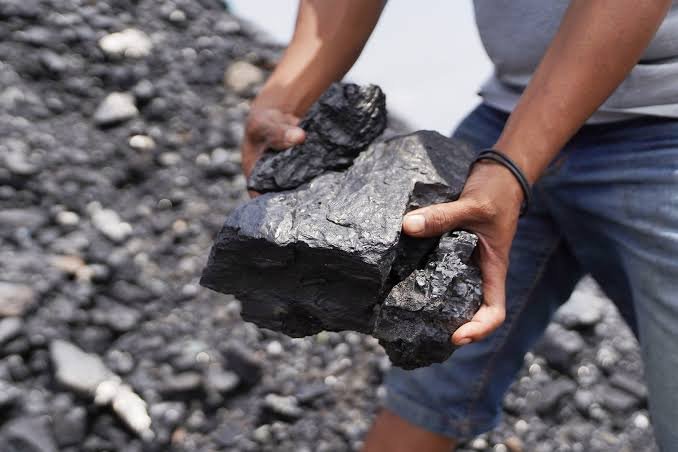
Ready
Tanzania's National Development Corporation expects the final feasibility study for the long-delayed Mchuchuma-Liganga project to be completed on 15 September 2026, clearing the way for implementation agreements and a construction start before the end of the year. The $3 billion integrated project would combine coal mining, a 600-megawatt power station, iron ore mining and steel production in Njombe Region, a development Tanzania's government projects could save $1.22 billion annually in foreign exchange currently spent importing steel, the country's second-largest foreign exchange outlay after petroleum. The project has moved between agreements, negotiations and stalled feasibility work for more than a decade. What's different this time is that compensation has been paid, the land is fully under state control, and a new Chinese state-owned investor has replaced the company that let the project languish for years.
DAR ES SALAAM — Tanzania's National Development Corporation says the Mchuchuma-Liganga project has entered its most consequential phase in over a decade, with a final feasibility assessment due 15 September 2026 that could clear the way for construction to begin before the year ends.
"We expect to sign the contracts within this year, and this will be a major part of implementing Vision 2050, as the Liganga and Mchuchuma project is one of the strategic programmes," NDC Director General Dr Nicolaus Shombe told The Citizen.
What Is Actually Being Built
Mchuchuma and Liganga were never designed as separate mining ventures. They form a single integrated industrial chain, coal and iron ore feeding directly into domestic power generation and steel production, rather than raw minerals simply being extracted and exported.
| Component | Specification |
| Liganga iron ore reserves (explored area) | ~126 million tonnes |
| Initial steel production capacity | ~1 million tonnes/year (potential to reach 2 million tonnes/year) |
| Mchuchuma coal mine capacity | 3 million tonnes/year |
| Mchuchuma power station capacity | 600 MW |
| — Allocated to Liganga steel complex | 250 MW |
| — Connected to national grid | 350 MW |
| Total project value | ~$3 billion |
| Projected annual foreign exchange savings | $1.22 billion (~TZS 3.2 trillion) |
| Projected government revenue (25 years) | ~$1.99 trillion (tax and royalties, per joint government-investor model) |
| Direct jobs projected | 6,500 |
| Construction timeline (post-signing) | ~3 years |
Sources: National Development Corporation; The Citizen; TanzaniaInvest; Daily News.
The iron ore component also includes vanadium and titanium deposits alongside the primary iron ore, minerals the government has said it wants processed locally as well, extending the project's value-addition ambitions beyond steel alone.
A Project That's Waited Since 1996
Understanding why this month's deadline matters requires understanding how long Tanzania has been trying to build this. A 1996 cabinet directive first instructed that the Mchuchuma and Liganga deposits be developed, followed by a 2007 cabinet paper directing that investors be sought. That process took four more years, culminating in a joint venture agreement signed in 2011 with Sichuan Hongda Group.
The project then stalled for over a decade under Sichuan Hongda's ownership, hindered by unresolved investment incentive and contractual disputes. Tanzania paid Sh15.4 billion in compensation to affected residents in June 2023, removing a major land-access obstacle and bringing the project area fully under state ownership. Sichuan Hongda began selling its shares to China-based Shudao Investment Group Company Limited (SDIG) in 2024, prompting Tanzania's government to restart negotiations from a stronger position.
That restart moved through several distinct stages across 2025 and 2026: a Government Negotiation Team held four negotiation meetings with SDIG between January and August 2025; a high-level Tanzanian delegation visited China in June 2025 specifically to resolve shareholding structure questions and secure assurances about SDIG's commitment to implementing the project in the national interest; and a fresh feasibility study, examining project viability, technology, infrastructure and market conditions against current realities, launched in July 2025. By February 2026, negotiations were described as roughly 95% complete. By May 2026, Minister for Industry and Trade Judith Kapinga told Parliament that the government and SDIG had concluded negotiations, with draft Joint Venture and Shareholders Agreements already completed and formal signing expected in the first half of the 2026/27 fiscal year.
What remains outstanding, and what the 15 September deadline specifically addresses, is narrower than the broader commercial negotiation: the technology required to process coking coal for steel production, one piece of feasibility work that NDC says several other completed studies are now waiting on before implementation agreements can be finalised and signed.
Why the Foreign Exchange Numbers Matter More Than the Groundbreaking
The most economically significant figure attached to this project isn't its $3 billion price tag, it's what Tanzania currently spends importing the product this project is designed to replace. Steel and metal products rank as Tanzania's second-largest foreign exchange expenditure after petroleum, and the government projects that domestic steel production from Liganga could save approximately $1.22 billion annually in foreign exchange, equivalent to roughly TZS 3.2 trillion, by substituting imported steel with locally produced output.
That reframes the project's real economic purpose. Extracting iron ore and coal is not, on its own, particularly transformative for Tanzania's economy; the country already exports various minerals in raw or lightly processed form. What makes Mchuchuma-Liganga potentially significant is the attempt to capture the far larger economic value sitting further up the chain, converting raw materials into finished steel domestically rather than importing that steel from elsewhere, a distinction this publication has highlighted as central to industrial policy debates across East Africa more broadly, from Ethiopia's manufacturing strategy to South Africa's steel sector.
The government and SDIG have also produced a joint financial model projecting $1.99 trillion in cumulative government tax and royalty revenue over 25 years. That figure, produced jointly by the government and its own investment partner rather than an independent analysis, should be read as a planning projection rather than a guaranteed outcome, but even a fraction of that figure materialising would represent a substantial, multi-decade revenue stream for a government pursuing an ambitious industrialisation agenda under its Vision 2050 framework.
The Coal Problem Underneath the Steel Ambition
The Mchuchuma power component adds a second dimension to the project beyond steel production. A 350 MW share of the planned 600 MW capacity would connect to Tanzania's national grid, meaning the project would function simultaneously as a major industrial power consumer and a net contributor of additional electricity to the national system, at a moment when Tanzania has been investing heavily in expanding overall generation capacity, from the Julius Nyerere Hydropower Project to gas-fired plants.
That power, however, comes from coal, at a time when global capital markets have grown increasingly restrictive toward financing coal-based infrastructure. That reality is precisely why NDC's current feasibility work is examining technology options and broader economic and financing conditions rather than simply confirming a design that was conceived years ago under different market and environmental-finance assumptions. A coal project that can't secure competitive financing, regardless of its domestic economic logic, faces a materially harder path to construction than one that can, and the outcome of that specific assessment will likely shape the final financing structure more than any other single variable in the project.
Beyond Steel: A Wider Industrial Ecosystem
The project's ambitions extend past its own site boundaries. Government officials have previously linked Liganga's iron ore output to supplying raw materials for the Saturn Corporation Limited vehicle assembly plant in Kigamboni, Dar es Salaam, an example of how a successful Mchuchuma-Liganga complex could feed downstream manufacturing elsewhere in Tanzania rather than functioning as an isolated industrial site. The government's own framing has consistently placed the project inside Tanzania's broader industrialisation strategy: NDC's mandate centres on developing strategic industries based on domestic natural resources, and Mchuchuma-Liganga is the clearest test case of whether that mandate can move from mineral extraction to a genuine, multi-stage industrial value chain.
What Actually Happens Next
The sequence from here is specific and checkable. NDC expects the coking coal technology assessment to conclude on 15 September 2026. That would clear the way for implementation agreements, building on the Joint Venture and Shareholders Agreements the government says were already substantially completed by May 2026, to be formally signed. A groundbreaking ceremony could follow before the end of 2026, and construction, once underway, is projected to take approximately three years to complete.
None of those steps should be mistaken for the project's actual success, and the piece's own framing captures that distinction well: breaking ground is a milestone, not an outcome. For a project that has moved between cabinet directives, joint venture agreements, investor changes and stalled feasibility work since 1996, a construction start in 2026 would represent genuine, measurable progress. But the real test, whether Tanzania can convert its Njombe iron ore and coal deposits into a functioning domestic steel industry that actually displaces $1.22 billion in annual imports, will not be visible at any groundbreaking ceremony. It will be visible only once the plant is producing steel, years after construction begins, and only then will Tanzania know whether three decades of intermittent effort on this project finally paid off.
FAQ
When is Tanzania expected to break ground on Mchuchuma-Liganga? Before the end of 2026, contingent on a final feasibility study on coking coal processing technology being completed on 15 September 2026, and implementation agreements being signed shortly afterward.
How big is this project? Approximately $3 billion, combining a coal mine and 600 MW power station at Mchuchuma with an iron ore mine, beneficiation facility and steel plant at Liganga, targeting initial steel production of about one million tonnes annually.
Why has this project taken so long? It traces back to a 1996 cabinet directive and a 2011 joint venture agreement with Sichuan Hongda Group that stalled for over a decade over unresolved investment incentives and contractual disputes, before Chinese state-owned Shudao Investment Group Company Limited acquired Sichuan Hongda's interests in 2024 and restarted negotiations.
What economic benefit does Tanzania expect from this project? The government projects it could save approximately $1.22 billion annually in foreign exchange by substituting imported steel, currently Tanzania's second-largest foreign exchange expenditure after petroleum, alongside an estimated $1.99 trillion in government tax and royalty revenue over 25 years and 6,500 direct jobs.
Is the coal component a financing risk? Yes, potentially. Global capital markets have grown increasingly restrictive toward coal-based projects, which is part of why Tanzania's current feasibility review is specifically examining technology options and financing conditions rather than simply proceeding with the project's original design.
What would actually prove this project succeeded? Not the groundbreaking ceremony, but whether Tanzania's Mchuchuma and Liganga deposits are eventually converted into a functioning domestic steel industry that measurably reduces the country's steel import bill, an outcome that would only be visible years after construction begins.
 Uchumi360
Business Intelligence
Uchumi360
Business Intelligence
Uchumi360 covers business, investment, and economic policy across East, Central, and Southern Africa.
For the serious reader
You read to the end. That places you in a small group.
Uchumi360 is built for readers who demand precision over speed, structure over sentiment, and analysis that holds uncomfortable conclusions rather than softening them. If this work sharpens how you think about Africa's economy, help us keep building the infrastructure behind it.
Institutional Partners
Commission intelligence. Shape the conversation.
Uchumi360 works with development finance institutions, investment firms, sovereign bodies, and strategic organisations across the coverage region. Institutional partnership unlocks:
- Commissioned sector and country intelligence reports
- Branded research series under your institution's authority
- Exclusive data briefings for internal strategy teams
- Speaking and editorial presence at Uchumi360 events
- Co-published investment outlooks for your markets
Support Our Work
Independent analysis has a cost. Help us bear it.
Uchumi360 does not carry advertising. It does not take editorial direction from sponsors. Every article is produced without commercial compromise. Your contribution funds the reporting, research, and editorial infrastructure that keeps this analysis free from influence.
Secure checkout: One-time and monthly support are processed securely. Add payment credentials to enable checkout here.
Stay Connected
Keep up with every new insight.
Follow our latest analysis, policy coverage, and market intelligence as soon as it is published. If you need something specific, reach out directly and we will point you to the right research.
