
Tanzania's 3.8 Million Housing Deficit Is Costing the Economy More Than Homes
Ready
Tanzania faces an estimated housing deficit of 3.8 million units and annual demand of approximately 200,000 homes, yet its formal mortgage market held only TZS 752 billion in outstanding residential loans at the end of 2025. Rapid urban growth and unplanned residential expansion are increasing transport costs, consuming land that could support agriculture and industry, and making roads, water networks, electricity and drainage more expensive to provide. As the country pursues a $1 trillion economy by 2050, the economic case for affordable housing extends beyond shelter to industrial production, municipal financing, labour productivity and the management of urban and rural land.
With a housing shortage estimated at 3.8 million units, annual demand of approximately 200,000 homes and a mortgage market worth just TZS 752 billion, Tanzania faces a housing challenge that extends far beyond shelter. Unplanned residential expansion is increasing transport costs, consuming agricultural land, complicating infrastructure delivery and limiting the productivity of its cities. As the country pursues a $1 trillion economy by 2050, planned and affordable urban and rural housing could become an instrument for industrial development, land management and more efficient public spending.
Tanzania's housing deficit has reached an estimated 3.8 million units, reflecting decades of population growth, insufficient formal housing construction and urban expansion that has frequently occurred faster than public infrastructure can be provided. While the shortage is ordinarily discussed in terms of the number of families without adequate accommodation, its economic consequences are considerably wider. The way Tanzania organises residential development determines how much land remains available for agriculture and industry, how far workers must travel to employment centres, how much governments spend extending roads and utilities, and whether growing cities can support the productivity gains needed to sustain national economic development.
The country's Long Term Perspective Plan for 2026/27 to 2050/51, published by the National Planning Commission in January 2026, identifies a housing deficit of 3.8 million units and acknowledges that excessive regulation, informal property transactions and weaknesses in land administration continue constraining the real estate sector. The government estimates that urbanisation will reach approximately half the population by 2050, placing additional pressure on housing supply, infrastructure and municipal finances. Under its long term development framework, Tanzania intends to expand affordable housing, strengthen land governance, introduce additional financing instruments and attract investment into residential development.
The challenge becomes clearer when measured against current housing demand and construction arrangements. Government assessments have estimated that Tanzania requires approximately 200,000 additional housing units annually, while individual homebuilders account for more than 70% of the existing housing supply. The remainder is provided through a combination of public institutions, private developers and other formal housing initiatives, including the National Housing Corporation (NHC), Watumishi Housing Investments and the Tanzania Building Agency. These arrangements have enabled households to gradually construct their own properties, but have also encouraged a pattern of residential expansion in which homes are built before roads, drainage, sewerage and other essential infrastructure have been adequately planned.
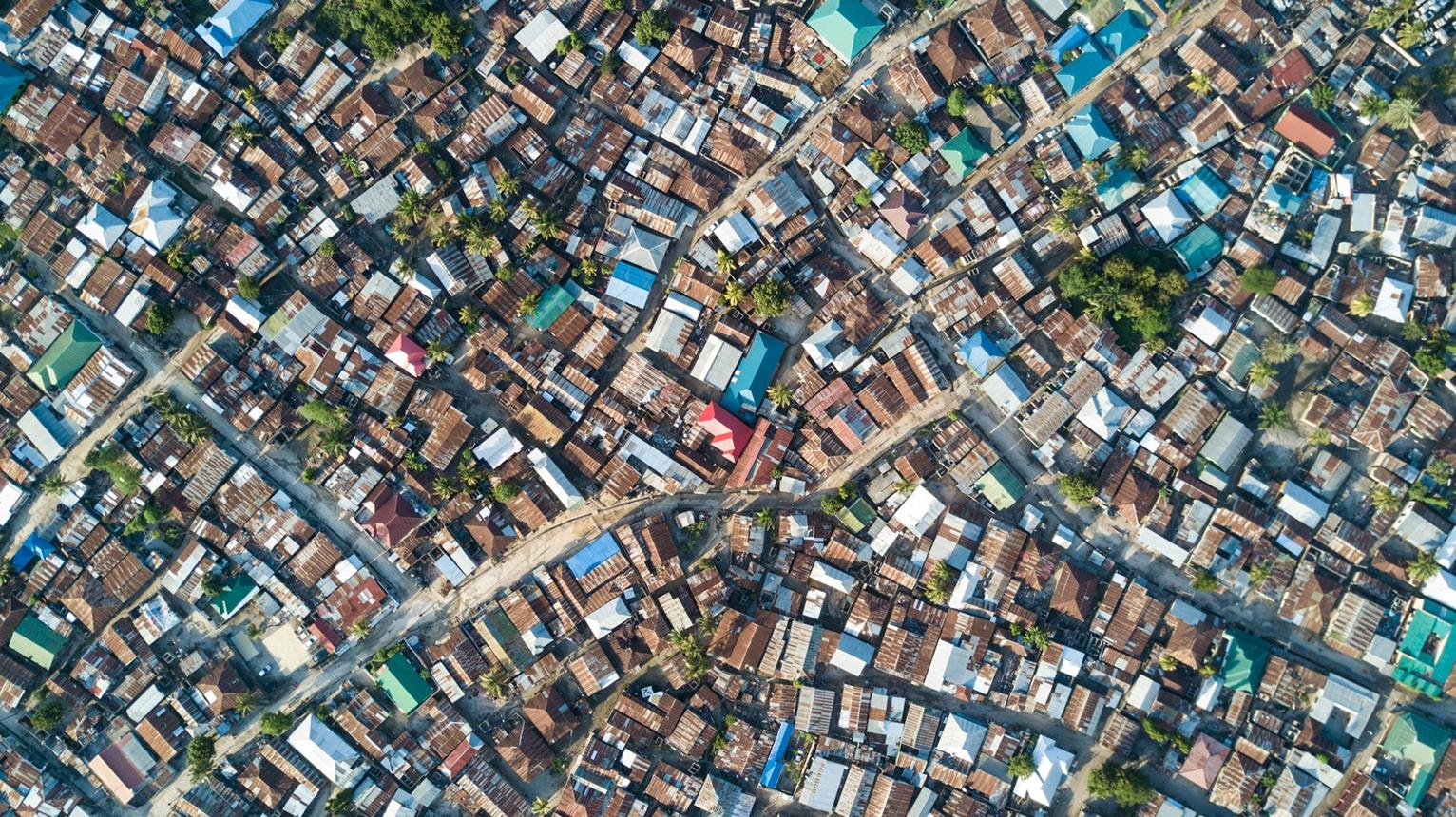
In Dar es Salaam, the consequences are visible across residential districts extending towards Mbezi, Goba, Bunju, Chanika, Pugu, Kigamboni and the adjoining areas of Pwani Region. Housing frequently develops through the subdivision of agricultural or undeveloped land into individual plots, followed by incremental construction financed from household savings and personal loans. This approach allows families to acquire property without depending on an extensive mortgage market, but it can leave local governments attempting to install roads, drainage and utility networks after buildings have already occupied much of the available land.
The World Bank has repeatedly identified this pattern as a constraint on Tanzania's urban productivity. Its 2021 study, Transforming Tanzania's Cities: Harnessing Urbanization for Competitiveness, Resilience, and Livability, found that rapid urban growth had not produced the full economic benefits normally associated with population and business concentration. Instead, dispersed residential development, inadequate transport connections and insufficient infrastructure increased the cost of moving people and goods while limiting access to employment. The bank argued that Tanzania needed stronger urban planning, more efficient land administration and greater residential density in existing developed areas to reduce the cost of future expansion.
These findings have direct implications for the government's ambition to build a $1 trillion economy by 2050. Tanzania is seeking higher productivity, increased manufacturing investment, greater agricultural output and expanded domestic consumption, yet the location and form of residential development influence the efficiency of each of these activities. Businesses incur additional transport and distribution costs when workers and suppliers are separated by lengthy journeys. Agricultural land becomes more difficult to develop commercially when urban expansion proceeds without clear spatial boundaries. Public authorities face higher costs when infrastructure must be installed around existing buildings rather than incorporated into planned residential layouts.
Housing policy therefore has an economic significance that extends beyond the immediate welfare of homeowners and tenants. Its effectiveness should also be assessed through the amount of infrastructure required per household, the accessibility of employment, the protection of productive land and the capacity of residential development to support domestic industries.
Tanzania's Cities Are Expanding Faster Than Their Infrastructure
Tanzania's urban population has grown substantially over successive census periods, increasing from approximately 18.8% of the national population in 1988 to 34.9% in 2022. According to the National Bureau of Statistics, the country had approximately 21.54 million urban residents at the time of the 2022 Population and Housing Census, compared with a total population of 61.74 million. The figures demonstrate the scale at which urban infrastructure must expand, particularly as the population continues growing and additional households relocate to towns and cities.
Tanzania's Housing and Urban Developmet Challenge
3.8M
Estimated national housing deficit
200,000
Estimated annual housing demand
34.9%
Population classified as urban in 2022
TZS 752B
Outstanding residential mortgage debt, December 2025
Sources: National Planning Commission, NBS, Bank of Tanzania and Tanzania's housing sector assessments. The housing deficit is an estimate, not a count of homeless households.
The challenges are particularly pronounced in Dar es Salaam, where decades of population growth have produced an extensive urban area covering formally planned neighbourhoods, informal settlements and residential districts that were previously agricultural or rural land. The World Bank estimated in October 2022 that approximately 70% of development in the city was informal and had occurred without corresponding extensions of infrastructure and services. This figure concerns Dar es Salaam and should not be presented as the proportion of all Tanzanian urban residents living in informal settlements.
In October 2026, The Guardian reported research indicating that informal settlement coverage in Dar es Salaam had expanded from approximately 52 square kilometres in 1982 to 379 square kilometres in 2022, an increase of around 630%. The report associated this expansion with growing costs of infrastructure installation, inadequate drainage and the difficulties authorities face when attempting to formalise neighbourhoods that have already been extensively occupied. Although the precise financial estimates cited in the reporting require scrutiny of the underlying methodology, the pattern of physical expansion is consistent with the longer-term problem identified by the World Bank.
The economic cost of this spatial development can be substantial. When a household builds on an isolated plot several kilometres beyond an existing residential area, the immediate construction cost may be relatively affordable because land prices are lower. However, providing paved road access, electricity distribution, water connections, drainage, waste collection and other services can require a disproportionately large investment relative to the number of households initially served. As additional residents arrive, public institutions must gradually extend infrastructure into areas where property boundaries, road reserves and existing buildings may prevent efficient construction.
The costs also fall on residents and businesses. Workers who live far from employment centres may spend several hours commuting, while employers face the consequences of late arrivals, fatigue and limited access to labour. The World Bank reported in December 2023 that public transport commuting in Dar es Salaam could average approximately two hours in each direction for affected commuters, illustrating the productivity consequences of inadequate connections between residential areas and major economic centres.
Tanzania has invested substantially in urban roads and Bus Rapid Transit infrastructure to address these problems, particularly in Dar es Salaam. However, transport investment cannot entirely compensate for residential development that continually extends further away from employment centres. A more efficient long-term approach would coordinate public transport corridors with planned housing, commercial activity, schools and public facilities, allowing households to live closer to services and reducing the need for lengthy journeys.
The World Bank's research on Tanzania's secondary cities provides an indication of the potential gains from improved development patterns. Its study of urban planning found that many neighbourhoods in the cities examined had very low residential and building densities, with a median gross population density of approximately 21 people per hectare. The study argued that such low densities increased the cost of infrastructure provision and that cities could accommodate additional residents more efficiently by encouraging suitable development within already urbanised areas.
The implication is not that every Tanzanian household should live in a high rise apartment. Residential density can be increased through a range of building forms, including terraced houses, apartments of several storeys and the redevelopment of underused urban plots. The appropriate form depends on land prices, infrastructure capacity, household incomes and local building conditions. The economic objective is to make more efficient use of serviced land while preserving liveable neighbourhoods.
Housing Development Could Protect Agricultural Land, but Rural Settlement Planning Requires a Different Model
The relationship between housing and agricultural productivity deserves greater attention in Tanzania's economic planning because the country is attempting to increase commercial agricultural output while residential development continues spreading into formerly productive land. Around Dar es Salaam and its adjoining districts, the expansion of residential areas has progressively changed the use of land that previously supported farming, horticulture and other rural activities. Similar pressures are emerging around Morogoro, Arusha, Dodoma, Mwanza and other rapidly growing towns, where agricultural plots located near roads and urban centres can become more valuable for residential subdivision than for continued farming.
This creates a conflict between immediate landowner incentives and longer term economic planning. A farmer may receive more money by selling land for residential plots than by maintaining agricultural production, particularly when farming incomes are uncertain and urban land prices are increasing. Once that land is subdivided, roads are established and permanent buildings are constructed, restoring it to commercial agriculture becomes difficult and expensive. The result can be the gradual disappearance of productive agricultural areas near cities, even while government policy seeks to expand irrigated farming, mechanisation, agroprocessing and domestic food production.
Planned housing could help manage this transition by directing residential expansion towards designated areas and preserving land suitable for agriculture, industry, water infrastructure and environmental protection. Such planning would require more than drawing zoning boundaries. Local authorities would need reliable land information, clear development rules, realistic infrastructure investment programmes and mechanisms for implementing plans before informal subdivisions become established.
The economic case is particularly relevant where agricultural land is close to existing markets and transport corridors. Farmland on the outskirts of a large city can be commercially valuable because producers have access to consumers, wholesalers and food processing businesses. Losing such land may increase the distance that food must travel to reach urban markets, although the actual effect depends on the productivity of the land being converted and the availability of alternative production areas. Housing policy should therefore be coordinated with agricultural land suitability assessments rather than assuming that every undeveloped plot around a city is equally appropriate for residential construction.
Rural housing requires a more differentiated approach. Much of Tanzania's rural population lives in dispersed settlements where homes are located close to family farms, livestock, water sources and established communities. The geographic distribution of these households can increase the cost of extending electricity, water networks, healthcare and other services, particularly where population density is low. Planned rural service centres, improved village layouts and affordable housing near agricultural processing facilities could reduce some of these costs while supporting local commerce.
However, consolidating rural settlements would not automatically release land for large scale commercial agriculture. Agricultural land fragmentation results from multiple factors, including inheritance, tenure arrangements, population growth and household production strategies. Relocating homes does not necessarily consolidate ownership or create agricultural holdings suitable for mechanisation, while moving farmers away from their fields can increase travel time and weaken livelihoods. Tanzania's own history of villagisation also demonstrates the social and economic risks of reorganising settlements without sufficient attention to agricultural production, local preferences and the costs of relocation.
A more effective approach would be voluntary, based on secure land rights and designed around existing livelihoods. Rural housing clusters could be developed where households seek improved access to schools, healthcare, water and other facilities, while agricultural policies separately address land consolidation, cooperative production, irrigation and farm mechanisation. Communities would retain the ability to manage productive land without requiring the assumption that modern housing must involve compulsory movement into centrally located settlements.
In areas experiencing new industrial investment, mining development or agricultural processing, planned worker housing could also support more efficient development. Residential facilities located near factories or agroprocessing centres can reduce transport costs, support local services and improve workforce availability. However, the investment case would depend on employment demand and the ability of businesses and households to sustain the cost of the housing provided.
Planned Housing Can Reduce the Cost of Roads, Water, Electricity and Public Services
One of the clearest economic arguments for planned residential development concerns the cost of providing public infrastructure. Roads, electricity distribution lines, water pipelines and drainage systems have substantial construction and maintenance costs, much of which is determined by the distance covered and the physical characteristics of the area served. When homes are concentrated within a well organised residential district, some infrastructure can serve more households over shorter distances. When settlements are dispersed across large areas, authorities may need to extend networks considerably further to reach the same number of people.
The cost difference can be illustrated through a simplified example. If a kilometre of local infrastructure serves 100 households in a dispersed residential area but could serve 400 households in a compact planned neighbourhood, the infrastructure length required per household would be approximately one quarter as great in the second arrangement, assuming comparable network configurations. This does not mean that the overall cost would necessarily fall by 75%, since larger populations may require higher capacity pipes, transformers, roads and drainage facilities. Nevertheless, the example demonstrates why density influences infrastructure expenditure and why governments must assess the number of households served relative to the capital required.
The World Bank has directly identified these inefficiencies in Tanzania. In its 2021 urbanisation review, the institution argued that low density development and urban fragmentation increased the cost of providing services and reduced the accessibility of employment and markets. It recommended stronger land use planning, improved tenure administration and the use of infrastructure investments to guide development towards suitable areas before unplanned settlement patterns became entrenched.
The consequences of inadequate planning are especially visible in flood prone areas. Residential development may take place on wetlands, riverbanks or low lying land where drainage is difficult or where settlements interrupt natural water flows. Once houses and commercial buildings have been established, flood mitigation can require expensive engineering works, land acquisition and the relocation or protection of existing properties.
In September 2021, World Bank urban specialists Eric Dickson and Leonardo Valente estimated that severe rainfall in Dar es Salaam during 2018 had caused approximately $100 million in household economic losses, equivalent to about 2% of the city's GDP at the time. The World Bank's assessment linked the costs to recurrent flooding, inadequate drainage and the concentration of residential and commercial activity in vulnerable areas.
Subsequent government and development partner investments have sought to improve drainage, roads and other facilities in established neighbourhoods. Between 2015 and 2023, the World Bank supported Dar es Salaam Metropolitan Development Project constructed or improved 207 kilometres of roads with associated facilities, including drainage, pedestrian infrastructure and street lighting, while upgrading community amenities across 14 lower income areas. According to the bank, more than four million residents benefited from the investment. The programme demonstrates that improving existing settlements is possible, but also illustrates the substantial resources needed to correct infrastructure deficiencies after residential areas have already developed.
Planned housing would not eliminate the need for upgrading existing communities. Tanzania has millions of residents whose homes and businesses are already established in informal or inadequately serviced neighbourhoods, and wholesale demolition or displacement would introduce enormous social and financial costs. A national housing strategy would therefore need to combine the development of new residential areas with incremental upgrading, secure tenure arrangements and infrastructure improvements in existing settlements.
Property taxation presents another financial opportunity associated with better land and housing administration. Formal layouts and reliable property identification can make it easier for local authorities to maintain registers, assess taxable buildings and administer legally established tax obligations. This could improve the predictability of local revenue, although better registration should not be equated with automatically increasing taxes on households with limited capacity to pay.
The Controller and Auditor General's review of local government finances for 2023/24 identified weaknesses in property tax collection, including the absence of a centralised taxpayer database, delays in remitting funds and incomplete integration between government systems. The audit found that the TAUSI property tax module had been implemented in only 47 local government authorities, while 137 continued relying on TANESCO related collection arrangements, leaving some properties without electricity connections outside the collection mechanism.
The findings demonstrate that property registration, digital systems and financial administration are important elements of municipal financing. However, a more reliable tax database would still need to be accompanied by clear revenue sharing arrangements and effective expenditure management if additional collections are to improve roads, waste management, drainage and other local services.
Tanzania's Mortgage Market Remains Too Small to Finance Mass Housing
The economic opportunity associated with housing is constrained by the country's relatively small formal mortgage market. According to the Bank of Tanzania's Financial Stability Report for December 2025, outstanding residential mortgage loans reached TZS 752 billion at the end of 2025, representing annual growth of 14.2%. The expansion indicates increasing demand for formal housing finance, but the value remains modest relative to the scale of the estimated national housing deficit and the volume of investment required to address it.
The Tanzania Mortgage Refinance Company's market update for September 2025 provides further evidence of the financing constraints. It reported outstanding mortgage loans of TZS 720.81 billion, equivalent to approximately 0.46% of GDP, with an average mortgage balance of TZS 124.17 million. Typical mortgage interest rates ranged between 15% and 19%, placing formal homeownership loans beyond the repayment capacity of many households.
At an illustrative annual interest rate of 16%, a TZS 100 million mortgage repaid over 20 years would require a monthly payment of approximately TZS 1.39 million, before insurance, transaction charges and other homeownership costs. Even a TZS 50 million mortgage under the same conditions would require monthly repayments of roughly TZS 696,000. These amounts demonstrate why mortgage finance is concentrated among households with comparatively stable and higher incomes, while many Tanzanians continue financing construction incrementally through savings, family contributions and short term credit.
The limitation is not confined to the cost of borrowing. Banks generally require evidence of reliable income, sufficient collateral and property documentation that meets lending standards. Many households earn income from informal businesses, agricultural activities or employment arrangements that may not provide the records required to qualify for conventional mortgages. Property transactions may also involve land with incomplete documentation, while the cost of surveying, obtaining titles and registering mortgages can create additional barriers.
Tanzania has already established institutions intended to address some of these problems. The Tanzania Mortgage Refinance Company, incorporated in 2010, provides longer term liquidity to banks and other mortgage lenders by refinancing eligible mortgage portfolios. Its shareholders include the government, commercial banks, development finance institutions and other investors. As of June 2026, TMRC reported 21 shareholders, with the government holding approximately 27.73%, alongside institutions such as CRDB, NMB, the International Finance Corporation and Shelter Afrique.
Mortgage refinancing can help banks manage the difference between relatively short term deposit funding and long term housing loans, potentially improving the availability of financing. However, refinancing alone cannot make houses affordable where construction prices substantially exceed household incomes. A wider financing strategy would need to address the price of serviced land, infrastructure costs, construction efficiency, credit eligibility and alternatives to conventional mortgage financed ownership.
Affordable rental housing deserves particular consideration because homeownership is not appropriate for every household. Young workers, students, newly formed families and people who move between cities for employment may prefer or require rental accommodation. A housing policy focused almost entirely on selling completed units could therefore fail to serve substantial segments of the population, particularly where households cannot afford a deposit or do not wish to assume long term debt.
The private sector has repeatedly identified these difficulties. In May 2024, The Citizen reported that developers cited difficulties obtaining affordable finance, uncertainty over the definition of affordable housing, land acquisition problems and policy constraints as barriers to expanding their participation. The article estimated that the principal public institutions involved in affordable housing collectively produced approximately 5,000 units annually, substantially below the country's estimated demand of 200,000 units. The figure describes the reported output of those institutions, not the total number of houses built by all Tanzanian households and developers.
A financially sustainable expansion would therefore require several models rather than dependence on a single national housing programme. Public institutions could provide serviced land and supporting infrastructure, private developers could construct housing at different price levels, financial institutions could expand qualifying mortgage products, and rental housing operators could serve households unable or unwilling to purchase homes immediately. Government support would need to be structured to ensure that subsidies reach intended beneficiaries without creating financial obligations that cannot be sustained through future budgets.
Affordable Housing Could Support Domestic Manufacturing, Construction Employment and Regional Development
The contribution of housing construction to the economy extends through the industries that supply building materials, equipment and professional services. Residential projects require cement, aggregates, steel, roofing materials, timber, glass, electrical equipment, plumbing products, doors, windows and furnishings. Their construction also creates demand for engineers, architects, surveyors, electricians, plumbers, transport operators, equipment technicians and other skilled and semiskilled workers. A housing programme undertaken at substantial scale can therefore generate economic activity beyond the value of completed buildings, particularly where domestic firms supply a large proportion of the required materials and services.
The potential scale becomes apparent when Tanzania's estimated annual housing demand is translated into construction expenditure. If 200,000 homes were constructed annually at an illustrative average building cost of TZS 50 million per unit, annual residential construction expenditure would amount to TZS 10 trillion. At an average cost of TZS 75 million, the expenditure would reach TZS 15 trillion. These figures are scenarios rather than estimates of the actual cost of closing Tanzania's housing deficit, and they exclude variations in land values, infrastructure, building sizes and regional construction conditions. They nevertheless demonstrate why housing development could support a large market for domestic manufacturers and construction businesses if effective demand and financing were available.
Illustrative Annual Housing Construction Market
Construction Expenditure at 200,000 Homes Annually
Illustrative annual expenditure in TZS trillions, assuming different average construction costs per dwelling. These are scenarios, not official forecasts. The domestic economic benefit would depend on the proportion of expenditure retained within Tanzania. Locally manufactured cement, aggregates, roofing materials and other building products can support domestic industrial activity, while imported steel products, machinery, fittings and finishing materials create additional demand for foreign exchange. A larger and more predictable housing market could encourage manufacturers to expand capacity, provided they can operate competitively and secure sufficient demand.
There is also a difference between the gross value of construction contracts and the additional contribution to GDP. Expenditure on imported materials does not constitute domestic production, while land transactions and transfers of existing properties must be accounted for differently from new construction. Employment and production gains would depend on the domestic value added generated throughout the construction supply chain. Consequently, a government housing programme should measure its impact through completed units, domestic procurement, wages, industrial output and infrastructure costs rather than counting the face value of construction contracts as an equivalent increase in national income.
Tanzania already has institutions capable of supporting a more extensive programme. The National Housing Corporation has undertaken residential and commercial development projects across the country, while Watumishi Housing Investments has developed housing intended partly for public employees and other eligible purchasers. These institutions provide experience in property development and project financing, although their combined production remains small compared with national housing demand.
In a 2026/27 programme update, NHC reported continued preparation for the Samia Housing Scheme, which targets 5,000 homes across locations including Mtoni Kijichi and Kawe in Dar es Salaam, together with Medeli and Iyumbu in Dodoma. The corporation also announced preparations for an initial 800 affordable homes in Kigamboni, Morogoro, Dodoma and Mwanza, with implementation expected to commence during the 2026/27 financial year. These figures represent programme targets and planned developments rather than confirmation that all the announced units have been completed.
The geographical distribution of these investments creates an opportunity to connect housing development with regional economic planning. Dodoma's expanding administrative and commercial role is increasing demand for accommodation, transport and supporting services, while Mwanza, Arusha, Morogoro and other urban centres require housing for workers employed in trade, manufacturing, education, tourism and other sectors. Planned residential development could help these cities manage future growth before the cost of retrofitting infrastructure becomes comparable to the problems already experienced in Dar es Salaam.
Housing investments also need to be coordinated with commercial and industrial development. Building large residential estates far from employment may create demand for additional transport infrastructure and increase household commuting expenses. Conversely, placing suitable housing near industrial zones, universities, hospitals and major transport corridors can improve access to employment and support businesses whose operations depend on nearby workers and consumers.
For cities such as Dar es Salaam, this could involve residential development around major BRT corridors and other established transport routes, while preserving space for public facilities and commercial activity. In smaller towns, planned housing could be integrated with new industrial parks, agricultural processing centres and educational institutions. The objective would be to ensure that new accommodation contributes to the economic functioning of its surrounding area rather than becoming an isolated residential project.
Tanzania Needs a Housing Policy That Coordinates Land, Finance and Infrastructure
The country's housing deficit cannot realistically be resolved by the National Housing Corporation or any other single institution constructing millions of apartments directly. The financing requirements would be substantial, and public authorities already face competing obligations involving transport, healthcare, education, energy and water infrastructure. A more effective national strategy would establish the conditions for a much larger range of households, private developers, financial institutions and local authorities to participate in planned housing supply, while directing public resources towards areas where markets alone are unlikely to provide affordable homes and essential services.
Land preparation is central to this approach. Local governments could identify suitable development areas, prepare detailed layouts, reserve space for roads and public facilities, and establish arrangements for electricity, water and drainage before properties are subdivided and constructed. Where publicly owned land is made available, the terms should be transparent and linked to measurable development obligations, including construction deadlines, affordability requirements where subsidies are provided, and protection against speculative holding of land without investment.
The financing framework would also need to extend beyond conventional mortgages. Long term mortgage refinancing, incremental construction loans, affordable rental finance, cooperative housing arrangements and carefully designed housing savings products could serve different income groups. Public subsidies may be necessary for the lowest income households, but they should be explicit, financially sustainable and connected to clear eligibility criteria. Incentives granted to developers should also be linked to measurable outcomes rather than merely the designation of a project as affordable.
The government has already begun examining reforms to the real estate sector. In February 2025, Ministry of Lands Director of Real Estate Upendo Matotola told The Citizen that a proposed legal review was intended to improve coordination, regulation and investor confidence while protecting participants in property transactions. The reform process reflects recognition that housing market development requires clearer institutional rules alongside investment in construction.
Implementation would also require a more reliable national housing information system. Tanzania's reported deficit of 3.8 million units should be accompanied by data distinguishing households without adequate accommodation from those requiring additional rooms, improved infrastructure, replacement of unsafe structures or access to affordable rental housing. Different forms of housing need require different policy responses, and constructing a new dwelling is not necessarily the most efficient solution where existing accommodation could be upgraded or extended.
A reliable housing database would also allow government to measure the performance of investment programmes more accurately. The number of homes announced, under construction, completed, sold, rented and occupied should be reported separately, alongside the cost of supporting infrastructure and the income groups served. This would help policymakers distinguish projects that generate substantial construction activity from those that successfully deliver affordable and functioning accommodation.
Tanzania's National Development Vision 2050 identifies improved urbanisation, stronger land administration and investment in real estate as components of the country's longer term economic programme. The connection between housing and national development is therefore recognised within government planning, but the scale of implementation remains considerably smaller than the need identified by official assessments.
The World Bank's urban development research suggests that improving housing outcomes will require broader changes in how cities grow. Better land administration, efficient residential density, stronger public transport connections and early provision of infrastructure can reduce the economic costs associated with fragmented settlements. These measures should be combined with upgrading existing neighbourhoods and protecting the tenure and livelihoods of households already residing in areas that lack formal planning.
Tanzania has an opportunity to apply these lessons while substantial parts of its future urban environment are still being developed. Decisions about where new homes are located, how land is subdivided and which infrastructure is installed before construction will influence the cost and productivity of cities for decades. Similar decisions in rural areas will shape access to services, agricultural land management and the development of smaller commercial centres.
The country's housing deficit is therefore connected to several of the economic priorities identified under Vision 2050. Planned residential development can reduce infrastructure expenditure per household, improve access to employment, protect productive land and generate demand for domestic manufacturing. Achieving these benefits will require housing finance, land management, urban planning and industrial policy to operate within a coordinated investment framework, with sufficient attention to affordability and the interests of existing communities.
Tanzania's estimated shortage of 3.8 million homes represents a major development challenge, but addressing it through well planned construction and settlement upgrading could also support substantial economic activity. The long term return will depend on the quality, affordability and location of the housing delivered, together with the public services and productive opportunities available to the people who occupy it.
 Uchumi360
Business Intelligence
Uchumi360 covers business, investment, and economic policy across East, Central, and Southern Africa.
For the serious reader
You read to the end. That places you in a small group.
Uchumi360 is built for readers who demand precision over speed, structure over sentiment, and analysis that holds uncomfortable conclusions rather than softening them. If this work sharpens how you think about Africa's economy, help us keep building the infrastructure behind it.
Institutional Partners
Commission intelligence. Shape the conversation.
Uchumi360 works with development finance institutions, investment firms, sovereign bodies, and strategic organisations across the coverage region. Institutional partnership unlocks:
- Commissioned sector and country intelligence reports
- Branded research series under your institution's authority
- Exclusive data briefings for internal strategy teams
- Speaking and editorial presence at Uchumi360 events
- Co-published investment outlooks for your markets
Support Our Work
Independent analysis has a cost. Help us bear it.
Uchumi360 does not carry advertising. It does not take editorial direction from sponsors. Every article is produced without commercial compromise. Your contribution funds the reporting, research, and editorial infrastructure that keeps this analysis free from influence.
Secure checkout: One-time and monthly support are processed securely. Add payment credentials to enable checkout here.
Stay Connected
Keep up with every new insight.
Follow our latest analysis, policy coverage, and market intelligence as soon as it is published. If you need something specific, reach out directly and we will point you to the right research.
