
Dar es Salaam Is Building East Africa’s Most Extensive BRT Network While Nairobi and Kampala Struggle to Catch Up
Ready
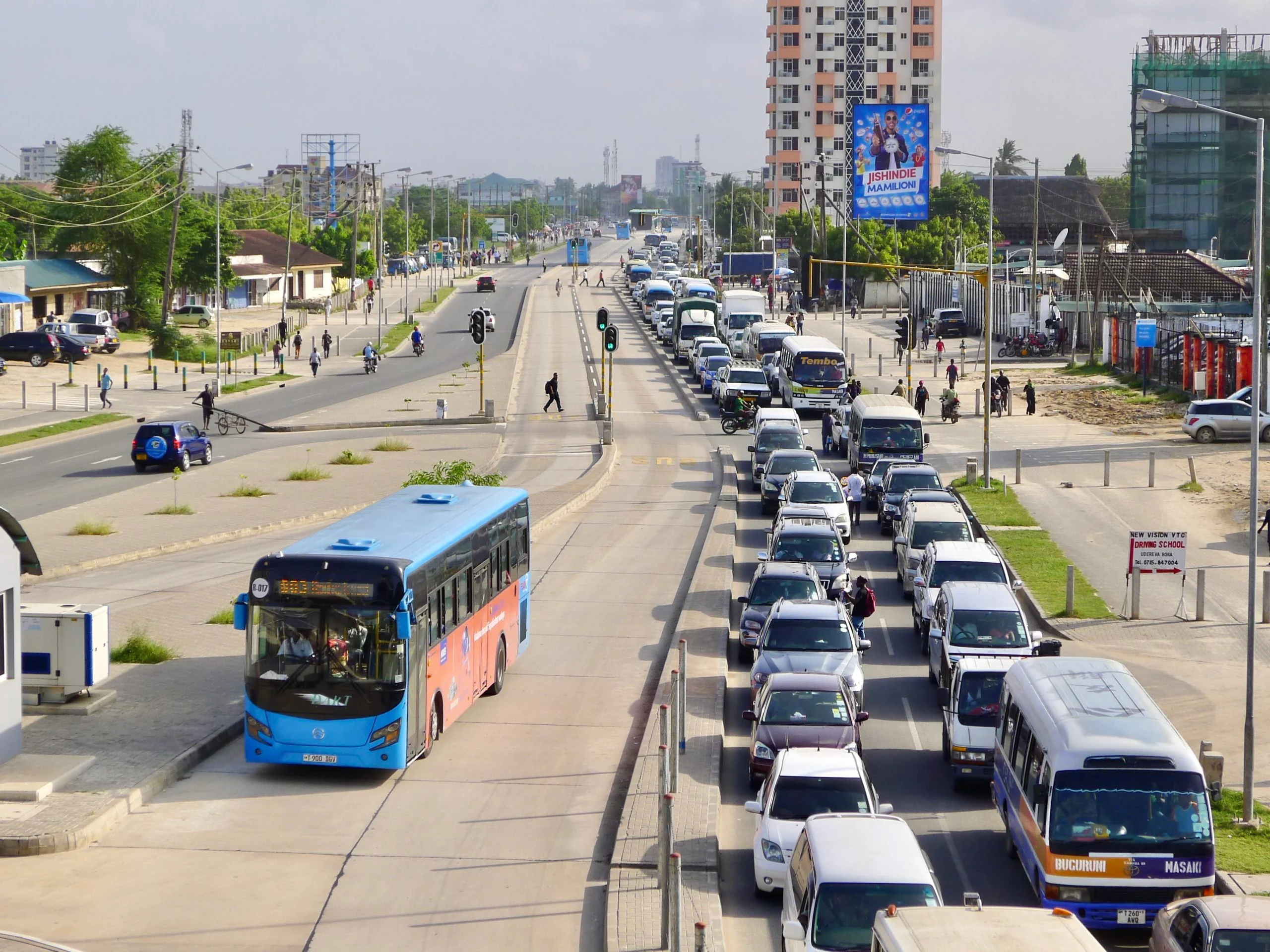
Dar es Salaam is expanding East Africa's pioneering Bus Rapid Transit system, with two BRT phases operating, a third beginning passenger trials on November 9, 2026, a fourth under construction and two additional phases planned. The original six phase programme is intended to create an approximately 140 kilometre network connecting residential districts with the city's commercial, industrial and administrative centres. Supported by investment from Tanzania and international development institutions, the system has already reduced travel times on major corridors and is extending services towards Mbagala and Gongo la Mboto. However, bus shortages, long passenger queues, delayed construction and unresolved compensation obligations of TZS 96.57 billion for Phase V demonstrate that delivering a comprehensive urban transport network will require improvements in operations and project management alongside infrastructure expansion.
Dar es Salaam is extending one of East Africa's most established dedicated bus transit systems, with two BRT phases operating, a third entering passenger trials, a fourth under construction and two further phases planned. The expansion is changing how Tanzania's commercial capital connects residential districts with employment, markets and industrial areas, although bus shortages, construction delays and land compensation disputes remain obstacles to delivering the full economic benefits.
Dar es Salaam is moving towards a citywide Bus Rapid Transit network that could substantially expand the reach of organised public transport across Tanzania's largest commercial centre, following the introduction of passenger trials on its third BRT corridor on November 9, 2026. The development extends a transport system that began operating in 2016 and has since expanded from Morogoro Road to Kilwa Road, with additional corridors being constructed along Nyerere Road and the northern routes connecting central Dar es Salaam with Mwenge and Tegeta. Although only the first two phases are fully operational, the scale of investment already made and the advanced preparation of further corridors place Dar es Salaam among the most extensively developed BRT cities in East Africa.
The latest milestone involves the third phase connecting central Dar es Salaam with Gongo la Mboto through Nyerere Road, a major route serving densely populated neighbourhoods, industrial and commercial areas, and communities around Julius Nyerere International Airport. Passenger trials began on November 9 under operator Mofat, with buses travelling between Gongo la Mboto and destinations including Kariakoo, Mnazi Mmoja and Kivukoni. According to The Citizen's November 10 reporting, DART Chief Executive Said Tunda explained that the exercise would assess operational readiness and identify infrastructure defects before the formal launch. The Guardian reported on November 11 that passengers had begun using the service, although ticketing arrangements, station facilities and other preparations remained incomplete.
The distinction between passenger trials and fully operational services is important because Dar es Salaam's BRT expansion has progressed at different speeds across its six original development phases. The first phase, approximately 21 kilometres along Morogoro Road, has operated since May 2016. The second, running approximately 20 kilometres along Kilwa Road towards Mbagala, received its official presidential launch in August 2026 after commercial services began during the preceding period. The third is now undergoing trial operations, while the fourth remains under construction. The fifth is still at the procurement and land acquisition stage, and the sixth has been designed as a future extension of the network.
Dar es Salaam's development therefore represents an expanding transport programme rather than five completed phases already carrying passengers. Its economic importance lies in the cumulative system taking shape: dedicated corridors serving several of the city's principal commuting directions, linked with major terminals, existing bus routes and the commercial and industrial areas where hundreds of thousands of people travel for work.
The investment is occurring in a city whose growth has consistently exceeded the capacity of its transport infrastructure. Dar es Salaam's expanding residential districts have increased the distances between homes and employment centres, while major roads must accommodate private vehicles, public buses, freight trucks, motorcycles and other traffic. The resulting congestion raises the cost of moving workers and goods, consumes productive time and creates pressure on businesses whose operations depend on reliable transport. Improving mass transit is therefore an economic investment as well as a public service, particularly in a city that handles substantial trade through its port and contributes a large share of Tanzania's commercial and industrial activity.
Six BRT Phases Are Redrawing Dar es Salaam's Transport Geography
Dar es Salaam's BRT programme was designed to create a network of dedicated bus corridors serving the principal directions in which the city has expanded. Instead of relying entirely on conventional buses operating in mixed traffic, the system provides segregated lanes, purpose built stations, major passenger terminals and arrangements for connecting surrounding neighbourhoods with the trunk routes. The World Bank describes the full programme as an approximately 140 kilometre network developed through six phases, although published engineering documents use different route lengths as designs have been revised and additional branches introduced.
The planned system connects residential and commercial areas extending west towards Kimara and Kibaha, south towards Mbagala, southwest towards Gongo la Mboto, north towards Mwenge and Tegeta, and across industrial and logistics corridors such as Nelson Mandela Road. Completing these routes would give Dar es Salaam several major transport arteries supported by dedicated public transport infrastructure, creating opportunities for more predictable commuting and better connections between employment centres and surrounding residential districts.
Status of Dar es Salaam's six original BRT phases, November 2026
| Phase | Principal corridor | Approximate length | Status |
| I | City centre, Ubungo, Kimara and Morocco | 21 km | Operating since 2016 |
| II | City centre to Mbagala via Kilwa Road | 20.3 km | Operating |
| III | City centre to Gongo la Mboto via Nyerere Road | 23.3 km | Passenger trials underway |
| IV | City centre, Mwenge, Ubungo and Tegeta | 30.1 km | Under construction |
| V | Ubungo, Mandela Road, Nyerere Bridge, Segerea and Kigogo | 25.7–27.6 km | Procurement and compensation |
| VI | Mwai Kibaki Road and proposed outer extensions | 26.5 km in current planning documents | Planned |
Sources: DART, TANROADS, African Development Bank and November 2026 reporting. Route lengths vary between published engineering designs and construction packages. The figures should not simply be added to calculate operational kilometres because the corridors have branches and some shared connections.
The first phase established the model. Built along Morogoro Road, with branches towards Morocco and Gerezani, the corridor opened in May 2016 and introduced East Africa's first operational BRT system. Its infrastructure includes approximately 21 kilometres of dedicated bus lanes, 27 stations, five terminals and a depot at Jangwani. The system was intended to separate high capacity buses from ordinary road traffic, reducing the time lost in congestion and making journey times more predictable for passengers travelling between the western suburbs and the city centre.
The second phase extended dedicated bus transport into the southern part of the city, serving Mbagala through Kilwa Road. It provides 20.3 kilometres of BRT infrastructure, 26 passenger stations, two flyovers, a major bus depot, two off road terminals, four feeder stations and a pedestrian bridge. The African Development Bank Group and the Africa Growing Together Fund contributed $155 million towards the project, which was implemented by TANROADS. At its official inauguration on August 7, 2026, President Samia Suluhu Hassan described comprehensive transport as essential to national development, connecting the investment to efforts to improve urban mobility and expand economic opportunities in densely populated communities.
The third phase is expected to extend those benefits to residents along Nyerere Road, one of Dar es Salaam's most heavily used commuting routes. Construction has reached an advanced stage, allowing operators to begin trial passenger services while outstanding station and depot facilities are completed. The corridor also has implications for access to industrial areas, commercial businesses and the airport vicinity, where public transport demand extends beyond the traditional morning and evening movement between homes and the central business district.
The fourth phase is intended to strengthen public transport connections through the northern part of Dar es Salaam, including areas along Ali Hassan Mwinyi Road, Bagamoyo Road and Sam Nujoma Road. DART identifies a total corridor length of approximately 30.1 kilometres, extending towards Tegeta and connecting Mwenge with Ubungo. The project includes construction along existing urban roads and the expansion of the Salender Bridge, a major intervention on a corridor where congestion affects movements between the city centre, Kinondoni and northern residential districts.
Construction of the fourth phase remains incomplete. On October 1, TANROADS reported that the first 13.5 kilometre package had reached 65% completion, while construction of its 20 BRT stations was approximately 77% complete. Assistant Project Manager Engineer Justin Moshi explained that work was continuing on station superstructures, roofing and other facilities, alongside bridge construction and road improvements. Eight of the 11 feeder stations in this package were reported to be approximately 95% complete. These figures demonstrate substantial progress, but they concern individual construction components and should not be presented as completion of the entire fourth phase.
The fifth phase will introduce another major route through areas currently dependent on congested roads carrying a combination of commuter traffic and heavy vehicles. Planned along Nelson Mandela Road, with connections towards Segerea, Kigogo and the Nyerere Bridge, it has implications for the movement of residents and workers through industrial and logistics areas. The sixth phase is intended to extend coverage along Mwai Kibaki Road through Mikocheni and Kawe and connect with the northern BRT network, while planning documents also identify extensions towards Kibaha and Vikindu. The precise configuration and timing remain subject to further implementation decisions, particularly as the government considers additional routes under a seventh phase.
The scale of the programme is substantial. In February 2026, TANROADS reported that more than TZS 600 billion had already been invested in Dar es Salaam's BRT infrastructure, with the first two phases operating and the third approaching completion. The government has also continued allocating resources to the programme through successive budgets and financing arrangements involving international development institutions.
However, the remaining investment programme is not simply a matter of completing construction already underway. Phase V still faces land acquisition and compensation requirements, while Phase VI remains at the planning stage. The development trajectory is therefore better described as a progressively expanding six phase network than as five phases nearing full completion.
Dar es Salaam's BRT System Has Already Reduced Travel Times, but Commuters Still Face Long Queues
The economic argument for investing in high capacity public transport is strongest when examining the time and money commuters spend travelling between residential areas and employment centres. In a city where substantial numbers of workers travel long distances through congestion, even relatively small reductions in journey time can accumulate into considerable economic benefits over the course of a working year. Employees arrive at work with greater predictability, businesses can organise staffing and deliveries more efficiently, while households may spend less of their income on transport and less time travelling.
The World Bank's assessment of the first BRT corridor provides evidence of these benefits. In its December 2023 review of infrastructure investment in Tanzania, the bank reported that journeys along an approximately 16 kilometre section between Kimara and Kivukoni had fallen from more than two hours to less than one hour following the introduction of BRT. Its programme reporting also identified a reduction in average transit time of approximately 24 minutes for beneficiaries and substantial improvements in pedestrian safety along the first phase.
The bank documented how these improvements changed transport decisions for individual households. Ibrahim Mwalafyale, an accountant living in Mbezi Makabe, told the World Bank that using BRT instead of driving the entire distance to the city centre had reduced his transport budget by more than 70%. He described travelling approximately eight kilometres by car to Kimara before transferring to the BRT for the remainder of his family's journey to school and work. The account illustrates how reliable mass transit can encourage some private vehicle users to change their commuting arrangements, reducing fuel expenditure and potentially limiting demand for scarce road space.
The third phase is already producing similar accounts during its preliminary operations. Speaking to The Citizen on November 10, commuter Aron Marwa said journeys that previously could take as long as three hours towards Banana had been reduced to less than 30 minutes on the trial service. Another passenger, Aysha Saleh, reported paying TZS 1,000 for a journey from Kariakoo to Gongo la Mboto, compared with TZS 3,000 to TZS 4,000 she had previously spent using motorcycles and three wheelers. These are individual experiences rather than independently measured average travel times or representative fare comparisons, but they indicate the economic benefits passengers expect from dedicated transport services.
The same evidence also illustrates the limitations of judging a public transport system by infrastructure alone. Phase III began passenger trials while essential facilities remained unfinished. DART Chief Executive Said Tunda explained on November 10 that the depot was still under construction and smart ticketing gates had not been installed, meaning the service could not yet be classified as fully operational. Passengers also reported queues at ticketing points and concerns about boarding arrangements outside designated stations. The system therefore needs to complete its operational infrastructure and establish reliable schedules before preliminary travel time improvements can be sustained across the full passenger market.
Similar problems have affected the original BRT corridor. The Institute for Transportation and Development Policy (ITDP), which has worked on public transport development across Africa, reported that Phase I initially operated approximately 140 buses and carried around 200,000 passengers daily, reducing travel times by more than half. However, subsequent operations experienced overcrowding, insufficient service frequencies and irregular bus arrivals, partly because available vehicles were inadequate for passenger demand. The organisation also identified operational financing difficulties and disruptions associated with flooding around the Jangwani depot.
The consequences have been visible to passengers. In a December 31, 2025 investigation, The Chanzo documented long queues and complaints over waiting times at major terminals. Commuter Esther Genes described occasions when passengers could spend almost two hours waiting for a bus because vehicles were not returning at sufficient frequency. The complaints continued into 2026, with The Citizen reporting that passengers at Kimara and Mbezi sometimes faced comparable waiting periods during peak demand.
These experiences reveal a distinction between providing a fast corridor and providing a fast journey. Dedicated lanes reduce the time buses lose in traffic, but passengers may gain little if they must wait excessively before boarding or make several inconvenient transfers. The commercial value of BRT consequently depends on bus availability, maintenance, service scheduling, station capacity and ticketing arrangements, alongside the roads and terminals constructed by government.
Nairobi, Addis Ababa and Other Regional Cities Are Pursuing Different Transport Models
Dar es Salaam's investment becomes more distinctive when compared with developments elsewhere in East Africa. Nairobi, Kampala, Kigali and Addis Ababa all face rising urban transport demand, but their approaches differ according to existing infrastructure, financing arrangements, population distribution and administrative priorities. The comparison establishes that Dar es Salaam was the region's first city to operate a dedicated BRT network and has made substantial progress expanding it, although there is no single independently verified measure that establishes which city has the best overall transport network across every mode.
Nairobi has a substantial road network, commuter railway services, an expressway and an extensive matatu industry, but its proposed BRT system has progressed more slowly. The Nairobi Metropolitan Area Transport Authority (NaMATA) identifies five planned BRT corridors, with the Simba line along Thika Superhighway undergoing infrastructure upgrades and other lines at different stages of design and preparation. In July 2026, Nairobi City County approved the implementation framework for the first phase of a proposed metropolitan mass rapid transit system, including a planned central business district underground connection and an Eastlands line. Governor Johnson Sakaja associated the initiative with the economic costs of congestion, arguing that the movement of workers and businesses was being constrained by lengthy delays.
Nairobi's experience demonstrates that constructing large roads and expressways does not necessarily resolve the problem of transporting large numbers of commuters efficiently. Road capacity can support private vehicles and freight, but public transport also requires accessible terminals, reliable services and sufficient capacity to move passengers without exposing every bus to ordinary traffic congestion. Nairobi's commuter railway provides an alternative form of mass transit, while its matatu network offers extensive coverage, although these assets operate under arrangements different from Dar es Salaam's dedicated BRT system.
Addis Ababa presents another comparison because Ethiopia's capital has operated an urban light rail system since 2015, providing a form of electric mass transit that Dar es Salaam does not possess. The railway operates across two intersecting corridors and represents an important investment in urban transport infrastructure. However, Addis Ababa has faced problems involving service availability, maintenance and integration with its wider bus and minibus network. Research published in 2026 identified continued dependence on walking and conventional public transport, while a February 2026 programme supported by the Global Green Growth Institute advanced designs for electric BRT corridors intended to complement the existing system.
Kigali and Kampala have also pursued public transport improvements, including bus service reforms, road investments and planning for higher capacity systems. Their transport models must be assessed in the context of different metropolitan populations, settlement patterns and travel demand. The presence of planned BRT corridors in those cities is not equivalent to completed dedicated transport infrastructure, just as Dar es Salaam's planned fifth and sixth phases cannot yet be counted among its operational services.
Dar es Salaam's regional distinction therefore rests on the duration and extent of its BRT implementation. It opened East Africa's first operational system in 2016, expanded service to Mbagala and has now introduced passenger trials towards Gongo la Mboto, while construction continues on a further northern corridor. That record demonstrates progress in providing dedicated mass transit infrastructure, although an overall judgment about transport performance would require comparable data on passenger coverage, average door to door journey times, service reliability, affordability, safety and the integration of different transport modes across the cities.
The Remaining Phases Face Financing, Compensation and Institutional Challenges
The financial and administrative challenges facing the fifth phase illustrate why the expansion timetable remains uncertain. The proposed corridor will serve Nelson Mandela Road and connecting routes towards Segerea, Kigogo and the Nyerere Bridge, but implementation has been affected by outstanding compensation obligations. In September 2026, The Citizen reported that the Controller and Auditor General had identified TZS 96.57 billion in compensation owed to people whose properties would be affected by construction. The project, valued at approximately €178 million, was intended to begin several years earlier, but disagreements over payment responsibilities and land acquisition have delayed implementation.
The compensation issue involves more than additional public expenditure. Property owners whose land is required for a major road project need adequate notice, lawful compensation and sufficient time to relocate or adjust their businesses. Unresolved claims can prevent contractors from accessing construction areas, create financial uncertainty and increase the risk of future disputes. The government therefore faces the need to coordinate land acquisition and financing before construction commitments generate further costs.
In October, TANROADS Dar es Salaam Regional Manager Alinanuswe Kyamba told The Citizen that the agency was verifying affected property owners' compensation records and preparing the corridor for construction. He also confirmed that procurement was underway but that a construction contractor had not yet been selected. This establishes that Phase V remained in preparation as of October 23, despite its prominent position in the city's broader BRT programme.
The sixth phase presents a different challenge because its full implementation arrangements remain under development. DART's current planning identifies a corridor along Mwai Kibaki Road through Mikocheni and Kawe, together with proposed extensions of the existing system towards Kibaha and Vikindu. On October 6, TANROADS Director General Mohamed Besta told The Citizen that later BRT investments would place greater emphasis on areas generating substantial passenger demand, including Muhimbili National Hospital, major stadiums and potentially the airport. He explained that the government was considering connections not adequately covered by the earlier phases, which largely followed established arterial roads.
The proposed changes are relevant because the performance of a mass transit system depends on the destinations it connects, not simply the kilometres of dedicated road constructed. A passenger travelling to Muhimbili may currently need several transfers or have difficulty finding a direct service from major residential districts. Connecting major hospitals, employment centres, universities, sports facilities and transport terminals could improve the usefulness of the network and reduce reliance on more expensive alternative transport.
The operational arrangements will be equally important. In July 2026, ITDP reported that Tanzanian transport authorities and private operators had participated in a study programme examining the management of BRT networks in Jakarta and Dakar. The programme, supported through the World Bank's Dar es Salaam Urban Transport Improvement Project, focused on fare integration, institutional coordination, financing and the division of responsibilities between public authorities and private operating companies. ITDP argued that Dar es Salaam's expansion had created a need for stronger arrangements to ensure infrastructure investment produced dependable services over the long term.
The issue is particularly relevant because Dar es Salaam's system involves several institutions with different responsibilities. TANROADS implements major road infrastructure, DART oversees the rapid transit system, LATRA regulates land transport services, and private companies operate buses. Local authorities are also involved in roads, land use, access arrangements and surrounding urban development. A passenger, however, experiences the resulting services as one journey. Delays, fragmented ticketing, inadequate feeder routes or conflicting operating decisions can reduce the usefulness of the entire network, even where the individual institutions have fulfilled parts of their mandates.
Dar es Salaam's Next Transport Challenge Is Integration Across the City
The economic significance of Dar es Salaam's BRT expansion will ultimately depend on how effectively it connects with the rest of the metropolitan transport system. Dedicated corridors provide the foundation for faster travel on major routes, but many residents live in neighbourhoods located some distance from those routes. Their journeys begin and end on local roads served by daladala, motorcycles, walking routes and other transport services. Improving access to BRT stations, designing reliable feeder connections and creating safe pedestrian facilities will therefore influence how many residents can benefit from the investment.
The World Bank's Independent Evaluation Group previously estimated that approximately 15% of Dar es Salaam's population lived within one kilometre of the first BRT corridor. Although the number of residents located near that corridor increased as the city expanded, the share remained limited, demonstrating why new routes and feeder services are necessary to extend access beyond the original Morogoro Road corridor. The expansion of Phases II, III and IV should increase the population served directly by dedicated transport, but the resulting coverage will depend on the final routes, service frequencies and connections with surrounding areas.
Dar es Salaam also possesses rail infrastructure that could contribute to a more integrated transport system. Existing railway alignments connect industrial and logistics areas around Ilala, Buguruni, Ubungo, Temeke and the port, while the national Standard Gauge Railway is expanding intercity passenger and freight transport. However, intercity rail services, freight lines and urban commuter transport perform different functions, and railway infrastructure should not automatically be counted as functioning urban passenger capacity without examining the services actually provided.
The connection between passenger mobility and freight transport is particularly consequential in Dar es Salaam because the city is also Tanzania's principal maritime gateway. Port related trucks compete for road space with buses, private vehicles and other commercial traffic, particularly on corridors connecting the harbour with industrial areas and inland roads. In October 2026, Transport Ministry Permanent Secretary Professor Godius Kahyarara told The Citizen that the government was preparing to increase rail transportation of containers between the port and inland facilities, with an eventual target of 1,500 containers daily. The plan involves greater use of existing TRC and TAZARA rail infrastructure, including approximately 40 kilometres of railway linked to TAZARA facilities and another 22 kilometres of metre gauge connections serving industrial and logistics areas.
Moving more freight by rail could reduce pressure on some urban roads, although the actual benefit would depend on the number of truck movements displaced, the performance of the railway service and how freight is transferred between inland terminals and final destinations. Combined with BRT expansion, improved freight logistics could allow Dar es Salaam to manage passenger and cargo movements through more specialised transport systems instead of relying so heavily on the same congested road corridors.
There are also opportunities to organise urban development around major BRT stations and terminals. Reliable mass transit can improve access to employment centres and encourage commercial activity around places where passengers regularly board and alight. However, station development requires pedestrian access, appropriate land use controls, drainage, safe crossings and attention to existing traders and communities. Without these arrangements, additional commercial development can increase congestion around transport facilities rather than improve mobility.
The World Bank has identified Dar es Salaam's rapid growth and urban settlement patterns as persistent constraints on mobility. Expansion of dedicated transport infrastructure can reduce journey times along selected routes, but the benefits may remain uneven where residential development continues extending into locations without adequate roads or public transport access. This makes coordination between transport planning and land use decisions essential as the city expands.
Dar es Salaam has already demonstrated that dedicated BRT corridors can reduce commuting times substantially, while the second phase and the new Gongo la Mboto trials show that the system is extending beyond the original western route. The fourth phase will add connections through the northern suburbs when completed, while the fifth and sixth phases could support a wider network serving industrial, residential and institutional destinations. The government has also begun considering additional connections to locations generating substantial passenger demand.
The next stage of the programme will require Tanzania to address the operational weaknesses that have accompanied infrastructure expansion, particularly insufficient buses, prolonged waiting times, station management and the integration of feeder services. It must also resolve land compensation and procurement requirements affecting future construction, while ensuring that completed corridors can be supported by reliable operating finance.
For East Africa, Dar es Salaam provides an established example of a city expanding high capacity bus infrastructure across successive development phases rather than relying entirely on conventional buses operating in ordinary traffic. The programme has already produced measurable travel time improvements and continues to extend into densely populated districts. Its longer term economic contribution will be determined by how effectively the full network moves people between homes, employment, schools, hospitals and commercial centres, and whether the transport institutions responsible for operating it can maintain reliable services as demand continues growing.
 Uchumi360
Business Intelligence
Uchumi360 covers business, investment, and economic policy across East, Central, and Southern Africa.
For the serious reader
You read to the end. That places you in a small group.
Uchumi360 is built for readers who demand precision over speed, structure over sentiment, and analysis that holds uncomfortable conclusions rather than softening them. If this work sharpens how you think about Africa's economy, help us keep building the infrastructure behind it.
Institutional Partners
Commission intelligence. Shape the conversation.
Uchumi360 works with development finance institutions, investment firms, sovereign bodies, and strategic organisations across the coverage region. Institutional partnership unlocks:
- Commissioned sector and country intelligence reports
- Branded research series under your institution's authority
- Exclusive data briefings for internal strategy teams
- Speaking and editorial presence at Uchumi360 events
- Co-published investment outlooks for your markets
Support Our Work
Independent analysis has a cost. Help us bear it.
Uchumi360 does not carry advertising. It does not take editorial direction from sponsors. Every article is produced without commercial compromise. Your contribution funds the reporting, research, and editorial infrastructure that keeps this analysis free from influence.
Secure checkout: One-time and monthly support are processed securely. Add payment credentials to enable checkout here.
Stay Connected
Keep up with every new insight.
Follow our latest analysis, policy coverage, and market intelligence as soon as it is published. If you need something specific, reach out directly and we will point you to the right research.
