
EgyptAir Launches Cairo-Zanzibar Route as Zanzibar Signals Interest in Its Own Airline
Ready
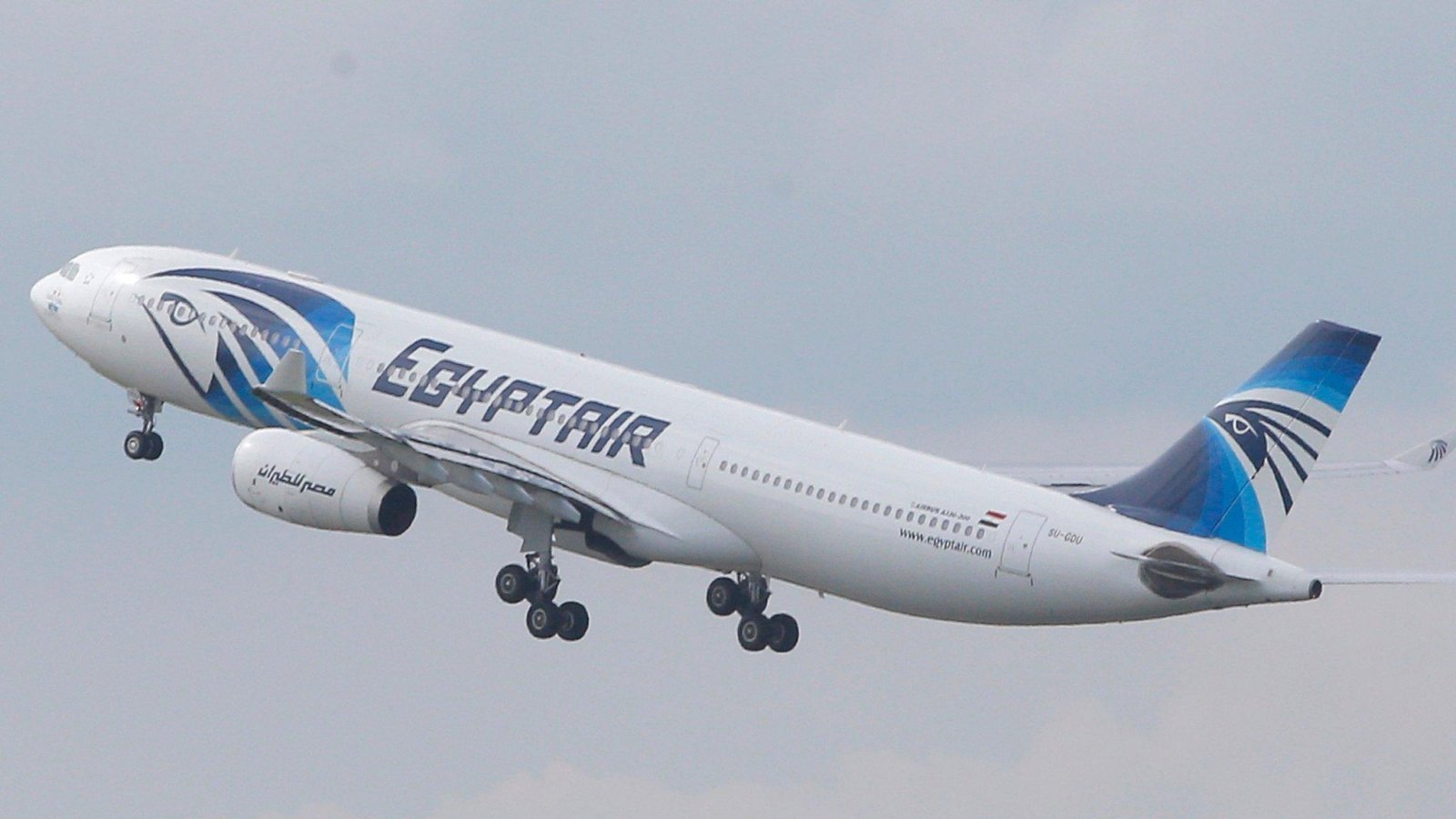
EgyptAir began direct flights between Cairo and Zanzibar on 4 September 2026, operating twice weekly on Fridays and Sundays with Boeing 737-800 aircraft, giving the archipelago a new direct link to North Africa without a transit stop in Nairobi, Addis Ababa or Dar es Salaam. At the launch, Zanzibar's Minister for Infrastructure, Communication and Transport, Dr Khalid Salum Mohamed, said the semi-autonomous region is exploring a possible collaboration with EgyptAir to help establish its own airline, a statement that builds on plans he first floated in 2024 for Zanzibar to acquire its own aircraft. Uchumi360 could not independently confirm the minister's exact remarks at the launch ceremony through English-language sources, but the ambition is consistent with a documented, two-year pattern of public statements from the same official.
ZANZIBAR — EgyptAir's first direct flight between Cairo and Zanzibar landed at Abeid Amani Karume International Airport on Friday, 4 September 2026, opening a new twice-weekly route that gives the archipelago its first direct link to North Africa. The service operates Fridays and Sundays using Boeing 737-800 aircraft, according to scheduling confirmed by Egypt's State Information Service and independently tracked by aviation data services AACO and AeroRoutes.
The route is part of a broader expansion for EgyptAir this year, which also launched a new direct service between Cairo and Birmingham, part of a stated push by the Star Alliance carrier to strengthen Cairo's position as a transit hub linking Africa, Europe and the Middle East. For Zanzibar, the practical benefit is straightforward: travellers from Egypt, and connecting passengers routing through Cairo from Europe or the wider Middle East, can now reach the island without transiting through Nairobi, Addis Ababa or mainland Dar es Salaam.
A Statement Worth Treating Carefully
At the launch, Zanzibar's Minister for Infrastructure, Communication and Transport, Dr Khalid Salum Mohamed, is reported to have said the semi-autonomous region is exploring a possible collaboration with EgyptAir to help establish its own airline. That claim deserves a direct note on sourcing: Uchumi360 could not independently confirm the minister's specific remarks at the 4 September ceremony through English-language wire services or aviation trade press, none of the outlets that covered the EgyptAir route launch itself, including Egypt's own State Information Service, mentioned any Zanzibar airline announcement.
What does lend the claim real credibility is that it isn't appearing from nowhere. Dr Salum has a documented public record on exactly this ambition: ch-aviation reported in August 2024 that he had said Zanzibar's government planned to buy an aircraft, as part of a broader infrastructure push under the region's five-year development plan, which also targeted raising Zanzibar and Pemba airports' air cargo handling from 67% to 80% and passenger capacity from 44% to 95% by 2025-26. A minister with a two-year track record of discussing aircraft acquisition plans expressing renewed interest at a major new route launch is a plausible, consistent statement, even without independent confirmation of the exact words used at this specific event.
What a Zanzibar Airline Would Actually Be Entering
Any new Zanzibar carrier would launch into a market that is not short of existing operators. The island already hosts several home-based airlines, including Tropical Air, Zan Air, As Sallam Air, Coastal Aviation and Flightlink, most operating smaller aircraft on domestic and short regional routes rather than the kind of jet service EgyptAir just introduced. International carriers already serving Zanzibar directly include Ethiopian Airlines, Kenya Airways, Rwandair, Turkish Airlines, Qatar Airways, Air France, Etihad Airways and, as of this month, EgyptAir.
That existing landscape reframes what "Zanzibar's own airline" would likely mean in practice. It would not be filling a connectivity gap Zanzibar currently lacks, plenty of carriers already fly there, but rather building sovereign capacity: a flag carrier the Revolutionary Government of Zanzibar owns and controls directly, rather than depending entirely on foreign and mainland Tanzanian operators to serve its own airport. That's a materially different rationale than most new-airline announcements, closer to the logic Uganda, Tanzania and other African governments have used in recent years when relaunching state-owned national carriers, than to a market genuinely underserved by existing operators.
Why This Would Be a Genuinely Difficult Undertaking
Standing up a new airline, even with a partner carrier's technical support, is a capital-intensive, operationally demanding undertaking that a considerable number of African aviation revival attempts have struggled with in recent years. Fleet acquisition or leasing, pilot and crew training, maintenance infrastructure, air operator certification, route rights negotiation and sustained working capital to cover losses during the years most new carriers take to reach profitability are all required before a single paying passenger boards a flight. If EgyptAir is genuinely providing feasibility studies, structural expertise or operational mentorship, as the minister is reported to have suggested, that kind of technical partnership can meaningfully de-risk parts of that process, but it does not eliminate the fundamental capital and operational challenge of launching and sustaining a new carrier.
What Comes Next
The EgyptAir route itself is real, scheduled, and now operating, a concrete, immediate win for Zanzibar's international connectivity regardless of how the airline ambition develops. The airline announcement is a different matter: worth tracking closely, given the minister's documented history on the subject, but not yet something to treat as a confirmed initiative until an official Zanzibari government statement, a formal agreement with EgyptAir, or independent aviation trade press coverage of the specific announcement becomes available. Uchumi360 will update this story if and when that confirmation surfaces.
FAQ
When did EgyptAir's Cairo-Zanzibar route actually launch? Friday, 4 September 2026, not the following day as some early reporting suggested. The route operates twice weekly, Fridays and Sundays, using Boeing 737-800 aircraft.
Is Zanzibar definitely starting its own airline? Not confirmed. Zanzibar's transport minister is reported to have raised the possibility of collaborating with EgyptAir on this at the route's launch, building on aircraft-acquisition plans he first disclosed in 2024, but Uchumi360 could not independently verify the specific launch-day remarks, and no formal agreement or government statement has yet confirmed the initiative.
Does Zanzibar already have its own airlines? Yes. Several home-based carriers already operate from Zanzibar, including Tropical Air, Zan Air, As Sallam Air, Coastal Aviation and Flightlink, though none currently operate the scale of jet service EgyptAir's new route represents.
Why would Zanzibar want its own airline if it's already well connected internationally? The rationale would likely be sovereign aviation capacity, a Zanzibar-owned and controlled flag carrier, rather than filling a service gap, since numerous foreign and mainland Tanzanian carriers already serve the island directly.
What would Zanzibar need to actually launch a new airline? Substantial capital for aircraft, established maintenance and training infrastructure, air operator certification, negotiated route rights, and sufficient working capital to sustain losses during the years most new carriers take to become profitable, challenges that a technical partnership with an established carrier like EgyptAir could help address but not eliminate.
 Uchumi360
Business Intelligence
Uchumi360
Business Intelligence
Uchumi360 covers business, investment, and economic policy across East, Central, and Southern Africa.
For the serious reader
You read to the end. That places you in a small group.
Uchumi360 is built for readers who demand precision over speed, structure over sentiment, and analysis that holds uncomfortable conclusions rather than softening them. If this work sharpens how you think about Africa's economy, help us keep building the infrastructure behind it.
Institutional Partners
Commission intelligence. Shape the conversation.
Uchumi360 works with development finance institutions, investment firms, sovereign bodies, and strategic organisations across the coverage region. Institutional partnership unlocks:
- Commissioned sector and country intelligence reports
- Branded research series under your institution's authority
- Exclusive data briefings for internal strategy teams
- Speaking and editorial presence at Uchumi360 events
- Co-published investment outlooks for your markets
Support Our Work
Independent analysis has a cost. Help us bear it.
Uchumi360 does not carry advertising. It does not take editorial direction from sponsors. Every article is produced without commercial compromise. Your contribution funds the reporting, research, and editorial infrastructure that keeps this analysis free from influence.
Secure checkout: One-time and monthly support are processed securely. Add payment credentials to enable checkout here.
Stay Connected
Keep up with every new insight.
Follow our latest analysis, policy coverage, and market intelligence as soon as it is published. If you need something specific, reach out directly and we will point you to the right research.
