
Kenya Begins $1.2 Billion Nairobi Airport Expansion as Ruto Promises New Terminal Within 18 Months
Ready
President William Ruto says construction of Nairobi's Jomo Kenyatta International Airport expansion has begun, following a KSh 154.2 billion contract with China Road and Bridge Corporation. The project aims to increase passenger handling capacity towards 22 million annually.
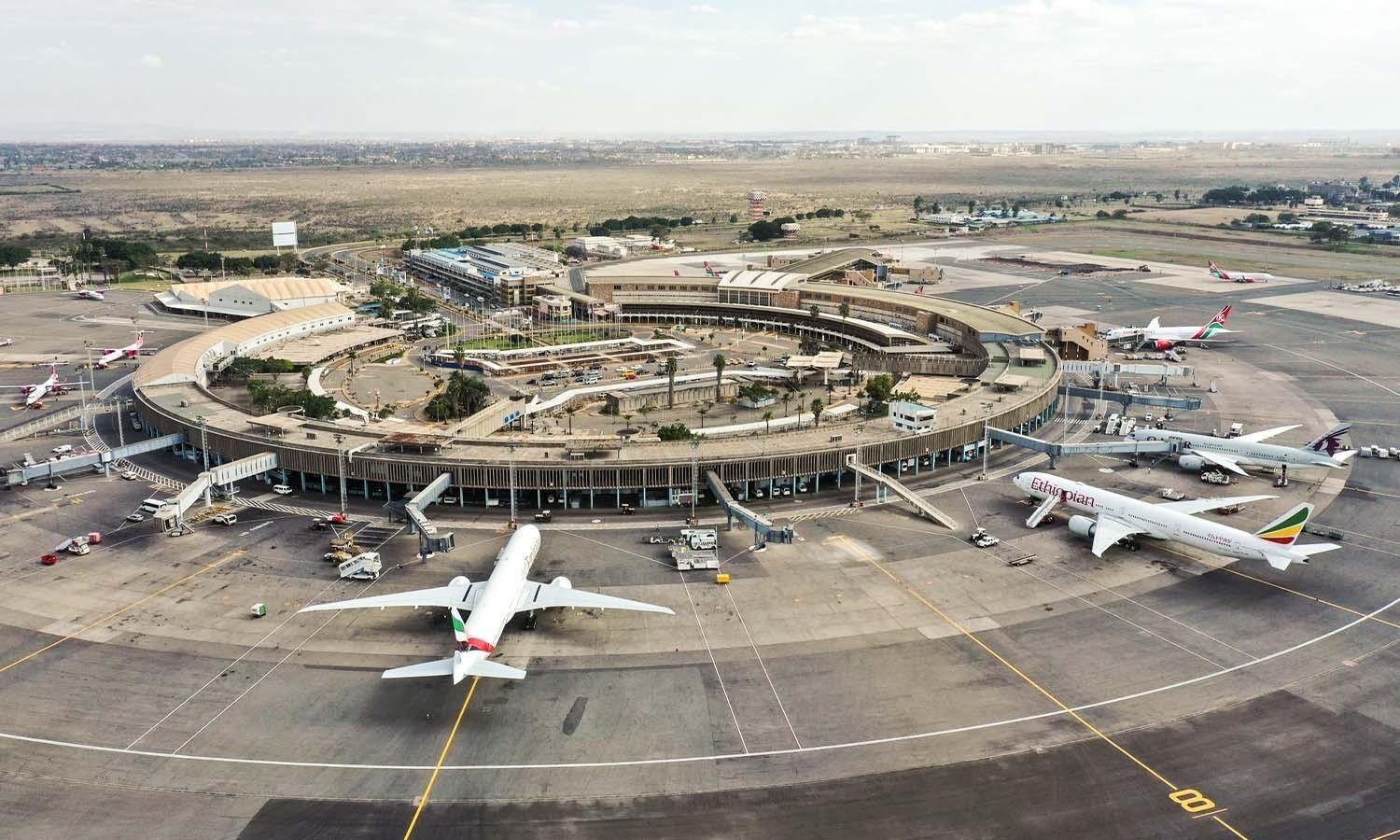
Kenya has moved into implementation of a KSh 154.2 billion expansion of Jomo Kenyatta International Airport, with a Chinese contractor appointed and President William Ruto announcing an accelerated completion target. The investment is intended to address capacity constraints at Nairobi's main aviation gateway as regional competition for passenger connections, air cargo and airline investment intensifies.
Kenya has begun implementing a KSh 154.2 billion ($1.2 billion) expansion of Jomo Kenyatta International Airport (JKIA), with President William Ruto confirming on November 4, 2026, that construction is underway and promising a new airport facility within 18 months. The project, contracted to China Road and Bridge Corporation (CRBC), represents one of Kenya's largest current transport infrastructure investments and follows the cancellation of an earlier airport development proposal involving India's Adani Group.
Speaking at the 2026 Industrialisation Summit at the Kenyatta International Convention Centre in Nairobi, Ruto said the government had reorganised the project after the controversy surrounding the Adani proposal and that implementation was now progressing.
“Already, the airport in Nairobi is under construction,” Ruto said, adding that a new facility would be available within 18 months. The timetable points to approximately May 2028, considerably earlier than the three year construction period previously communicated by the Ministry of Roads and Transport.
The government's announcement follows a sequence of procurement and implementation decisions. The Kenya Airports Authority completed an integrated airport master plan in February 2026, issued an international construction tender in March and awarded the principal design and construction contract to CRBC in June. The agreement was signed on June 23 by Principal Secretary for Aviation and Aerospace Development Teresia Mbaika and CRBC General Manager Yu Xiaodong, in the presence of Transport Cabinet Secretary Davis Chirchir.
Although the president has confirmed that construction has begun, publicly available information does not yet establish the extent of physical construction completed or whether his 18 month target covers the entire modernisation programme or an initial passenger terminal. The distinction matters because the project combines terminal construction with improvements to existing airfield infrastructure, passenger processing systems and airport access roads.
PROJECT AT A GLANCE
KSh 154.2B
Signed construction contract
$1.2B
Approximate US dollar value
22M
Target annual passenger capacity
18 months
Latest presidential completion target
Nairobi Airport Is Already Operating Beyond Its Designed Capacity
The economic case for expanding JKIA is supported by passenger traffic that has already exceeded the airport's planned capacity. According to the Ministry of Roads and Transport, JKIA handled approximately 8.93 million passengers in 2025 against a designed annual capacity of 7.5 million, meaning the airport was operating about 19% above its original capacity benchmark.
The airport's growth has placed pressure on its single runway, aircraft parking facilities, passenger terminals and road access infrastructure. Its existing terminal complex has been expanded incrementally over several decades, leaving operational constraints that are increasingly difficult to address through small improvements alone.
JKIA Passenger Capacity and Demand
Millions of passengers per year. The 2045 figure is a traffic forecast, while the 22 million figure is the planned capacity target.

The airport master plan forecasts annual passenger numbers rising to approximately 22.31 million by 2045, an increase of nearly 150% from the 2025 level. Cargo volumes are projected to increase from 407,214 tonnes to 860,400 tonnes over the same period. These forecasts indicate that the airport will need substantial new handling capacity even if passenger and freight growth remain close to the government's baseline assumptions.
The expansion programme is designed to raise total annual passenger handling capacity towards 22 million. Its immediate construction programme includes a new terminal capable of accommodating an additional 10 million passengers annually, while subsequent expansion provisions allow further capacity increases.
A Chinese Contractor, African Financing Institutions and a New Funding Structure
The June 2026 contract with CRBC established the principal construction arrangement after the government abandoned its earlier Adani proposal. The new framework separates construction procurement from financing arrangements, with the Trade and Development Bank (TDB) and Africa Finance Corporation (AFC) appointed to arrange financing for the investment.
According to statements reported by Reuters in June, the government intends to support project financing through revenues generated by airport operations, while TDB and AFC seek participation from development finance institutions and commercial lenders. This is particularly relevant for Kenya, where elevated public debt obligations have increased scrutiny of new infrastructure borrowing and its implications for the national budget.
The involvement of African financial institutions in arranging the transaction could reduce reliance on a single international financier and provide a financing structure adapted to airport cash flows. However, the financial durability of the arrangement will depend on borrowing costs, repayment periods, revenue assumptions and the allocation of construction and demand risks.
Airport infrastructure has high initial capital requirements, while its revenues depend on passenger volumes, aircraft movements, commercial concessions, property rentals and cargo operations. If the expansion is supported by airport revenues, the central financial question will be whether incremental earnings from higher traffic and commercial activities can cover financing obligations without requiring substantial additional government support.
The June announcements did not provide a complete publicly verified account of final financing commitments, debt terms or revenue security arrangements. Appointment of financial arrangers therefore should not be interpreted as confirmation that every component of the project has reached financial close.
Kenya Plans to Modernise the Runway, Terminals and Airport Access
The construction programme extends beyond a new passenger terminal. According to the Ministry of Roads and Transport, the improvements include upgrading the existing runway, constructing a partial parallel taxiway, introducing rapid exit taxiways and reorganising aircraft parking facilities. These changes are intended to reduce runway occupancy times, improve aircraft movements and increase the number of flights the airport can process during peak periods.
Existing terminals will also undergo reconfiguration, with improvements planned for check in, immigration, security screening, baggage handling and vehicle parking. The objective is to increase passenger processing efficiency while maintaining operations at an airport that already handles more traffic than its original design capacity.
The distinction between terminal capacity and runway capacity is particularly relevant to the project's commercial prospects. A larger passenger terminal can accommodate more travellers, but airlines cannot necessarily operate proportionately more flights unless the runway, taxiway and aircraft parking systems can support additional movements. JKIA currently depends on one operational runway, leaving it vulnerable to disruption when that runway becomes temporarily unavailable.
The February 2026 integrated master plan includes proposals for additional runways and wider transport connections, but these longer term proposals should be distinguished from the works explicitly included in the current KSh 154.2 billion construction contract.
Competition for East Africa's Aviation Traffic Is Increasing
Kenya's airport investment is taking place as Ethiopia and Rwanda develop major aviation infrastructure to accommodate growing international traffic. Nairobi has an established position as an important regional aviation gateway, supported by Kenya Airways, international airline connections, tourism demand, business travel and cargo operations serving Kenya and neighbouring economies.
However, the economics of international aviation increasingly favour airports capable of accommodating large passenger volumes, efficient connections and reliable aircraft turnaround times. Airlines evaluating routes and regional hubs consider airport operating costs, connection times, access to maintenance services, cargo facilities and the commercial potential of connecting passengers.
For Kenya Airways, improvements at JKIA could support more efficient operations, particularly where congestion currently affects aircraft scheduling and passenger connections. The potential gains will nevertheless depend on the airline's route network, fleet deployment and commercial performance rather than airport capacity alone.
Cargo operations represent another opportunity. Kenya's fresh produce and flower exports depend heavily on reliable air freight connections, where delivery speed, handling costs and temperature controlled logistics directly influence exporters' competitiveness. The government's forecast that JKIA cargo traffic could more than double by 2045 strengthens the commercial case for modern cargo handling and supporting logistics infrastructure.
The airport master plan also proposes developing an Airport City and Special Economic Zone around JKIA, targeting businesses involved in logistics, agricultural processing, pharmaceuticals, light manufacturing and regional distribution. These developments could broaden airport related revenues beyond traditional aviation charges, although their commercial success will depend on land availability, private investment, customs efficiency and competitive operating costs.
An 18 Month Deadline Introduces New Execution Pressure
The latest presidential timeline introduces an important implementation question. In June, the government communicated a construction period of approximately three years, while Ruto's November announcement suggests that a new airport facility could be ready by May 2028.
Large airport construction projects require coordination between contractors, regulators, airlines, airport operators and security agencies. Building new terminals alongside an operating international airport presents additional constraints because construction must proceed without substantially interrupting passenger movements, runway operations or air cargo handling.
The government's ability to meet the accelerated timetable will therefore depend on construction sequencing, contractor mobilisation, the availability of financing, equipment procurement and the commissioning of operational systems. Completing a building does not necessarily mean that the airport can immediately accommodate commercial passenger operations, since aviation facilities must undergo technical testing, security assessments and operational readiness procedures.
The appointment of CRBC and the reported mobilisation of contractors demonstrate progress beyond the planning and procurement stages. Nevertheless, a fully documented construction programme, updated completion milestones and independently verifiable physical progress would provide a clearer basis for assessing whether the government's latest deadline can be achieved.
For Kenya, the investment addresses a capacity problem that has already materialised. The country's largest international airport handled nearly nine million passengers in 2025, exceeding its designed capacity, while government forecasts indicate sustained growth in passenger and cargo demand over the next two decades.
The next test will be whether the KSh 154.2 billion investment delivers that additional capacity at a financing cost Kenya can sustain, without creating another expensive infrastructure asset whose full commercial potential takes years to realise.
 Uchumi360
Business Intelligence
Uchumi360 covers business, investment, and economic policy across East, Central, and Southern Africa.
For the serious reader
You read to the end. That places you in a small group.
Uchumi360 is built for readers who demand precision over speed, structure over sentiment, and analysis that holds uncomfortable conclusions rather than softening them. If this work sharpens how you think about Africa's economy, help us keep building the infrastructure behind it.
Institutional Partners
Commission intelligence. Shape the conversation.
Uchumi360 works with development finance institutions, investment firms, sovereign bodies, and strategic organisations across the coverage region. Institutional partnership unlocks:
- Commissioned sector and country intelligence reports
- Branded research series under your institution's authority
- Exclusive data briefings for internal strategy teams
- Speaking and editorial presence at Uchumi360 events
- Co-published investment outlooks for your markets
Support Our Work
Independent analysis has a cost. Help us bear it.
Uchumi360 does not carry advertising. It does not take editorial direction from sponsors. Every article is produced without commercial compromise. Your contribution funds the reporting, research, and editorial infrastructure that keeps this analysis free from influence.
Secure checkout: One-time and monthly support are processed securely. Add payment credentials to enable checkout here.
Stay Connected
Keep up with every new insight.
Follow our latest analysis, policy coverage, and market intelligence as soon as it is published. If you need something specific, reach out directly and we will point you to the right research.
