
Kenya’s Tanzania Rail Link Could Turn East Africa Into a Connected Rail Market
Ready
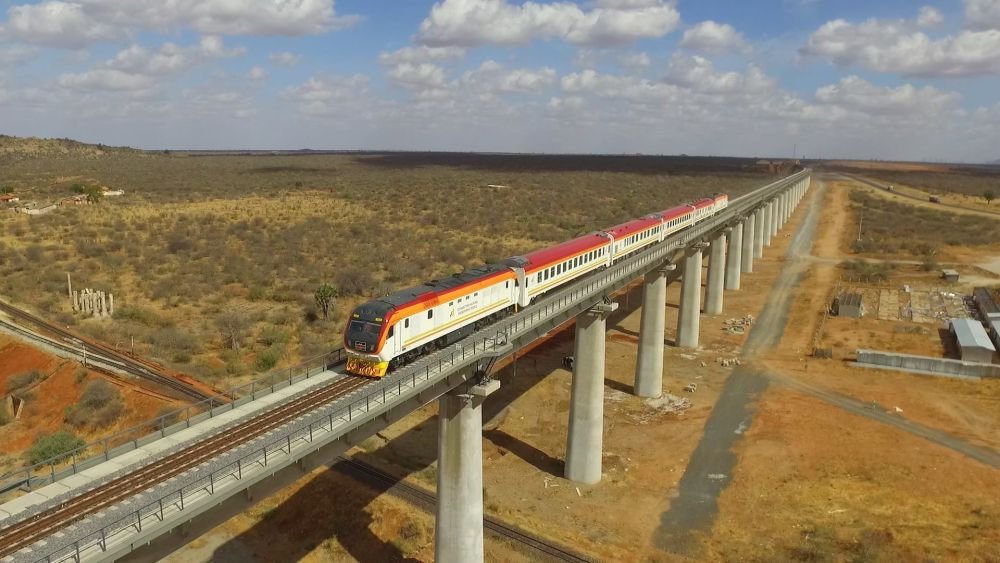
Kenya has announced about KSh5 billion for a proposed railway connection from Voi towards Tanzania, extending the transport logic of the Voi Mwatate Taveta corridor into a potentially larger regional network. Kenya is already spending KSh5.5 billion to rehabilitate the 20 year dormant metre gauge line from Voi through Mwatate to Taveta and has announced a dry port in Voi. Tanzania, meanwhile, plans a 2,561 kilometre SGR network connecting Dar es Salaam with Mwanza, Kigoma, Katavi and neighbouring countries including Rwanda, Burundi, Uganda and the DRC. Tanzania’s Central Corridor SGR projects are also being supported through a wider regional financing structure. Uganda is considering a connection to Tanzania to provide another export route for minerals through Dar es Salaam. The strategic opportunity is therefore not a single Kenya Tanzania railway. It is the possibility of connecting East Africa’s ports, industrial centres, agricultural regions and mineral belts through interoperable railway corridors.
NAIROBI — Kenya’s proposed railway link to Tanzania could become one of the missing connections in East Africa’s emerging rail network
Kenya is moving towards a new railway connection with Tanzania after President William Ruto announced that about KSh5 billion has been set aside for a proposed line from Voi towards the Tanzanian border. Ruto made the announcement on September 27 while speaking in Mwatate, Taita Taveta County, saying the proposed railway would pass through Mwatate, Bura, Mwakitau and Taveta before crossing into Tanzania. The announcement follows the Kenyan government’s decision earlier this year to rehabilitate the Voi Mwatate Taveta metre gauge railway, which had been out of operation for almost two decades. The two developments create the possibility of linking Kenya’s railway network with northern Tanzania while also reviving an older trade corridor that historically connected Mombasa, Voi, Taveta, Moshi, Arusha and destinations further west.
The significance of the announcement is therefore larger than the KSh5 billion allocation itself. The proposed connection sits at the intersection of two different railway systems and two major port corridors. Kenya is extending its SGR network westwards towards Kisumu and the Malaba border, while Tanzania is building an electrified SGR network centred on Dar es Salaam and extending towards the interior and neighbouring countries. The northern connection proposed by Kenya would introduce another cross border link, potentially allowing freight and passenger movement between Kenya and Tanzania through Taveta and the Holili border area. Whether that potential becomes a functioning regional railway corridor will depend on technical compatibility, investment, border procedures, freight economics and the eventual form of the connection.
The first layer of integration is already being rebuilt on Kenya’s side
Kenya's current project begins with the rehabilitation of an old railway rather than the construction of an entirely new regional system. In April 2026, Ruto launched reconstruction of the Voi Mwatate Taveta metre gauge railway after nearly 20 years of inactivity. The government allocated KSh5.5 billion to the rehabilitation and announced plans for a dry port in Voi. The Kenyan presidency said the revived line is intended to reconnect the Mombasa Voi Taveta Moshi Arusha Singida Bujumbura trade route and could reduce the distance between Mombasa and Bujumbura by 358 kilometres. It also described Voi as a potential logistics hub connecting the Port of Mombasa with the Taveta Holili One Stop Border Post.
The proposed extension announced in September changes the scale of that proposition. Instead of ending at Taveta, the railway could potentially become part of a cross border network reaching northern Tanzania. Ruto said the proposed railway would carry both passengers and cargo, with stations planned along the Kenyan section. The economic case would depend on whether sufficient freight can be aggregated along the corridor, including agricultural commodities, manufactured goods, minerals and consumer products moving between coastal and inland markets. A railway becomes commercially useful when it moves large volumes at competitive unit costs, so the existence of track alone does not guarantee a viable corridor.
The old metre gauge infrastructure also presents a technical question. Kenya's main modern railway is built to standard gauge, while the Voi Mwatate Taveta line being rehabilitated is metre gauge. Tanzania's main new railway system is standard gauge. This means that a future railway network connecting the systems would require either a technically compatible new line, transshipment arrangements, or another solution that prevents the gauge difference from becoming a permanent barrier to through freight movement. The September announcement concerns the proposed connection and does not establish that these technical questions have already been resolved. That distinction is essential when assessing the project as a regional integration opportunity rather than treating the announcement as an already connected railway.
Tanzania is building the larger southern and central network
The Kenyan proposal is arriving while Tanzania is constructing a much larger railway network. Tanzania Railways Corporation says the country's SGR programme is intended to develop a network of at least 2,561 kilometres connecting Dar es Salaam, Mwanza, Kigoma and Katavi with neighbouring countries including Rwanda, Burundi and the Democratic Republic of Congo. The planned system is electrified and designed for higher speed and greater freight capacity than conventional railway infrastructure. TRC says the railway is intended to carry freight of up to 10,000 tonnes in a single train, equivalent to approximately 500 freight trucks.
The Central Corridor component gives the network an explicitly regional dimension. The African Development Bank's project documentation identifies the Tanzania Burundi Democratic Republic of Congo Joint Standard Gauge Railway Project as a multinational transport project designed to improve connectivity along the Central Corridor and strengthen regional integration and trade. Its Tanzania component includes the 411 kilometre Tabora Kigoma section and the 156 kilometre Uvinza Malagarasi section, together with institutional support for Tanzania Railways Corporation and the regional project coordination structure. The Tanzania component has an estimated cost of about US$3.21 billion, while the AfDB project has a planned completion date of March 2031.
Financing is also beginning to match the scale of the infrastructure ambition. In April 2026, Standard Chartered arranged a US$2.33 billion syndicated financing facility for two sections of Tanzania's SGR programme. Reuters reported that the financing supports construction on the planned 1,219 kilometre Dar es Salaam Mwanza railway, with Yapi Merkezi and China Civil Engineering Construction Corporation involved in construction. The financing illustrates the extent to which railway development is moving from individual national projects towards large infrastructure programmes with regional economic implications.
A Kenya Tanzania connection could create two complementary port corridors
The economic geography becomes clearer when the railway projects are viewed from the ports rather than from national borders. Mombasa and Dar es Salaam are two of East Africa's principal maritime gateways. Both serve domestic markets and provide access to landlocked economies. A connected railway system would give businesses and governments greater ability to route cargo according to cost, capacity, distance and destination rather than relying almost entirely on the road corridor associated with one national gateway.
For northern Tanzania, a connection through Taveta could provide access to Mombasa for some categories of cargo. For Kenya, the same corridor could create a rail route into northern Tanzania and potentially further towards Tanzania's interior. The commercial effect would not necessarily be that one port replaces the other. A more integrated railway system could instead allow the two ports to serve overlapping hinterlands while creating alternative routes when congestion, weather, capacity constraints or market conditions affect one corridor.
This is where the idea of regional railway integration becomes economically more interesting than the individual infrastructure announcements. Railways create large fixed costs but relatively low marginal transport costs when freight volumes are high. A regional network can therefore make a larger number of production centres commercially accessible to ports, processors and markets. The value of integration rises as more countries and production zones become connected because freight can travel across longer distances without requiring a complete change of transport mode at every border.
Uganda is already looking at Tanzania as another railway route to the sea
The potential network extends beyond Kenya and Tanzania. In February 2026, Reuters reported that Uganda was planning to connect its proposed new SGR to Tanzania's railway network. The proposed Ugandan route would run from the Tanzanian border through southern and southwestern Uganda towards Mpondwe on the Democratic Republic of Congo border. Uganda's stated objective is to create another export route for commodities including gold, copper and iron ore through the Port of Dar es Salaam.
That proposal introduces a second regional logic. The Kenya Tanzania connection could integrate the northern part of the East African railway system, while a Tanzania Uganda connection could connect the Central Corridor to Uganda and potentially the DRC. Uganda is already pursuing railway connectivity with Kenya, meaning that its future railway system could potentially sit between two major East African corridors. Instead of one linear railway running from one port to one inland market, the region could eventually develop a network with several routes to the coast.
Tanzania's railway plans already anticipate this broader geography. TRC identifies Rwanda, Burundi, Uganda, Kenya and the DRC among countries that could benefit from the development of the SGR network. The African Development Bank similarly describes the Tanzania Burundi DRC railway project in terms of regional integration and trade rather than simply domestic transport. These projects remain at different stages of planning, financing and construction, so they should not be treated as one coordinated network today. But their geographic direction is increasingly similar.
East Africa could move from railway corridors to a railway network
The distinction between a corridor and a network is economically important. A corridor normally connects a particular port with a particular destination. A network creates multiple possible routes between ports, production areas and consumer markets. The second structure can support competition between gateways, reduce dependence on individual roads and borders, and make investment in inland production more attractive because producers have access to more than one route to international markets.
East Africa has much of the basic economic geography required for such a network. Mombasa and Dar es Salaam provide major maritime gateways. Kenya and Tanzania have large domestic markets. Uganda, Rwanda, Burundi, South Sudan and the DRC provide substantial landlocked markets and production zones. The region also has agricultural areas and mineral deposits that require lower cost transport to reach processing facilities and ports. Railway infrastructure can connect these economic functions if the technical, financial and institutional arrangements are designed around cross border movement rather than stopping at national boundaries.
The biggest constraint may therefore become interoperability rather than construction alone. Rail gauges, locomotives, signalling systems, customs procedures, border operations, axle loads, tariffs and freight handling arrangements all influence whether a train can actually move efficiently across several countries. A railway that ends at a border can still be useful, but it does not produce the same economic effect as a train that can move cargo across the region with minimal interruption.
The institutional architecture will matter just as much. The East African Community already provides a regional framework through which member states can coordinate infrastructure and trade policy. The Northern Corridor and Central Corridor have also developed institutional structures around transport and logistics. Connecting railway assets would require these arrangements to work together with national railway companies, port authorities, customs agencies, regulators and private freight operators.
The opportunity is a regional market built around movement, not borders
The emerging railway projects suggest that East Africa is gradually developing the physical ingredients of a more integrated transport market. Kenya's proposed Voi Tanzania connection could add a northern cross border railway link. Tanzania's SGR programme is extending the Central Corridor towards inland markets and neighbouring countries. Uganda is examining a connection to Tanzania, while Kenya is extending its own SGR towards Uganda through the Naivasha Kisumu Malaba corridor.
None of these projects should yet be described as a completed East African railway network. They are separate national and multinational projects at different stages, with different financing structures, gauges and implementation timelines. Their combined potential, however, is becoming easier to see. If the connections are built with interoperability in mind, East Africa could eventually have rail routes linking Mombasa and Dar es Salaam with inland markets stretching from Kenya and Tanzania through Uganda, Rwanda, Burundi and the DRC.
The economic question will then shift from whether East Africa needs railways to whether it can operate them as one regional freight system. That means harmonising border procedures, coordinating infrastructure standards, developing competitive freight tariffs, creating efficient intermodal terminals and ensuring that ports and railways operate as parts of the same supply chain. The infrastructure investment is only the physical foundation. The larger economic return comes from allowing goods, capital and production to move across the region with fewer artificial breaks.
East Africa has spent decades discussing integration through treaties and institutions. The railway projects now emerging across the region offer a more physical form of integration. A connected railway would not remove the borders of East Africa. It would make those borders less expensive to cross.
FAQ
What railway connection has Kenya proposed with Tanzania? President William Ruto announced that Kenya has set aside about KSh5 billion for a proposed railway connection from Voi towards Tanzania. The proposed route would pass through Mwatate, Bura, Mwakitau and Taveta before reaching the Tanzanian border.
Is the Voi Tanzania railway already under construction? No. The KSh5 billion connection announced in September is a proposed extension. Kenya is separately rehabilitating the existing Voi Mwatate Taveta metre gauge railway, for which KSh5.5 billion was announced in April 2026.
Why is the connection economically significant? It could create another rail connection between Kenya and Tanzania and potentially provide a route linking Mombasa with northern Tanzania. Its eventual economic value would depend on freight volumes, construction costs, railway compatibility, border procedures and operating costs.
How does Tanzania fit into the wider railway network? Tanzania is developing a planned 2,561 kilometre SGR network connecting Dar es Salaam with major inland centres and neighbouring countries. Its Central Corridor projects also include railway infrastructure intended to improve connections towards Burundi and the DRC.
Could Uganda also connect to Tanzania by rail? Uganda is considering a railway connection to Tanzania. Reuters reported that the proposed route could provide Uganda with an additional export corridor to Dar es Salaam, particularly for mineral commodities, and could eventually create a connection towards the DRC.
What is the main challenge to creating one East African railway network? Construction is only one part of the problem. Different railway gauges, signalling systems, customs procedures, border controls, freight tariffs and operating standards can prevent separate railway projects from functioning as a single network even when physical connections exist.
Could Mombasa and Dar es Salaam become complementary rather than competing gateways? Potentially. A connected railway system could give inland producers and traders more than one route to the coast, allowing cargo to move through whichever corridor provides the appropriate combination of distance, capacity, cost and reliability. The outcome would depend on the actual operating economics of the completed network.
 Uchumi360
Business Intelligence
Uchumi360
Business Intelligence
Uchumi360 covers business, investment, and economic policy across East, Central, and Southern Africa.
For the serious reader
You read to the end. That places you in a small group.
Uchumi360 is built for readers who demand precision over speed, structure over sentiment, and analysis that holds uncomfortable conclusions rather than softening them. If this work sharpens how you think about Africa's economy, help us keep building the infrastructure behind it.
Institutional Partners
Commission intelligence. Shape the conversation.
Uchumi360 works with development finance institutions, investment firms, sovereign bodies, and strategic organisations across the coverage region. Institutional partnership unlocks:
- Commissioned sector and country intelligence reports
- Branded research series under your institution's authority
- Exclusive data briefings for internal strategy teams
- Speaking and editorial presence at Uchumi360 events
- Co-published investment outlooks for your markets
Support Our Work
Independent analysis has a cost. Help us bear it.
Uchumi360 does not carry advertising. It does not take editorial direction from sponsors. Every article is produced without commercial compromise. Your contribution funds the reporting, research, and editorial infrastructure that keeps this analysis free from influence.
Secure checkout: One-time and monthly support are processed securely. Add payment credentials to enable checkout here.
Stay Connected
Keep up with every new insight.
Follow our latest analysis, policy coverage, and market intelligence as soon as it is published. If you need something specific, reach out directly and we will point you to the right research.
