
Why Tanzania Is Betting on Logistics Before Manufacturing
Ready
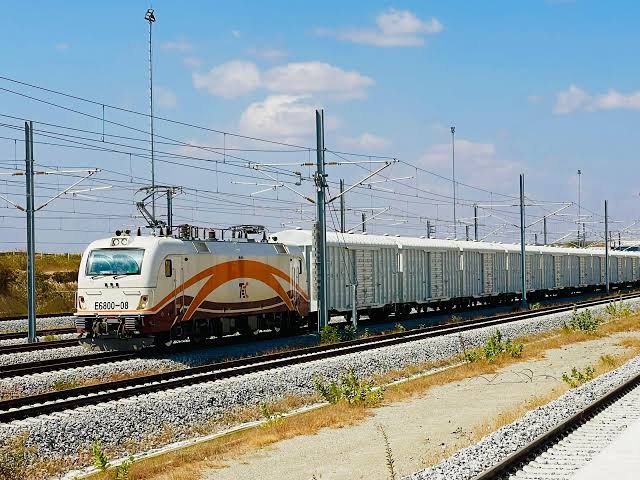
Tanzania's Long Term Perspective Plan 2026/27–2050/51 sequences infrastructure ahead of manufacturing rather than alongside it, treating logistics, energy and digital connectivity as productive assets in their own right rather than support systems for industry. The Standard Gauge Railway, the Port of Dar es Salaam expansion, the Julius Nyerere Hydropower Project and the East African Crude Oil Pipeline function as one integrated corridor rather than separate projects. The logic: manufacturers in developing economies typically lose competitiveness to logistics costs before labour costs, and Tanzania's geography, bordering eight countries with Indian Ocean access, gives it a transit-hub advantage the plan is trying to convert into an economic one. The open risk is coordination: infrastructure without industrial parks, customs systems and demand attached captures only part of its value.
Industrialisation starts before the first factory gets built. It starts with roads that cut transport costs, railways that move raw materials efficiently, ports that connect producers to global markets, reliable electricity that keeps machines running, and digital infrastructure that links businesses to customers. Without those foundations, factories become expensive to run and exports become uncompetitive regardless of how sound the industrial policy looks on paper.
That's the logic running through Tanzania's Long Term Perspective Plan 2026/27–2050/51. Rather than putting manufacturing at the start of its economic transformation, the document positions logistics, infrastructure and connectivity as the systems that make industrialisation viable in the first place. It reflects a lesson development economics has increasingly settled on: countries rarely industrialise because they build factories. They industrialise because they build the systems that let factories compete once they exist.
Infrastructure stops being a public service and becomes a productive asset
For decades, infrastructure in Tanzania, as in most developing economies, was treated largely as a social investment: roads for mobility, ports for trade facilitation, electricity for access. Vision 2050 reframes that. Transport, energy and digital infrastructure are presented throughout the document as productive assets that directly shape competitiveness, investment attraction and industrial expansion, not as background conditions that happen to support growth elsewhere.
Railways, highways, ports, airports, logistics hubs and digital networks are expected to lower the cost of doing business while integrating Tanzania into regional and global value chains. That's a conceptual shift with real policy consequences: infrastructure isn't supporting economic growth from the sidelines anymore. It's one of the plan's principal drivers.
An economic corridor, not a list of separate projects
Tanzania has spent the past decade running one of the largest infrastructure programmes in its history. The Standard Gauge Railway connects the Port of Dar es Salaam with Dodoma, Mwanza, Kigoma and neighbouring countries. The Port of Dar es Salaam is being expanded to handle larger vessels and higher cargo volumes. The Julius Nyerere Hydropower Project is expanding electricity generation. The East African Crude Oil Pipeline is building a new energy corridor linking Uganda to the Port of Tanga.
Looked at individually, these read as unrelated infrastructure projects competing for the same headlines. Looked at together, and consistent with how the Long Term Perspective Plan links transport, logistics and industrial competitiveness throughout, they form one integrated system intended to move people, goods, energy and information more efficiently across the country and the wider region.
Logistics costs, not labour costs, are the real competitiveness barrier
The biggest obstacle facing manufacturers in developing economies usually isn't labour costs. It's logistics. If raw materials take longer to move, electricity is unreliable, cargo sits at ports for weeks, or roads inflate vehicle operating costs, locally manufactured goods end up more expensive than imported alternatives, regardless of how cheap local labour is.
Vision 2050 appears built around that specific insight rather than assuming manufacturing will flourish once factories exist. The plan prioritises investments that lower production costs across the entire economy on the logic that efficient logistics let manufacturers source inputs more cheaply, deliver products faster and compete more effectively in regional and international markets. In this framing, logistics isn't infrastructure policy adjacent to industrial policy. It functions as industrial policy directly.
Turning geography into a gateway advantage
Tanzania has a geographic advantage few countries share: it borders eight countries, has direct Indian Ocean access, and serves as a transit route for several landlocked economies, including Zambia, Malawi, Rwanda, Burundi, Uganda and the eastern Democratic Republic of the Congo.
Vision 2050 tries to convert that geography into an economic asset by strengthening transport corridors, ports and logistics services, with an objective larger than improving domestic transport. The plan aims to position Tanzania as one of Africa's principal gateways for regional trade, generating value not just through Tanzanian exports but through transit services, warehousing, freight forwarding, distribution, industrial processing and cross-border commerce moving through the country on its way elsewhere.
Why this is also an investment strategy
Investors rarely assess infrastructure as an isolated sector. They assess how it affects profitability directly: reliable ports reduce shipping costs, railways lower inland transport expenses, stable electricity increases production efficiency, and digital networks improve coordination and market access. Collectively, these factors are what actually determine whether a country becomes an attractive manufacturing destination, more than tax incentives or land availability tend to.
The Long Term Perspective Plan treats logistics as part of this broader competitiveness calculation rather than as a transport agenda running in parallel to the investment strategy.
The part that isn't guaranteed: coordination
Building infrastructure doesn't guarantee industrialisation on its own. The harder work is connecting that infrastructure to industrial policy, education, technology, investment promotion and regional trade so the pieces actually compound each other. A railway that doesn't connect to industrial parks only captures part of its economic potential. A port without efficient customs systems stays underutilised regardless of its physical capacity. Electricity without industrial demand attached to it generates limited economic return.
Vision 2050 repeatedly emphasises integration across sectors, which suggests the government understands this risk rather than treating each infrastructure investment as a standalone success once completed. Whether that integration actually materialises, rather than staying a stated intention, will determine how much value Tanzania captures from an infrastructure programme this large.
The Uchumi360 insight
Many countries try to industrialise by attracting factories first and fixing logistics afterward, discovering the cost problem only once manufacturers are already losing to imports. Tanzania appears to be reversing that sequence deliberately, investing in the systems that reduce production costs before expecting industry to scale on top of them. If that sequencing works, railways, ports, power stations and highways won't just support manufacturing once it arrives. They'll be the reason manufacturing chooses Tanzania over its competitors in the first place.
FAQ
Why does Tanzania's plan prioritise infrastructure over manufacturing incentives? Because logistics costs, not labour costs, are typically what makes manufacturing in developing economies uncompetitive against imports, so the plan targets that cost first.
What infrastructure projects form Tanzania's logistics corridor? The Standard Gauge Railway, the Port of Dar es Salaam expansion, the Julius Nyerere Hydropower Project, and the East African Crude Oil Pipeline, treated as one integrated system rather than separate projects.
How does Tanzania's geography factor into the strategy? Tanzania borders eight countries and has Indian Ocean access, positioning it as a transit route for landlocked economies including Zambia, Uganda and the DRC, which the plan aims to convert into a regional trade gateway role.
What's the biggest risk to this infrastructure-first approach? Coordination. Infrastructure delivers limited value if it isn't connected to industrial parks, customs efficiency and actual industrial demand, and the plan's success depends on integration it hasn't yet demonstrated.
 Uchumi360
Business Intelligence
Uchumi360
Business Intelligence
Uchumi360 covers business, investment, and economic policy across East, Central, and Southern Africa.
For the serious reader
You read to the end. That places you in a small group.
Uchumi360 is built for readers who demand precision over speed, structure over sentiment, and analysis that holds uncomfortable conclusions rather than softening them. If this work sharpens how you think about Africa's economy, help us keep building the infrastructure behind it.
Institutional Partners
Commission intelligence. Shape the conversation.
Uchumi360 works with development finance institutions, investment firms, sovereign bodies, and strategic organisations across the coverage region. Institutional partnership unlocks:
- Commissioned sector and country intelligence reports
- Branded research series under your institution's authority
- Exclusive data briefings for internal strategy teams
- Speaking and editorial presence at Uchumi360 events
- Co-published investment outlooks for your markets
Support Our Work
Independent analysis has a cost. Help us bear it.
Uchumi360 does not carry advertising. It does not take editorial direction from sponsors. Every article is produced without commercial compromise. Your contribution funds the reporting, research, and editorial infrastructure that keeps this analysis free from influence.
Secure checkout: One-time and monthly support are processed securely. Add payment credentials to enable checkout here.
Stay Connected
Keep up with every new insight.
Follow our latest analysis, policy coverage, and market intelligence as soon as it is published. If you need something specific, reach out directly and we will point you to the right research.
