
Tanzania and DRC Agree to Expand Central Corridor Trade Links
Ready
Tanzania and the Democratic Republic of Congo agreed during President Félix Tshisekedi's 17-18 August 2026 visit to Zanzibar to accelerate a multimodal transport project linking rail, road, port and Lake Tanganyika infrastructure into a single trade corridor. The stakes are already large: more than 60% of cargo at the Port of Dar es Salaam is bound for the DRC, and Tanzania exported roughly TZS 795 billion in goods to the DRC in 2025 against just TZS 24 billion in imports, a heavily one-directional trade relationship Tanzania's new infrastructure push is explicitly designed to deepen. But Tanzania isn't the only East or Central African country chasing this cargo. Kenya's Northern Corridor and Angola's Lobito Corridor are both competing for the same Congolese mineral traffic, and which route wins will be decided by cost, transit time and reliability, not by which capital hosts the friendliest state visit.
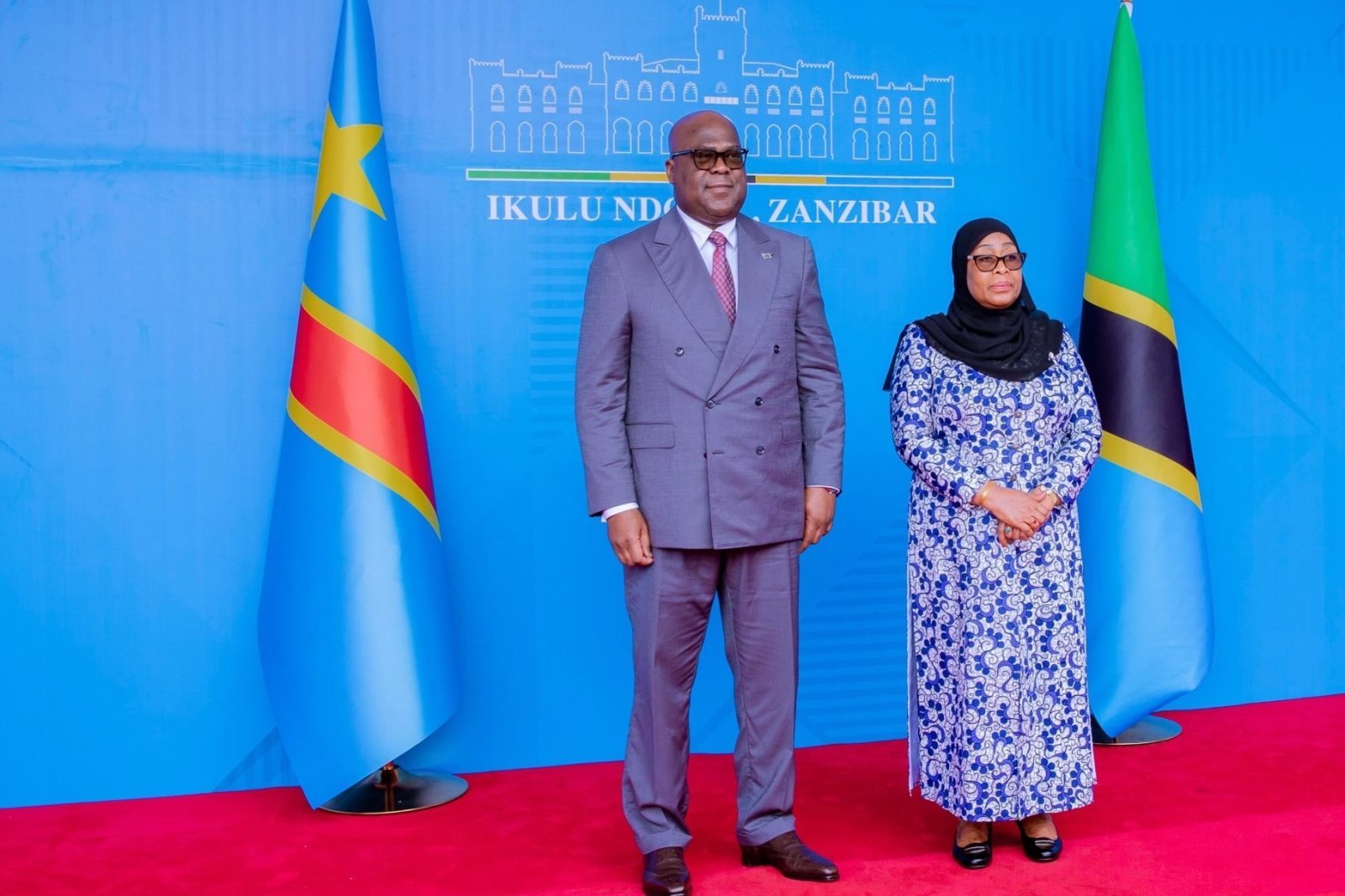
DAR ES SALAAM — Tanzania and the Democratic Republic of Congo used President Félix Tshisekedi's two-day state visit to Zanzibar on 17-18 August 2026 to commit to something more ambitious than another round of bilateral trade pledges: an attempt to weld railway, road, port and lake infrastructure into a single integrated logistics system connecting DRC's mineral-rich interior to the Indian Ocean.
"This project is of great importance in connecting ports, railways, roads and water transport, and thereby reducing the cost and time of transporting cargo through Lake Tanganyika," President Samia Suluhu Hassan said at a joint press conference following the talks.
Why This Relationship Is Already Large
The scale of what's at stake explains why both governments are treating this as a strategic priority rather than routine cooperation. More than 60% of all cargo handled at the Port of Dar es Salaam is destined for the DRC, and the DRC moved roughly 7.2 million tonnes of cargo through Tanzanian ports in 2025 alone. Bilateral trade reached approximately TZS 794 to 795 billion that year, but the relationship is heavily asymmetric: Tanzania exported roughly TZS 795 billion in goods to the DRC while importing only about TZS 24 billion in return, a trade imbalance of more than 30 to 1 that reflects the DRC's dependence on Tanzania as a transit and supply route far more than any balanced two-way commercial relationship.
President Tshisekedi framed the infrastructure agenda in terms that went beyond logistics efficiency, describing it as critical not just for moving cargo but for enabling the DRC and other African countries to unlock their own natural resources and build stronger economies, language that positions this corridor as industrial policy as much as transport policy.
The New Piece Nobody Was Expecting: A Congolese Dry Port in Dar es Salaam
The most concrete new commitment from the visit was also the least anticipated. Tshisekedi announced that the DRC has begun preparations to construct a dry port inside Dar es Salaam itself, a facility that would provide customs clearance, cargo handling, mineral certification and quality-control services specifically for Congolese cargo passing through Tanzania. "We want to make trade between our countries easier. The construction of a dry port in Dar es Salaam will help improve the handling and transportation of DRC cargo passing through Tanzania," Tshisekedi said.
That's a meaningful escalation in how the DRC is approaching this corridor. Rather than simply relying on Tanzanian port infrastructure and hoping for efficiency improvements, Kinshasa is proposing to embed its own customs and certification capacity directly inside Tanzania's largest port, giving the DRC more direct control over how its own cargo, particularly minerals requiring certification, moves through a foreign country's gateway.
The Rail Backbone Already Under Construction
Tanzania's Standard Gauge Railway is the physical spine this entire strategy depends on. The Tabora-to-Kigoma section extends the network toward Lake Tanganyika, while the Uvinza-to-Musongati line is being built as the first direct SGR connection between Tanzania and Burundi, a 282-kilometre section constructed under a $2.154 billion contract signed by Tanzania, Burundi and Chinese contractors CREGC and CREDC, comprising 240 kilometres of mainline track and 42 kilometres of crossing and operational infrastructure.
The more consequential extension is still in feasibility stage: Burundi and the DRC are studying a further railway from Musongati into DRC territory, eventually reaching toward Kindu, with Tanzania's Ministry of Transport describing the fuller route as running through Uvinza, Musongati, Gitega, Bujumbura, Uvira and Kindu. If that extension is built, it would give eastern and central DRC a direct rail link into Tanzania's transport system, and from there to Dar es Salaam, without depending on road transport or Lake Tanganyika shipping as intermediate steps.
Alongside the rail network, the Dar es Salaam-to-Mwanza SGR line, 1,219 kilometres in total, is progressing according to Tanzania Railway Corporation, with commercial operations targeted by the end of 2028. That line runs on a different axis than the Congo-facing western extensions, but it reinforces the same underlying logic: Tanzania is building a rail network dense enough to reduce dependence on road transport across its entire freight system, not just on the routes serving DRC specifically.
Lake and Road Infrastructure Filling the Gaps Rail Can't Reach Yet
Rail alone doesn't solve the Central Corridor's capacity problem, which is why Tanzania has moved in parallel on Lake Tanganyika transport. Four new 2,000-tonne cargo vessels launched in July 2026, alongside upgrades at Kigoma Port, are designed to increase cargo movement between Kigoma and eastern DRC ahead of any rail extension actually reaching Congolese territory. President Samia separately highlighted construction of the Kalemie-Manono road inside the DRC as a complementary link, and the two countries agreed to reduce trade barriers, improve border services and open more space for private sector participation in building out the remaining infrastructure.
Individually, none of these projects, the railway, the vessels, the road, the proposed dry port, would transform the corridor on its own. Together, they start to resemble something closer to a genuinely integrated logistics network: rail for large-volume, long-distance freight, the lake as an alternative route into eastern DRC where rail doesn't yet reach, roads connecting production areas and border markets, and Dar es Salaam providing the connection to international shipping lanes.
The Minerals Question Underneath the Trade Numbers
General merchandise trade is only part of why this corridor matters. The DRC holds some of the world's largest copper and cobalt deposits, minerals central to global battery and renewable energy supply chains, and efficiently moving that output from inland mining regions to a seaport is a strategic economic question well beyond ordinary bilateral trade. Tanzania and the DRC have already agreed to deepen cooperation specifically in mining, covering technical expertise, mineral value addition and marketing, and President Samia invited the DRC to participate in Tanzania's own regional minerals centre, a potential institutional link between Tanzania's processing ambitions and DRC's raw mineral output.
Why This Isn't a Two-Country Story
This is where the regional comparison matters most, because Tanzania is not the only country positioning itself as DRC's gateway to global markets, and the competition for that cargo is intensifying rather than settling.
| Corridor | Connects | Key Infrastructure | Status |
| Central Corridor (Tanzania) | DRC, Burundi, Rwanda → Port of Dar es Salaam (Indian Ocean) | SGR (Tabora-Kigoma, Uvinza-Musongati), Lake Tanganyika vessels, Kigoma Port, proposed DRC dry port in Dar es Salaam | Under active construction; Musongati-Kindu extension in feasibility |
| Northern Corridor (Kenya) | Uganda, Rwanda, eastern DRC → Port of Mombasa (Indian Ocean) | Established road and rail network via Mombasa | Mature, operational route; Kenya's incumbent advantage |
| Lobito Corridor (Angola) | Southern DRC, Zambia → Port of Lobito (Atlantic) | Dilolo-Sakania railway concession (Mota-Engil, 30-year term, ~$1.8bn), Lobito Atlantic Railway | Under active construction; strong US development finance backing |
Sources: The Citizen; The Chanzo; The EastAfrican; Uchumi360 prior reporting on the Lobito Corridor concession.
Kenya's Northern Corridor already connects Mombasa to Uganda, Rwanda and parts of eastern DRC through an established, operational road and rail network, giving Nairobi a considerable head-start advantage in institutional maturity and existing trader relationships that Tanzania's Central Corridor, still under active construction on several key links, has yet to match. The Lobito Corridor, running the opposite direction entirely toward the Atlantic through Angola, is competing directly for southern DRC's copper and cobalt traffic, and this publication has previously reported on the 30-year, roughly $1.8 billion concession Mota-Engil signed with the DRC in August 2026 to modernise the Dilolo-Sakania railway feeding that route, backed by real interest from the US International Development Finance Corporation.
That three-way competition means Tanzania's advantage in this relationship, geographic proximity, an existing and growing rail network, and now a proposed DRC-operated dry port inside Dar es Salaam itself, has to be weighed against Kenya's operational maturity on one side and Lobito's aggressive, internationally-financed construction pace on the other. The Central Corridor's genuine edge may be that it's pursuing a more integrated, multimodal design, rail, lake and road working together, rather than depending on any single mode of transport the way the other two corridors currently do.
What Will Actually Decide the Winner
Tanzania's Ministry of Transport and Tanzania's broader diplomatic push increasingly frame this competition around five specific variables: cost, transit time, reliability, port efficiency, and the ability to connect mines and production centres directly to international markets. None of those variables are won through state visits or joint communiqués; they're won through years of consistent execution, whether trains actually run on schedule, whether Dar es Salaam's port congestion improves rather than worsens as volume grows, and whether the proposed DRC dry port and the Musongati-Kindu rail extension actually get built rather than remaining feasibility studies.
The larger opportunity for Tanzania, beyond simply moving more Congolese cargo through its port, is capturing the economic activity that clusters around that cargo: logistics companies, warehousing, freight forwarding, insurance, banking services, mineral processing, and manufacturing locating along the corridor rather than merely passing goods through it. For the DRC, a genuinely reliable Indian Ocean route reduces dependence on road transport and diversifies the country's access to international markets away from a single corridor, a meaningful strategic gain regardless of which route ultimately carries the most tonnage.
The Security Backdrop Shaping the Economic Partnership
This infrastructure push isn't happening in a political vacuum. Tanzania has provided direct military support to Tshisekedi's government, deploying troops alongside South Africa and Malawi during intense fighting against the M23 rebellion in eastern Congo, and the two presidents' talks in Zanzibar also covered peace, security and the DRC's response to its seventeenth Ebola outbreak. That security relationship gives the economic partnership a foundation beyond pure commercial logic, Tanzania has a demonstrated stake in Congolese stability that goes well past cargo volumes, which may partly explain why Dodoma is willing to commit substantial rail and port investment to a partner whose own trade contribution remains so lopsided in Tanzania's favour.
What to Watch Next
The near-term tests are specific and trackable: whether the DRC's proposed Dar es Salaam dry port moves from announcement to construction, whether feasibility work on the Musongati-to-Kindu rail extension produces a committed financing plan, and whether Tanzania's regional minerals centre actually attracts DRC participation in a way that translates into processing investment rather than remaining a diplomatic gesture. The next real contest for East and Central African trade, as this corridor's own logic suggests, won't be decided at any border crossing. It will be decided by which of Tanzania, Kenya and Angola can turn political commitment into the kind of consistent, integrated infrastructure that actually makes crossing that border worthwhile.
FAQ
What did Tanzania and the DRC actually agree to during Tshisekedi's visit? An acceleration of an integrated multimodal transport project strengthening the Central Corridor, combining railway, road, Lake Tanganyika shipping and port infrastructure, alongside DRC's announcement that it has begun preparing to build a dry port inside Dar es Salaam for its own cargo.
How much trade currently flows between Tanzania and the DRC? Approximately TZS 794-795 billion in 2025, though heavily one-directional: Tanzania exported roughly TZS 795 billion in goods to the DRC while importing only about TZS 24 billion in return.
How much of Dar es Salaam's port traffic is related to the DRC? More than 60% of cargo handled at the Port of Dar es Salaam is destined for the DRC, which moved roughly 7.2 million tonnes of cargo through Tanzanian ports in 2025.
Is Tanzania the only country competing for DRC's trade and mineral traffic? No. Kenya's established Northern Corridor already connects Mombasa to Uganda, Rwanda and eastern DRC, and Angola's Lobito Corridor is competing for the same Congolese mineral traffic via an Atlantic route, backed by a roughly $1.8 billion, 30-year rail concession signed in August 2026.
What is the DRC's proposed dry port in Dar es Salaam? A facility DRC President Tshisekedi announced is in preparation, intended to provide customs clearance, cargo handling, mineral certification and quality-control services specifically for Congolese cargo, giving the DRC more direct control over its own trade passing through Tanzania.
What will ultimately determine which corridor, Tanzania's, Kenya's or Angola's, wins the most DRC traffic? Cost, transit time, reliability, port efficiency, and the ability to connect mines and production centres directly to international markets, factors that depend on sustained infrastructure execution over years rather than diplomatic agreements alone.
 Uchumi360
Business Intelligence
Uchumi360
Business Intelligence
Uchumi360 covers business, investment, and economic policy across East, Central, and Southern Africa.
For the serious reader
You read to the end. That places you in a small group.
Uchumi360 is built for readers who demand precision over speed, structure over sentiment, and analysis that holds uncomfortable conclusions rather than softening them. If this work sharpens how you think about Africa's economy, help us keep building the infrastructure behind it.
Institutional Partners
Commission intelligence. Shape the conversation.
Uchumi360 works with development finance institutions, investment firms, sovereign bodies, and strategic organisations across the coverage region. Institutional partnership unlocks:
- Commissioned sector and country intelligence reports
- Branded research series under your institution's authority
- Exclusive data briefings for internal strategy teams
- Speaking and editorial presence at Uchumi360 events
- Co-published investment outlooks for your markets
Support Our Work
Independent analysis has a cost. Help us bear it.
Uchumi360 does not carry advertising. It does not take editorial direction from sponsors. Every article is produced without commercial compromise. Your contribution funds the reporting, research, and editorial infrastructure that keeps this analysis free from influence.
Secure checkout: One-time and monthly support are processed securely. Add payment credentials to enable checkout here.
Stay Connected
Keep up with every new insight.
Follow our latest analysis, policy coverage, and market intelligence as soon as it is published. If you need something specific, reach out directly and we will point you to the right research.
