
Tanzania Is Quietly Becoming East Africa's Logistics Superpower
Ready
Tanzania's Long Term Perspective Plan 2026/27–2050/51 links its major infrastructure projects, the Standard Gauge Railway, three ports at Dar es Salaam, Tanga and Mtwara, the Julius Nyerere Hydropower Project, the East African Crude Oil Pipeline, One Stop Border Posts and regional highways, into a single logistics corridor rather than a list of separate ministry projects. The strategy leverages Tanzania's geography: Indian Ocean access, eight bordering countries, and the shortest maritime route for landlocked Zambia, Malawi, Rwanda, Burundi, Uganda and the DRC. Tanzania is competing directly with Kenya's Mombasa and Lamu, Djibouti, and Mozambique's port network for the same regional trade. The real test isn't infrastructure completion. It's whether cargo volumes, transit trade and export growth actually follow.
Individually, Tanzania's mega projects look like a railway here, a port expansion there. Connected, they read as one deliberate logistics network built to serve landlocked neighbours as much as Tanzania itself, the same strategy that made Singapore and Rotterdam wealthy without their own factories.
The world's most successful trading nations share one trait: they move goods faster, cheaper and more efficiently than their competitors. Singapore built wealth with almost no natural resources by mastering logistics. The Netherlands became Europe's trade gateway through Rotterdam. Dubai turned itself into a global commercial hub by connecting ports, airports and free zones into one system rather than developing them separately.
Tanzania's Long Term Perspective Plan 2026/27–2050/51 suggests the country is pursuing the same model, though the public conversation around it has mostly focused on individual projects rather than the pattern connecting them. The government isn't simply building roads, railways and ports as discrete infrastructure investments. It's building one of Africa's more integrated logistics systems, designed to serve Tanzania and much of Eastern and Central Africa simultaneously.
Geography as an underrated resource
Tanzania's natural wealth conversations usually centre on gold, natural gas, graphite or tourism. Vision 2050 treats location as a resource deserving equal billing. Few countries share Tanzania's position: Indian Ocean access, borders with eight countries, the shortest maritime route for several landlocked economies, and a position between Southern Africa, Central Africa and the East African Community.
Geography alone generates nothing on its own. Infrastructure is what converts it into economic value, and that conversion appears to be the organising logic behind Vision 2050 rather than an incidental byproduct of separate infrastructure decisions.
Separate ministries, one network
For years, Tanzania's major infrastructure announcements read as unrelated: the Standard Gauge Railway, the Port of Dar es Salaam expansion, Port of Tanga modernisation, Mtwara Port expansion, the Julius Nyerere Hydropower Project, the East African Crude Oil Pipeline, new international airports, dry ports, One Stop Border Posts, national highways. Viewed individually, they belong to different ministries and different press cycles.
Viewed together, and consistent with how Vision 2050 repeatedly links transport infrastructure, energy systems, logistics services and regional connectivity as mutually reinforcing pillars, they resemble a single logistics network rather than a collection of standalone projects competing for the same budget line. Tanzania isn't building infrastructure project by project. It's building corridors.
What the railway actually connects
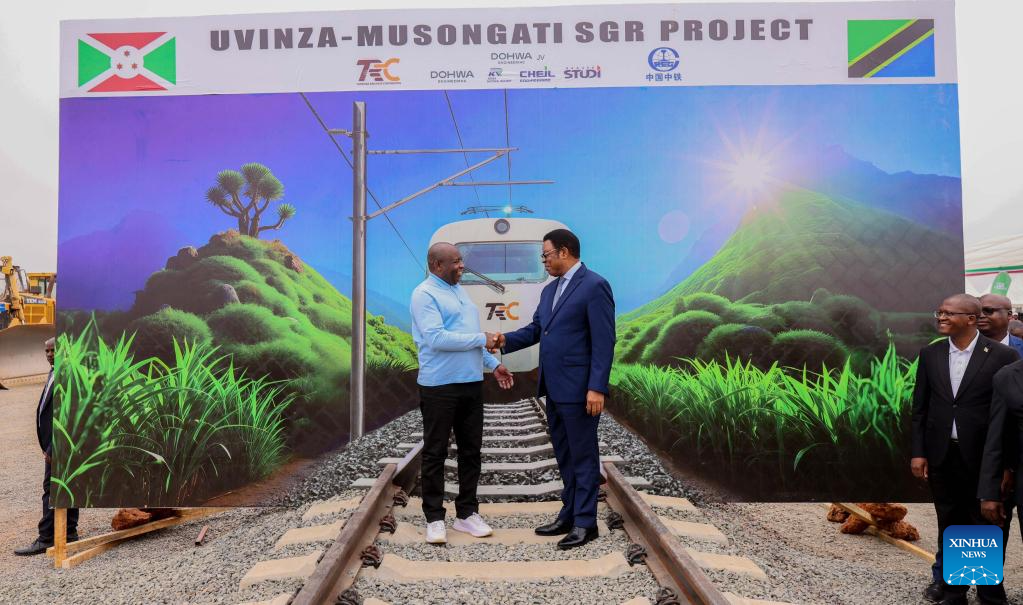
The Standard Gauge Railway illustrates the strategy more clearly than any other single project. It does more than move passengers between Dar es Salaam and Dodoma. It connects the Port of Dar es Salaam to the country's interior, and is designed to eventually link Tanzania with Rwanda, Burundi and the eastern Democratic Republic of the Congo, while strengthening trade connectivity with Uganda through regional links.
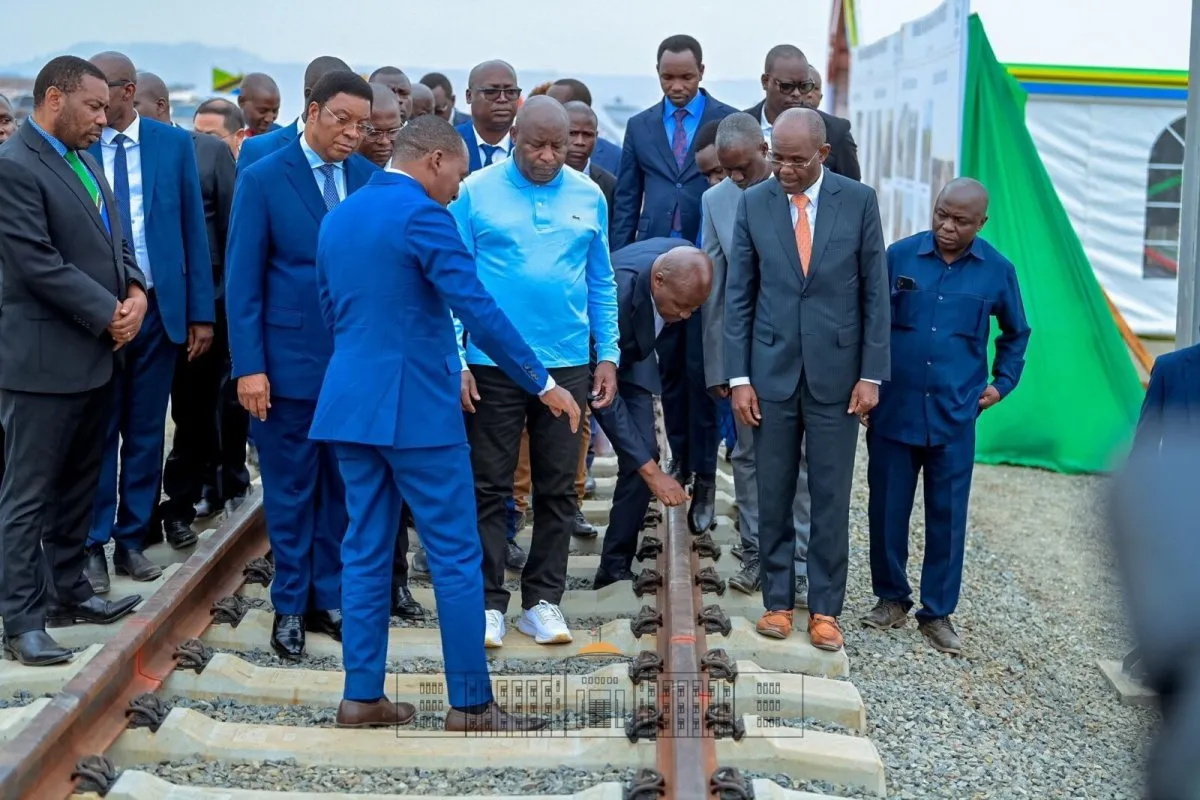 The railway connecting Burundi and Tanzania is expected to modernize transport and strengthen trade
The economics compound across borders. For exporters, every hour cut from transport time lowers production costs. For ports, faster rail connections raise cargo throughput. For neighbouring landlocked countries, reliable rail reduces dependence on road freight, which is typically slower and more expensive. The railway generates value well beyond Tanzania's own borders, which is precisely the point of a corridor strategy rather than a purely domestic transport upgrade.
Three ports, three distinct roles
Tanzania is also building a deliberate multi-port strategy rather than concentrating everything at one facility. Dar es Salaam remains the principal commercial gateway and one of Africa's busiest ports. Tanga is emerging as East Africa's energy gateway through the East African Crude Oil Pipeline. Mtwara is increasingly positioned around natural gas development, agriculture, mining and trade with Southern Africa.
Rather than competing with each other for the same cargo, the three ports are developing different economic functions, which together expand Tanzania's total capacity to handle cargo, energy exports and regional trade simultaneously rather than funnelling everything through a single bottleneck.
Energy as logistics infrastructure
Vision 2050 treats energy as an economic enabler for the logistics network, not a separate utility sector running alongside it. That's why the Julius Nyerere Hydropower Project, natural gas infrastructure and national transmission expansion appear consistently alongside transport investments in the plan rather than in a separate section. Ports need electricity. Railways need electricity. Manufacturing needs electricity. Digital logistics needs electricity. Without reliable, abundant power, transport infrastructure alone can't deliver the industrial competitiveness the broader strategy depends on.
Built for more than Tanzania
The clearest signal of regional ambition is that the infrastructure being built is considerably larger than what Tanzania's own economy requires on its own. Dar es Salaam already handles cargo destined for Zambia, Malawi, Rwanda, Burundi, Uganda and the DRC. The Standard Gauge Railway is designed with regional integration built in from the start, not added as an afterthought. Road corridors increasingly support cross-border trade across Eastern and Southern Africa.
Tanzania's ambition here extends past becoming a national transport hub. It's positioning to become a regional logistics platform, generating revenue and strategic relevance from goods that never originate or terminate inside Tanzania at all.
Logistics as an export industry in its own right
Countries traditionally export goods. Increasingly, they also export services, and logistics is where that shift shows up most directly. Ports generate revenue. Railways earn transit fees. Warehousing creates employment. Freight forwarding becomes a standalone business. Customs clearance and container handling generate income independent of what's actually being shipped. Insurance, finance and digital logistics services expand alongside the physical infrastructure.
Vision 2050 places logistics alongside manufacturing, agriculture, mining and tourism as a strategic sector in its own right, not as a supporting service to those other sectors, which reflects how much of the model's revenue is expected to come from moving other countries' cargo rather than only Tanzania's own trade.
The regional field is crowded
Tanzania isn't pursuing this uncontested. Kenya keeps expanding the Port of Mombasa, Lamu Port and the Northern Corridor. Djibouti has become one of Africa's most important maritime gateways, serving Ethiopia specifically. South Africa dominates much of Southern Africa's existing logistics network. Mozambique is expanding Maputo, Beira and Nacala simultaneously.
The competition to become Africa's preferred logistics gateway is already underway, and Tanzania's response has been to build at scale rather than compete on a single asset: not one railway but a railway network, not one port but a multi-port system, not isolated highways but full regional corridors.
What actually proves this worked
Infrastructure construction is the comparatively easy part. Generating the freight to justify it is harder. The real measure of Tanzania's logistics strategy won't be kilometres of railway built or tonnes of concrete poured. It will be cargo volumes, transit trade, export growth, lower transport costs, industrial investment attracted, and regional market share actually captured. Those are the indicators that determine whether this infrastructure becomes productive capital generating ongoing returns, or simply an expensive set of public assets built ahead of the demand that was supposed to justify them.
The Uchumi360 insight
Tanzania's infrastructure programme has largely been reported as a collection of mega projects. Vision 2050 suggests something larger is actually underway. The individual projects aren't the strategy. The logistics network connecting them is. Countries that dominate trade rarely do so because they manufacture everything themselves. They do so because everything moves through them. Tanzania appears to be betting that becoming East Africa's logistics superpower becomes the foundation its industrial economy gets built on, rather than a byproduct of industrialisation happening elsewhere first.
FAQ
What infrastructure makes up Tanzania's logistics corridor? The Standard Gauge Railway, three ports (Dar es Salaam, Tanga, Mtwara), the Julius Nyerere Hydropower Project, the East African Crude Oil Pipeline, One Stop Border Posts, dry ports and regional highways.
Which countries does this network serve beyond Tanzania? Zambia, Malawi, Rwanda, Burundi, Uganda and the Democratic Republic of the Congo, all landlocked or partially dependent on Tanzania's ports and rail for maritime trade access.
Who is Tanzania competing against for regional logistics dominance? Kenya (Mombasa, Lamu, Northern Corridor), Djibouti (serving Ethiopia), South Africa, and Mozambique (Maputo, Beira, Nacala).
How will success actually be measured? Cargo volumes, transit trade, export growth, lower transport costs, industrial investment and regional market share, not the scale of infrastructure construction itself.
 Uchumi360
Business Intelligence
Uchumi360
Business Intelligence
Uchumi360 covers business, investment, and economic policy across East, Central, and Southern Africa.
For the serious reader
You read to the end. That places you in a small group.
Uchumi360 is built for readers who demand precision over speed, structure over sentiment, and analysis that holds uncomfortable conclusions rather than softening them. If this work sharpens how you think about Africa's economy, help us keep building the infrastructure behind it.
Institutional Partners
Commission intelligence. Shape the conversation.
Uchumi360 works with development finance institutions, investment firms, sovereign bodies, and strategic organisations across the coverage region. Institutional partnership unlocks:
- Commissioned sector and country intelligence reports
- Branded research series under your institution's authority
- Exclusive data briefings for internal strategy teams
- Speaking and editorial presence at Uchumi360 events
- Co-published investment outlooks for your markets
Support Our Work
Independent analysis has a cost. Help us bear it.
Uchumi360 does not carry advertising. It does not take editorial direction from sponsors. Every article is produced without commercial compromise. Your contribution funds the reporting, research, and editorial infrastructure that keeps this analysis free from influence.
Secure checkout: One-time and monthly support are processed securely. Add payment credentials to enable checkout here.
Stay Connected
Keep up with every new insight.
Follow our latest analysis, policy coverage, and market intelligence as soon as it is published. If you need something specific, reach out directly and we will point you to the right research.
