
Tanzania Secures $1.2 Billion for Tabora to Kigoma SGR With AfDB's Largest Credit Guarantee
Ready
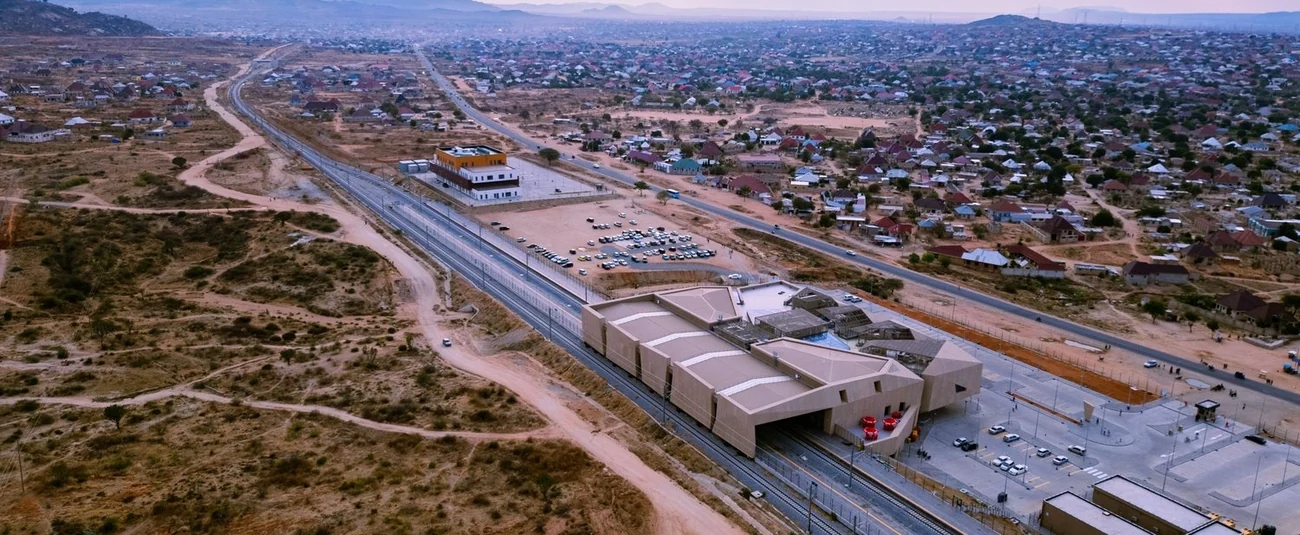
Tanzania has signed a $1.2 billion commercial financing facility for the Tabora to Kigoma Standard Gauge Railway, backed by the African Development Bank's largest partial credit guarantee to date, valued at $800 million. The agreement brings together nine commercial banks and international credit insurers to support construction of a major railway connection linking western Tanzania to the Central Corridor. The investment will strengthen the country's position as a regional transport gateway, improve freight connectivity with Burundi and eastern Democratic Republic of Congo, and expand access to the Port of Dar es Salaam for businesses operating across the Great Lakes region.
Tanzania has signed a $1.2 billion commercial financing facility for the Tabora to Kigoma Standard Gauge Railway, backed by the African Development Bank's largest partial credit guarantee to date, valued at $800 million. The agreement brings together nine commercial banks and international credit insurers to support construction of a major railway connection linking western Tanzania to the Central Corridor. The investment will strengthen the country's position as a regional transport gateway, improve freight connectivity with Burundi and eastern Democratic Republic of Congo, and expand access to the Port of Dar es Salaam for businesses operating across the Great Lakes region.
Tanzania has concluded a $1.2 billion commercial financing agreement for the construction of the Tabora to Kigoma section of its Standard Gauge Railway (SGR), marking a major milestone in the financing of the country's railway expansion programme. The transaction, announced on 4 November 2026, was structured by the African Development Bank (AfDB), which provided an $800 million partial credit guarantee to support commercial lending from a consortium of nine international and African banks. The guarantee is the largest of its kind arranged by the Bank, allowing Tanzania to secure substantial commercial financing for a railway connection that will extend the Central Corridor towards Lake Tanganyika and improve transport access to Burundi and eastern Democratic Republic of Congo.
The financing agreement covers Lot 6 of Tanzania's Standard Gauge Railway programme, a 411 kilometre electrified railway connecting Tabora with Kigoma in the western part of the country. The project forms part of Tanzania's wider investment in modern railway infrastructure intended to link Dar es Salaam with inland production centres, industrial areas and regional markets. By extending the SGR network towards Lake Tanganyika, the government is strengthening a transport corridor that connects the Indian Ocean with some of Central Africa's most commercially important agricultural, mineral and consumer markets. The railway is expected to improve the movement of cargo, reduce dependence on long distance road transport and support investment in logistics, manufacturing, agriculture and services along the route.
The agreement also advances the African Development Bank's wider financing mandate for Tanzania's railway programme. The government previously appointed the Bank to structure and mobilise up to $3.2 billion in financing from commercial banks, development finance institutions, export credit agencies and institutional investors. In December 2024, AfDB signed a coordination agreement with Deutsche Bank and Société Générale to arrange up to $1.2 billion for the Tabora to Kigoma project. The latest agreement represents the completion of that commercial financing arrangement, establishing a consortium of lenders and a guarantee structure that brings together African and international financial institutions to support one of Tanzania's largest ongoing infrastructure investments.
Nine International Banks Join Tanzania's $1.2 Billion Railway Financing
The commercial facility has been arranged through a syndicate of nine banks, with Deutsche Bank and Société Générale serving as co arrangers alongside the African Development Bank. The other participating lenders are HSBC, Commerzbank, Nedbank, Stanbic Bank Tanzania, First Abu Dhabi Bank, FirstBank UK and Bank of Africa United Kingdom. Their participation brings together financial institutions with experience in sovereign lending, infrastructure finance and international capital markets, providing Tanzania with access to a large financing facility through a coordinated arrangement rather than relying on a single commercial lender.
The financing consists of two components: $720 million in guaranteed commercial lending and $480 million extended on the strength of Tanzania's sovereign credit. The African Development Bank's partial credit guarantee of up to $800 million supports the guaranteed component, covering specified repayment obligations and providing additional protection to participating lenders. The structure allows commercial banks to finance a major public infrastructure project while benefiting from the credit standing and risk management capacity of a multilateral development institution.
A partial credit guarantee differs from a direct loan because the development bank provides financial protection against specified payment risks rather than disbursing the entire guaranteed amount as construction funding. Tanzania receives the $1.2 billion commercial financing from the participating banks, while AfDB's $800 million guarantee supports the credit arrangements that make the lending possible. The guarantee therefore strengthens the financing structure without constituting an additional $800 million loan to the government.
International credit insurers are also participating in the transaction. Insurance broker Texel arranged approximately $405.5 million in private credit insurance covering part of the African Development Bank's exposure, with protection provided through international insurance markets, including Lloyd's syndicates. This additional arrangement distributes financial exposure between the multilateral institution and commercial insurers, allowing the transaction to combine several sources of credit protection within one financing structure.
The involvement of commercial banks, a multilateral development institution and private credit insurers demonstrates how large African infrastructure projects can attract financing from institutions with different financial mandates. Commercial lenders provide capital, the African Development Bank structures the transaction and provides credit protection, while insurers assume an agreed portion of the financial exposure. For Tanzania, this arrangement expands access to international capital for infrastructure development while allowing the government to finance a major railway section through a coordinated commercial facility.
The $1.2 billion agreement forms part of a broader financing package valued at approximately $2.3 billion for the Tabora to Kigoma project. The wider structure includes financing arrangements involving export credit agencies and another guarantee institution. Tanzania's engagement with these institutions reflects the scale of capital required to construct an electrified railway across western Tanzania and the government's approach to mobilising funding from several international financial sources.
Tabora to Kigoma Railway Will Extend the Central Corridor Towards Lake Tanganyika
The Tabora to Kigoma section occupies an important position within Tanzania's railway development programme because it connects the country's interior with Lake Tanganyika, providing a route towards regional markets that depend heavily on road, lake and multimodal transport. Tabora is an important railway junction in central Tanzania, while Kigoma serves as a commercial gateway to communities and markets around Lake Tanganyika. Connecting these centres through a modern electrified railway will strengthen the movement of cargo between western Tanzania and the expanding SGR network leading towards Dar es Salaam.
Tanzania's Central Corridor has long provided access to the Indian Ocean for several landlocked economies in East and Central Africa. The corridor includes the Port of Dar es Salaam, inland railway and road connections, logistics facilities and transport routes extending towards Burundi, Rwanda, Uganda, Zambia and the Democratic Republic of Congo. Its economic value comes from providing businesses with an international trade route through which imports, exports and transit cargo can move between coastal shipping networks and inland markets.
The Tabora to Kigoma investment extends this transport opportunity towards Lake Tanganyika, one of the principal geographical connections between Tanzania and eastern DRC. Kigoma's port facilities connect with lake transport services serving commercial centres including Kalemie, which provides access to markets in the eastern part of the Democratic Republic of Congo. The completed railway will allow cargo moving between Dar es Salaam and Kigoma to benefit from modern rail infrastructure, creating opportunities for more efficient connections with lake transport operators and inland distribution networks.
For the Democratic Republic of Congo, improved access to Tanzania's railway and port infrastructure could strengthen the movement of imported machinery, construction materials, manufactured goods, fuel and agricultural products. Eastern DRC contains substantial mineral resources and a large consumer market, but transport costs remain a major consideration for businesses moving cargo between inland production centres and international shipping routes. A modern railway connection through Tanzania offers an additional transport option for exporters, importers and logistics companies serving this market.
Burundi also stands to benefit from improvements in Tanzania's Central Corridor. As a landlocked economy, Burundi depends on transport connections through neighbouring countries for access to international markets, making the cost and reliability of regional infrastructure important to its trade competitiveness. Tanzania is already pursuing railway connections towards Burundi under its wider regional SGR development programme, while the Tabora to Kigoma section will strengthen the broader railway network serving western Tanzania and the Great Lakes region. Together, these investments expand the infrastructure through which agricultural commodities, industrial inputs, consumer products and manufactured goods can reach regional markets.
The railway will also improve connectivity within Tanzania itself. Western regions contain agricultural production areas, trading centres and emerging commercial activities whose access to markets depends on efficient transport services. Better railway connections can make it easier for producers to move bulk agricultural commodities, construction materials, fertilisers and industrial inputs over long distances, while passenger services improve mobility between western Tanzania and the country's principal urban and commercial centres.
For businesses operating along the corridor, railway construction and operations will create additional demand for transport services, cargo handling, storage, maintenance, accommodation, equipment supply and other supporting activities. Stations and logistics facilities can also encourage investment in warehouses, distribution centres and processing facilities where reliable freight transport improves access to customers and suppliers.
Tanzania's Railway Expansion Strengthens Competition for Regional Cargo
The economic significance of the Tabora to Kigoma project extends beyond the railway itself because Tanzania is competing to serve a growing share of freight moving between the Indian Ocean and the Great Lakes region. The Port of Dar es Salaam is a major maritime gateway for Tanzania and several neighbouring economies, handling domestic imports and exports alongside transit cargo destined for landlocked markets. Expanding railway capacity towards western Tanzania will strengthen the infrastructure connecting the port with regional production and consumption centres.
Rail transport is particularly suited to moving large volumes of bulk commodities, containers and other freight across long distances. A modern railway can carry substantial quantities of cargo using fewer train movements than the equivalent volume transported by road vehicles, supporting improvements in transport capacity and the organisation of freight operations. For businesses, the economic benefits arise from the ability to move goods reliably between ports, inland terminals and regional markets while reducing delays associated with fragmented transport arrangements.
The commercial opportunity is substantial in regions where road transport remains the dominant means of moving freight over long distances. Agricultural exporters require reliable connections to reach domestic and international markets, while manufacturers depend on the timely delivery of raw materials, machinery, packaging and other production inputs. Mining companies similarly require transport infrastructure capable of handling bulk minerals, industrial equipment and construction materials. By extending the electrified SGR towards Kigoma, Tanzania is increasing the capacity of the Central Corridor to serve several categories of cargo through a connected railway network.
The project also complements Tanzania's investments in port infrastructure and logistics services. The relationship between ports and railways is especially important because a port's competitive position depends partly on how efficiently cargo can be moved inland after arriving by sea. Faster vessel handling and improved port facilities create economic value when supported by reliable transport links to domestic and regional destinations. The extension of the SGR towards Lake Tanganyika therefore contributes to a wider transport system connecting maritime shipping, inland railway services, road distribution and lake transport.
Tanzania's location provides access to several regional markets through different transport corridors, but commercial opportunities become more valuable when supported by infrastructure that can handle growing trade volumes. The Tabora to Kigoma section will strengthen the western connection of the national railway network, making the Central Corridor more accessible to businesses operating around Lake Tanganyika and providing additional opportunities for logistics investment.
The railway's role in regional trade also places it within the broader objective of increasing economic integration between East and Central African markets. Tanzania, Burundi and the Democratic Republic of Congo are members of the East African Community, which seeks to expand trade through improved market access, infrastructure development and coordination of customs and regulatory arrangements. Better railway connections can support those objectives by improving the physical infrastructure required for businesses to move goods between member states.
AfDB's Largest Credit Guarantee Opens a New Model for Infrastructure Financing
The African Development Bank's $800 million partial credit guarantee is an important feature of the transaction because it demonstrates how a development finance institution can mobilise commercial capital for infrastructure without providing the entire financing amount through direct lending. Large transport projects require substantial funding, and development banks have historically supported such investments through sovereign loans, concessional financing and project specific facilities. Guarantees allow these institutions to use their financial standing to support commercial lenders, expanding the amount of capital available for infrastructure development.
For international banks, lending to governments for major infrastructure projects involves an assessment of repayment capacity, project implementation, currency exposure and the wider economic conditions of the borrowing country. Multilateral guarantees improve the financing environment by protecting lenders against defined risks and strengthening the commercial terms under which capital can be provided. This makes guarantees particularly relevant for infrastructure projects that require large financing commitments and extended repayment periods.
The Tanzania transaction illustrates the financial scale that can be achieved through this approach. An $800 million partial credit guarantee supports a $1.2 billion commercial financing agreement involving nine banks, while private insurers provide additional protection covering part of AfDB's exposure. The arrangement allows several financial institutions to participate in one project, distributing commitments across a larger group of lenders and expanding Tanzania's access to international commercial financing.
The transaction also builds on the African Development Bank's wider infrastructure financing activities in Tanzania. According to the Bank's October 2026 Country Portfolio Performance Review, its active portfolio in the country was valued at approximately $3.85 billion across 29 operations as of September 2026, with around 84% concentrated in infrastructure, including transport, energy, water and sanitation. The review also noted Tanzania's increasing ability to access financing beyond the concessional resources traditionally provided through the African Development Fund, reflecting a broader range of financing instruments available to support national development priorities.
The Tabora to Kigoma agreement therefore forms part of an expanding financial relationship between Tanzania and the African Development Bank. Beyond its role as a lender, the Bank is providing transaction structuring, coordination of commercial institutions and credit guarantees intended to attract financing for projects requiring substantial capital investment. This approach enables Tanzania to pursue large infrastructure projects through combinations of development finance, commercial lending and private sector participation.
The financing also provides a reference point for other African governments seeking to develop railways, ports, energy infrastructure and transport corridors. Many countries face infrastructure requirements that exceed the capital available through domestic budgets and traditional development lending. By combining commercial banking capacity with multilateral credit protection, transactions of this nature can widen the range of institutions willing to finance long term public infrastructure.
The Financing Agreement Advances Tanzania's Regional Railway Programme
Tanzania's Standard Gauge Railway investment is among the country's largest infrastructure development programmes, intended to modernise long distance rail transport and strengthen economic connections between Dar es Salaam, central Tanzania, the Lake Zone and neighbouring countries. The programme supports the movement of passengers and freight through a modern railway network while improving the infrastructure available to industries dependent on bulk transport and regional distribution.
The Tabora to Kigoma section extends that investment towards Lake Tanganyika, strengthening the connection between the country's western regions and the Port of Dar es Salaam. The railway will also support wider transport planning around the Central Corridor by connecting inland economic activity with international maritime trade routes and regional markets. Its development adds to Tanzania's efforts to improve railway connectivity with Burundi and the wider Great Lakes region, where access to ports and efficient inland logistics remains essential for commercial activity.
The financing agreement marks a transition from the arrangement of funding commitments announced in December 2024 to a signed commercial facility involving nine lenders, a record AfDB partial credit guarantee and international credit insurance. The financial structure demonstrates Tanzania's ability to bring together different institutions around a major infrastructure investment and provides a model through which multilateral guarantees can help mobilise substantial commercial financing.
The economic contribution of the railway will extend into freight transport, port activity, domestic production and regional trade. Improved rail connectivity towards Kigoma will give agricultural producers, industrial businesses, logistics companies and regional traders additional opportunities to move goods through Tanzania's Central Corridor, while supporting the development of commercial services along the railway route.
For Tanzania, the $1.2 billion agreement advances the government's objective of connecting its national railway network with regional trade markets and strengthening the country's role as a transport gateway between the Indian Ocean and Central Africa. With the African Development Bank arranging its largest partial credit guarantee to support the transaction, the project also demonstrates the growing role of African development finance institutions in mobilising international capital for major infrastructure investments.
FAQ
How much financing has Tanzania secured for the Tabora to Kigoma SGR? Tanzania has signed a $1.2 billion commercial financing facility for the Tabora to Kigoma section of its Standard Gauge Railway, supported by an $800 million partial credit guarantee arranged by the African Development Bank.
Which banks are financing Tanzania's Tabora to Kigoma railway? The nine participating institutions are Deutsche Bank, Société Générale, HSBC, Commerzbank, Nedbank, Stanbic Bank Tanzania, First Abu Dhabi Bank, FirstBank UK and Bank of Africa United Kingdom.
How does the African Development Bank's $800 million guarantee work? The partial credit guarantee provides protection to commercial lenders against specified repayment obligations. It supports the $1.2 billion commercial financing arrangement and is not a separate $800 million cash loan to Tanzania.
How is the $1.2 billion railway financing structured? The agreement comprises $720 million in guaranteed commercial lending and $480 million supported directly by Tanzania's sovereign credit. International credit insurers also provide protection covering part of AfDB's exposure.
How long is the Tabora to Kigoma Standard Gauge Railway? The financed section is described as a 411 kilometre electrified railway connecting Tabora with Kigoma in western Tanzania.
How will the Tabora to Kigoma railway benefit Tanzania's economy? The railway will improve long distance freight and passenger connectivity, support trade and commercial activity in western Tanzania, strengthen the Central Corridor and create opportunities for agriculture, logistics, manufacturing and related services.
How will the railway benefit Burundi and the Democratic Republic of Congo? The project will improve transport connections towards Lake Tanganyika and regional trade routes, strengthening access between the Port of Dar es Salaam, Burundi and eastern DRC.
What is the African Development Bank's wider role in Tanzania's SGR programme? The Bank has been mandated to structure and mobilise up to $3.2 billion in financing for Tanzania's wider railway development programme, involving commercial banks, development finance institutions, export credit agencies and other investors.
 Uchumi360
Business Intelligence
Uchumi360 covers business, investment, and economic policy across East, Central, and Southern Africa.
For the serious reader
You read to the end. That places you in a small group.
Uchumi360 is built for readers who demand precision over speed, structure over sentiment, and analysis that holds uncomfortable conclusions rather than softening them. If this work sharpens how you think about Africa's economy, help us keep building the infrastructure behind it.
Institutional Partners
Commission intelligence. Shape the conversation.
Uchumi360 works with development finance institutions, investment firms, sovereign bodies, and strategic organisations across the coverage region. Institutional partnership unlocks:
- Commissioned sector and country intelligence reports
- Branded research series under your institution's authority
- Exclusive data briefings for internal strategy teams
- Speaking and editorial presence at Uchumi360 events
- Co-published investment outlooks for your markets
Support Our Work
Independent analysis has a cost. Help us bear it.
Uchumi360 does not carry advertising. It does not take editorial direction from sponsors. Every article is produced without commercial compromise. Your contribution funds the reporting, research, and editorial infrastructure that keeps this analysis free from influence.
Secure checkout: One-time and monthly support are processed securely. Add payment credentials to enable checkout here.
Stay Connected
Keep up with every new insight.
Follow our latest analysis, policy coverage, and market intelligence as soon as it is published. If you need something specific, reach out directly and we will point you to the right research.
