
Julius Nyerere Hydropower Project: A Century of Ambition and Tanzania’s Next Economic Test
Ready
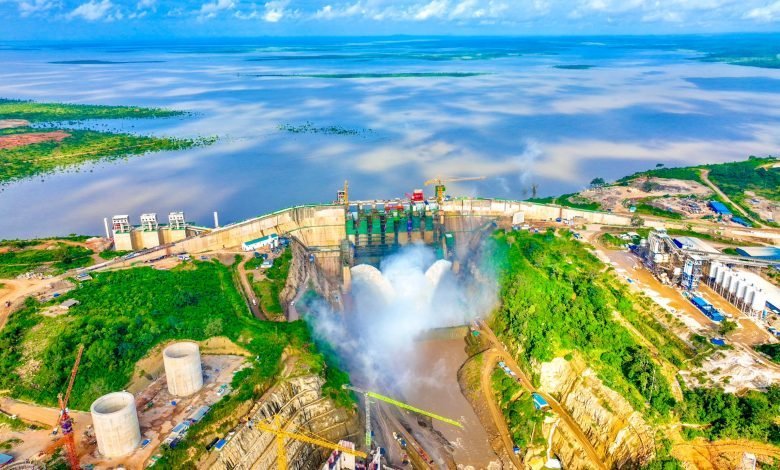
The Julius Nyerere Hydropower Project, 2,115 MW across nine turbines on the Rufiji River, traces back to German and British colonial-era surveys of the site and reached a design scale of roughly 2,100 MW as early as 1980, with support from Norway's NORAD and Norconsult. It was shelved for decades because Tanzania's electricity demand and financing capacity couldn't justify a project of that size. President John Magufuli revived it in 2017, and TANESCO signed a roughly TZS 6.558 trillion (about $2.9 billion) EPC contract with Egypt's Arab Contractors and Elsewedy Electric in December 2018; construction began in 2019, funded almost entirely from domestic government revenue. The first turbine came online in February 2024, and all nine were operational by April 2025, with the Controller and Auditor General reporting 99.35% implementation by December 2024. The project now gives Tanzania more installed capacity than its historical peak demand, shifting the country's central energy question from supply to demand: whether transmission capacity, industrial policy, electricity pricing and investment promotion can convert 2,115 MW into manufacturing, mineral processing, agro-processing and regional electricity trade, rather than simply more consumption without productivity gains.
DAR ES SALAAM — There is a temptation to treat the Julius Nyerere Hydropower Project as simply a remarkable feat of engineering. At 2,115 MW, nine generating units, and a reservoir holding roughly 32.8 billion cubic metres of water, it certainly is one. But the more useful way to understand the project is as the resolution of a question Tanzania has been asking for more than a century: how to convert the Rufiji River's natural resources into national economic development. That question outlived German colonial rule, British administration, independence, socialism and structural adjustment. It has now taken physical form, and the more interesting story is what comes after.
A Century Before the Dam, the Rufiji Was Already a Development Question
German authorities investigated the Rufiji in the early 20th century, and British administrators continued surveying the river after the First World War, initially focused on irrigation and flood control rather than electricity. By the mid-20th century the ambition had grown considerably: a 1961 FAO study envisaged roughly 200,000 hectares of irrigation in the Rufiji Basin. Electricity later became the dominant component of that vision, but the underlying idea, using infrastructure to transform an entire economic geography, predates hydropower entirely, which is precisely why JNHPP should not be judged on megawatts alone.
Independence sharpened the political stakes without resolving the engineering question. Julius Nyerere inherited decades of studies on the Rufiji, and through the 1960s American and Japanese institutions, including the US Bureau of Reclamation and the Tennessee Valley Authority, contributed to the thinking around the basin. By the 1970s, Norway had become the project's most important international partner: NORAD supported feasibility studies, Norconsult undertook major engineering work, and Hafslund later joined the design process. By around 1980, that work had produced a design of approximately 2,100 MW, remarkably close to the 2,115 MW Tanzania eventually built four decades later. The technical vision, in other words, was never the missing ingredient. What Tanzania lacked was the economic and financial capacity to execute it.
Why Tanzania Waited for Decades
The project didn't stall because earlier governments failed to grasp its potential. It stalled because the economics genuinely weren't favourable: Tanzania's economy was smaller, its electricity consumption was low, and its industrial base couldn't obviously absorb a facility generating more than 2,000 MW. The World Bank and other institutions questioned, reasonably, whether Tanzania could economically use a project this large. Environmental concerns compounded the hesitation, since the proposed reservoir would fundamentally alter part of the Rufiji ecosystem, raising questions about wildlife, downstream flows and the wider Selous ecosystem. By the 1980s, Stiegler's Gorge was trapped between three problems at once, cost, scale mismatched to demand, and environmental consequence, and the project was effectively shelved, though never forgotten.
What eventually changed wasn't a new engineering breakthrough. It was Tanzania itself: the economy grew, the population expanded, urbanisation accelerated, and repeated electricity shortages exposed how vulnerable the country's generation system had become to hydrological conditions and inadequate capacity. The argument that Tanzania couldn't absorb a project of this scale grew steadily less convincing, illustrating a broader point about large infrastructure: a project can be uneconomic at one stage of a country's development and transformative at another.
Magufuli's Decision Broke the Financing Deadlock
The decisive shift came under President John Magufuli, who committed to proceeding with the project in 2017. The more consequential decision wasn't reviving Stiegler's Gorge, it was changing how Tanzania paid for it: rather than waiting on international development finance, the government chose to fund construction domestically. In December 2018, TANESCO signed an EPC contract worth approximately TZS 6.558 trillion, roughly $2.9 billion at the time, with the Egyptian joint venture of Arab Contractors and Elsewedy Electric. Construction began in 2019 against an initial completion date of 14 June 2022, which slipped repeatedly before the project finally neared completion in 2025; Tanzania's Controller and Auditor General reported implementation at 99.35% by December 2024, with government officials citing figures between 99.5% and 99.8% complete by early 2025.
The project's renaming carried real political weight. Stiegler's Gorge referenced the site's colonial history; Julius Nyerere Hydropower Project tied the infrastructure explicitly to independent Tanzania's founding development vision. The continuity across administrations is genuinely unusual: Nyerere supplied the original development thinking, Magufuli supplied the political decision and financing model, and President Samia Suluhu Hassan's government carried the project through to completion after taking office in 2021, when it stood at roughly 30-33% complete. Few Tanzanian infrastructure projects have survived three distinct political eras intact.
What Tanzania Actually Built
| Indicator | JNHPP |
| Location | Rufiji River, Stiegler's Gorge |
| Installed capacity | 2,115 MW |
| Generating units | 9 |
| Capacity per turbine | 235 MW |
| Firm annual energy | 6,307 GWh |
| Reservoir capacity | ~32.8 billion m³ |
| Main dam height | ~131 metres |
| Main dam length | ~1,025 metres |
| Project cost | ~TZS 6.55 trillion |
| Original contract (2018) | TZS 6.558 trillion / ~US$2.9 billion |
| Construction began | 2019 |
| First electricity | February 2024 |
| All nine turbines operational | April 2025 |
| Contractor | Arab Contractors & Elsewedy Electric |
| Project owner | TANESCO |
| Financing | Government of Tanzania (domestic revenue) |
Figures should be read alongside Ministry of Energy and Controller and Auditor General reporting, which use slightly different rounding for total project cost.
The Real Project Is the Economy Around It
These numbers explain why JNHPP matters. They don't answer the more important question: what does Tanzania actually do with 2,115 MW? A dam doesn't industrialise a country. Electricity does, but only when it connects to productive activity. If factories can't connect to the grid, if transmission capacity is insufficient, if industrial electricity prices remain too high, or if Tanzania lacks enough industrial investment to absorb the new supply, the economic return on a TZS 6.55 trillion asset shrinks considerably. The question worth asking is no longer how many megawatts Tanzania has. It's how much additional economic output each of those megawatts can enable.
That reframing points directly at where the electricity could do the most work: mineral processing and refining rather than raw mineral exports, manufacturing that benefits from more reliable production conditions, agro-processing that captures more value domestically than exporting raw commodities does, cold-chain infrastructure that reduces post-harvest losses, irrigation systems paired with more predictable water management, modern rail and logistics, and, increasingly, digital infrastructure and data centres that require dependable power above all else. None of that happens automatically. Energy policy and industrial policy now have to be designed together, since identifying which sectors can build a genuine competitive advantage from electricity availability, and pricing that electricity in a way that gives investors confidence in continued supply, is a different and harder task than building the plant itself.
The Transmission Network May Decide the Project's Real Return
There is an uncomfortable possibility sitting underneath JNHPP's completion: Tanzania could have solved its generation problem without fully solving its electricity-system problem. Power still has to travel from Rufiji to consumers, which requires transmission capacity, substations and distribution infrastructure keeping pace with generation. If the grid grows more slowly than generation capacity, Tanzania risks stranding exactly the asset it just spent a century building. The dam cannot be evaluated apart from the grid, the grid cannot be evaluated apart from industrial demand, and industrial demand cannot be evaluated apart from investment policy, each link in that chain determines how much of JNHPP's potential actually gets captured.
Regional Trade Could Make Tanzania an Energy Hub, but Exports Shouldn't Be the Whole Strategy
Tanzania sits inside an increasingly interconnected East and Southern African power system, which creates a real opportunity to export surplus generation for foreign exchange and better commercial utilisation of the plant. But there's an important strategic distinction worth making explicit: Tanzania's higher-value path isn't becoming a cheap power exporter. It's industrialising domestically first, processing minerals, manufacturing goods, adding value to agricultural output, and exporting genuine surplus regionally on top of that. Selling raw electricity is useful. Using that electricity to produce goods Tanzania can sell regionally and globally is potentially far more transformative, and treating JNHPP as an economic multiplier rather than simply a power station is the difference between those two outcomes.
The Environmental Cost Is Part of the Economic Calculation
No serious assessment of JNHPP can set aside its environmental dimension. The Rufiji Basin is one of Tanzania's most significant ecological systems, and the dam and reservoir have raised long-standing concerns over wildlife habitat, downstream flows, fisheries, sediment movement and the broader Selous ecosystem, concerns UNESCO has separately raised regarding the site's World Heritage implications. The reservoir's scale also changes Tanzania's relationship with the river itself, shifting it from a natural system exploited for agriculture or power toward one under far greater human control, which creates new responsibilities around balancing generation against downstream ecological and agricultural needs. The honest approach treats this as part of the same ledger as the economic case, not a separate debate: if JNHPP generates substantial economic value while its environmental impacts are genuinely monitored and mitigated, large infrastructure and environmental stewardship can coexist. If those costs are ignored, Tanzania will simply have treated its natural capital as an invisible subsidy, which is poor economics as much as poor environmental policy.
What the Next Decade Needs to Show
The construction phase is over. The implementation phase, the one that actually determines whether JNHPP becomes transformative, is beginning, and it will be measured across several distinct indicators rather than a single completion certificate: how much electricity the plant actually generates relative to its installed capacity; whether the national grid can reliably evacuate that power; whether manufacturers and other productive sectors meaningfully increase their electricity consumption; whether reliable power attracts new domestic and foreign investment; whether Tanzania's mineral and agricultural exports become more processed and higher-value over time; whether genuine surplus power converts into commercially viable regional trade; whether the broader economy generates enough additional revenue and productivity to justify the public investment; and whether the Rufiji ecosystem is demonstrably being managed responsibly throughout.
Those eight indicators tell a far more meaningful story than simply reporting that nine turbines are operational. The German surveyors, the British administrators, the FAO's irrigation planners, Nyerere's development vision, Norway's engineers, and the international financiers who once doubted Tanzania could absorb a project this size were all, in different ways, asking the same underlying question the country still has to answer now that the dam exists: not whether Tanzania could build 2,115 MW, but whether it can turn that capacity into an economy worth the century it took to get there.
FAQ
How long has Tanzania actually been planning this project? Over a century. German colonial administrators first surveyed the Rufiji River's potential in the early 1900s, and by around 1980 Norwegian- and internationally-backed engineering studies had already designed a facility close to today's 2,115 MW scale, decades before construction actually began.
Why did it take so long to build? Primarily economics, not technical capability. Tanzania's electricity demand and financing capacity for most of the 20th century couldn't justify a project of this scale, and environmental concerns about the Rufiji ecosystem added further hesitation, leading international institutions and successive governments to shelve it repeatedly.
What changed to make the project viable? Tanzania's own economic growth, rising electricity demand, and President John Magufuli's 2017 decision to finance construction domestically rather than waiting on international development finance, a shift that turned a decades-old design into an active construction programme.
When did JNHPP actually become fully operational? The first turbine began generating in February 2024, and all nine turbines were operational by April 2025, with Tanzania's Controller and Auditor General reporting 99.35% implementation as of December 2024.
Does having 2,115 MW of new capacity guarantee Tanzania's industrialisation? No. The project shifts Tanzania's central energy challenge from supply to demand: whether transmission infrastructure, industrial policy, electricity pricing and investment promotion can convert available capacity into manufacturing, mineral processing and higher-value exports, rather than simply more consumption without corresponding productivity gains.
What are the main risks to JNHPP delivering its full economic potential? Insufficient transmission capacity to move power from the Rufiji to where demand exists, electricity prices that don't attract industrial investment, and unresolved environmental concerns about the Rufiji Basin and its relationship to the Selous ecosystem, all of which sit alongside the generation numbers as part of the project's real economic return.
 Uchumi360
Business Intelligence
Uchumi360
Business Intelligence
Uchumi360 covers business, investment, and economic policy across East, Central, and Southern Africa.
For the serious reader
You read to the end. That places you in a small group.
Uchumi360 is built for readers who demand precision over speed, structure over sentiment, and analysis that holds uncomfortable conclusions rather than softening them. If this work sharpens how you think about Africa's economy, help us keep building the infrastructure behind it.
Institutional Partners
Commission intelligence. Shape the conversation.
Uchumi360 works with development finance institutions, investment firms, sovereign bodies, and strategic organisations across the coverage region. Institutional partnership unlocks:
- Commissioned sector and country intelligence reports
- Branded research series under your institution's authority
- Exclusive data briefings for internal strategy teams
- Speaking and editorial presence at Uchumi360 events
- Co-published investment outlooks for your markets
Support Our Work
Independent analysis has a cost. Help us bear it.
Uchumi360 does not carry advertising. It does not take editorial direction from sponsors. Every article is produced without commercial compromise. Your contribution funds the reporting, research, and editorial infrastructure that keeps this analysis free from influence.
Secure checkout: One-time and monthly support are processed securely. Add payment credentials to enable checkout here.
Stay Connected
Keep up with every new insight.
Follow our latest analysis, policy coverage, and market intelligence as soon as it is published. If you need something specific, reach out directly and we will point you to the right research.
