
The Masaki Paradox: Why a Small Plot in Dar es Salaam Costs More Than an Acre in Texas
Ready
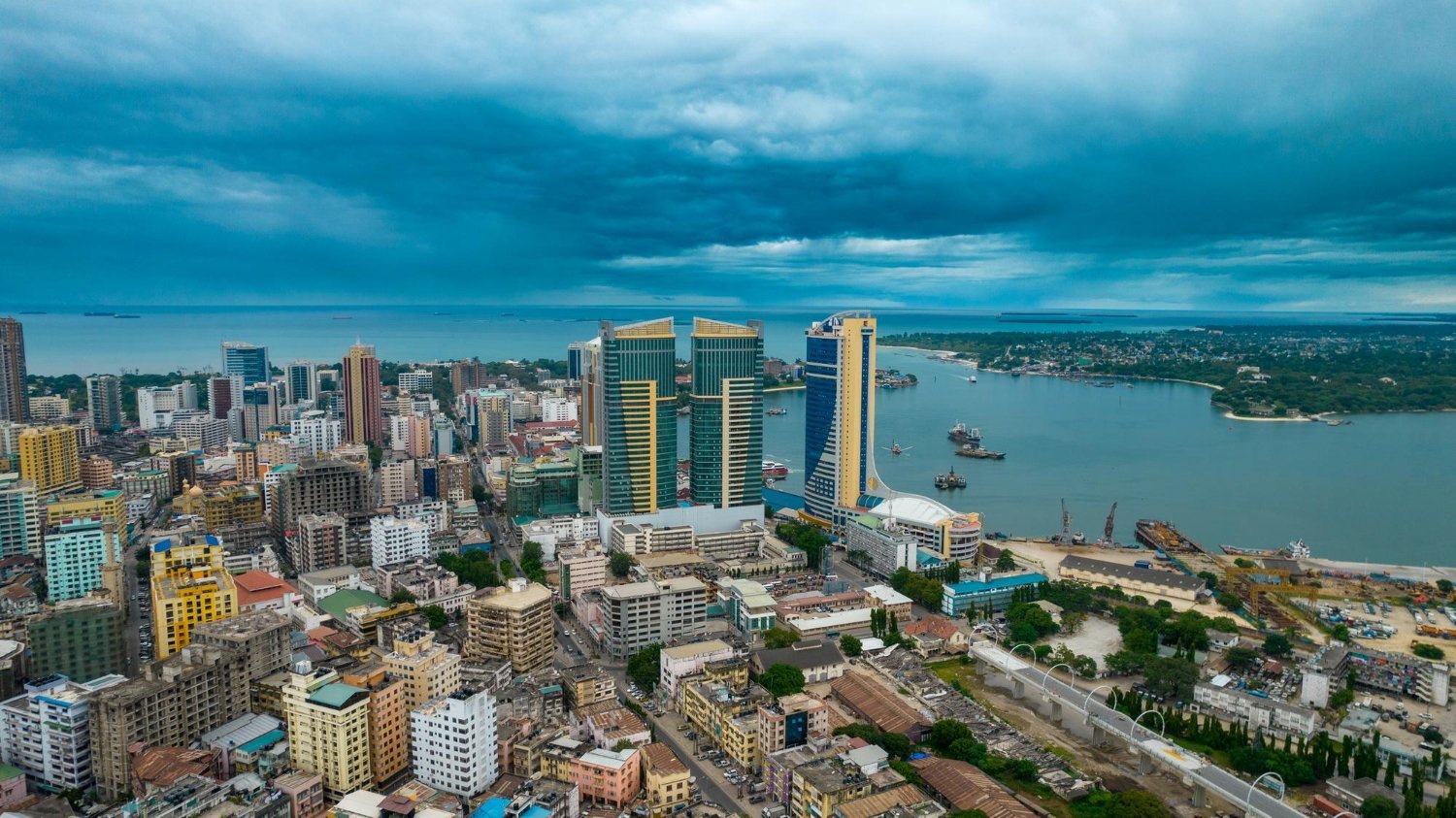
In 2026, prime land in Masaki trades at USD 1,400 to USD 2,655 per square metre. A four-bedroom house in Austin, Texas costs less than that same empty plot, comes with freehold title, and includes functioning roads, water, and power. The economics should not make sense. They do because Dar es Salaam has concentrated all its desirable infrastructure into a few coastal neighbourhoods and left everywhere else behind. That is not a real estate problem. It is a city planning failure with a real estate price tag. The anomaly is structural: artificial scarcity of serviced land, expatriate demand priced in hard currency, and infrastructure confined to the same three postcodes create a self-reinforcing premium that disconnects price from any rational economic foundation. Closing the gap requires not making Masaki cheaper but making the corridors of Mbweni, Mbezi, Kigamboni, Goba, and Tegeta genuinely equivalent alternatives through targeted infrastructure extension, land title formalisation, and amenity decentralisation. Kigali did this deliberately over a decade. Dar es Salaam has not started.
Consider two properties.
The first is a 1,000 square metre plot in Masaki, Dar es Salaam. No house. No guaranteed power. Water pressure that depends on the day. A road outside that may or may not be paved. A leasehold title giving you the right of occupancy for 33, 66, or 99 years, after which the land reverts to the state. Cost in 2026: between USD 700,000 and USD 1.3 million.
The second is a four-bedroom house on a quarter-acre in Austin, Texas. Garden, two-car garage, reliable municipal utilities, paved roads, public schools, freehold title owned outright forever. Cost: approximately USD 400,000 to USD 500,000.
The Masaki plot costs more. Without a house. This is not a curiosity. It is a signal that something has gone wrong with how Dar es Salaam grows, who it grows for, and who gets left behind when it does.
The numbers are more extreme than most people realise
Masaki and Oysterbay trade at TZS 3.5 million to TZS 6.5 million per square metre as of 2026, equivalent to USD 1,430 to USD 2,655. Oysterbay specifically averages USD 1,500 to USD 2,200 per square metre, with premium plots reaching USD 3,820. The citywide average is USD 1,200.
Johannesburg, a city of six million with far superior infrastructure and a significantly more developed economy, averages USD 545 to USD 637 per square metre. Cape Town, South Africa’s most expensive city by far and a globally recognised lifestyle destination with world-class municipal services, averages USD 1,620 to USD 1,890 per square metre in its prime areas.
Prime Dar es Salaam land is priced between Johannesburg and Cape Town. In a city where mortgage rates run at 15 to 19 percent, where the median household income is a fraction of what it is in any of those comparison markets, and where the infrastructure quality does not approach what either of those cities delivers.
That is the paradox. Understanding why it exists is the beginning of understanding how to fix it.
Why the anomaly exists
The root cause is not demand. It is supply, specifically the severe shortage of land that combines secure title, reliable infrastructure, and proximity to the amenities that international tenants and high-income domestic buyers require.
In Dar es Salaam, that combination exists in approximately four to five neighbourhoods: Masaki, Oysterbay, Msasani, parts of Mbweni and parts of Upanga. These are the only areas where land consistently carries bankable title, where roads are paved, where backup power is standard in residential and commercial buildings, and where international schools, expatriate-grade medical facilities, and the diplomatic community concentrate their presence.
The diplomatic community is the key pricing mechanism. Embassies, international organisations, NGOs, and multilateral institutions concentrate their residential demand in those same three or four areas. They pay in USD. Their housing allowances are benchmarked to New York or London, not Dar es Salaam. They create a pricing floor entirely disconnected from local income. A Tanzanian professional on a strong local salary competes in the same market as someone whose reference point is Manhattan, and loses.
This creates a self-reinforcing dynamic. Infrastructure is a luxury good in Dar es Salaam because it is concentrated rather than distributed. When reliable power, paved roads, and consistent water pressure are available across most of a city, they do not create a price premium in any specific location. When they exist only in three neighbourhoods, access to them is priced in, and that premium compounds with every other advantage those neighbourhoods hold.
The mortgage market removes the natural price anchor. In Texas, a buyer finances a USD 400,000 purchase at 6 to 7 percent over thirty years. In Dar es Salaam, 15 to 19 percent mortgage rates make financing economically irrational for most buyers. The market becomes cash-only. Cash buyers are wealthy by definition. Wealthy buyers set prices by what they can pay rather than what incomes support. The equilibrating mechanism that keeps prices connected to economic fundamentals in most markets simply does not function here.
None of this is a conspiracy. It is the rational output of structural conditions that have been allowed to accumulate for decades.
Who benefits from the status quo
This is the question that most urban development analyses avoid, because the answer is uncomfortable.
The owners of land in Masaki and Oysterbay, which includes the diplomatic community, international organisations, wealthy Tanzanian families, and foreign investors, have a direct financial interest in the rest of the city remaining worse. Every year that Mbweni lacks reliable streets and roads, every year that Kigamboni roads remain unpaved, every year that plots in Goba continue to be measured by feet wisdom and not by plan, every year that there is no international school north of Masaki, the premium those three neighbourhoods command is preserved.
That is not malice. It is property economics. But it means that the redistributive agenda, which is obviously the correct policy response, faces organised resistance from the people with the most political and financial influence in the city. Understanding that is a precondition for doing anything about it.
What Kigali actually did
Kigali is the comparison that matters, and it deserves more than a paragraph.
In the early 2000s, Kigali had the same problem Dar es Salaam has now: desirable land concentrated in a small number of central neighbourhoods, with dramatically inferior quality everywhere else. The Rwandan government’s response was deliberate and sequenced. It extended paved roads into Kicukiro and Gasabo before those districts were commercially developed. It required new residential developments to connect to reliable utilities as a condition of planning approval. It relocated government institutions and anchored commercial development in areas it wanted to develop, creating demand that private investment then followed.
The result, over roughly fifteen years, is a city where property prices are more evenly distributed across districts than in any other major East African city. Kigali is not uniformly cheap. But the quality gap between the prime areas and the emerging ones is significantly smaller than in Dar es Salaam, and that gap closure is what moderated the premium concentration. It was not achieved through price controls or market interference. It was achieved through infrastructure sequencing and land administration reform, both of which are available to Dar es Salaam.
The mechanism is straightforward: the price of property in any neighbourhood is a function of the gap between the quality of that neighbourhood and the quality of the alternatives. Close the gap, moderate the premium.
What redistribution actually requires
Mbweni, Mbezi, Kigamboni, and the corridors north along Bagamoyo Road have the physical space, the population base, and the accessibility to absorb significant residential and commercial development. They trade at USD 500 to USD 1,200 per square metre, not because the land is inferior but because the infrastructure has not arrived. And the prices could realistically be cheaper.
The interventions that would move the needle are specific. Targeted road paving, water supply extension, and power reliability improvement along those corridors would begin closing the quality gap. Every international school that opens in Mbezi rather than Msasani reduces the premium that proximity to existing facilities in Msasani commands. Systematic land title formalisation outside the current prime zone would unlock private investment and provide collateral for development finance in areas that currently attract neither. Expedited planning approvals and infrastructure co-investment for developments locating outside the hotspots would accelerate what market forces alone are too slow to produce.
None of this requires inventing new policy instruments. All of it requires choosing to direct public investment toward the areas that currently lack it rather than toward the areas that already have everything.
That choice has not been made consistently in Dar es Salaam. The political economy is part of the reason why.
What growth without redistribution produces
Dar es Salaam’s population is approximately 6 million and growing faster than almost any major city in the world. Property prices across the city are expected to grow 28 to 40 percent cumulatively over the next five years under stable economic conditions.
If the infrastructure distribution does not change, that growth will concentrate in the existing prime areas, which will become more expensive still and further out of reach for the majority of the city’s residents and workers. The commute from Mbagala to Masaki, already an economic tax on the productivity of everyone who makes it, will get worse as the city grows and the geographic concentration of desirable activity deepens.
A city where all its high-value activity, the embassies, the international firms, the quality medical care, the schools whose graduates get jobs, concentrates in three coastal neighbourhoods is not just inequitable. It is inefficient in a measurable way. The entrepreneurs, skilled workers, and professionals who cannot afford to live near where the high-value work happens carry the cost of that distance in time, money, and reduced productivity every single day.
A plot in Masaki costing more than a house in Texas is not evidence of a thriving property market. It is evidence of a city that has failed to distribute the conditions for a functional life across the people who live in it.
The answer is not to bring Masaki down. It is to make the rest of the city worth living in, which will bring the premium down naturally, as a consequence rather than a target. Dar es Salaam has the land, the growth rate, and the investment momentum to do that. What it has not yet had is the political will to choose it.
FAQ
Why is property in Masaki so expensive compared to its infrastructure quality? Because the supply of land with secure title, reliable utilities, and proximity to international amenities is structurally limited to three or four neighbourhoods. When the supply of a desired combination is small and the demand from USD-earning international tenants is consistent, price reflects scarcity rather than objective quality.
Is Dar es Salaam property a good investment? For buyers with USD liquidity and a long-term horizon, prime Dar es Salaam has historically appreciated. The risk is concentration: values in Masaki and Oysterbay depend on continued expatriate and diplomatic demand, which is sensitive to security conditions and organisational relocations. Emerging corridors like Mbweni and Mbezi offer lower entry points with higher sensitivity to infrastructure improvements.
What would make property prices more equitable across Dar es Salaam? Extending paved roads, reliable power, and water supply to the Mbweni, Mbezi, Kigamboni, and Tegeta corridors, combined with systematic land title formalisation outside the current prime zone and decentralisation of international schools and medical facilities, would close the quality gap between neighbourhoods and moderate the concentration of premium pricing.
How does Dar es Salaam compare to Kigali on property price distribution? Kigali has more evenly distributed property prices across its districts, achieved through deliberate infrastructure sequencing into emerging areas like Kicukiro and Gasabo before commercial development followed. Dar es Salaam has not applied the same sequencing, which is the primary structural difference rather than any difference in underlying land quality or economic fundamentals.
Why are mortgage rates so high in Tanzania? Commercial lending rates in Tanzania run between 15 and 19 percent, reflecting the Bank of Tanzania’s benchmark rate, credit risk premiums, and the relatively shallow mortgage market. At those rates, a thirty-year mortgage on a USD 500,000 property produces monthly payments that exceed what most professional salaries can service, effectively restricting the market to cash buyers and removing the income-anchoring function that mortgage finance provides in lower-rate markets.
 Uchumi360
Business Intelligence
Uchumi360
Business Intelligence
Uchumi360 covers business, investment, and economic policy across East, Central, and Southern Africa.
For the serious reader
You read to the end. That places you in a small group.
Uchumi360 is built for readers who demand precision over speed, structure over sentiment, and analysis that holds uncomfortable conclusions rather than softening them. If this work sharpens how you think about Africa's economy, help us keep building the infrastructure behind it.
Institutional Partners
Commission intelligence. Shape the conversation.
Uchumi360 works with development finance institutions, investment firms, sovereign bodies, and strategic organisations across the coverage region. Institutional partnership unlocks:
- Commissioned sector and country intelligence reports
- Branded research series under your institution's authority
- Exclusive data briefings for internal strategy teams
- Speaking and editorial presence at Uchumi360 events
- Co-published investment outlooks for your markets
Support Our Work
Independent analysis has a cost. Help us bear it.
Uchumi360 does not carry advertising. It does not take editorial direction from sponsors. Every article is produced without commercial compromise. Your contribution funds the reporting, research, and editorial infrastructure that keeps this analysis free from influence.
Secure checkout: One-time and monthly support are processed securely. Add payment credentials to enable checkout here.
Stay Connected
Keep up with every new insight.
Follow our latest analysis, policy coverage, and market intelligence as soon as it is published. If you need something specific, reach out directly and we will point you to the right research.
