
China’s $1.4 Billion TAZARA Revival Faces US and EU Backed Lobito Corridor in Battle for Africa’s Copper Exports
Ready
China is investing $1.4 billion to rehabilitate TAZARA while American, European and African financiers support the Lobito Corridor. As Tanzania and Angola propose linking the two railways, the competition for Central Africa's copper exports is becoming a test of freight economics, financing and regional integration.
With China investing $1.4 billion to rehabilitate the Tanzania Zambia Railway and American, European and African financiers backing the Lobito Corridor, Central Africa's copper producers are gaining competing routes to international markets. A new agreement between Tanzania and Angola to connect the two railway systems could fundamentally alter the economics of regional trade, but substantial financing, infrastructure and operational challenges remain.
Tanzania and Angola have agreed to pursue a railway connection between the Indian and Atlantic oceans through Zambia and the Democratic Republic of Congo, introducing a potentially consequential development into an infrastructure competition that has attracted billions of dollars in Chinese, American, European and African investment. The agreement, announced by Tanzanian President Samia Suluhu Hassan on October 29, 2026, would connect the Tanzania Zambia Railway Authority (TAZARA) network serving Dar es Salaam with the Benguela Railway leading to Angola's Port of Lobito, creating the possibility of moving freight across Central and Southern Africa through an interconnected railway system.
The announcement comes as China advances a $1.4 billion rehabilitation of TAZARA, originally constructed in the 1970s, while the United States, European Union and African financial institutions support the development of the Lobito Corridor. Both investments seek to improve access to the mineral producing regions of Zambia and the DRC, whose copper and cobalt output has become increasingly important to international manufacturing, electricity networks and the energy transition. Yet the proposed connection introduces a different possibility: two corridors developed under competing financing arrangements could eventually operate as complementary parts of a regional transport network.
The economic stakes extend beyond railway construction. Zambia and the DRC are major suppliers of copper, while the DRC dominates global cobalt mining. Both countries depend on international transport corridors to move minerals to export markets and import fuel, machinery, chemicals and industrial equipment. For landlocked mineral producers, freight costs, border delays and the reliability of access to seaports influence the profitability of individual mines, the competitiveness of new investments and the value governments can extract from expanding mineral production.
For Tanzania, the expansion of TAZARA and its possible integration with the Lobito Corridor raise a direct commercial question. Dar es Salaam has long served as an Indian Ocean outlet for Zambia's Copperbelt, but the emergence of another potentially competitive rail route creates pressure to improve transport efficiency, port performance and the range of services provided to mineral exporters. The country's opportunity depends on whether it can capture a larger share of Central African freight and associated commercial activity, particularly as regional mining production increases.
Two Railway Investments With Different Commercial Foundations These are distinct investment programmes. The $786 million Lobito financing package announced in July 2026 relates to upgrading the existing corridor, not construction of the entire new Zambia Lobito railway.
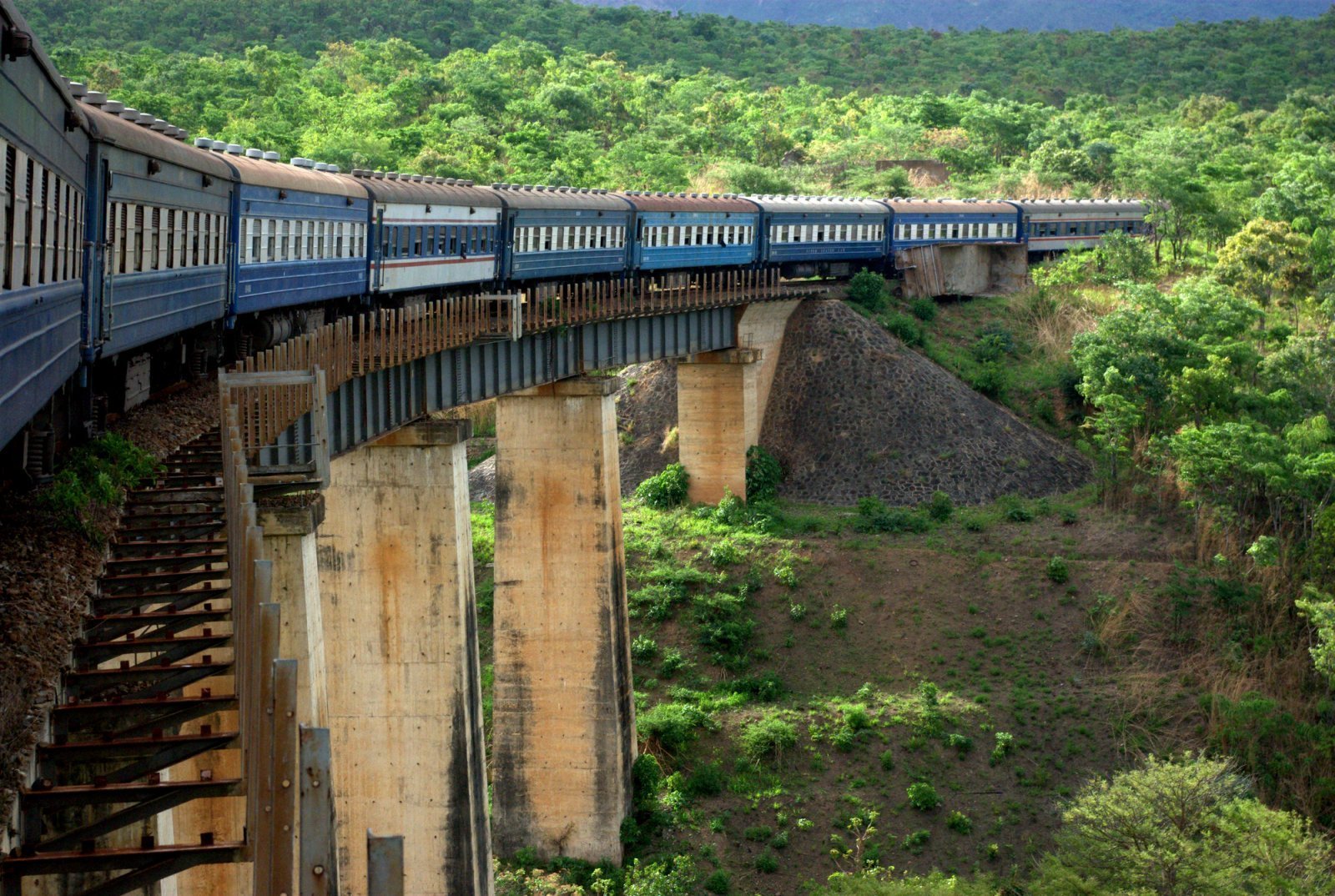
TAZARA extends approximately 1,860 kilometres between Dar es Salaam and New Kapiri Mposhi in Zambia. Built with Chinese assistance between 1970 and 1975, the railway was originally intended to provide Zambia with an alternative export route at a time when the country's dependence on transport infrastructure through white minority ruled Southern Africa created considerable political and commercial vulnerabilities. Its subsequent decline resulted from inadequate maintenance, shortages of operational equipment, limited investment and recurring financial difficulties.
The scale of that deterioration is evident in figures presented to Zambia's National Assembly in November 2025. Freight volumes had fallen from a peak of approximately 1.2 million tonnes in 1986 to fewer than 100,000 tonnes in recent years, leaving much of the railway's original transport capacity unused.
On September 29, 2025, Tanzania, Zambia and China signed a $1.408 billion revitalisation agreement with China Civil Engineering Construction Corporation (CCECC). According to Zambia's Ministry of Transport and Logistics, the programme comprises approximately $1.17 billion in initial investment and $238 million in subsequent reinvestment under a 31 year concession. The works include rehabilitation of railway tracks, workshops and supporting infrastructure, together with new locomotives, passenger coaches and freight wagons. The ministry specifies that the freight business, rather than the entire railway operation, is subject to the concession.
The investment is intended to restore TAZARA's ability to handle substantial freight volumes after decades of deterioration. Environmental assessment documentation associated with the project identifies a rehabilitation target of approximately 2 million tonnes of annual freight capacity, although the actual volume ultimately transported will depend on demand, operating performance and connections to the wider railway and port systems.
Importantly, the agreement's execution does not mean that all rehabilitation works have been completed or that the railway has entered full concession operations. In October 2026, TAZARA's board reported that the concessionaire was mobilising equipment, conducting infrastructure surveys and undertaking preparatory activities, while several requirements remained outstanding before the concession could take full effect.
The Lobito Corridor has a different infrastructure and financing structure. Its western section uses the existing Benguela Railway in Angola and connections into the DRC. A separate project, led by Africa Finance Corporation (AFC), aims to construct approximately 830 kilometres of new railway connecting Chingola in Zambia to Luacano in Angola, where it would join the Benguela network and provide a western outlet to the Atlantic Ocean.
On July 31, 2026, the Development Bank of Southern Africa announced financial close on a $786 million financing package with the US International Development Finance Corporation for the existing Lobito Atlantic Railway project. The financing supports rehabilitation, operational improvements and freight capacity expansion along an established railway corridor. The operating concession involves a consortium including Trafigura and Mota Engil.
The proposed new Zambia Lobito line remains at a different stage. In a November 3, 2026 announcement, AFC said preferred engineering and construction bidders had been identified, while potential users had signed memoranda and letters of intent covering approximately 2 million tonnes of freight annually. The development institution is targeting financial close in 2027, with eventual annual traffic of approximately 5 million tonnes across copper, cobalt, petroleum, agricultural and other cargo categories.
That distinction is fundamental to evaluating the two programmes. TAZARA is predominantly a rehabilitation project involving an existing railway with substantial but underused infrastructure. The Zambia Lobito project requires construction of a new cross border connection, even though the wider Lobito route already contains operational railway assets. Their construction risks, investment requirements, financing timetables and initial revenue prospects are therefore materially different.
The Economics of Copper Exports Will Determine Which Corridor Attracts Freight
The commercial prospects of both corridors are closely tied to the expansion of copper mining in Zambia and the DRC. Copper demand is expected to increase as countries expand electricity transmission networks, renewable energy generation, electric vehicle manufacturing, data centres and other electricity intensive industries. These applications require substantial quantities of copper, while declining ore grades and lengthy mine development periods create difficulties for expanding global supply.
The International Energy Agency's Global Critical Minerals Outlook 2026 projects that global copper supply could fall approximately 25% short of requirements by 2035 under its stated policy assumptions. Although that projection represents an improvement from the 30% shortfall estimated in the previous year's report, it reinforces the commercial significance of additional copper production from countries including Zambia and the DRC.
Zambia has set a national target of increasing annual copper production to 3 million tonnes by 2031, while mining companies operating in the DRC continue to invest in expanding production and processing facilities. These ambitions will increase demand for reliable transport if the associated projects proceed as planned. However, national production targets should not be treated as guaranteed future freight volumes: mineral output depends on electricity supply, commodity prices, financing conditions, mine development schedules and regulatory decisions.
Copper exporters evaluate transport options on the basis of the complete cost of delivery from a mine or processing facility to the buyer. Railway tariffs are only one component. Exporters must also consider road transport to rail terminals, cargo handling, border clearance, insurance, port storage, vessel availability and the cost of maintaining inventory during transit.
A railway offering lower freight charges may become commercially unattractive if cargo spends additional days waiting at border crossings or ports. Equally, a longer corridor can compete effectively with a geographically shorter alternative when it provides predictable delivery schedules, fewer transfers and reliable access to shipping services.
For copper cathodes, even relatively modest changes in transport costs can affect mine earnings across large export volumes. Consider a hypothetical producer exporting 200,000 tonnes annually. A reduction of $50 per tonne in total logistics costs would generate $10 million in annual savings before considering any changes in financing or inventory costs. Across several large mining operations, the commercial value of more efficient freight movement could substantially exceed the direct revenues earned by railway operators.
The competitive position of TAZARA and Lobito will therefore be determined by measurable performance rather than political sponsorship alone. Transit times, freight rates, train availability, cargo security, border clearance and vessel schedules will influence which route mine operators select.
ILLUSTRATIVE FREIGHT SAVINGS
Annual Savings From Lower Transport Costs
Hypothetical 200,000 tonnes of annual exports. These are scenario calculations, not observed savings from either corridor.
 The movement of imports is also critical. Mining requires large quantities of fuel, construction materials, chemicals, machinery and replacement equipment. A railway that transports copper to the coast but returns with largely empty wagons loses an important opportunity to distribute operating costs across traffic moving in both directions.
AFC's decision to target petroleum, agricultural and other industrial cargo on the Zambia Lobito Railway reflects this commercial consideration. Likewise, TAZARA's recovery will depend partly on attracting imports and general freight, alongside mineral exports. Mining traffic may provide the initial commercial foundation, but diversified freight demand would make railway revenues less dependent on copper production and prices.
Why the China Versus West Narrative Explains Only Part of the Competition
The two railway programmes have become closely associated with competition between China and Western governments for access to critical minerals. China has longstanding commercial relationships with Zambia and the DRC through mining investment, infrastructure development, processing and commodity trading. The United States and European Union, meanwhile, are seeking to diversify critical mineral supply chains and reduce their dependence on concentrated international processing capacity.
These interests help explain the political attention surrounding the two corridors. China's investment in TAZARA strengthens an established economic relationship with Tanzania and Zambia, while American and European support for Lobito creates additional transport options for mineral producers and buyers. African institutions also play substantial roles, including AFC's leadership of the new Zambia Lobito railway and the African Development Bank's financing of wider regional infrastructure and economic development activities.
In August 2026, the African Development Bank approved a $255 million loan and a $10 million grant to support Zambia's participation in the Lobito economic development initiative. The programme extends beyond railway infrastructure to trade facilitation, agriculture, industrial activities and other investments intended to increase economic activity along the corridor.
However, the origin of infrastructure financing does not determine where every tonne of mineral cargo will eventually be exported. Copper transported through Lobito could ultimately be shipped to Asian buyers, just as copper leaving Dar es Salaam can be sold to customers in Europe or the Americas. Commercial contracts, shipping rates and processing requirements will influence final destinations.
The assumption that a railway backed by Western institutions will serve exclusively Western customers, or that a Chinese financed corridor will necessarily channel all exports to China, oversimplifies the operation of international commodity markets.
The International Energy Agency estimates that China accounted for almost 60% of global refined copper consumption in 2024, reflecting the scale of its manufacturing and industrial sectors. That concentration creates a substantial commercial incentive for African copper exporters to maintain efficient access to Asian markets, regardless of their political or financing relationships with other countries.
For Zambia and the DRC, having several commercially viable export corridors provides an opportunity to negotiate better terms with railway operators, port authorities and logistics companies. It also reduces exposure to disruptions on any single route. That advantage will exist only when the alternative infrastructure is genuinely operational, financially sustainable and capable of accommodating substantial cargo volumes.
Tanzania and Angola's Railway Agreement Introduces a Different Possibility
The October 2026 agreement between Tanzania and Angola adds another dimension to the existing investments. Rather than treating the Atlantic and Indian Ocean corridors solely as separate export routes, the two governments have proposed linking them through Zambia and the DRC.
President Samia Suluhu Hassan announced the agreement following discussions with Angola, indicating that the Benguela Railway would connect with the TAZARA system to establish a route between the two coasts. However, the announcement did not establish a construction timetable, final route alignment, investment cost or confirmed financing structure.
The proposal should therefore be understood as an intergovernmental infrastructure ambition rather than an approved, fully financed transcontinental railway project.
From a trade perspective, the potential benefits are substantial. A functioning east to west railway connection could allow cargo owners to select between ports on opposite sides of the continent according to shipping costs, destination markets, port congestion and service reliability. It could also improve access to imported inputs for mining and manufacturing businesses located along the route.
For example, machinery imported from Asian manufacturing centres could enter through Dar es Salaam and move inland to Zambia or the DRC, while mineral exports destined for European markets could potentially travel westward towards Lobito. Importers and exporters would gain greater flexibility, especially during disruptions affecting one maritime or land transport corridor.
The connection could also encourage additional trade between Tanzania, Zambia, Angola and the DRC, where large distances and inadequate transport infrastructure have historically increased the cost of moving goods between neighbouring countries.
However, an agreement to connect two railway networks does not automatically create a commercially viable transcontinental service. The physical infrastructure must accommodate continuous freight movements, while operators must agree on track access, rolling stock compatibility, pricing, cargo handling, customs procedures and operational responsibilities.
TAZARA uses a different track gauge from parts of the wider regional network, introducing potential requirements for freight transfers, transshipment facilities or substantial engineering interventions. The costs and operational implications of these interfaces must be resolved before the proposed connection can deliver seamless railway services.
Even where physical connections exist, cross border railway operations can be constrained by customs delays, inadequate locomotive availability, different signalling systems, restrictive operating agreements and competing national transport priorities.
For these reasons, a complete economic feasibility study would need to compare the railway proposal with existing road and rail alternatives, assess expected freight demand and determine whether the benefits justify construction, maintenance and operating costs.
The strongest commercial justification may initially come from targeted improvements to existing connections and freight terminals rather than construction of an entirely new railway across the full distance. Investments that remove bottlenecks, shorten customs clearance times or improve rolling stock availability can sometimes deliver greater immediate returns than extensive new track construction.
Why Africa's Railway Ambitions Frequently Struggle to Become Commercially Viable
Railway projects across Africa have repeatedly faced a fundamental economic challenge: attracting sufficient freight volumes to justify their construction and operating costs. Railways require substantial initial investment, continuous maintenance and specialised equipment, while freight customers often retain the flexibility to move cargo by road when railway services become unreliable.
This creates a difficult financial relationship. Rail operators need consistent volumes to recover their investments and maintain competitive tariffs. Mining companies, meanwhile, are reluctant to commit cargo to railway services that have not demonstrated dependable performance. Without credible freight commitments, investors may hesitate to finance construction. Without completed infrastructure, customers may hesitate to sign binding transport agreements.
The progress reported by AFC in November 2026 illustrates the importance of addressing that problem before construction. Prospective users of the new Zambia Lobito Railway have signed memoranda and letters of intent covering approximately 2 million tonnes of annual freight, against a longer term commercial target of 5 million tonnes. These expressions of demand provide useful evidence for lenders, although they do not necessarily carry the same financial commitments as binding freight contracts.
The investment also faces substantial geographic and institutional challenges. Building an 830 kilometre railway through Angola and Zambia requires land acquisition, environmental approvals, bridges, drainage systems, track construction, signalling equipment and connections to existing networks. Once operational, railway services must cross national borders and coordinate with separate customs authorities, regulators and infrastructure owners.
The challenge is even greater for a prospective connection between the Atlantic and Indian oceans, where several railway networks and national jurisdictions would need to function as an integrated transport system.
Financing arrangements introduce another risk. Railway infrastructure generally generates returns over long periods, while construction costs are incurred before commercial operations begin. If future freight demand proves lower than expected, infrastructure operators may struggle to service financing obligations or maintain adequate investment in their assets.
Governments can reduce these risks through appropriate regulation, transparent concession agreements, credible traffic forecasts and coordinated infrastructure investment. However, public guarantees and revenue support arrangements can also transfer commercial risk to taxpayers. The economic benefits of a railway should therefore be assessed alongside the financial obligations it creates.
TAZARA's own history demonstrates that building railway infrastructure is only the beginning of the investment cycle. The railway served an essential strategic purpose when it opened in the 1970s, but inadequate reinvestment and operational difficulties subsequently reduced traffic to a fraction of its earlier levels. The current rehabilitation programme seeks to reverse that decline through substantial new capital and a different operating arrangement.
For Lobito, achieving financial close and completing construction will be major milestones. The longer term measure of success will be the volume of freight actually transported, the cost savings delivered to customers and the ability of railway operators to maintain their infrastructure without recurring financial distress.
Tanzania's Opportunity Extends Beyond Transit Fees and Port Charges
For Tanzania, the revival of TAZARA presents an opportunity to strengthen Dar es Salaam's position as a regional logistics and commercial centre. The railway connects inland mineral producing regions with the country's principal port, allowing Tanzania to earn revenue through freight handling, storage, transportation, customs services and related commercial activities.
However, the economic returns from a transport corridor depend on the volume and type of activities that develop around it. A railway carrying copper across Tanzania creates employment and transport revenues, but a corridor supporting warehousing, equipment maintenance, regional distribution, trade finance and industrial production can generate additional economic activity.
The distinction is relevant because Tanzania does not automatically capture the industrial value associated with minerals simply because they pass through its territory. Copper processed in Zambia or the DRC and exported through Dar es Salaam generates logistics revenue for Tanzania, while much of the mining and processing income remains associated with activities undertaken elsewhere.
Expanding Tanzania's participation would require investment in specific services for which commercial demand exists. These could include mineral storage facilities, bonded warehouses, railway equipment maintenance, inspection services, freight insurance, commodity trading and financing arrangements for exporters.
More capital intensive investments, including mineral processing and manufacturing, would require separate feasibility assessments. Establishing copper refining or other processing facilities in Tanzania would involve substantial energy, water, feedstock, technology and capital requirements. Their viability cannot be inferred from the availability of railway infrastructure alone.
Dar es Salaam Port will also play a decisive role. A rehabilitated railway cannot achieve its commercial potential if trains encounter prolonged delays at port terminals or if cargo handling facilities fail to keep pace with freight volumes. Investments in port capacity, customs systems, terminal access and inland logistics must therefore be coordinated with TAZARA's rehabilitation.
The same considerations apply to Zambia and the DRC, whose governments have an interest in ensuring that infrastructure development supports mining competitiveness while creating opportunities for domestic processing, manufacturing and regional commerce.
An integrated Atlantic and Indian Ocean transport system could expand those opportunities, but its commercial usefulness will ultimately be determined by the efficiency of its weakest connections.
The Next Phase Will Be Determined by Financing, Freight Commitments and Execution
By November 2026, the two railway corridors had reached different implementation milestones. TAZARA had secured a $1.408 billion concession agreement and entered preparatory rehabilitation activities, while the existing Lobito Atlantic Railway had achieved financial close on a $786 million financing package. The proposed 830 kilometre Zambia Lobito connection had secured prospective freight commitments and advanced contractor selection but was still targeting financial close in 2027.
The Tanzania Angola agreement introduces the prospect of connecting these networks, although its commercial and engineering requirements remain to be established.
These developments create several measurable indicators for assessing progress. For TAZARA, the immediate priorities are completing concession requirements, commencing major rehabilitation works, restoring operational reliability and increasing freight volumes. For the Zambia Lobito Railway, the priorities are securing financing, converting expressions of freight demand into bankable commitments and advancing construction. For the proposed transcontinental connection, a credible feasibility study and coordinated commitments from the countries involved would establish whether the project has a practical investment case.
The competing international interests behind these programmes may accelerate investment, but they cannot eliminate the commercial requirements of railway operations. Freight customers will continue to compare costs, delivery schedules and reliability, while lenders will assess traffic forecasts, construction risks and expected revenues.
For Tanzania, Zambia, Angola and the DRC, the potential advantage lies in having several transport options capable of serving different markets and handling expanding volumes of minerals, imports and regional trade.
The latest agreement between Tanzania and Angola creates a possibility that was largely absent from the earlier debate over TAZARA and Lobito: the two corridors could eventually support both competition and connectivity. Whether that possibility becomes commercially valuable will depend on the ability of the participating governments, railway operators and investors to finance and operate the infrastructure as a functioning transport network.
Until then, the economic competition will be decided by freight volumes moved, costs incurred and delivery times achieved, rather than the number of agreements signed or the geopolitical prominence of their financiers.
 Uchumi360
Business Intelligence
Uchumi360 covers business, investment, and economic policy across East, Central, and Southern Africa.
For the serious reader
You read to the end. That places you in a small group.
Uchumi360 is built for readers who demand precision over speed, structure over sentiment, and analysis that holds uncomfortable conclusions rather than softening them. If this work sharpens how you think about Africa's economy, help us keep building the infrastructure behind it.
Institutional Partners
Commission intelligence. Shape the conversation.
Uchumi360 works with development finance institutions, investment firms, sovereign bodies, and strategic organisations across the coverage region. Institutional partnership unlocks:
- Commissioned sector and country intelligence reports
- Branded research series under your institution's authority
- Exclusive data briefings for internal strategy teams
- Speaking and editorial presence at Uchumi360 events
- Co-published investment outlooks for your markets
Support Our Work
Independent analysis has a cost. Help us bear it.
Uchumi360 does not carry advertising. It does not take editorial direction from sponsors. Every article is produced without commercial compromise. Your contribution funds the reporting, research, and editorial infrastructure that keeps this analysis free from influence.
Secure checkout: One-time and monthly support are processed securely. Add payment credentials to enable checkout here.
Stay Connected
Keep up with every new insight.
Follow our latest analysis, policy coverage, and market intelligence as soon as it is published. If you need something specific, reach out directly and we will point you to the right research.
