
Tanzania Bus Strike Disrupts Travel as Licence Rules Trigger Wider Transport Dispute
Ready
Tanzania’s intercity bus network was disrupted this week after drivers across several regions stopped work over a new licence demerit points system, exposing a deeper dispute over who should bear responsibility for road safety violations. The stoppage affected major terminals and routes linking Dar es Salaam with Morogoro, Arusha, Mwanza, Mbeya, Mara and other regions. The economic cost extends beyond stranded passengers. Long distance buses move workers, students, traders and goods across a country where road transport remains central to domestic commerce. The dispute is also unfolding as Tanzania’s formal road transport market expands. LATRA says transport licences reached 590,468 in 2025/26, up 146.1 percent from 2021/22. The immediate disagreement may be over 15 licence points, but the larger issue is how Tanzania distributes regulatory responsibility across drivers, vehicle owners and transport operators.
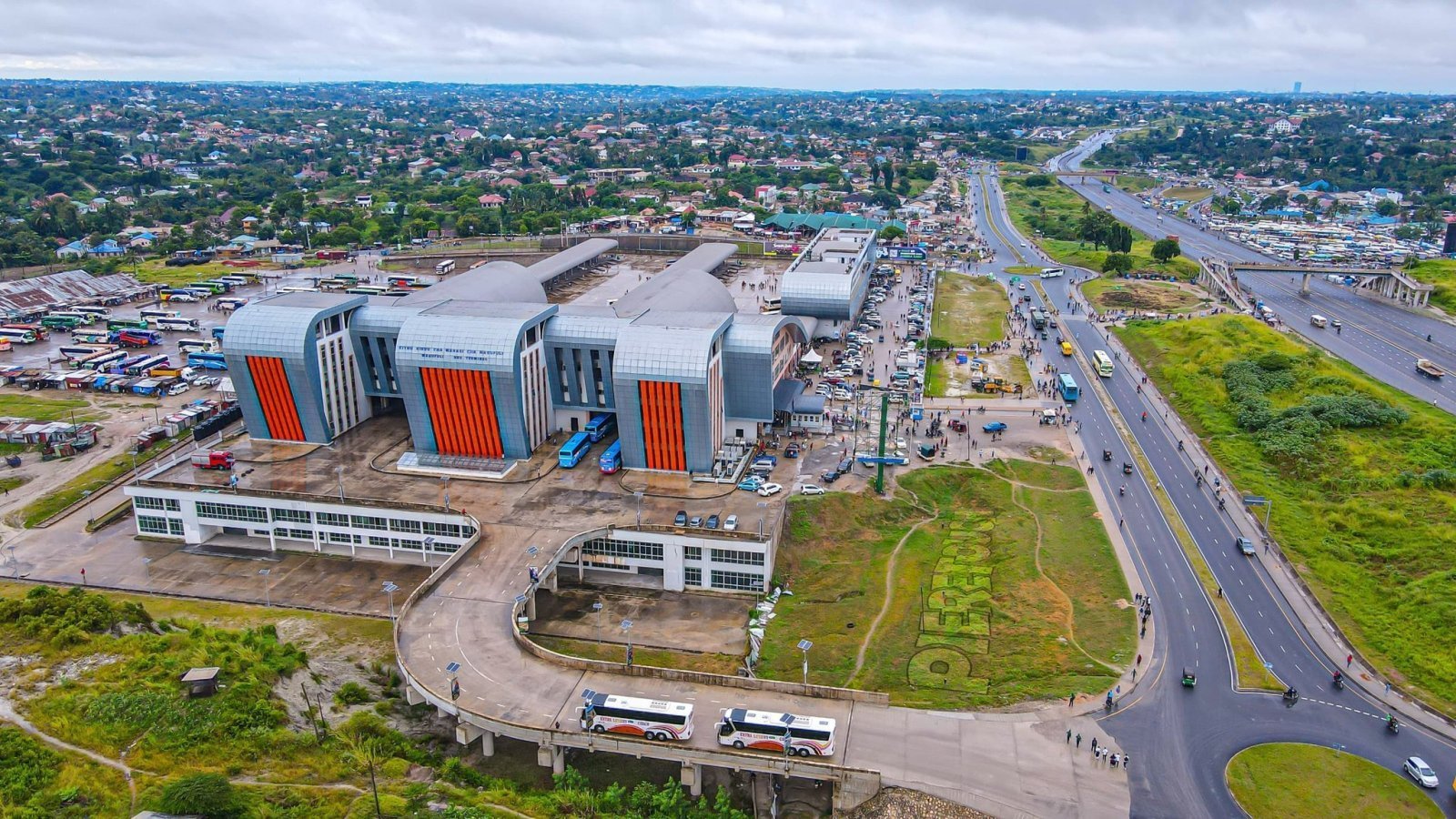
DAR ES SALAAM — Tanzania’s intercity bus strike has exposed a regulatory problem larger than the 15 points attached to a driving licence: the country is trying to improve road safety while deciding how responsibility should be divided between the person behind the wheel, the owner of the vehicle and the company operating the service. Long distance bus drivers stopped work on 29 September in protest against the licence points system, leaving passengers stranded at major terminals and disrupting routes connecting Dar es Salaam with Morogoro, Arusha, Mwanza, Mbeya, Mara and other parts of the country. Reports from Moshi and Morogoro recorded buses unable to depart after drivers failed to report for work, while passengers who had already purchased tickets waited for services to resume. By 30 September, Tanzanian media reported that the stoppage had spread to several major transport corridors, including routes serving the Lake Zone and border areas.
Why did a licence system become a nationwide transport disruption?
The immediate dispute concerns a demerit system under which a driving licence carries 15 points that can be deducted according to the nature and severity of traffic offences. Drivers have argued that the framework can transfer responsibility for mechanical problems and other vehicle related violations onto the person driving the vehicle, even where the driver does not own or maintain it. At Moshi, drivers cited concerns over offences involving tyres and other vehicle defects, while transport representatives said commercial drivers feared that accumulated deductions could ultimately prevent them from working. The Tanzania Truck Owners Association also said the concerns extended beyond passenger buses to truck drivers, indicating that the dispute has implications for the wider commercial road transport workforce.
The government's position has introduced a second layer to the dispute. On 29 September, Police Commissioner Awadh Juma Haji said the points system had not yet started operating and that no driver had lost a licence through points. He said authorities were conducting public education on the system and that formal implementation would be communicated when it began. On 30 September, police officials in Mwanza similarly said the regulations remained under review and open to stakeholder consultation. The clarification means that the disruption has occurred partly around expectations of how the system will operate, rather than a confirmed nationwide implementation that has already removed licences from drivers.
What does the strike reveal about the economics of Tanzania's bus industry?
The size of Tanzania's road transport market explains why a dispute involving drivers can quickly become an economic issue. LATRA's latest figures show that licences for passenger, goods carrying and private hire vehicles increased from 239,953 in financial year 2021/22 to 590,468 in 2025/26, an increase of 146.1 percent. The regulator describes average annual growth of 27.2 percent over that period. The figures cover multiple categories rather than intercity buses alone, but they show the scale of formal road transport activity now subject to licensing and regulation.
Intercity and regional buses form a substantial part of the passenger transport market. LATRA's 2024/25 land transport statistics classified public service vehicles into intercity and regional buses, commuter buses, school buses, tour buses and other categories, with intercity and regional services accounting for 47.2 percent of public service vehicle licences issued in the period covered by the report. An earlier LATRA annual statistics report recorded 23,809 licences for intercity and regional buses in 2022/23, compared with 22,459 in 2021/22. Of the 2022/23 licences, 22,171 were ordinary buses, 1,495 were semi luxury and 143 were luxury.
The economic function of these buses extends well beyond passenger mobility. They connect labour markets, universities, hospitals, trading centres and regional businesses, while allowing small traders and households to move between cities without owning private vehicles. The disruption therefore imposes costs that do not appear on the balance sheets of bus operators alone. A cancelled journey can mean a missed market day, delayed employment, postponed medical travel or a disrupted supply chain, particularly along routes connecting production centres with major urban markets and border corridors. The Guardian reported that the latest stoppage reached routes linking the Lake Zone with border points, while cargo trucks and smaller commercial vehicles were also affected in parts of Mara.
Is Tanzania's road safety problem large enough to justify tougher enforcement?
There is a clear economic and public safety case for stronger road safety enforcement. Tanzania's 2024 Economic Survey, using LATRA data, recorded 940 road accidents involving passenger and cargo vehicles in 2024, down from 1,009 in 2023. Passenger buses accounted for 303 of the 2024 accidents, compared with 335 in 2023, while cargo vehicles accounted for 254. The same official data attributes part of the reduction to measures including regular road inspections, vehicle tracking systems for long distance passenger buses and sensitisation of transport stakeholders.
The trend does not remove the underlying safety problem. Passenger buses were involved in more than 300 recorded accidents in 2024, and Tanzania has continued to experience serious bus crashes. In June 2025, a collision involving two buses on the Moshi Tanga highway killed at least 37 people and injured 30, according to the Associated Press. The government therefore has a clear reason to strengthen accountability for dangerous driving, but the design of enforcement determines whether responsibility falls on the party capable of correcting the underlying problem.
This distinction is particularly relevant for commercial transport. A driver controls speed, overtaking, mobile phone use and other aspects of vehicle operation, but may have limited control over tyres, brakes, maintenance schedules, vehicle condition or employment arrangements. A regulatory system that attributes every vehicle related offence to the driver can create incentives for drivers to become more cautious, but it may not create the same pressure on owners to maintain vehicles. Conversely, a system that places responsibility exclusively on owners could weaken individual driver accountability for dangerous behaviour. The economic problem is therefore one of assigning responsibility to the actor who can actually prevent the violation.
Why are drivers worried about losing their licences?
For a professional driver, a licence is an income generating asset rather than simply a document proving eligibility to drive. The concerns expressed during the strike reflect this economic reality. Drivers at Moshi said repeated penalties could ultimately threaten their employment, particularly where they work without strong employment contracts and depend on their driving income to support their households. Tanzania Truck Owners Association chairman Elias Lukumay separately described the issue as particularly sensitive because of what he called a shortage of drivers, arguing that the system should be introduced alongside education and stakeholder engagement.
The concern is amplified by the frequency with which commercial drivers are exposed to enforcement because they spend far more time on the road than an ordinary private motorist. A professional driver covering thousands of kilometres each month has more exposure to traffic enforcement than someone who drives occasionally. That does not mean commercial drivers should face different safety standards, but it does mean the enforcement system needs clear rules for offences, transparent evidence, fair appeals and a clear separation between driver behaviour and vehicle owner responsibilities.
There is also a question about the relationship between fines and points. Drivers have described the combination as double punishment, particularly where they pay a financial penalty and also lose points for the same offence. That interpretation is a driver and stakeholder concern rather than an established finding that the system is legally invalid. What is clear is that the perception of cumulative punishment has become strong enough to trigger collective industrial action.
What does the dispute say about the relationship between drivers and transport owners?
The strike has exposed a structural division inside Tanzania's transport industry. The driver is the visible representative of a bus company on the road, but the driver does not necessarily control the vehicle, its maintenance budget, employment contract, route economics or operating schedule. The owner, meanwhile, has greater control over capital expenditure and maintenance but may not be physically present when a traffic offence occurs. A workable regulatory system has to account for this separation rather than treating the transport company as if it were a single actor.
This becomes especially important for vehicle defects. If a bus has worn tyres, faulty lights or mechanical problems, a driver may have the practical choice of refusing to operate the vehicle or reporting the defect, but commercial pressures can make that decision difficult where employment conditions are weak. The regulatory question is therefore not simply who receives a penalty after a violation. It is whether the rules create a financial incentive for the owner to prevent the defect before the bus reaches the road.
The issue also connects to Tanzania's wider transport regulation. LATRA says its mandate includes issuing, renewing, suspending and cancelling transport licences for passenger and goods vehicles, while its licensing system is connected with other government systems including TRA, TIRA, NIDA, GePG and BRELA. The regulatory infrastructure is therefore increasingly digital and interconnected. The next challenge is ensuring that responsibility can be assigned accurately across the driver, vehicle and operating company when a violation occurs.
How much disruption can an intercity bus stoppage create?
Tanzania's dependence on road transport makes prolonged disruption expensive. LATRA has previously reported that more than 90 percent of cargo passing through Tanzanian ports to land linked countries is transported by road, with the remainder moving by rail. Although that figure refers specifically to transit cargo rather than passenger buses, it illustrates the wider dependence of Tanzania and its neighbouring markets on road corridors. A prolonged disruption involving both passenger buses and commercial vehicles could therefore affect mobility and freight simultaneously. (Latra)
The passenger side is also highly monetised. In December 2025, LATRA reported that bus fare collections between 1 and 20 December reached Sh71 billion, although only about Sh8 billion was collected through online platforms and about Sh63 billion in cash. The regulator's figures provide a sense of the financial volume moving through the bus sector even over a short period, although they cannot be directly extrapolated into a daily national bus revenue figure. A disruption therefore affects not only passengers and operators but also the transaction flows that generate taxes, regulatory payments and income throughout the transport value chain.
There are also costs that are difficult to measure. A passenger who arrives at a terminal with a paid ticket but cannot travel has already incurred a financial and time cost. A businessperson who misses a delivery or market appointment bears another. Employers may lose working hours when staff cannot reach another region, while hotels, restaurants, fuel stations and other businesses along major routes can experience lower activity if journeys are cancelled. These secondary effects are why transport disputes can become economic events even when the initial disagreement concerns a regulatory rule.
Is the licence points dispute occurring in isolation?
It is part of a broader period of regulatory adjustment in Tanzania's road transport sector. In January 2026, LATRA listed amendments to regulations covering public service vehicles, goods carrying vehicles and private hire services. The regulator has also been enforcing requirements around where long distance buses can pick up and drop off passengers in Dar es Salaam, with buses from different regions being directed to designated terminals. These changes are intended to improve regulation, safety and traffic management, but they have also generated disputes over operating costs and passenger access.
The terminal dispute provides useful context for the current strike. In August, LATRA said long distance buses were required to use designated terminals and linked the arrangement to the ability of authorities to inspect buses before departure. A subsequent legal challenge was filed in the High Court against the requirement affecting Magufuli Bus Terminal, with the case naming Tamisemi, Ubungo Municipal Council, LATRA and the Attorney General as respondents. The case was scheduled for further mention on 30 September.
The pattern suggests that Tanzania is attempting to formalise a transport market that has expanded substantially in recent years. Licensing, digital ticketing, vehicle tracking, designated terminals and driver certification are all mechanisms for moving the sector towards greater regulatory visibility. But each mechanism changes the distribution of costs and responsibilities among operators, owners, drivers and passengers. The resistance emerging around the points system should therefore be understood within this wider transition rather than as a standalone disagreement about traffic penalties.
What would a workable system look like?
The immediate requirement is clarity. Police have said that the points system has not yet begun operating, while drivers have acted on their understanding that the system creates an immediate risk to their licences and livelihoods. That gap between regulatory intent and stakeholder understanding has already produced a nationwide disruption. A formal implementation process that publishes the offences, corresponding points, evidence requirements, notification procedures, appeal mechanisms and responsibilities of drivers and owners would reduce uncertainty before enforcement begins.
The second requirement is differentiated accountability. Dangerous driving, speeding, reckless overtaking or deliberate violations are fundamentally different from a mechanical defect that a driver did not create. The rules should therefore distinguish between conduct controlled by the driver and defects controlled by the owner or operator. Such differentiation would not weaken road safety enforcement. It would direct enforcement towards the actor with the capacity to prevent the violation.
The third requirement is a credible appeals process. A professional driver should be able to challenge an alleged violation where the circumstances are disputed, particularly where losing a licence can eliminate the driver's ability to earn an income. At the same time, appeals cannot become a mechanism for delaying legitimate enforcement. The economic objective is a system that is strict enough to change behaviour but predictable enough that transport businesses can plan around it.
What does the dispute mean for Tanzania's growing transport market?
Tanzania's road transport sector is expanding in scale and becoming more formalised. The increase in transport licences from 239,953 in 2021/22 to 590,468 in 2025/26 is one measure of that expansion, while the growth of intercity bus services, digital ticketing, vehicle tracking and regulated terminals points towards a transport industry that is increasingly integrated into formal economic systems. The more the sector grows, the greater the cost of regulatory uncertainty becomes.
The current strike also shows that road safety policy cannot be separated from transport economics. Drivers need enforceable safety standards, owners need clear obligations, passengers need reliable services and regulators need credible enforcement. If one part of that chain carries disproportionate risk, resistance can emerge even when the underlying objective is widely accepted.
The immediate disruption may ease as drivers receive clarification and authorities engage with transport associations. At Nyegezi Bus Terminal in Mwanza, some drivers resumed services after police explained that the points system had not yet taken effect, demonstrating that uncertainty itself was one of the factors sustaining the stoppage.
The deeper issue remains unresolved. Tanzania is building a larger and more regulated road transport market, but the institutions governing that market have to keep pace with the economic relationships inside it. The licence points debate has exposed precisely where those relationships remain unclear: between the driver who operates the vehicle, the owner who controls the asset and the regulator responsible for keeping both accountable. A transport system becomes safer when responsibility follows control, and it becomes more reliable when regulation follows the economics of the industry.
FAQ
What caused Tanzania's intercity bus strike? Drivers stopped work to protest the licence demerit points system and what they regard as excessive exposure to penalties that could affect their ability to continue driving. They have particularly raised concerns about offences involving vehicle conditions that they argue should be the responsibility of owners or employers.
Has Tanzania already started deducting points from drivers' licences? Police said on 29 September that the system had not yet started operating and that no driver had lost a licence through point deductions. On 30 September, police officials in Mwanza reiterated that the regulations remained under review and open to stakeholder consultation.
How many points does a driving licence carry? The disputed system assigns 15 points to a driving licence, with deductions linked to traffic offences according to their nature and severity. The precise economic concern for professional drivers is that accumulating deductions could eventually affect their ability to retain the licence required for their employment.
How large is Tanzania's road transport market? LATRA reported 590,468 transport licences across passenger, goods carrying and private hire vehicles in 2025/26, compared with 239,953 in 2021/22. That represents an increase of 146.1 percent and shows the scale of the formal road transport market covered by regulation.
How many passenger bus accidents were recorded in 2024? The Tanzania Economic Survey recorded 303 accidents involving passenger buses in 2024, compared with 335 in 2023. The government attributed part of the broader decline in passenger and cargo vehicle accidents to measures including inspections, vehicle tracking for long distance buses and stakeholder sensitisation.
Why does the strike have wider economic consequences? Intercity buses connect labour markets, businesses, trading centres, educational institutions and households across the country. The disruption therefore affects economic activity beyond the transport companies themselves, particularly where passengers depend on scheduled services to reach markets, jobs and other commercial activities.
What happens next? The immediate issue is whether drivers return to work while their concerns are handled through formal channels. The longer term question is how Tanzania designs the points system so that driver behaviour is regulated firmly while vehicle owners and operators remain responsible for defects and decisions under their control.
 Uchumi360
Business Intelligence
Uchumi360
Business Intelligence
Uchumi360 covers business, investment, and economic policy across East, Central, and Southern Africa.
For the serious reader
You read to the end. That places you in a small group.
Uchumi360 is built for readers who demand precision over speed, structure over sentiment, and analysis that holds uncomfortable conclusions rather than softening them. If this work sharpens how you think about Africa's economy, help us keep building the infrastructure behind it.
Institutional Partners
Commission intelligence. Shape the conversation.
Uchumi360 works with development finance institutions, investment firms, sovereign bodies, and strategic organisations across the coverage region. Institutional partnership unlocks:
- Commissioned sector and country intelligence reports
- Branded research series under your institution's authority
- Exclusive data briefings for internal strategy teams
- Speaking and editorial presence at Uchumi360 events
- Co-published investment outlooks for your markets
Support Our Work
Independent analysis has a cost. Help us bear it.
Uchumi360 does not carry advertising. It does not take editorial direction from sponsors. Every article is produced without commercial compromise. Your contribution funds the reporting, research, and editorial infrastructure that keeps this analysis free from influence.
Secure checkout: One-time and monthly support are processed securely. Add payment credentials to enable checkout here.
Stay Connected
Keep up with every new insight.
Follow our latest analysis, policy coverage, and market intelligence as soon as it is published. If you need something specific, reach out directly and we will point you to the right research.
