
Tanzania's SGR Contractor Yapi Merkezi Under Pressure as Government Takes Control of Construction Spending
Ready
Tanzania says it has paid Turkish contractor Yapi Merkezi for construction of its delayed Standard Gauge Railway, but questions whether the funds were allocated to the intended sections. Transport Minister Makame Mbarawa says financing is available, yet construction continues to lag, forcing Tanzania Railways Corporation (TRC) to intervene in essential expenditure, including workers' salaries, fuel, steel and cement. With additional contractors brought in to accelerate the Makutupora to Isaka railway, the dispute raises concerns over financial accountability, contractual obligations and whether taxpayers could face additional costs to complete one of Tanzania's largest infrastructure investments.
Transport Minister Makame Mbarawa says financing is available for the delayed Makutupora to Isaka railway, while Tanzania Railways Corporation has intervened to control expenditure and secure construction supplies. Allegations concerning the allocation of payments to Turkish contractor Yapi Merkezi raise questions about contract management, financial accountability and the cost of keeping the project moving.
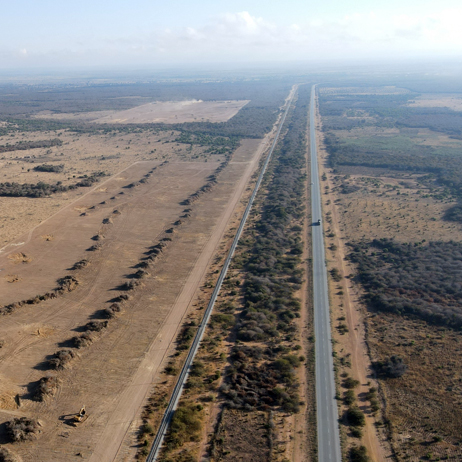
Tanzania's government is tightening its control over construction expenditure on the delayed Standard Gauge Railway (SGR) sections between Makutupora and Isaka, as Transport Minister Professor Makame Mbarawa intensifies criticism of Turkish contractor Yapi Merkezi over its failure to deliver construction progress despite the availability of financing. The Tanzania Railways Corporation (TRC) has assumed a more direct role in ensuring construction materials are available, controlling expenditure and supervising work schedules, while additional contractors have been brought into the project to recover lost time.
Mbarawa has maintained that the government has met its financial obligations and that delays are principally linked to the contractor's planning and execution. He has also raised concerns that payments made to Yapi Merkezi were not adequately directed towards the particular construction activities for which they were intended. According to the minister's reported account, TRC has had to intervene in operational expenditure, including workers' salaries, fuel for construction machinery and vehicles, reinforcing steel and cement, to prevent further interruptions.
The specific allegations about the allocation of funds and TRC's direct payment of individual expenses have not been independently corroborated by publicly available payment records or a detailed government expenditure statement. However, the Ministry of Transport's official statement of October 28 confirms that TRC has strengthened its involvement in the supply of essential materials and control of project expenditure. That intervention changes the practical relationship between the government and the contractor, even while the formal construction contract remains in place.
The dispute concerns two sections of the railway extending westward from Makutupora through Tabora to Isaka, a critical part of Tanzania's planned rail connection between Dar es Salaam and Mwanza. Lot 3 covers approximately 368 kilometres including passing loops and sidings, while Lot 4 covers 165 kilometres. Both were contracted to Yapi Merkezi, which previously delivered the first two sections of Tanzania's modern railway between Dar es Salaam and Makutupora.
The government's latest interventions follow years of construction delays and renewed financing commitments. In April 2026, Standard Chartered announced that it had arranged more than $2.33 billion in syndicated financing associated with Tanzania's SGR development, including financing for Lots 3 and 4. Yet, six months later, senior government officials were publicly questioning why construction remained slow despite the financial arrangements being in place.
Government Says the Funding Problem Has Been Resolved
During an inspection on October 24, Mbarawa announced that TZS 3.67 trillion, approximately $1.39 billion, had been secured to support construction of the Makutupora to Isaka sections. He attributed the delays primarily to contractors' implementation and planning difficulties rather than a shortage of financing.
The minister explained that payment procedures require contractors to submit Interim Payment Certificates (IPCs), which document work completed and establish the basis for disbursements. According to his explanation, inadequate preparation and submission of payment certificates had contributed to delays in accessing available funds.
"There is no funding problem. The main challenge has been the contractor's own planning," Mbarawa said during the inspection, according to The Citizen's October 26 report.
The distinction between secured financing and money disbursed against completed work is central to the dispute. In major construction contracts, financing arrangements establish the resources available to fund a project, but payments are normally linked to contractual conditions, documented progress and certification procedures. A contractor may therefore have access to a funded project without receiving every available amount immediately.
Conversely, the government's confirmation that financing is available does not, by itself, establish how much has been disbursed, when payments reached the contractor or how those funds were subsequently distributed between labour, suppliers, subcontractors and other project expenses.
This is particularly relevant to Mbarawa's reported allegation that funds paid to Yapi Merkezi were not allocated as expected to the corresponding railway sections. Establishing the precise nature of any misallocation would require examination of the contractor's payment records, invoices, bank transactions, subcontractor accounts and the relevant provisions of its agreements with TRC.
No independently verified reconciliation of these accounts has been made publicly available. The available evidence supports the government's concerns about implementation and expenditure control, but it does not establish that funds were unlawfully diverted or misappropriated.
The distinction is consequential because payments made under a construction contract may enter accounts administered across several projects or operating units, depending on the contractor's internal arrangements and contractual restrictions. Whether those arrangements are permissible depends on the agreements governing the funds, their designated uses and whether the contractor met its obligations to the project.
TRC's Intervention Raises Questions About Contractor Responsibility
The government has adopted measures that go beyond conventional project monitoring. TRC Director General Engineer Machibya Shiwa has confirmed that the corporation is working to ensure the availability of essential construction materials and strengthen expenditure controls, while requiring contractors to submit detailed work programmes specifying activities to be undertaken each day.
Under the minister's reported account, TRC's involvement extends to expenses ordinarily managed by the contractor, including salaries, fuel, steel and cement. These are recurring inputs without which construction cannot continue. Labour must be paid, heavy machinery requires fuel, and concrete structures depend on a continuous supply of cement and reinforcing materials.
If TRC is making these payments directly, the arrangement represents a substantial operational intervention. Rather than relying exclusively on the contractor to organise expenditure and mobilise resources after receiving contract payments, the project owner is taking a closer role in determining how resources reach workers, equipment operators and suppliers.
The financial implications depend on how those payments are accounted for. If TRC pays for construction inputs on behalf of Yapi Merkezi, the costs may be deducted from future certified payments, recorded as recoverable advances or treated under another contractual mechanism. Alternatively, if direct expenditure is not properly reconciled against existing contractor obligations, the arrangement could expose the government to additional costs.
There is currently insufficient publicly available information to establish which accounting mechanism applies to the reported direct payments.
The intervention raises several matters for public financial oversight. TRC must establish whether its expenditure is replacing amounts already paid to the contractor, whether the government retains the right to recover those costs, and whether any additional procurement is being undertaken under the original construction agreements.
These questions are particularly relevant because the government is simultaneously financing the railway's construction and supervising the contractor's performance. Greater control over individual expenses may reduce the immediate risk of construction interruptions, but it also requires clearly documented responsibility for costs, quality, delivery and any contractual disputes.
The Ministry of Transport's account confirms that the government has chosen to retain Yapi Merkezi while strengthening oversight and bringing additional construction capacity into the project. The contractor's precise contractual obligations have not been publicly revised in the available statements.
Chinese Subcontractor Accelerates Construction as Government Questions Yapi Merkezi's Performance
The government's dissatisfaction became particularly visible during Mbarawa's October 26 inspection of the Tabora to Isaka section at Bukene.
The minister said China Civil Engineering Construction Corporation (CCECC), which had been brought in as a subcontractor, had achieved five percentage points of construction progress during September and October 2026. According to Mbarawa, that was equivalent to the progress Yapi Merkezi had delivered over the preceding four years on the work being compared.
He described the performance gap as unacceptable and warned that the government would not continue tolerating delays in strategic infrastructure projects.
The official Ministry of Transport statement attributes the five percentage point improvement to CCECC's work during the two months. However, the statement does not provide the underlying engineering progress reports or a complete breakdown of the work packages being compared. The figures should therefore be understood as the minister's assessment rather than an independently established measurement of the relative productivity of the two companies.
The Tabora to Isaka construction contract was signed in July 2022 with an implementation period of 42 months. Its original timetable has therefore been overtaken by the government's revised expectations, with Mbarawa now indicating that the project could be completed in 2028 if the accelerated construction arrangements are sustained.
The government considered terminating Yapi Merkezi's contract but concluded that cancellation could create further delays and financial complications. Mbarawa explained that the preferred approach was to advise the company to engage an appropriately qualified subcontractor, while respecting the limits of the existing contractual framework.
This decision reflects the difficulties governments face when replacing a contractor during a large infrastructure project. Termination can involve disputes over completed work, mobilisation costs, equipment ownership, outstanding payments, performance guarantees and the procurement of replacement contractors. A new contractor must also evaluate the quality and condition of partially completed works before assuming responsibility for the remaining construction.
Consequently, replacing a poorly performing contractor does not necessarily produce immediate progress. It can introduce a period of technical assessment, financial settlement and contract negotiation during which construction slows further.
The government's decision to keep Yapi Merkezi in place while bringing in CCECC appears designed to avoid those interruptions. However, it also creates a more complicated delivery structure in which the main contractor, subcontractors, TRC and consulting engineers must coordinate responsibilities and establish clear accountability for construction quality and expenditure.
A $2.33 Billion Financing Package Has Increased Pressure to Deliver
The contractor dispute has developed against the background of a substantial international financing arrangement announced earlier in 2026.
On April 28, Standard Chartered confirmed that it had arranged more than $2.33 billion in syndicated financing associated with Tanzania's railway expansion. The package includes financing for the Makutupora to Tabora and Tabora to Isaka sections, alongside support for the Isaka to Mwanza section being constructed by CCECC.
According to the bank, financing for Lots 3 and 4 included $1.32 billion in export credit agency facilities signed during 2025 and 2026, together with $462 million in longer term financing from commercial banks and development finance institutions signed in 2023.
A separate $559 million facility backed by China's export credit agency supports Lot 5, connecting Isaka to Mwanza. The financing arrangements involve European export credit institutions, including Italy's SACE, Sweden's EKN and Poland's KUKE.
Tanzania's Ministry of Finance separately announced a financing agreement worth approximately $1.277 billion on April 29, describing it as part of the wider $2.33 billion financing programme. These figures represent overlapping components of the financing arrangements and should not be added together as separate amounts available for construction.
For international lenders and export credit agencies, the latest developments draw attention to the distinction between making capital available and achieving construction milestones. Delays may extend the period during which financing costs accumulate before the railway begins generating the passenger and freight revenues needed to support its economic case.
The public announcements do not provide sufficient detail to establish whether the delays have resulted in additional financing charges, changes to loan conditions or claims between the government, lenders and contractors.
Nevertheless, financing costs are only one component of the economic consequences. Delayed construction also postpones the benefits expected from railway operations, including lower inland freight costs, reduced pressure on roads and improved access between Dar es Salaam, central Tanzania and the Lake Zone.
The railway's commercial potential depends on completing a continuous operating network. Even where individual sections have reached advanced stages of construction, traffic cannot move across the full route until the connecting sections and supporting operating systems are commissioned.
For a major transport investment, this creates a particular financial risk: substantial capital can be committed to completed sections without the government or railway operator being able to capture the full revenue potential of the network.
The Auditor General Has Already Raised Questions About SGR Expenditure
The latest concerns follow scrutiny of Tanzania's wider railway investment programme by the Controller and Auditor General (CAG).
On October 10, 2026, TRC reported that CAG Charles Kichere had undertaken a four day inspection of ongoing railway construction towards Mwanza and Kigoma, covering Makutupora to Tabora, Tabora to Isaka, Isaka to Mwanza and Tabora to Kigoma.
According to TRC's official account, Kichere said the SGR programme involved investment exceeding TZS 35 trillion and required careful examination to ensure public funds produced value for money. TRC reported that the auditor considered the projects generally to be progressing well, while calling for continued supervision to ensure quality and timely completion.
The inspection did not publicly establish that Yapi Merkezi had misappropriated project funds. Its relevance lies in the broader financial scrutiny surrounding one of Tanzania's largest public infrastructure programmes.
The spending allegations now associated with Lots 3 and 4 could warrant a more specific examination of the contractor's accounts and the government's payment controls, particularly if TRC has assumed responsibility for expenses that were already provided for under certified contractor payments.
Such an examination would need to establish the total value of payments made by the government, the construction activities certified against those payments, the amounts transferred to subcontractors and suppliers, and the expenses subsequently incurred directly by TRC.
It would also need to distinguish contractual nonperformance from financial misconduct. A contractor may fail to complete work on schedule because of weak planning, shortages of machinery, supply chain problems or financial difficulties without necessarily having diverted funds illegally. Conversely, a failure to account for payments assigned to particular construction activities would require a separate contractual and financial assessment.
The government's public statements have established concerns about Yapi Merkezi's implementation performance. They have not yet established the precise financial consequences of TRC's intervention or whether the government has initiated a formal audit of the contractor's use of payments.
Delays Threaten the Commercial Benefits of Tanzania's Railway Network
The Makutupora to Isaka sections are central to Tanzania's effort to extend modern railway services from the Indian Ocean towards western Tanzania and the Great Lakes region.
The railway is intended to provide a higher capacity alternative to road transport for passengers and freight, improving connections between Dar es Salaam, Dodoma, Tabora and Mwanza. The wider programme also includes railway extensions towards Kigoma and neighbouring countries, with the government seeking to position Tanzania as a major transport outlet for landlocked economies.
For freight customers, however, the economic advantages of the SGR depend on the availability of an operational route, competitive tariffs and reliable service. Delays on connecting sections restrict the ability of the network to accommodate through traffic, regardless of how much investment has already been completed elsewhere.
The commercial implications extend to transport companies, agricultural traders, manufacturers and mining businesses that could potentially use the railway to move bulk cargo. Each year of delayed service represents another period during which prospective customers must continue relying on existing transport alternatives or defer investments dependent on improved logistics.
The government has therefore attached considerable importance to recovering construction momentum. In October, Mbarawa announced that works had been reorganised into smaller construction areas, with responsibilities redistributed to improve coordination and accelerate progress. TRC has also introduced closer monitoring of daily activities and material availability.
Yet faster construction alone will not settle the underlying dispute over contractual performance and expenditure accountability. If the original contractor remains responsible for delivering the project while TRC directly pays for selected construction inputs, the financial arrangements must establish which party bears the cost of delays, defective work, additional materials and any future disputes.
Those responsibilities will become increasingly relevant as the government pursues its revised 2028 completion expectation.
Tanzania Must Reconcile Payments, Costs and Construction Progress
Tanzania's response to the delays indicates that the government is pursuing an operational solution rather than immediately terminating Yapi Merkezi's contract. The approach combines closer TRC oversight, additional subcontracting capacity, revised construction schedules and tighter controls over expenditure.
The strategy may allow construction to continue while avoiding the legal and financial complications of replacing the main contractor. Its effectiveness will be measured by whether the remaining work advances according to credible milestones and whether the additional interventions can be accommodated within the project's existing financial commitments.
The unresolved issue concerns the relationship between the money already paid, the work completed and the expenses now reportedly being assumed directly by TRC.
If government funds were disbursed for particular construction obligations but did not reach the intended activities, the contractor would need to account for that difference under the applicable contract. If TRC subsequently paid workers or suppliers to prevent construction from stopping, those payments would need to be recorded and reconciled against the contractor's existing obligations.
Without that reconciliation, it would be difficult to establish whether the government is merely changing the method of making payments or accepting additional financial exposure to keep the railway project moving.
Yapi Merkezi's response to the specific allegations about payment allocation and direct TRC expenditure has not been established in the public statements examined. The company remains the main contractor for the relevant sections, and no independently verified finding of financial misconduct has been identified.
The latest developments consequently leave Tanzania facing two related tasks: completing the delayed railway and establishing a transparent account of the resources used to deliver it.
The first will determine when the country can begin capturing the transport and commercial benefits of its inland SGR investment. The second will determine whether the additional government intervention has protected public funds and preserved the contractual responsibilities for which Yapi Merkezi was originally engaged.
 Uchumi360
Business Intelligence
Uchumi360 covers business, investment, and economic policy across East, Central, and Southern Africa.
For the serious reader
You read to the end. That places you in a small group.
Uchumi360 is built for readers who demand precision over speed, structure over sentiment, and analysis that holds uncomfortable conclusions rather than softening them. If this work sharpens how you think about Africa's economy, help us keep building the infrastructure behind it.
Institutional Partners
Commission intelligence. Shape the conversation.
Uchumi360 works with development finance institutions, investment firms, sovereign bodies, and strategic organisations across the coverage region. Institutional partnership unlocks:
- Commissioned sector and country intelligence reports
- Branded research series under your institution's authority
- Exclusive data briefings for internal strategy teams
- Speaking and editorial presence at Uchumi360 events
- Co-published investment outlooks for your markets
Support Our Work
Independent analysis has a cost. Help us bear it.
Uchumi360 does not carry advertising. It does not take editorial direction from sponsors. Every article is produced without commercial compromise. Your contribution funds the reporting, research, and editorial infrastructure that keeps this analysis free from influence.
Secure checkout: One-time and monthly support are processed securely. Add payment credentials to enable checkout here.
Stay Connected
Keep up with every new insight.
Follow our latest analysis, policy coverage, and market intelligence as soon as it is published. If you need something specific, reach out directly and we will point you to the right research.
