
Uganda drives electric momentum across the region as Kiira Motors launches 13,000 km Trans-Africa expedition
Ready
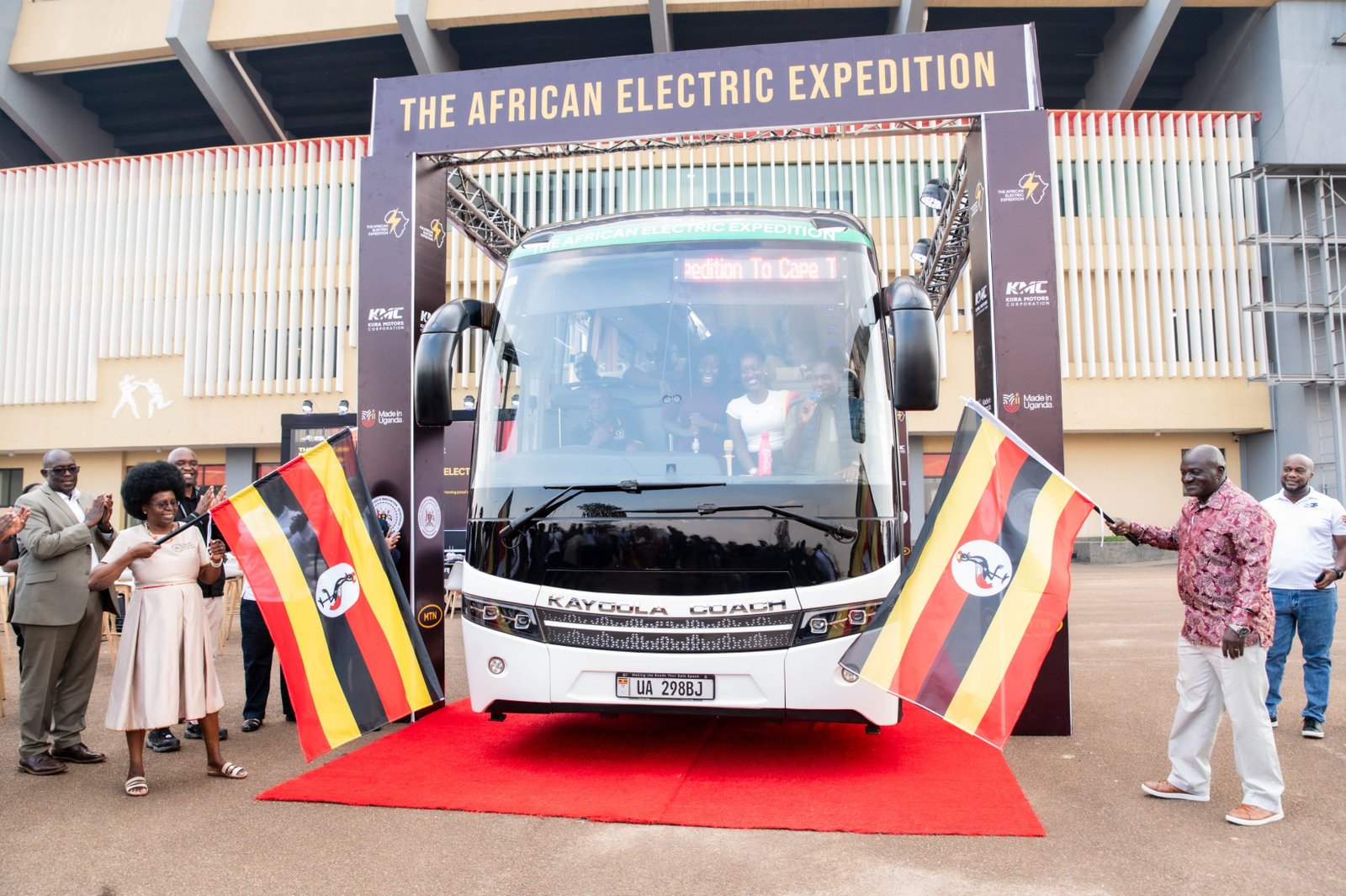
Uganda has taken a bold step in Africa’s electric mobility race with the launch of the Made in Uganda Grand Trans Africa Electric Expedition, a 30 day, 13,000 kilometre journey showcasing the capabilities of the locally built Kayoola Electric Coach across six countries. The expedition is both a technical stress test and a strategic push to position Uganda as a regional hub for electric vehicle manufacturing and public transport solutions.
Uganda’s electric vehicle ambitions have entered a continental spotlight with the launch of the Made in Uganda Grand Trans Africa Electric Expedition, a 30 day, 13,000 kilometre journey designed to test, market and validate the country’s first domestically built electric coach.
Kiira Motors, the state backed automotive maker, is using the expedition to demonstrate the capabilities of the Kayoola Electric Coach 13M across six countries Uganda, Tanzania, Zambia, Botswana, Eswatini and South Africa. The journey is being positioned as both a technical endurance test and a strategic market engagement tour targeting fleet buyers, transport regulators and potential investors.
What the expedition aims to prove
The coach will travel through varied terrains, climates and road conditions, giving Kiira Motors a rare chance to gather real world performance data outside controlled testing environments. Engineers want to observe battery performance, range reliability, charging behaviour and overall durability. At the same time, the project doubles as a mobile showroom. At each stop the team will engage transport ministries, bus operators and logistics companies to pitch the case for locally built electric mobility solutions.
Industry watchers note that the visibility of a cross border electric journey sends a wider signal about Uganda’s industrial capability. The “Made in Uganda” branding is intended to shift perceptions from viewing the country as a consumer market to seeing it as an emerging manufacturer in the automotive space.
The bigger economic stakes
Uganda wants to position itself as a regional assembly and production hub for electric buses, especially for public transport systems. The government has invested heavily in the Jinja based Kiira Vehicle Plant, expected to anchor a broader automotive ecosystem that includes local parts suppliers, component manufacturers and technical service jobs.
If Uganda can successfully manufacture and deploy electric coaches at scale, the benefits extend far beyond the factory floor. Public transport authorities across the region are seeking alternatives to diesel fleets, as fuel import bills rise and cities grapple with air quality challenges. East and Southern Africa present a potentially lucrative market for e mobility providers who can offer reliable, competitively priced fleet solutions.
But the opportunities come with structural challenges. Charging infrastructure remains uneven across the continent. Outside major urban centres in countries like Tanzania, Zambia and Botswana, there are limited high-capacity charging options for long distance electric mobility. This expedition forces a confrontation with those realities, highlighting both gaps and opportunities for energy companies and government agencies.
Commercial viability is another hurdle. Fleet operators make decisions based on total cost of ownership. For Kiira Motors to compete with global manufacturers, the company must show that maintenance, electricity costs and battery life cycles make economic sense when compared with imported diesel or hybrid buses. Strong warranties, financing packages and accessible service centres will be essential.
Regional regulatory alignment is equally important. Vehicle certification, safety standards and cross border approvals differ from one country to another. An electric coach built in Uganda must pass multiple regulatory checks to operate freely across the region. Policymakers will need to harmonize standards if the region hopes to grow a competitive automotive industry.
Why the journey matters
Beyond the symbolism of a proudly East African electric expedition, the road trip is a calculated move to spark conversations that can translate into procurement deals. The presence of private sector sponsors such as telecom companies signals that e mobility is increasingly viewed as part of a broader digital and energy ecosystem.
 If the coach completes the journey without major failure, Kiira Motors gains credibility. Reliability is the strongest marketing tool in fleet business. A successful expedition strengthens the case for governments and private operators to consider bulk orders.
What comes next
For Uganda’s electric vehicle dream to mature into a continental industry, several conditions must align. Governments will need to create favourable procurement policies for locally manufactured buses. Energy companies must expand charging infrastructure along major transport corridors. Investors must be confident that local manufacturing can hit scale, quality and cost targets.
The expedition is an important milestone, but not the final determinant of success. Its real value will be measured in the contracts, partnerships and infrastructure investments that follow. If Uganda can convert this high visibility journey into long term industrial traction, the country could become a key player in Africa’s evolving electric mobility landscape.
The Kayoola coach on the Trans Africa road is more than a publicity event. It is a live experiment in East Africa’s industrial future, testing whether a new generation of local manufacturing can compete in a rapidly electrifying world.
 Uchumi360
Business Intelligence
Uchumi360 covers business, investment, and economic policy across East, Central, and Southern Africa.
For the serious reader
You read to the end. That places you in a small group.
Uchumi360 is built for readers who demand precision over speed, structure over sentiment, and analysis that holds uncomfortable conclusions rather than softening them. If this work sharpens how you think about Africa's economy, help us keep building the infrastructure behind it.
Institutional Partners
Commission intelligence. Shape the conversation.
Uchumi360 works with development finance institutions, investment firms, sovereign bodies, and strategic organisations across the coverage region. Institutional partnership unlocks:
- Commissioned sector and country intelligence reports
- Branded research series under your institution's authority
- Exclusive data briefings for internal strategy teams
- Speaking and editorial presence at Uchumi360 events
- Co-published investment outlooks for your markets
Support Our Work
Independent analysis has a cost. Help us bear it.
Uchumi360 does not carry advertising. It does not take editorial direction from sponsors. Every article is produced without commercial compromise. Your contribution funds the reporting, research, and editorial infrastructure that keeps this analysis free from influence.
Secure checkout: One-time and monthly support are processed securely. Add payment credentials to enable checkout here.
Stay Connected
Keep up with every new insight.
Follow our latest analysis, policy coverage, and market intelligence as soon as it is published. If you need something specific, reach out directly and we will point you to the right research.
