
Kenya Plans Up to KSh 200 Billion 60km Elevated Expressway From Nairobi to Thika, Groundbreaking Expected Within Two Months
Ready
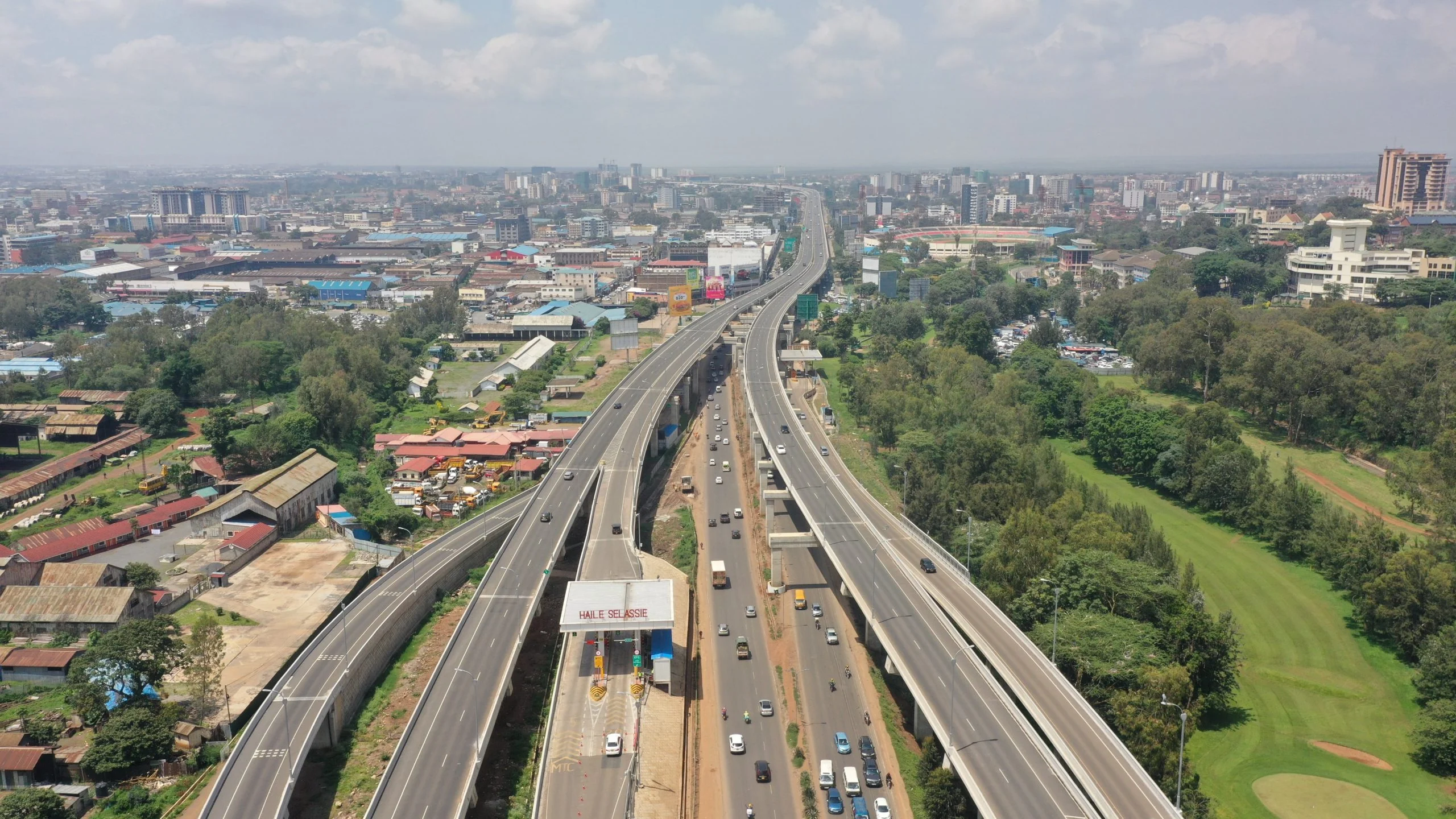
Kenya is advancing a 60 kilometre elevated expressway from Museum Hill in Nairobi to Thika at a preliminary cost of KSh 150 billion to KSh 200 billion, with construction expected to use private financing under a Public Private Partnership model. The road would run above the existing Thika Superhighway and separate longer distance traffic from local movements through Ruiru and Juja, but the final cost, investor, concession structure and toll charges have not yet been published. The project could reduce congestion and support another cycle of property and commercial development along the northern Nairobi corridor, although the experience of the original Thika Superhighway shows that additional road capacity will need to be combined with public transport, maintenance and land use planning if the gains are to endure.
Kenya is advancing plans for a new 60-kilometre elevated expressway between Nairobi and Thika at a preliminary cost of between KSh 150 billion and KSh 200 billion, proposing to build a second high-capacity road above the existing Thika Superhighway as congestion intensifies along one of the Nairobi metropolitan region’s most economically important commuter, residential, industrial and education corridors. Deputy President Kithure Kindiki said on October 30 that President William Ruto is expected to preside over a groundbreaking ceremony within one or two months, although the project remains at the design and feasibility stage and the government has not yet published a final construction cost, concession structure, private investor or toll schedule.
The proposed expressway would run from Thika Town through Juja, Ruiru and the densely developed northern approaches to Nairobi before reaching Museum Hill, where it could connect with the existing Nairobi Expressway network. Motorists travelling longer distances would use the elevated route while local and shorter distance traffic would continue using the current ground level highway, an arrangement intended to separate through traffic from vehicles entering and leaving the corridor at the numerous interchanges, estates, universities, commercial centres and public transport stops that have accumulated along Thika Road since the original superhighway opened in 2012.
The project is potentially one of Kenya’s largest urban road investments, but its economic importance lies less in the number of additional lanes than in what has happened to the corridor over the fourteen years since the first major expansion. The Thika Superhighway was itself constructed to solve severe congestion between Nairobi and Thika, yet improved accessibility accelerated residential development, commercial construction, land appreciation, university expansion, business activity and vehicle ownership along Ruiru, Juja, Kasarani, Roysambu, Githurai and neighbouring areas. KeNHA now acknowledges that the road’s success generated a second generation of traffic problems because the development it enabled created more trips, more access points, more public transport activity and greater interaction between local traffic and vehicles travelling through the corridor.
The proposed elevated expressway therefore presents Kenya with a more complicated transport problem than the one addressed by the original Thika Superhighway. Additional capacity could substantially reduce travel times for motorists making longer journeys between Nairobi, Ruiru, Juja and Thika, especially if access points are limited and the elevated route connects efficiently with the Nairobi Expressway around Museum Hill. At the same time, the experience of the existing road shows that new road capacity can stimulate additional development and travel demand, meaning that congestion relief will depend on land use management, public transport integration and access control as much as on engineering.
The Original Thika Superhighway Created the Economy, Now Congesting It
The approximately 50 kilometre Thika Superhighway was developed between 2009 and 2012 at a reported cost of about $360 million and transformed what had previously been a congested road into an eight to twelve lane controlled access highway with interchanges, flyovers, service roads and pedestrian infrastructure. KeNHA says the investment improved connectivity, supported business creation, raised employment and contributed to significant real estate development along the route, while residents and planners have observed substantial increases in land values and rental construction after accessibility improved.
That development has changed the economic geography of metropolitan Nairobi. Ruiru and Juja are no longer peripheral settlements whose traffic simply enters or leaves the capital; they are large residential, educational and commercial centres generating their own journeys throughout the day. Thika remains an industrial and commercial centre, while developments around Garden City, Kasarani, Roysambu, Kahawa, Githurai and Ruiru have increased the number of motorists, matatus, delivery vehicles, pedestrians and freight movements using the same corridor. KeNHA has identified congestion around Githurai, Kahawa, Roysambu, Kasarani, Garden City and Pangani as a growing problem because through traffic now interacts continuously with local traffic, public transport operations, roadside commerce and pedestrian movements.
The economic logic behind the elevated expressway is therefore to restore some separation between long distance and local traffic. A commuter travelling from Thika to central Nairobi should theoretically be able to remain on an elevated road rather than repeatedly competing for road space with vehicles joining from local estates, buses stopping near commercial areas or motorists accessing neighbourhood roads. The same principle underpins elevated urban expressways in highly congested metropolitan regions elsewhere, where building upward can add capacity without acquiring a completely new right of way through densely developed urban land.
That advantage is particularly important along Thika Road because extensive development now sits on both sides of much of the corridor. Building another conventional highway alongside the existing road would require substantial land acquisition, demolition and relocation, while an elevated structure could potentially use more of the existing road reserve. The feasibility study initiated in October is expected to determine whether that assumption is technically workable, how much additional land will still be required, where access ramps can be located and how construction can proceed while millions of existing journeys continue underneath.
The KSh 200 Billion Figure Is Still Preliminary
The upper estimate of KSh 200 billion places the proposed Thika expressway among Kenya’s largest current road projects, but it should not yet be treated as an approved project cost. Pulse Kenya reports that preliminary estimates range between KSh 150 billion and KSh 200 billion, while the government has not published a final financial model, concession agreement, investor or toll structure. The ongoing feasibility and design work is expected to establish the alignment, engineering requirements, environmental and social impacts, land needs, traffic projections and more reliable construction cost before procurement and financing can be completed.
The government intends to pursue private sector financing through a Public Private Partnership, which would reduce the amount of upfront expenditure that must be financed directly through the national budget but would not make the infrastructure economically free. Under a PPP arrangement, the private investor must ultimately recover construction, financing, operating and maintenance costs through toll revenues, government payments or a combination of both, while the concession contract determines how traffic, revenue, construction and political risks are divided between the state and investor.
Kenya already has a major precedent in the Nairobi Expressway, which was developed under a design, finance, build, operate, maintain and transfer model with a long term concession. The proposed Thika project may eventually adopt similar principles, but the government has not confirmed that it will replicate the same contractual structure, and assumptions about toll rates or concession length would therefore be premature.
The financing question is especially relevant because Kenya is simultaneously trying to expand road infrastructure while facing a substantial funding deficit for both new construction and maintenance. Treasury estimates reported by Business Daily put the road infrastructure financing gap at approximately KSh 1.5 trillion over five years and KSh 4 trillion over a decade, while the government is developing a wider tolling framework intended to bring more private capital and road user financing into the sector.
The Thika project therefore sits inside a broader shift in how Kenya intends to pay for major highways. The state is increasingly attempting to move commercially attractive corridors toward user financed or privately financed models rather than funding every large road directly from taxation and borrowing. That approach can accelerate construction where traffic volumes are sufficient to support private investment, but it also transfers more transport costs directly to motorists and creates long term contractual obligations that need careful assessment even when they do not appear immediately as conventional public debt.
Toll Pricing Will Determine Who Benefits From the New Road
No toll structure has been announced for the proposed Thika expressway, but the financing model will determine whether the project primarily becomes a premium road for motorists able to pay or a broader intervention in metropolitan productivity. The existing Nairobi Expressway demonstrates how a tolled road can offer substantial travel time savings to users willing to pay, while motorists who choose not to pay continue using the parallel public road network. Kenya’s draft tolling policy is also considering user charges on several other major roads as the government seeks new sources of infrastructure finance.
For Thika Road, affordability will be particularly important because the corridor carries large volumes of daily commuters rather than only commercial and occasional long distance traffic. If tolls are set too high, the elevated road may attract fewer vehicles than projected while the existing highway remains congested below it. If charges are low enough to shift substantial traffic onto the new route, investors must still recover a project cost potentially approaching KSh 200 billion over the concession period. The eventual agreement will therefore have to balance investor returns, traffic demand and commuter affordability.
The economics become more complicated when public transport is considered. A large share of people travelling along the corridor use matatus and buses rather than private vehicles, and their economic benefit from the elevated road will depend on whether public service vehicles are allowed to use it affordably, whether travel time savings are passed through to passengers and whether the project is integrated with Nairobi’s planned mass transit system. An expressway that substantially improves private vehicle journeys while leaving public transport operations concentrated on the congested road below would produce a narrower productivity gain than one integrated with high capacity bus services.
This matters because Nairobi’s traffic problem is ultimately a people movement problem rather than only a vehicle movement problem. NaMATA continues to pursue Bus Rapid Transit infrastructure, including along the Thika corridor, where earlier BRT implementation has faced funding and completion delays. A bus carrying dozens of commuters uses road capacity more efficiently than the same number of people travelling in individual cars, which means the economic return from the new road will depend partly on how Kenya combines additional road capacity with mass transit rather than treating the two as substitutes.
Kenya Is Financing New Capacity While the Existing Road Needs More Money
Another important economic issue is that the existing Thika corridor already requires greater maintenance expenditure. The Roads Ministry told Parliament in September that sections of the highway require pavement strengthening and reconstruction, particularly along the Thika to Kenol stretch, but that budget constraints have delayed some of the necessary works. Maintenance allocations for the broader corridor increased from KSh 1.4 billion in 2025/26 to KSh 1.65 billion in 2026/27, yet the ministry has said additional funding is still required.
KeNHA has separately warned that pavement deterioration, drainage problems, overloaded vehicles, utility works and heavy traffic are increasing preservation requirements on the original road. The authority has argued that the next phase of corridor management requires systematic maintenance, better drainage, rationalised bus stages, stronger access control, pedestrian facilities and management of roadside development in addition to more capacity.
The coexistence of a proposed KSh 150 billion to KSh 200 billion elevated highway with funding shortages on the existing road captures one of the central challenges in infrastructure policy. Capital expenditure attracts greater attention because it creates visible new assets, but metropolitan productivity also depends on whether the older network remains functional. If the existing ground level road deteriorates while the elevated route becomes the premium alternative, Kenya could end up with two increasingly different levels of road service operating along the same corridor.
A successful financing structure therefore has to consider the road system as a whole. The elevated highway can remove some through traffic and potentially slow deterioration on the existing carriageway, but local traffic, matatus, pedestrians, businesses and most access movements will continue using the lower road. Investment in drainage, pavement, pedestrian safety and public transport facilities on the existing highway will remain necessary even after the expressway is completed.
The Expressway Could Accelerate Another Property Cycle Along Ruiru, Juja and Thika
Transport infrastructure affects land markets because shorter and more predictable travel times expand the geographical area from which people can commute economically. The original Thika Superhighway demonstrated this clearly by supporting rapid residential and commercial growth along Ruiru, Juja and other areas north of Nairobi, with KeNHA itself linking the highway to rising real estate activity and land values.
A new elevated expressway could produce another adjustment in property values if it significantly reduces travel times between Thika, Juja, Ruiru and central Nairobi. Land that is currently discounted because of peak hour congestion becomes more attractive when the effective commuting distance falls, creating incentives for additional housing, offices, warehousing, retail and industrial development. The project could therefore reinforce the metropolitan expansion that has already moved Nairobi’s economic footprint well beyond the county boundary into Kiambu.
This creates both an economic opportunity and a planning problem. Higher density along the corridor can support larger consumer markets, more housing supply and greater commercial activity, but additional development also generates additional traffic. The original superhighway has already demonstrated that road capacity and urban growth influence one another. If improved accessibility encourages another major increase in residential development without corresponding investments in rail, buses, local roads, drainage and utilities, some of the congestion relieved by the new expressway could eventually return in another form.
The long term economic value of the project will therefore depend partly on whether transport investment is coordinated with land use planning. Ruiru, Juja and Thika can absorb more economic activity if housing, employment and services are developed around an integrated transport network, but uncontrolled sprawl would increase commuting distances and make the metropolitan region even more dependent on road travel.
The Corridor Is Larger Than a Nairobi Commuter Road
Thika Road also forms part of Kenya’s A2 highway system extending north toward Kenol, Sagana, Marua, Nanyuki, Isiolo and ultimately Moyale on the Ethiopian border. KeNHA identifies the Great North Road connection through Thika as part of the strategic national highway network linking Nairobi with northern Kenya and Ethiopia.
This gives the proposed expressway a logistics dimension beyond daily commuting because freight and intercity traffic entering Nairobi from the north also share parts of the corridor with metropolitan traffic. Separating longer distance traffic from local movements could improve travel reliability for commercial vehicles and reduce the cost of moving goods between Nairobi, Central Kenya and northern transport routes, although the magnitude of that benefit will depend on the final access design and the treatment of heavy vehicles.
The connection with the Nairobi Expressway around Museum Hill is particularly important because it could create a more continuous high capacity road system linking the northern metropolitan corridor to routes toward Westlands, Mombasa Road and Jomo Kenyatta International Airport. In network terms, the economic value of a highway rises when it connects efficiently with other major transport corridors rather than functioning as an isolated project.
KSh 200 Billion Has to Buy More Than Additional Lanes
The proposed Thika Road Expressway could materially improve mobility between Nairobi and the rapidly expanding northern metropolitan corridor, and building an elevated road above an existing highway offers a way to increase capacity without attempting to acquire an entirely new 60 kilometre right of way through densely developed settlements. The project also has the potential to support further residential, industrial and commercial investment in Ruiru, Juja and Thika while improving the movement of longer distance traffic into Nairobi.
Its economic case, however, will ultimately depend on the details that are still unresolved. The KSh 150 billion to KSh 200 billion estimate remains preliminary, the final PPP structure has not been published, tolls have not been announced, feasibility work is ongoing and there is not yet enough information to assess the state’s contingent financial obligations or the private investor’s expected return.
The original Thika Superhighway also provides a useful warning against measuring success only through additional road capacity. Kenya built a much larger road, travel improved, development followed and the resulting urban expansion eventually generated enough additional traffic to congest the corridor again. KeNHA now describes the problem as involving traffic management, access control, public transport, maintenance, land use and pedestrian movement as much as highway capacity.
If the elevated expressway is integrated with mass transit, better interchange management, land use planning and sustained maintenance of the existing highway, the project could raise productivity across one of East Africa’s fastest growing metropolitan corridors by reducing time lost in traffic and increasing the effective economic integration of Nairobi, Ruiru, Juja and Thika. If it is treated primarily as another road expansion, the region could eventually reproduce the same cycle that followed the original Thika Superhighway, only with more vehicles, more development and a considerably more expensive piece of infrastructure above it.
 Uchumi360
Business Intelligence
Uchumi360 covers business, investment, and economic policy across East, Central, and Southern Africa.
For the serious reader
You read to the end. That places you in a small group.
Uchumi360 is built for readers who demand precision over speed, structure over sentiment, and analysis that holds uncomfortable conclusions rather than softening them. If this work sharpens how you think about Africa's economy, help us keep building the infrastructure behind it.
Institutional Partners
Commission intelligence. Shape the conversation.
Uchumi360 works with development finance institutions, investment firms, sovereign bodies, and strategic organisations across the coverage region. Institutional partnership unlocks:
- Commissioned sector and country intelligence reports
- Branded research series under your institution's authority
- Exclusive data briefings for internal strategy teams
- Speaking and editorial presence at Uchumi360 events
- Co-published investment outlooks for your markets
Support Our Work
Independent analysis has a cost. Help us bear it.
Uchumi360 does not carry advertising. It does not take editorial direction from sponsors. Every article is produced without commercial compromise. Your contribution funds the reporting, research, and editorial infrastructure that keeps this analysis free from influence.
Secure checkout: One-time and monthly support are processed securely. Add payment credentials to enable checkout here.
Stay Connected
Keep up with every new insight.
Follow our latest analysis, policy coverage, and market intelligence as soon as it is published. If you need something specific, reach out directly and we will point you to the right research.
