
Dar es Salaam Is Adding 500,000 People a Year and Running Out of Water at the Same Time. The Kidunda Dam Is the Missing Piece.
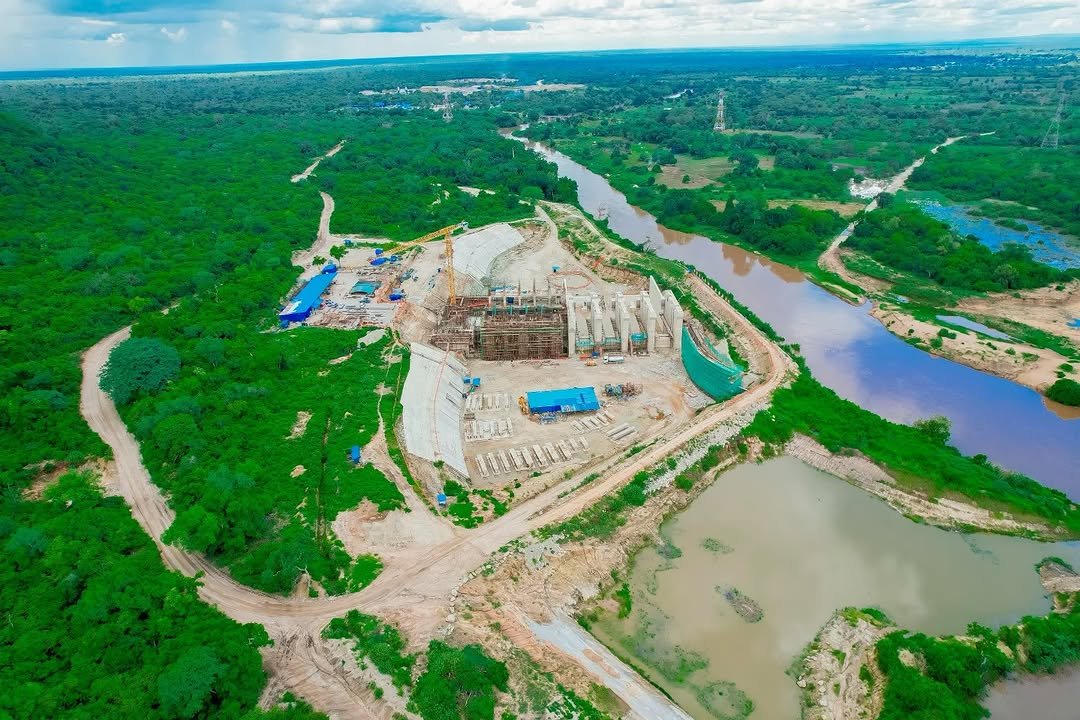
Dar es Salaam's water supply is drawn more than 90 percent from the Ruvu River system, which experiences seasonal volatility that converts what should be an abundant natural resource into a structurally unreliable production input. The city's population stands at approximately 7 million in 2026 and is projected to exceed 10 million by 2030, according to Tanzania's National Bureau of Statistics and World Bank population growth projections. DAWASA's demand projections show supply already falling short of need for millions of current residents, with the gap widening as population growth and industrial development accelerate demand faster than existing infrastructure can expand supply. The Kidunda Multipurpose Dam, under construction along the Ruvu River in Morogoro region at an estimated cost of over TZS 335 billion, is designed to store approximately 190 billion litres of water and deliver a regulated supply of roughly 24,000 litres per second to Dar es Salaam and surrounding regions. The engineering case for the dam is straightforward and sound. The economic case is more important and less discussed. Dar es Salaam cannot become the industrial and commercial engine that Tanzania's development strategy requires while its water supply remains seasonally volatile and structurally inadequate for a city approaching megacity scale. Kidunda is not solving a water shortage. It is removing one of the most binding constraints on the economic transformation that Tanzania's entire investment programme is attempting to build.
Water as Production Input: The Frame That Changes the Analysis
The standard framing of urban water infrastructure as a public service delivery challenge, measured in household connection rates, water quality compliance, and access to safe drinking water, captures the humanitarian dimension of the investment but misses its economic significance. Water is not only a utility. It is a production input whose reliability, cost, and quality determine the viability of the industrial, commercial, and service sector activities that generate economic output.
Manufacturing operations require water in volumes and at reliability standards that household water systems are not designed to meet. Food processing plants require continuous water supply for cleaning, processing, and cooling operations whose interruption causes product loss and equipment damage. Textile and garment manufacturing requires water for dyeing and finishing processes whose consistency determines product quality. Pharmaceutical manufacturing requires water of specific purity standards whose interruption forces production shutdown and batch rejection. Construction activity, which is occurring at extraordinary scale in Dar es Salaam as the investment surge builds infrastructure and commercial property, requires water for concrete mixing, dust suppression, and worker welfare that intermittent supply cannot reliably provide.
Dar es Salaam's Ruvu River water system delivers this production input intermittently. Seasonal flow variation means that supply pressure fluctuates with rainfall patterns in ways that industrial users cannot plan around. Demand growth driven by 750,000 additional residents annually means that the gap between system capacity and system demand is widening structurally rather than fluctuating cyclically. An industrial investor evaluating Dar es Salaam as a manufacturing location assesses water supply reliability with the same weight given to electricity reliability, logistics efficiency, and labour market depth. A city whose water system is seasonally unreliable and structurally capacity-constrained imposes a production risk on manufacturing investment that competing locations without that constraint do not impose.
Kidunda converts an intermittent natural resource into a predictable production input by storing the Ruvu River's excess wet season flow and releasing it as regulated supply during dry season periods when natural flow falls below demand levels. The dam does not create water that does not exist. It converts seasonal abundance into annual reliability. That conversion is the economic transformation that 190 billion litres of storage capacity represents, not simply an engineering achievement but an industrial competitiveness improvement whose value compounds across every manufacturing investment that Dar es Salaam's water reliability improvement enables.
The 7 Million to 10 Million Trajectory and What It Demands of Water Infrastructure
The population arithmetic of Dar es Salaam's megacity trajectory makes the Kidunda investment's urgency specific and measurable in ways that general infrastructure planning language obscures.
A city adding 750,000 residents annually requires water supply system expansion that keeps pace with population growth simply to maintain current per capita supply levels, before accounting for the per capita supply improvement that development standards require or the industrial water demand that manufacturing investment generates separately from residential demand. DAWASA's projections already show supply falling short of current demand for millions of existing residents. Adding 750,000 additional residents annually to a system that is already supply-constrained produces a widening deficit whose infrastructure response must be proportional to the scale of the population addition rather than calibrated to historical demand growth rates.
By 2030, when Dar es Salaam crosses the 10 million threshold, its water demand will reflect not only the 3 million additional residents added between 2026 and 2030 but the cumulative industrial and commercial water demand of the manufacturing zones, the logistics facilities, the construction activity, and the service sector growth that the investment surge is generating simultaneously. The Julius Nyerere Hydropower Station's 2,115 megawatts of additional electricity generation will enable the industrial activity that drives this commercial water demand. The TANROADS programme's road network improvements will move the goods that manufacturing produces. The SGR extension will connect Dar es Salaam to the hinterland mineral and agricultural economy. But if the water system cannot supply the manufacturing zones that all of this infrastructure is designed to serve, the industrial investment those zones are designed to attract will not materialise at the scale the development strategy requires.
Kidunda's construction timeline is therefore not simply an engineering project management question. It is a race between the infrastructure system that the investment surge is assembling and the population and industrial demand growth that is outpacing that system's current capacity. Every year of delay in Kidunda's completion is a year in which Dar es Salaam's water supply constraint persists against a demand trajectory that is growing by 750,000 residents annually. The project's long delay history, which the brief attributes to the tension between domestic financing's sovereignty advantages and its capital deployment constraints, represents a real and compounding economic cost even when the dam's eventual completion is not in doubt.
The Infrastructure System Architecture: Where Kidunda Fits
Uchumi360's coverage of Dar es Salaam's infrastructure investment this month has documented a set of large-scale projects that are individually significant but whose combined significance is greater than the sum of their parts. Reading them together reveals an infrastructure system architecture that Tanzania is attempting to assemble, whose completeness determines whether Dar es Salaam becomes the industrial and commercial engine that the development strategy requires.
The Julius Nyerere Hydropower Station addresses the energy constraint. Adding 2,115 megawatts to the national grid and reducing dependence on diesel generation, JNHPS is the energy system investment that makes industrial electricity available at the volumes and reliability that manufacturing competitiveness requires. Without it, industrial zones cannot attract the energy-intensive manufacturing that drives structural transformation.
The TANROADS programme and the SGR extension address the logistics constraint. The road network improvements and the railway extension toward the Zambian border connect Dar es Salaam to its hinterland economy and to the regional trade flows that make it a viable manufacturing and distribution hub rather than simply a coastal consumption centre. Without them, industrial zones cannot efficiently access the raw material inputs and consumer markets that manufacturing operations require.
The BRT expansion and the DMDP II urban infrastructure package address the urban mobility and fiscal sustainability constraints. The BRT corridors move the labour force that industrial zones require from residential locations to employment locations efficiently enough to make urban density economically productive rather than simply congested. The property tax system generates the municipal revenue that makes infrastructure maintenance financially sustainable rather than dependent on external financing.
The Kidunda Dam addresses the water constraint. Without reliable, adequate water supply, the manufacturing zones that the energy, logistics, and urban mobility investments are designed to serve cannot attract the industrial tenants whose production activity generates the economic output, the formal employment, and the export earnings that structural transformation requires.
Each of these investments is necessary but not sufficient. JNHPS without Kidunda means industrial zones with reliable electricity but unreliable water. Kidunda without JNHPS means reliable water but unreliable electricity. The TANROADS network without BRT means efficient goods movement but inefficient labour movement. The BRT without the property tax system means improved urban mobility without the revenue to maintain it. The system only functions as an industrial enabler when all of its components are operational simultaneously. Kidunda is the water component without which the system remains incomplete regardless of how well the other components perform.
The Climate Adaptation Dimension That Compounds the Investment Case
Tanzania's rainfall variability is increasing under climate change in ways that make the Ruvu River system's seasonal volatility more extreme and less predictable than historical patterns suggest. Wet season peaks are becoming higher, generating flood risk that the existing unregulated river system cannot manage. Dry season troughs are becoming lower, extending the period of supply constraint beyond what seasonal historical averages would predict. The combination of higher peaks and lower troughs makes the existing water system more volatile rather than simply unreliable.
Kidunda's storage capacity converts this increasing climate volatility into managed flow by capturing the higher wet season peaks that would otherwise generate downstream flooding and releasing them as regulated dry season supply when natural flow is lowest. The dam is therefore not simply scaling existing water infrastructure to meet growing demand. It is restructuring the relationship between the Ruvu River's natural flow regime and Dar es Salaam's water supply system in a way that insulates the city's water supply from climate variability rather than remaining exposed to it.
For industrial investors evaluating Dar es Salaam as a manufacturing location, climate resilience in water supply is not an environmental consideration separate from business risk. It is a business risk in itself. A manufacturing operation whose water supply is disrupted by extreme weather events, whether flood damage to intake infrastructure or drought-driven supply rationing, faces production losses that are directly attributable to climate exposure in the water system. A water system that is regulated by storage infrastructure with 190 billion litres of buffer capacity is substantially more climate-resilient than an unregulated river system whose supply tracks seasonal rainfall variability directly.
The AEO 2025 documents climate change as a direct economic risk variable rather than an environmental consideration separate from development economics. East Africa's high exposure to climate shocks, including the rainfall variability that affects both agricultural production and urban water systems, translates directly into investment risk premiums that rational investors apply to location decisions in climate-exposed markets. Kidunda's climate adaptation function reduces Dar es Salaam's water system climate exposure in ways that improve the city's investment risk profile for manufacturing and industrial investment, a benefit that extends well beyond the direct economic value of the water supply improvement.
The Domestic Financing Model: Sovereignty at a Price
The brief identifies Kidunda's domestic financing structure as a distinguishing feature of the project and correctly identifies both its advantage, reduced external debt exposure and currency risk, and its constraint, slower capital deployment and the project delays that domestic financing limitations have produced.
This financing distinction deserves more specific analytical attention in the context of Uchumi360's coverage of Tanzania's broader infrastructure investment programme. The TANROADS programme, the DMDP II package, and the SGR extension are all financed substantially through external borrowing at terms that reflect Tanzania's B+ sovereign rating and the Africa premium that Uchumi360's AfCRA analysis documented as adding meaningfully to the cost of external financing. Kidunda's domestic financing approach avoids this premium at the cost of the capital deployment pace that external financing would enable.
The economic trade-off is specific. External financing at Tanzania's current borrowing terms adds a risk premium to the project's financing cost that reflects the institutional quality and governance risk factors that international capital markets price into Tanzanian sovereign debt. Domestic financing eliminates this premium but subjects the project's pace to the constraints of Tanzania's domestic capital market depth and the government's fiscal space for directing domestic resources to infrastructure investment in competition with recurrent expenditure demands.
The project's long delay history suggests that the domestic financing model has imposed a substantial opportunity cost in terms of the water supply improvement that has been deferred while the financing was assembled. Quantifying this opportunity cost requires estimating the economic value of the water reliability improvement that each year of delay has prevented, which is analytically equivalent to quantifying the industrial investment that has been foregone, the manufacturing output that has not been produced, and the formal employment that has not been created because Dar es Salaam's water system constraint persisted. These costs are not visible in the project's financial statements. They are embedded in the economic trajectory of Tanzania's industrial development.
The financing lesson that Kidunda's experience suggests for future water infrastructure investment is not that domestic financing is wrong but that the trade-off between financing sovereignty and capital deployment pace should be made explicitly and the opportunity cost of slower deployment should be incorporated into the financing decision rather than treated as an acceptable consequence of the sovereignty benefit.
The Integration Imperative: Converting Water Reliability Into Economic Output
The brief correctly identifies the central risk of the Kidunda investment: that reliable water supply does not automatically translate into industrial expansion, productivity gains, and revenue generation unless the water supply improvement is deliberately integrated into industrial policy, urban planning, and the economic development framework that determines whether improved infrastructure generates the economic activity it enables.
This integration challenge is the same challenge that Uchumi360's infrastructure debt analysis identified as the determinant of whether infrastructure investment generates economic returns or simply generates improved statistics and debt obligations. The DMDP II property tax system is the integration mechanism that makes Dar es Salaam's urban infrastructure financially self-sustaining. The BRT network's land use planning coordination is the integration mechanism that makes transit investment generate urban productivity rather than simply improved bus speeds. For Kidunda, the integration mechanisms are the industrial zone water allocation frameworks, the tariff structures that price water to productive sectors at levels that make industrial investment commercially rational, and the regulatory frameworks that give manufacturing investors confidence that their water supply requirements will be met reliably over the investment horizon their factory construction requires.
Tanzania's SEZ strategy, which Uchumi360 documented in the investment surge analysis, provides the industrial policy framework within which Kidunda's water supply improvement can be deliberately directed toward productive economic activity rather than simply distributed across residential and commercial demand at large. The industrial zones designated under the SEZ framework are the locations where water supply reliability translates most directly into manufacturing investment, because these zones offer the combination of infrastructure, regulatory streamlining, and incentive structures that make them the most commercially attractive locations for the manufacturing investment that structural transformation requires.
The deliberate allocation of Kidunda's regulated water supply to these zones, at tariffs that reflect both the cost of supply and the economic value of reliability to industrial users, is the integration mechanism that converts a water infrastructure project into an industrial development asset. Without this deliberate allocation, Kidunda's 24,000 litres per second of regulated supply will be absorbed by the residential and commercial demand of Dar es Salaam's growing population in ways that improve urban welfare without generating the industrial productivity gains that structural transformation requires.
The Model for Other African Cities Under Water Stress
Dar es Salaam's water challenge is not unique in the African urban context. Nairobi experiences water rationing that imposes production costs on its manufacturing and commercial sectors. Lusaka faces groundwater stress that is intensifying as its population grows faster than its surface water infrastructure expands. Kinshasa sits on the Congo River, one of the world's largest freshwater flows, yet its urban population experiences chronic water supply unreliability because the infrastructure to capture, treat, and distribute that resource has not been built at the scale its population requires.
The common pattern across these cities is the one that Kidunda is attempting to address in Dar es Salaam: water availability that is structurally adequate at the regional level but operationally unreliable at the urban system level because the storage, treatment, and distribution infrastructure that converts available water into reliable supply has not been built ahead of demand growth. Kidunda's pre-emptive capacity building approach, constructing storage and regulation infrastructure before the supply deficit becomes an acute crisis rather than after it has already constrained economic development, is the right model even when the financing constraints that slow its implementation are real.
The lesson for other African cities is not simply that dams should be built. It is that water infrastructure investment should be treated with the same analytical seriousness as energy infrastructure, logistics infrastructure, and urban mobility infrastructure in the development planning frameworks that determine how scarce public investment resources are allocated across competing priorities. Water supply reliability is a production input constraint whose economic cost is as measurable and as consequential as electricity unreliability, road congestion, or port inefficiency. The infrastructure investment required to remove that constraint deserves the same priority in development planning that the removal of the other constraints has received.
The Bottom Line
The Kidunda Dam will solve Dar es Salaam's water supply volatility problem. That is its engineering function and on the available evidence it will perform that function effectively. Whether it solves the economic constraint that water unreliability imposes on Dar es Salaam's industrial development trajectory depends on decisions that go beyond the dam's engineering design and that are the responsibility of the industrial policy, urban planning, and regulatory frameworks that determine how Kidunda's regulated water supply is allocated, priced, and integrated into the city's economic development strategy.
Dar es Salaam is assembling the infrastructure system that a 10 million person industrial city requires. The JNHPS provides the energy. The TANROADS network and the SGR provide the logistics. The BRT expansion provides the urban mobility. The DMDP II property tax system provides the fiscal sustainability. Kidunda provides the water. No single component of this system is sufficient on its own. Each is necessary for the system to function as an industrial enabler rather than as a collection of individually impressive but collectively incomplete infrastructure assets.
Tanzania has the investment pipeline, the institutional framework, and the geopolitical attention that creates the financing options to assemble this system. The question that will determine whether Dar es Salaam arrives at 10 million people as an economic engine or as a congestion trap is whether the system is assembled with the deliberateness, the coordination, and the economic integration that converts infrastructure completion into industrial development. Kidunda is the water component of that system. Its completion is necessary. Its integration into the industrial development framework that makes its water reliability economically productive is what determines its ultimate significance.
_______________________________________________________________________________________
Sources: Tanzania Ministry of Water Project Data 2025 and 2026. DAWASA Water Demand and Supply Reports. Tanzania National Bureau of Statistics Population and Housing Census Data and Projections. World Bank Tanzania Population Growth Projections 2026 to 2030. African Development Bank African Economic Outlook 2025. Julius Nyerere Hydropower Station Generation and Commissioning Data. TANROADS Programme Report December 2025. World Bank DMDP II Project Appraisal Document 2023. DART Agency BRT Phase Documentation. Tanzania Investment and Special Economic Zones Authority Tiseza Data 2025. IMF Tanzania Article IV Consultation 2024.
_______________________________________________________________________________________
Uchumi360 covers business, investment, and economic policy across East, Central, and Southern Africa.
 Uchumi360
Business Intelligence
Uchumi360
Business Intelligence
Uchumi360 covers business, investment, and economic policy across East, Central, and Southern Africa.
