

Infinity Hills and the New Political Economy of Zanzibar’s Real Estate Boom
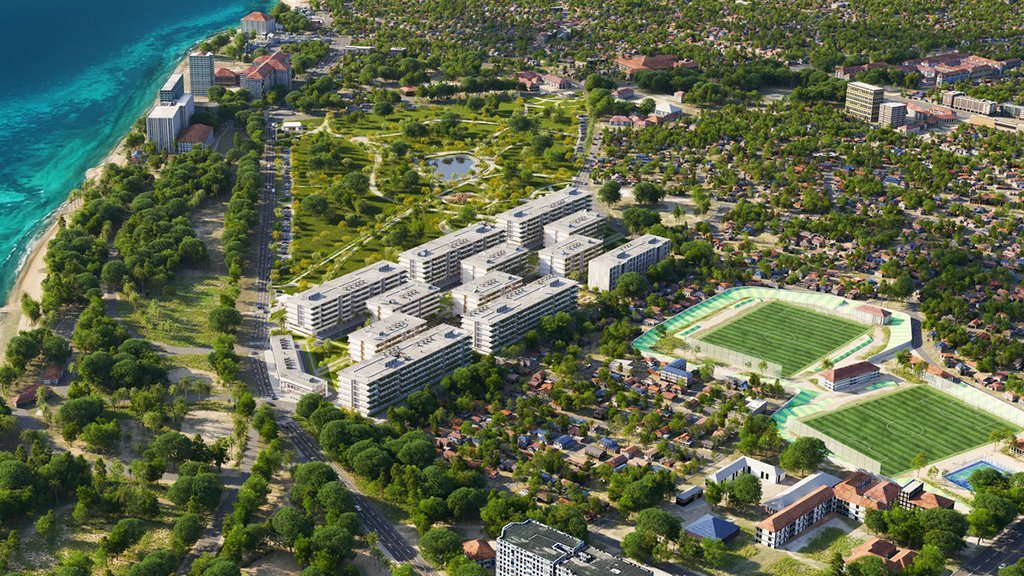
Infinity Hills is more than a housing project. It represents a structural shift in Zanzibar’s economy toward foreign capital, premium urban living, and asset-based growth. But as luxury developments multiply, the island faces a critical question: can this boom deliver inclusive prosperity, or will it deepen inequality and create an enclave economy?
Zanzibar is undergoing one of the fastest structural transformations in its modern history. What was once a tourism-dependent island economy is steadily repositioning itself as a high-end property and investment destination. The emergence of large master-planned developments such as Infinity Hills is not an isolated real estate story. It is a signal of a deeper shift in the political economy of the archipelago and, by extension, Tanzania’s coastal growth corridor.
Infinity Hills, a mixed-use residential and commercial project featuring more than a thousand housing units alongside retail and social infrastructure, represents a new class of urban development previously rare in Zanzibar. Its scale alone places it closer to Gulf-style planned communities than traditional East African housing estates.
From Tourism Dependency to Asset-Driven Growth
For decades, Zanzibar’s economy relied heavily on tourism receipts, cloves, and transfers from mainland Tanzania. That model is increasingly volatile, exposed to global shocks such as pandemics, geopolitical disruptions, and climate risks.
High-end real estate offers a different growth engine: capital inflows that are not tied to seasonal visitor numbers.
Projects like Infinity Hills attract:
- Foreign direct investment into construction and property market
- Diaspora capital seeking secure offshore assets
- Lifestyle investors relocating from Europe, the Middle East, and Asia
- Regional elites diversifying portfolios into coastal property
In macroeconomic terms, this shifts Zanzibar toward an asset-based economy, where land and property become primary stores of value and vehicles for capital accumulation.
The Pricing Question: Who Is Zanzibar Being Built For?
Price signals emerging from developments like Infinity Hills indicate a market orientation toward international buyers rather than domestic households. Entry-level units priced in the hundreds of thousands of US dollars place them far beyond the reach of the vast majority of Tanzanians.
This creates a dual housing market:
- A foreign-facing premium sector driven by hard currency
- A local market struggling with affordability constraints
While premium projects raise land values and government revenues, they also risk accelerating spatial inequality if not balanced by affordable housing policy. Without deliberate planning, prime coastal areas could evolve into enclaves disconnected from the socioeconomic realities of local communities.
Mixed-Use Urbanism and Productivity Gains
One of the most consequential aspects of Infinity Hills is its integrated commercial component. The inclusion of retail space, offices, and social amenities reflects a shift toward compact urbanism rather than fragmented development.
This model can generate real productivity gains:
- Reduced transport costs and congestion
- Higher labor efficiency due to proximity of services
- Increased formal sector activity through registered businesses
- Stable local employment beyond tourism seasonality
For Tanzania, which faces chronic urban planning challenges in cities like Dar es Salaam, such developments function as experimental prototypes of controlled urban growth.
Foreign Capital vs. Economic Sovereignty
The inflow of foreign buyers raises a complex policy dilemma. On one hand, external capital accelerates development without burdening public finances. On the other, excessive reliance on non-resident ownership can expose the economy to external shocks.
Key risks include:
- Property bubbles driven by speculative demand
- Sudden market contractions if foreign interest declines
- Capital flight through profit repatriation
- Reduced housing availability for residents
Countries such as Mauritius and Seychelles have navigated similar transitions with mixed outcomes, achieving high per-capita income but also grappling with rising inequality and cost-of-living pressures.
Strategic Implications for Tanzania’s 2050 Vision
Tanzania’s long-term development ambitions emphasize industrialization, urban modernization, and middle-income transformation. Zanzibar’s real estate boom could support these goals if integrated into a broader national strategy.
Potential positive spillovers include:
- Expansion of construction and engineering capabilities
- Growth of financial services tied to property transactions
- Increased tax revenue and foreign exchange reserves
- Enhanced global visibility for Tanzania as an investment destination
However, real estate-led growth alone does not generate broad-based prosperity unless linked to productive sectors such as manufacturing, technology, and logistics.
The Risk of an Enclave Economy
A critical concern among development economists is the emergence of “enclave growth”, sectors that generate wealth without deep linkages to the wider economy.
If luxury developments rely heavily on imported materials, foreign contractors, and expatriate labor, local multiplier effects diminish. The result can be visually impressive infrastructure with limited transformation of domestic productive capacity.
Avoiding this outcome requires:
- Strong local procurement policies
- Skills transfer requirements
- Integration with local supply chains
- Urban planning aligned with public infrastructure expansion
A Turning Point for Zanzibar
Infinity Hills encapsulates both the promise and the contradictions of Zanzibar’s development trajectory. It demonstrates investor confidence, introduces modern urban planning concepts, and injects significant capital into the economy. At the same time, it raises fundamental questions about inclusivity, sustainability, and long-term national interest.
Zanzibar is no longer merely a tourist paradise. It is becoming a contested economic space where global capital, local aspirations, and policy choices intersect.
Whether projects like Infinity Hills ultimately strengthen Tanzania’s development path or deepen structural inequalities will depend less on the buildings themselves and more on the governance frameworks surrounding them.
