
Weak Road-Use Management Is Costing Dar es Salaam’s Economy Billions Each Year
Ready
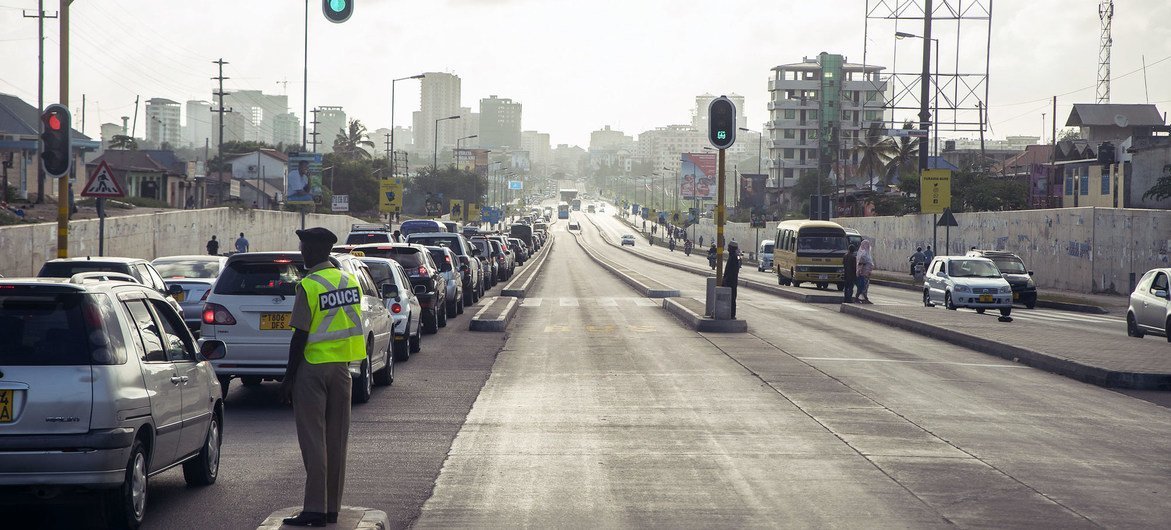
Traffic congestion in Dar es Salaam is draining an estimated TZS 655 billion from the economy each year, not primarily due to insufficient roads but weak management of existing ones. From disorder at public transport stops to uncontrolled roadside activities, poor road-use governance is quietly eroding productivity, raising business costs, and undermining the city’s role as Tanzania’s economic engine.
Traffic congestion in Dar es Salaam is not merely a transport inconvenience. It is a structural economic burden that erodes productivity, raises operating costs for businesses, worsens public health outcomes, and weakens the city’s competitiveness as Tanzania’s commercial hub.
Research underscores the scale of the losses. Katala (2019) estimates that congestion costs the city approximately TZS 655 billion annually, driven by time delays and excess fuel consumption. In 2026, this figure could be much more, possibly even a trillion. A study cited by Elinaza (2010), based on findings from the Confederation of Tanzania Industries, suggests traffic jams reduce business profitability by about 20 percent. Additional studies by Othman (2010) and Lupala (2010) identify congestion as a major contributor to urban air pollution and associated health costs.
In effect, congestion functions as an invisible tax paid daily by workers, firms, and the state.
The Core Problem Is Not Just Lack of Roads
Public debate often focuses on building new highways and flyovers. However, a substantial share of congestion in Dar es Salaam arises from weak management of existing road capacity.
Traffic management involves regulating the movement of vehicles, pedestrians, and roadside activities to preserve road efficiency and safety. Even wide roads can become bottlenecks if usage is poorly controlled.
Currently, the dominant approach relies on traffic police manually directing vehicles at intersections. While useful, this method cannot address congestion sources occurring between junctions, particularly around public transport stops and commercial zones.
Key Controllable Drivers of Congestion
Public Buses Stopping Outside Designated Bays
Minibuses frequently stop in active traffic lanes rather than within designated stops, effectively reducing the number of usable lanes. When this occurs at multiple stops along a corridor, queues form rapidly.
Strict enforcement of stopping only within official bays could restore traffic flow without major infrastructure spending.
Motorcycles and Three-Wheelers Occupying Bus Stops
Motorcycles and three-wheelers often park inside bus bays while waiting for passengers. This forces buses to load and unload in traffic lanes, narrowing road capacity and disrupting flow.
Designating separate staging areas for these vehicles near, but not inside, bus stops would deliver immediate efficiency gains.
Informal Trading Within Passenger Areas
Vendors frequently occupy waiting areas at transport stops, pushing passengers into the roadway. Buses then pull further into traffic to pick up passengers, increasing safety risks and congestion.
Protecting stop areas as transport infrastructure rather than commercial space is essential for system efficiency.
Unregulated Passenger Pick-Up and Drop-Off
Stopping anywhere along major corridors to load or unload passengers is a major daily source of gridlock on roads such as Morogoro, Kilwa, and Ali Hassan Mwinyi.
Consistent enforcement of designated stopping points would significantly improve throughput.
Speed Restrictions and Physical Barriers
In some corridors, very low speed limits and excessive speed bumps reduce vehicle throughput. Where safety conditions permit, optimizing speed management could increase road efficiency without building new capacity.
Such adjustments should be paired with safer pedestrian infrastructure, including signalized crossings and grade-separated walkways.
Incomplete Integration of Mass Transit Infrastructure
Bus rapid transit systems have expanded passenger capacity, but in several locations pedestrian crossings near stations force vehicles to stop repeatedly, generating queues that propagate along the corridor.
Future planning should integrate transit systems with safe pedestrian crossings to maintain continuous traffic flow.
The Most Cost-Effective Solution: Manage What Already Exists
Dar es Salaam could reduce a large share of congestion without large capital projects. Stronger enforcement, better coordination among agencies, and disciplined management of road use would unlock latent capacity within existing infrastructure.
Reducing congestion would deliver immediate economic gains:
- Higher workforce productivity
- Lower logistics and operating costs
- Reduced national fuel consumption
- Improved urban air quality and health outcomes
- Greater competitiveness as a regional business hub
Bottom Line
Road space in Dar es Salaam is a high-value economic asset. Poor management converts that asset into a source of losses rather than growth.
From an Uchumi360 perspective, the fastest and most impactful intervention is not only to build more roads, but to ensure current infrastructure operates at maximum efficiency. As the city continues to expand rapidly, its ability to manage mobility systems will determine whether Dar es Salaam strengthens or constrains Tanzania’s economic trajectory.
 Uchumi360
Business Intelligence
Uchumi360
Business Intelligence
Uchumi360 covers business, investment, and economic policy across East, Central, and Southern Africa.
For the serious reader
You read to the end. That places you in a small group.
Uchumi360 is built for readers who demand precision over speed, structure over sentiment, and analysis that holds uncomfortable conclusions rather than softening them. If this work sharpens how you think about Africa's economy, help us keep building the infrastructure behind it.
Institutional Partners
Commission intelligence. Shape the conversation.
Uchumi360 works with development finance institutions, investment firms, sovereign bodies, and strategic organisations across the coverage region. Institutional partnership unlocks:
- Commissioned sector and country intelligence reports
- Branded research series under your institution's authority
- Exclusive data briefings for internal strategy teams
- Speaking and editorial presence at Uchumi360 events
- Co-published investment outlooks for your markets
Support Our Work
Independent analysis has a cost. Help us bear it.
Uchumi360 does not carry advertising. It does not take editorial direction from sponsors. Every article is produced without commercial compromise. Your contribution funds the reporting, research, and editorial infrastructure that keeps this analysis free from influence.
Secure checkout: One-time and monthly support are processed securely.
Stay Connected
Keep up with every new insight.
Follow our latest analysis, policy coverage, and market intelligence as soon as it is published. If you need something specific, reach out directly and we will point you to the right research.
