
Africa’s 10 Largest Banks Hold $1.2 Trillion in Assets as South Africa Dominates the Industry
Ready
Africa's ten largest banks hold approximately $1.22 trillion in assets, according to an October 2026 comparison of financial institutions, with South Africa accounting for five of the top ten, Morocco three and Egypt two. Standard Bank leads at $232.27 billion, followed by the National Bank of Egypt at $197.98 billion and FirstRand at $167.31 billion. Nigeria's largest lenders remain outside the top ten, while East African institutions including Equity, KCB, CRDB and NMB operate on considerably smaller balance sheets. The concentration highlights differences in financial market development, capital accumulation and the capacity of African banks to finance major infrastructure and industrial investments.
South Africa accounts for five of Africa's ten largest banking institutions, followed by Morocco with three and Egypt with two, according to an October 2026 ranking of bank assets. Standard Bank leads with approximately $232 billion, while Nigeria's largest lenders remain outside the top ten and East African institutions operate on considerably smaller balance sheets. The concentration reflects differences in capital accumulation, financial market development, exchange rates and the capacity to finance large corporate and infrastructure investments.
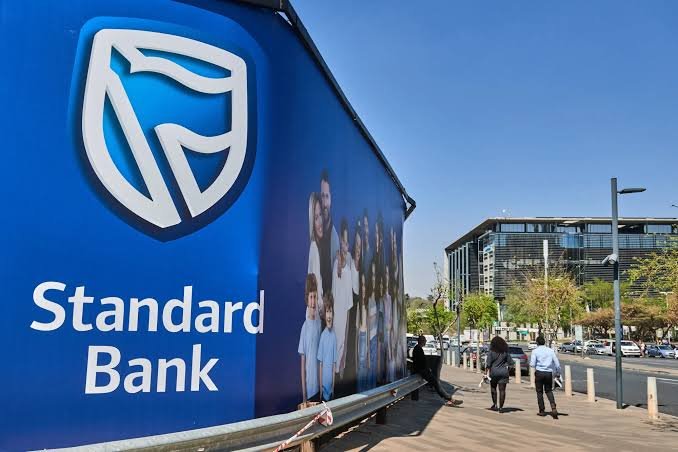
South Africa's Standard Bank Group has retained its position among Africa's largest banking institutions, with approximately $232.27 billion in total assets at the end of June 2026, followed by the National Bank of Egypt at $197.98 billion and FirstRand at $167.31 billion, according to a comparative ranking published by Egyptian financial research platform First Bank on October 6. The ranking places five South African banks among the continent's ten largest by assets, alongside three institutions headquartered in Morocco and two in Egypt, illustrating how banking balance sheets remain concentrated in a small number of African financial markets despite expanding demand for credit across the continent.
The ten banks hold approximately $1.22 trillion in assets based on the published ranking, with Standard Bank alone accounting for almost one fifth of the total. The figures include loans, cash, securities and other assets recognised on bank balance sheets, rather than capital available exclusively for new lending. Their scale nevertheless indicates the financial capacity concentrated within a relatively small number of institutions that serve households, businesses, governments and investors across multiple African economies.
The concentration is particularly relevant as African governments seek financing for transport corridors, electricity generation, industrial development, housing and expanding private enterprises. Large banking groups can provide corporate credit, trade finance, guarantees, treasury services and participation in syndicated lending arrangements, while smaller institutions may face tighter limits on the size of individual exposures they can support. The ability to finance these activities depends on regulatory capital, liquidity, profitability and risk appetite, however, rather than total assets alone.
The latest comparison also comes during a period of improving banking sector performance. According to African Business magazine's October 2026 assessment, the 100 banks included in its annual ranking collectively held approximately $1.8 trillion in assets, an increase of 16% from $1.56 trillion in the previous survey. Their combined Tier 1 capital increased by 23% to $155 billion, supported by stronger profitability, balance sheet expansion and more favourable exchange rates in several markets. The survey uses Tier 1 capital to determine its principal ranking, which explains why its ordering differs from rankings based exclusively on assets.
South African Banks Account for Half the Top Ten
Africa's ten largest banks by reported assets
| Rank | Bank | Country | Assets |
| 1 | Standard Bank Group | South Africa | $232.27B |
| 2 | National Bank of Egypt | Egypt | $197.98B |
| 3 | FirstRand | South Africa | $167.31B |
| 4 | Absa Group | South Africa | $139.23B |
| 5 | Nedbank Group | South Africa | $98.21B |
| 6 | Banque Misr | Egypt | $94.98B |
| 7 | Attijariwafa Bank | Morocco | $87.94B |
| 8 | Investec | South Africa | $84.66B |
| 9 | Banque Centrale Populaire | Morocco | $62.18B |
| 10 | Bank of Africa | Morocco | $51.03B |
Source: First Bank, October 6, 2026, comparing institutions using reported and converted asset figures attributed to June 2026. Figures are indicative; independently published comparisons differ on some institutions' consolidated asset scope and currency conversions.
South Africa's position reflects the development of an established banking industry supported by sophisticated capital markets, pension funds, institutional investors, corporate borrowers and financial services businesses. The country's largest banks have spent decades expanding beyond domestic retail banking into corporate finance, wealth management, investment banking, insurance and operations elsewhere in Africa. This has enabled them to accumulate comparatively large asset bases and diversify revenue across financial products and geographical markets.
Standard Bank illustrates the scale of these operations. In its 2026 interim financial results, the group reported approximately R3.8 trillion in assets at June 30 and headline earnings of R26.1 billion for the first six months of the year, representing a 10% increase from the corresponding period in 2025. It served more than 19.5 million clients and maintained operations in 21 African countries, while its regional businesses continued contributing substantially to earnings.
The group's geographical reach is particularly relevant because its position in African banking is not determined exclusively by the size of South Africa's domestic economy. Standard Bank has substantial businesses across East, West, Central and Southern Africa, enabling it to finance trade and investment between countries while supporting multinational companies operating across several jurisdictions.
In March 2026, Standard Bank Chief Executive Sim Tshabalala described the group's 2025 financial performance as evidence that it had achieved the financial objectives established five years earlier. Speaking in the bank's annual results announcement, Tshabalala said the group had met or exceeded its principal financial targets, reflecting its expansion in banking, insurance and related services. The bank reported full year headline earnings of R49.2 billion for 2025 and a return on equity of 19.3%.
The relative scale of the other major South African banks reinforces the country's established position in financial services. FirstRand operates businesses including First National Bank, Rand Merchant Bank and WesBank, combining retail deposits, consumer credit, corporate banking and investment services. Absa maintains significant operations outside South Africa, including in Kenya, Tanzania, Uganda, Zambia and other markets. Nedbank participates in corporate and retail banking alongside investment and asset management, while Investec serves wealth management and specialist banking clients across selected international markets.
The presence of these groups among the largest banks does not mean the South African economy faces no financial constraints. Banks may possess substantial assets while remaining cautious about lending during periods of weak economic growth, elevated credit risks or uncertain investment demand. Their financial size provides capacity, but actual credit expansion depends on the availability of viable borrowers and the financial returns associated with lending.
Egypt and Morocco Have Built Banking Institutions With Regional Influence
Egypt's position is anchored by the National Bank of Egypt and Banque Misr, two institutions with substantial domestic operations and longstanding relationships with government, households and businesses. The National Bank of Egypt's reported $197.98 billion in assets places it second in the October comparison, while Banque Misr appears sixth with approximately $94.98 billion. Their presence reflects the scale of Egypt's domestic financial system, its population and the role of major banks in channelling savings and financing government and private sector activities.
However, Egypt's banking sector must also be assessed in the context of its currency and public finance conditions. Changes in the Egyptian pound's exchange rate can significantly alter the dollar value of bank assets, even where the underlying domestic currency balance sheet continues expanding. Government securities and other sovereign exposures may also represent substantial portions of bank portfolios, meaning a large asset base does not necessarily translate into equally large lending to private businesses.
Morocco presents a different model of banking expansion. Its domestic economy is smaller than those of South Africa and Egypt, but Moroccan institutions have established a substantial commercial presence across other African markets. Attijariwafa Bank, Banque Centrale Populaire and Bank of Africa together account for approximately $201 billion in assets under the October comparison, reflecting both domestic market development and international expansion.
According to African Business, Attijariwafa Bank operates in 27 countries and serves more than 12 million customers. Morocco's nine institutions included in the publication's 2026 Top 100 survey collectively held $23.3 billion in Tier 1 capital, compared with $20.3 billion in the previous year. The figures indicate that Moroccan banking expansion has been supported by institutions capable of accumulating capital and operating beyond their home market.
Moroccan banks have established particularly visible operations in West and Central Africa, financing trade, commercial activity and regional businesses through subsidiaries and associated banking networks. Their international expansion demonstrates how a banking industry can acquire a wider commercial presence than the size of its domestic economy might otherwise suggest.
This offers a useful comparison for other African countries seeking to develop regional financial institutions. A bank's ability to expand internationally depends on access to capital, sound risk management, regulatory approvals and the capacity to operate profitably across markets with different currencies and financial conditions. Market size matters, but institutional development and strategic acquisition can also influence a banking group's eventual scale.
Nigeria Has Large Banks, but Currency Depreciation Has Affected Dollar Rankings
Nigeria is Africa's most populous country and supports an extensive banking industry, yet its largest lenders remain outside the ten largest institutions in the October asset comparison.
Access Bank appears in eleventh position with approximately $39.82 billion, followed by Ecobank Transnational Incorporated, headquartered in Togo, with $35.64 billion. Other Nigerian institutions in the ranking include United Bank for Africa with $23.97 billion, Zenith Bank with $23.60 billion and First Bank of Nigeria's holding company with approximately $22.21 billion.
Nigeria's absence from the top ten partly reflects the effect of exchange rate depreciation on banking assets measured in US dollars. When the naira loses value against the dollar, the dollar equivalent of a bank's domestic currency assets can decline even when its balance sheet expands in local currency terms. This makes comparisons across countries sensitive to the exchange rates and reporting dates selected.
The country's banks have also been undergoing a major recapitalisation programme. The Central Bank of Nigeria introduced higher minimum capital requirements intended to strengthen financial institutions and increase their capacity to support economic activity. By March 2026, 30 banks had reportedly met the new thresholds, with institutions raising additional funds through rights issues, public offerings and other capital transactions.
The results are reflected in the 2026 African Business capital survey. Combined Tier 1 capital among Nigerian banks in its ranking rose from $10.3 billion to $15.2 billion, a substantial increase that supported the expansion of institutions such as UBA and Access Bank.
The distinction between capital growth and asset growth is important. Additional capital can improve a bank's ability to absorb losses and support lending, but the effect on total assets depends on how the bank deploys the funds, whether borrowers satisfy lending criteria and the regulatory requirements governing capital adequacy.
Nigeria's banks also participate in cross border expansion, including acquisitions in East Africa. In May 2025, Access Bank completed its acquisition of the National Bank of Kenya from KCB Group, expanding its presence in a market with established connections to regional trade. Access Bank Chief Executive Roosevelt Ogbonna described Kenya as a centre of regional commerce and associated the acquisition with efforts to strengthen the bank's international business connections, according to the October 2026 African Business analysis.
These developments indicate that Nigerian banks are seeking to expand their geographic and commercial reach even while currency movements constrain their reported scale in dollar terms.
East African Banks Remain Outside the Top Twenty
For East Africa, the rankings reveal a substantial difference between the region's growing economic ambitions and the scale of its domestically headquartered banking institutions.
The October First Bank comparison places Kenya's Equity Bank Group at approximately $16.65 billion in assets, ranking twenty fifth, while KCB Group appears thirtieth with $12.24 billion. However, a separate October 2026 analysis by Nigerian financial research platform Proshare places KCB twenty fourth with $17.76 billion, based on a different financial reporting and conversion approach. These discrepancies show why rankings need to identify the dates and financial statements underlying their figures.
The same Proshare comparison places Tanzania's CRDB Bank at approximately $10.06 billion, ranking thirtieth, while NMB Bank appears thirty ninth with $7.03 billion. Although the figures are materially smaller than those of the continent's largest banking groups, the presence of Tanzanian banks among the larger institutions in Africa reflects the expansion of the country's financial sector, including rising deposits, credit growth and increasing investment in digital financial services.
The disparity in balance sheet size has implications for the financing of major infrastructure and industrial investments. East African governments are pursuing railways, electricity generation, port development, industrial facilities and regional transport corridors whose costs can run into billions of dollars. Domestic banks may participate in such investments, but regulatory exposure limits and the need to maintain diversified portfolios constrain the amounts individual institutions can commit to a single project or borrower.
Consequently, large projects often require financing from several sources, including domestic banking syndicates, development finance institutions, international commercial banks, export credit agencies and capital markets. This financial structure can increase the complexity of securing investment and expose projects to international borrowing conditions, foreign currency requirements and negotiations involving multiple lenders.
The expansion of East African banks could therefore support regional development by improving the availability of corporate finance, strengthening domestic financial intermediation and increasing the capacity to organise syndicated transactions. However, expanding bank assets should not become an objective detached from profitability, sound lending standards and financial stability.
A bank with a smaller but well managed balance sheet may be more financially resilient than a substantially larger institution exposed to excessive credit risk. The economic contribution of banking growth depends on the allocation of capital to productive activity, not simply the nominal size of assets.
Africa's Banking Industry Is Growing, but Financial Capacity Remains Uneven
The latest rankings demonstrate that Africa's banking industry has expanded significantly, but its largest institutions remain concentrated in countries with established financial markets, substantial domestic savings and banks capable of operating across multiple jurisdictions.
The combined $1.8 trillion in assets recorded by African Business across its Top 100 banks represents an increase of approximately $240 billion compared with the previous survey. The publication attributes part of this improvement to stronger financial performance and exchange rate movements, which have increased the dollar value of bank capital and assets in several countries.
That increase is commercially relevant because banking institutions serve as intermediaries between savings and investment. Banks collect deposits, provide payment services, extend credit and participate in financing arrangements that support businesses and households. Their capacity to perform these functions influences the availability and cost of capital across the economy.
However, the relationship between financial sector size and economic development is not automatic. Banks can accumulate substantial assets through holdings of government securities, central bank deposits and other financial investments without necessarily expanding lending to productive businesses. The allocation of assets, the cost of credit and the effectiveness of financial intermediation are therefore as relevant as total balance sheet size.
For African economies seeking industrialisation and infrastructure expansion, banking development will require institutions capable of providing longer term financing while managing credit risks and maintaining adequate capital. This creates opportunities for stronger domestic capital markets, pension fund investment, credit guarantees, development finance arrangements and cross border banking cooperation.
The rankings also demonstrate how international comparisons can be affected by currency movements and accounting methodologies. Banks report their assets in local currencies and often have different financial year ends, making US dollar rankings sensitive to the conversion rates selected. Some published comparisons also use different consolidated reporting scopes, particularly where banking groups operate insurance, investment management or international subsidiaries.
For investors and policymakers, rankings are most useful when interpreted alongside bank profitability, Tier 1 capital, loan quality, liquidity, deposit growth and the composition of the lending portfolio.
South Africa's dominance of the upper end of the rankings reflects decades of financial sector development and international expansion, while the presence of major Egyptian and Moroccan institutions demonstrates the scale that can emerge from different banking models. Nigeria's recapitalisation programme and the growth of East African financial institutions indicate that the distribution of banking assets will continue changing as institutions raise capital, enter new markets and expand their services.
The economic question for Africa is how the increasing financial capacity of its banks will translate into productive investment. As governments and businesses seek financing for industrialisation, regional trade, energy and infrastructure, the continent's banking institutions will face growing demand to support projects whose financial requirements extend beyond traditional short term commercial lending. Their contribution will depend on their ability to mobilise capital, manage risks and finance activities capable of generating sustainable economic returns.
 Uchumi360
Business Intelligence
Uchumi360 covers business, investment, and economic policy across East, Central, and Southern Africa.
For the serious reader
You read to the end. That places you in a small group.
Uchumi360 is built for readers who demand precision over speed, structure over sentiment, and analysis that holds uncomfortable conclusions rather than softening them. If this work sharpens how you think about Africa's economy, help us keep building the infrastructure behind it.
Institutional Partners
Commission intelligence. Shape the conversation.
Uchumi360 works with development finance institutions, investment firms, sovereign bodies, and strategic organisations across the coverage region. Institutional partnership unlocks:
- Commissioned sector and country intelligence reports
- Branded research series under your institution's authority
- Exclusive data briefings for internal strategy teams
- Speaking and editorial presence at Uchumi360 events
- Co-published investment outlooks for your markets
Support Our Work
Independent analysis has a cost. Help us bear it.
Uchumi360 does not carry advertising. It does not take editorial direction from sponsors. Every article is produced without commercial compromise. Your contribution funds the reporting, research, and editorial infrastructure that keeps this analysis free from influence.
Secure checkout: One-time and monthly support are processed securely. Add payment credentials to enable checkout here.
Stay Connected
Keep up with every new insight.
Follow our latest analysis, policy coverage, and market intelligence as soon as it is published. If you need something specific, reach out directly and we will point you to the right research.
