
Kenya’s Remittances Fall to $430.5 Million as North American Inflows Decline Sharply
Ready
October inflows were 1.9 per cent lower than a year earlier, while the 12-month total declined by $59 million. Stronger receipts from outside North America and Europe prevented a much larger fall, and Kenya’s reserves and currency remained stable.
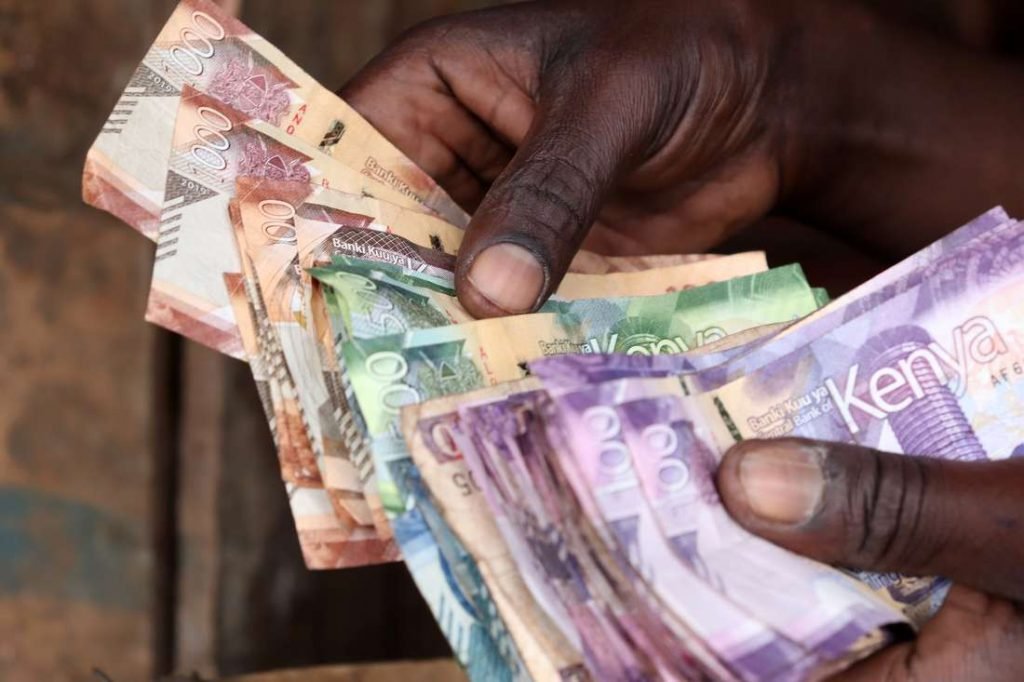
Remittances to Kenya declined to $430.5 million in October 2026, from $438.8 million a year earlier, interrupting one of the country’s most dependable sources of household income and foreign exchange.
The 1.9 per cent annual decline was equivalent to approximately $8.3 million. Inflows also fell by 1.8 per cent from the $438.5 million received in September.
The Central Bank of Kenya reported that cumulative remittances in the 12 months to October decreased by 1.1 per cent to $5.023 billion, from $5.082 billion in the comparable period. That represents approximately $59 million less foreign currency entering through formal remittance channels.
The decline is moderate rather than a collapse. Monthly remittances remain above $400 million, and the October amount was equivalent to approximately KSh55.9 billion at the November 12 exchange rate.
Nevertheless, the 12-month contraction deserves attention because remittances support household consumption, school fees, healthcare, housing, investment and business capital. They also supply foreign currency to banks and authorised money-transfer operators, supporting the balance of payments and the shilling.
North American inflows explain most of the decline
The most important change was not simply the total amount but its geographical composition.
North American remittances fell to $195.6 million in October, from $262.6 million in October 2025. That was a decline of approximately $67.1 million, or 25.5 per cent, according to Uchumi360 calculations using CBK’s monthly data.
European inflows increased modestly to $85.1 million from $82.4 million. Receipts classified as coming from the “rest of the world” rose sharply to $149.8 million from $93.8 million, an increase of about $56 million or 59.7 per cent.
The growth from outside North America and Europe therefore offset most, but not all, of the fall in North American transfers.
North America still supplied the largest share of October’s total, accounting for approximately 45.4 per cent. The rest-of-world category contributed 34.8 per cent and Europe 19.8 per cent.
The shift could indicate greater diversification in Kenya’s diaspora income, but one month is insufficient to establish a structural change. Remittances are affected by employment conditions in host countries, the timing of salary and family payments, exchange rates, transfer costs and seasonal expenditure.
CBK did not attribute the October decline to a specific cause. It would therefore be speculative to assign the North American fall to economic weakness, immigration policy, tax changes or a movement into informal transfer channels without additional evidence.
The figures cover remittances reported through commercial banks and authorised international money-transfer providers. Cash carried personally or funds transferred through unrecorded channels are not fully captured.
The shilling and reserves absorbed the decline
The lower remittance total did not produce immediate pressure on Kenya’s exchange rate or official reserves.
The shilling traded at KSh129.96 to the US dollar on November 12, unchanged from a week earlier. Official foreign-exchange reserves stood at $14.605 billion, equivalent to 5.9 months of projected imports and comfortably above the central bank’s four-month statutory benchmark.
That resilience reflects the wider foreign-exchange position rather than remittances alone. Export earnings, tourism, investment flows, external borrowing and import demand all influence reserves and the currency.
A prolonged remittance contraction would nevertheless remove one of the relatively stable inflows that helps Kenya finance imports without creating additional external debt. Remittances differ from loans because they do not require repayment, and unlike some investment flows, they are generally less sensitive to short-term changes in financial-market sentiment.
For households, the effect depends on the amount received in shillings. A weaker local currency can partially compensate for lower dollar transfers, while a stable or stronger shilling means a decline in dollar inflows is more directly reflected in beneficiaries’ purchasing power.
October’s stable exchange rate therefore offered no significant currency offset to the annual fall in dollar receipts.
Banks, fintechs and property markets should watch the source shift
Commercial banks, mobile-money providers and international transfer companies earn fees and transaction revenue from remittance flows. A sustained decline from North America could affect institutions with a high concentration in US and Canadian transfer corridors.
Growth in the rest-of-world category could create opportunities for providers serving the Gulf, Africa, Asia and other emerging diaspora destinations. The broad CBK classification does not reveal which individual markets drove the October increase, making country-level disclosure an important next step.
The property sector also has an interest in the trend. Diaspora funds are used for home construction, mortgages and land purchases, although the proportion allocated to real estate changes over time. Developers whose sales models depend heavily on diaspora buyers should distinguish between total national remittances and the narrower investment flows available for property purchases.
Small businesses receiving family capital from abroad may be affected more immediately. Unlike formal bank loans, diaspora funding may carry flexible repayment conditions and can help firms buy stock, equipment or premises when conventional credit is unavailable.
The full-year outcome remains open
Kenya received approximately $4.199 billion between January and October 2026. To equal the $5.037 billion received during the whole of 2025, November and December inflows would need to total about $837 million, or an average of $418.7 million per month.
That requirement is only about 1.6 per cent higher than the combined inflows recorded in November and December 2025. The country could therefore still match or exceed last year’s calendar-year total, despite the decline in the 12-month rolling measure.
The decisive indicators will be November and December inflows, whether North American receipts recover, the countries driving growth in the rest-of-world category and the cost of transferring money into Kenya.
The shilling-dollar exchange rate, reserve position and formal-versus-informal transfer channels will also matter. If remittances remain above $400 million a month and become more geographically diversified, October’s decline may prove manageable. If weakness in the North American corridor persists without continued growth elsewhere, the effect will become more visible in household spending and Kenya’s supply of foreign currency.
 Uchumi360
Business Intelligence
Uchumi360 covers business, investment, and economic policy across East, Central, and Southern Africa.
For the serious reader
You read to the end. That places you in a small group.
Uchumi360 is built for readers who demand precision over speed, structure over sentiment, and analysis that holds uncomfortable conclusions rather than softening them. If this work sharpens how you think about Africa's economy, help us keep building the infrastructure behind it.
Institutional Partners
Commission intelligence. Shape the conversation.
Uchumi360 works with development finance institutions, investment firms, sovereign bodies, and strategic organisations across the coverage region. Institutional partnership unlocks:
- Commissioned sector and country intelligence reports
- Branded research series under your institution's authority
- Exclusive data briefings for internal strategy teams
- Speaking and editorial presence at Uchumi360 events
- Co-published investment outlooks for your markets
Support Our Work
Independent analysis has a cost. Help us bear it.
Uchumi360 does not carry advertising. It does not take editorial direction from sponsors. Every article is produced without commercial compromise. Your contribution funds the reporting, research, and editorial infrastructure that keeps this analysis free from influence.
Secure checkout: One-time and monthly support are processed securely. Add payment credentials to enable checkout here.
Stay Connected
Keep up with every new insight.
Follow our latest analysis, policy coverage, and market intelligence as soon as it is published. If you need something specific, reach out directly and we will point you to the right research.
