
Why Mobile Money Has Become Economic Infrastructure in Africa
Ready
Mobile money has moved beyond financial inclusion to become economic infrastructure across Africa. Sub Saharan Africa processed about $1.4 trillion through mobile money in 2025, connecting households, merchants, governments and financial institutions through an increasingly important digital payment rail.
Mobile money has become one of the systems through which African economies actually function. In 2025, Sub Saharan Africa processed about $1.4 trillion through mobile money across 92 billion transactions, while the global industry reached 2.3 billion registered accounts and 593 million accounts active within 30 days. The GSMA State of the Industry Report on Mobile Money 2026 shows that more than $2.1 trillion flowed through mobile money globally during the year, with merchant payments alone rising 42% to $155 billion. Africa’s role is larger than account ownership alone suggests because mobile wallets now carry wages, retail payments, remittances, utility bills, government transfers, savings and increasingly credit and insurance.
Financial inclusion remains part of the story, but it no longer explains the full economic importance of mobile money. The World Bank Global Findex 2021 found that 33% of adults in Sub Saharan Africa had a mobile money account, the highest share of any region and more than three times the global average at the time. Sub Saharan Africa also contained all 11 economies where more adults relied exclusively on mobile money than on an account at a bank or another financial institution. Mobile money expanded because it solved a distribution problem that conventional banking had struggled with for decades: how to provide basic financial services to large populations without building a branch network dense enough to reach every town, village and informal settlement.
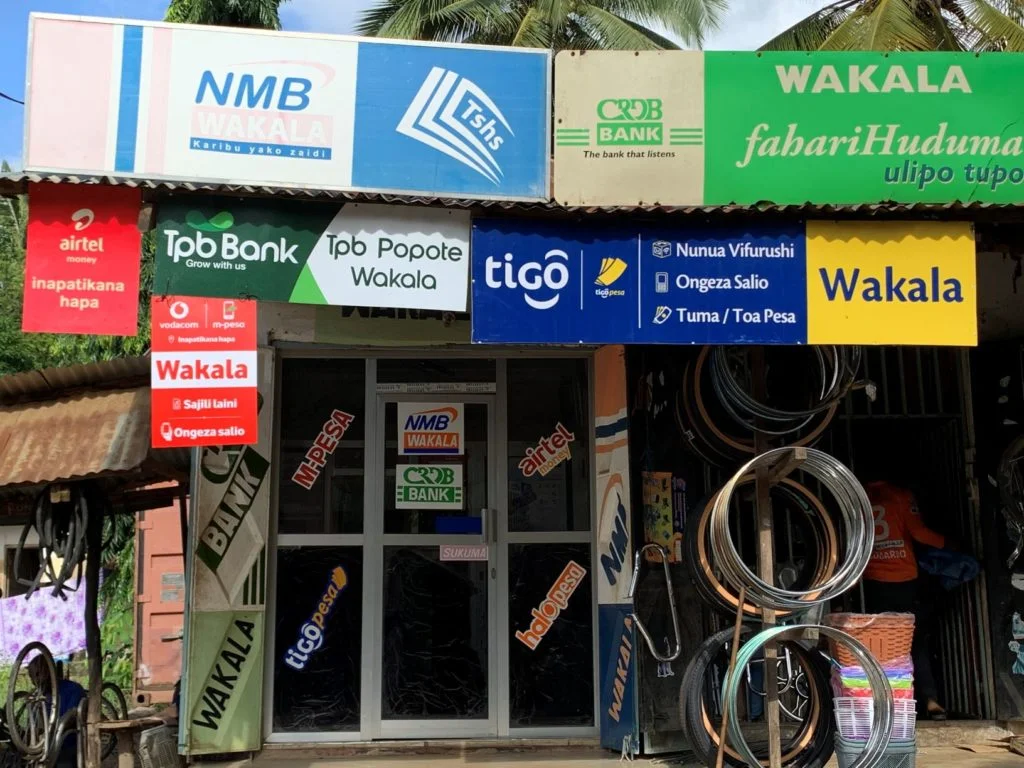
The network that emerged now sits between telecommunications infrastructure and banking infrastructure. A user can convert cash into electronic value through an agent, send it across the country in seconds, receive wages, pay a merchant, settle a utility bill or store value without visiting a bank branch. Individually, most of those transactions are ordinary. Collectively, they have created a payment rail through which a large share of everyday economic activity moves.
How Much Money Moves Through Mobile Money in Africa?
Sub Saharan Africa moved about $1.4 trillion through mobile money in 2025 across approximately 92 billion transactions, according to the GSMA’s September 2026 analysis of mobile money taxation in Africa. Globally, mobile money transaction value exceeded $2.1 trillion during the same year. It took the industry around two decades to pass $1 trillion in annual transaction value and only another four years to double it.
Those figures should not be compared directly with GDP because transaction value counts money every time it moves. The same unit of currency can appear repeatedly as it passes from an employer to a worker, from that worker to a merchant and from the merchant to a supplier. The figure is better understood as a measure of how heavily the payment system is being used. Ninety two billion transactions in one year mean mobile money has moved beyond occasional transfers and into the routine circulation of money through households and businesses.
The composition of those transactions is also changing. The GSMA 2026 industry report recorded merchant payments of $155 billion in 2025, making them the fastest growing major mobile money use case. The shift matters because a wallet used primarily for person to person transfers performs a narrow function, while a wallet used for merchant payments, salaries, savings, credit, insurance and utility payments starts to resemble the transaction layer of a broader financial system.
Why Did Mobile Money Grow So Quickly in Africa?
Mobile money expanded rapidly because its cost structure was better suited to many African markets than conventional branch banking. A bank branch requires buildings, employees, security infrastructure, cash management, compliance systems and enough customer activity within a given area to justify those fixed costs. That model is expensive to extend into low income, rural and geographically dispersed populations where transaction values are often small.
Mobile money used infrastructure that already existed. Telecommunications networks were expanding, mobile phones were becoming more common and local shops could be converted into cash in and cash out agents at a fraction of the cost of building a traditional financial branch. By 2025, the global mobile money network had 30 million registered agents, of whom 11 million were active monthly, according to the GSMA State of the Industry Report 2026. Those agents processed $430 billion in cash deposits during the year.
The agent network is one of the least appreciated components of African financial infrastructure. Mobile money is often described as a digital innovation, but its expansion depends heavily on a physical network of businesses that connect cash economies to electronic value. The technology moves the money digitally, while the agent allows a customer to enter or leave the digital system.
What Do Africans Use Mobile Money For?
Mobile money users in Africa increasingly use their wallets for activities that were previously associated with bank accounts. The World Bank’s analysis of mobile money in Sub Saharan Africa shows that account holders use mobile wallets for wages, agricultural payments, government transfers, savings, borrowing and digital payments. Among adults with a mobile money account in the region in 2021, 22% had received wages through it, 13% had received money from the sale of agricultural products, 8% had received a government transfer or pension, 39% had used the account to save and 20% had borrowed formally through it.
The economic effect becomes larger when money remains inside the digital system for several transactions. A worker who receives a salary into a wallet and immediately withdraws everything has gained a convenient payment channel. A worker who receives that salary digitally, pays a merchant digitally, settles a utility bill digitally and transfers money to another household without withdrawing cash is participating in a much deeper digital payment network. Every additional use reduces the number of moments when money has to be physically transported, counted, secured and reconciled.
This is also where mobile money starts generating information as well as moving value. Each digital payment produces a record. In economies where large amounts of commerce have traditionally taken place in cash, those records can become important for bookkeeping, credit assessment, taxation and the development of new financial products.
How Does Mobile Money Help Small Businesses in Africa?
Mobile money lowers the cost of accepting digital payments for small firms. A micro enterprise does not necessarily need a card terminal, a conventional merchant account or the banking infrastructure that historically made electronic payments expensive for businesses with low transaction values. A mobile wallet can provide a basic way to receive customers’ money, pay suppliers and move working capital without handling every transaction in cash.
The more important effect appears when repeated transactions create a usable financial history. A cash business can generate significant revenue while producing little independently verifiable evidence of that revenue. Once a portion of sales and supplier payments passes through digital channels, financial institutions gain information about cash flow, transaction frequency and business activity. That is not equivalent to audited financial statements and should not be treated as a substitute for proper credit analysis, but it can reduce some of the information gaps that make lending to small firms difficult.
The GSMA’s research on mobile money and economic growth in five African markets identifies lower transaction costs and better cash flow management among the channels through which mobile money affects businesses and wider economic activity. For Africa, where micro, small and medium enterprises account for a large share of employment, the ability to move from invisible cash flows towards more observable digital transactions can eventually influence access to finance as much as the payment itself.
Does Mobile Money Contribute to Economic Growth in Africa?
GSMA modelling suggests that mobile money has produced measurable macroeconomic effects, although the estimates are counterfactual models rather than direct additions to national accounts. Its analysis of Côte d’Ivoire, Ghana, Kenya, Senegal and Tanzania estimated that GDP in each country was between 8% and 10% higher by the end of 2023 than it would have been without mobile money. The estimated contribution ranged from about $6 billion in Senegal to $24 billion in Kenya in 2017 purchasing power parity terms. The full GSMA country level analysis provides separate studies for all five markets.
The economic effect does not come from mobile money company revenues alone. Payments infrastructure affects output indirectly by reducing the cost and time required to exchange value. A farmer can receive payment without travelling to collect cash. A household can move money during an emergency. A merchant can sell to a customer who does not have physical cash available. A business can pay a supplier remotely. These gains are individually small but become economically important when replicated across millions of users and billions of transactions.
The infrastructure comparison is therefore literal in an economic sense. Roads reduce the cost of moving goods. Telecommunications networks reduce the cost of moving information. Payment systems reduce the cost of moving value. Mobile money has become important to African growth because it lowers one of the frictions involved in almost every economic exchange.
How Does Mobile Money Help African Governments?
Mobile money gives governments a distribution and collection channel that does not depend on every citizen having a bank account. Salaries, pensions, social protection payments, subsidies and other government transfers can be sent electronically, while taxes, licences, utility charges and public service fees can be collected through digital payment channels.
The World Bank Global Findex data show that 8% of Sub Saharan African adults with mobile money accounts had received government transfers or pensions through those accounts in 2021. The proportion was still relatively modest, but the infrastructure already existed for governments to send money directly to citizens using a channel many people were already using for private transactions.
Digital payments also improve traceability. Cash transactions can be difficult to reconcile and easy to lose inside weak administrative systems. Electronic payments leave records that can be matched against obligations, recipients and public accounts. The fiscal opportunity is therefore broader than imposing taxes on mobile money. A more digital economy can improve tax registration, payment collection and visibility over transactions while reducing dependence on physical cash.
Do Mobile Money Taxes Reduce Usage?
Evidence from African markets suggests that taxes imposed directly on mobile money transactions can reduce usage substantially. A 2025 IMF Working Paper on mobile money taxation examined transaction level data from Cameroon and the Central African Republic after both countries introduced mobile money taxes, with Mali used as a comparison. The researchers estimated that average monthly values of taxed transactions fell by 40% in Cameroon and 47% in the Central African Republic relative to the comparison group, while transaction counts declined by 33% and 51% respectively. The study also found that unbanked and rural users carried a larger effective burden because they had fewer alternatives to mobile money.
The same research estimated the excess economic burden of the tax at around 35% of the revenue raised. The authors also found evidence that taxation pushes some transactions towards cash, creating an uncomfortable policy trade off for governments trying to formalise their economies. A payment levy can generate visible revenue quickly, but if the levy reduces digital transactions it can simultaneously weaken the systems that make commercial activity easier to observe and administer.
Africa has already seen this debate move from theory to policy reversal. Ghana introduced its Electronic Transfer Levy at 1.5% in 2022, reduced it to 1% in 2023 and repealed it in April 2025. The GSMA’s analysis of Ghana’s E Levy observed lower mobile money demand and greater use of cash out transactions after its introduction, while the organisation’s broader 2026 research across several African markets found that transaction based taxes can increase payment costs and encourage movement back towards cash.
The fiscal question is therefore larger than how much revenue can be extracted from mobile money itself. Governments have to weigh direct transaction tax receipts against the economic value of maintaining a cheap digital payment rail that can support commerce, formalisation and the taxation of income, profits and consumption elsewhere in the economy.
What Is Mobile Money Interoperability and Why Does It Matter?
Interoperability allows money to move between different mobile wallets, banks and payment providers without requiring users to remain inside a single network. It determines how effectively separate financial systems can behave like one payment market.
A customer whose wallet communicates only with users on the same network has fewer potential counterparties than one who can send money to any mobile provider or bank. Merchants face the same problem when customers use several networks. Interoperability reduces the need to maintain multiple accounts or convert electronic balances back into cash simply to move money between providers.
The GSMA State of the Industry Report 2026 identifies interoperability and cross border harmonisation among the main priorities for the next stage of mobile money development. Domestic interoperability can improve competition and convenience, but the larger African opportunity lies in connecting national payment systems across borders.
African regional trade still faces a mismatch between the movement of goods and the movement of money. A trader may be able to send money across a domestic mobile network almost instantly while paying a supplier in a neighbouring country remains more expensive and administratively complex. Cross border mobile money therefore sits directly inside the wider debate about African trade integration. Lower tariffs and faster border clearance achieve less if the payment associated with the transaction remains costly.
Will Mobile Money Replace Banks in Africa?
Mobile money is more likely to change the structure of banking than replace banks. Mobile wallets are particularly effective at mass market payments and small transactions, while banks remain central to large scale lending, corporate finance, long term deposits, capital markets and other complex financial services. The two systems are becoming increasingly connected rather than developing as complete substitutes.
Mobile money has nevertheless changed who owns the customer relationship. A person may technically hold funds within a regulated financial structure while interacting with those funds almost entirely through a telecommunications company or mobile application. Banks that once competed mainly with other banks now operate alongside telecom operators, fintech firms and payment companies that control important parts of the retail financial experience.
Africa’s financial system is consequently developing around layers rather than around one institution performing every function. The wallet can provide the daily payment interface, banks can provide balance sheet capacity and more complex finance, agents connect digital balances to cash and fintech companies build products on top of those systems.
What Risks Come With Mobile Money Becoming Infrastructure?
Dependence creates new forms of economic risk. A prolonged outage on a major mobile money network can interrupt retail payments, household transfers and business transactions. Fraud can reduce confidence in digital finance. Weak agent liquidity can leave customers unable to convert balances into cash. Market concentration can keep fees high, while inadequate consumer protection can expose people to losses they do not fully understand.
The GSMA 2026 industry report places fraud controls, consumer protection, interoperability and financial health among the priorities created by mobile money’s increasing scale. Those issues become more serious as the payment system moves from being optional to being something households and firms depend on daily.
Access is also still uneven. The World Bank’s Global Findex research on Sub Saharan Africa identifies lack of money, lack of a mobile phone and inadequate documentation among the barriers that continue to prevent adults from opening and using mobile money accounts. Financial infrastructure can be extensive without being universal, and the economic gains will remain uneven where affordability, connectivity and identification continue to exclude significant groups.
What Is the Future of Mobile Money in Africa?
The next phase of mobile money will be measured less by the number of accounts opened and more by how much economic activity those accounts can support. Merchant payments are already growing quickly. Savings, insurance and credit are being layered onto wallets. Governments are using digital payment channels. Banks and mobile money providers are becoming more connected. Cross border payments, interoperability, fraud prevention and affordability will determine how much further the network can expand.
The African experience has already broken with the historical sequence of financial development seen in richer economies. Many countries built large mobile payment networks before achieving universal branch banking, widespread card ownership or dense ATM coverage. Instead of waiting for the traditional financial system to reach everyone, they constructed a different route into digital finance around mobile networks and local agents.
The next economic gain will come from connecting that infrastructure more deeply to commerce. A wallet that allows someone to send money to a relative creates convenience. A wallet that allows the same person to receive income, pay merchants, save, borrow, transact with government and trade across borders becomes part of the operating infrastructure of the economy.
Africa has already built that rail at enormous scale. The policy question now is how cheaply, securely and widely value can move across it.
FAQ
How much money moves through mobile money in Africa? Sub Saharan Africa processed about $1.4 trillion across approximately 92 billion mobile money transactions in 2025, according to the GSMA.
Why is mobile money important to Africa’s economy? Mobile money gives households and businesses access to digital payments without requiring dense bank branch infrastructure. The World Bank Global Findex found that 33% of adults in Sub Saharan Africa had a mobile money account in 2021.
What do Africans use mobile money for besides transfers? Mobile money is used for wages, agricultural payments, merchant purchases, government transfers, savings and borrowing. The World Bank’s regional data show that 39% of mobile money account holders in Sub Saharan Africa had used their account to save and 20% had borrowed formally through it.
Does mobile money contribute to economic growth? The GSMA’s five country African study estimated that GDP in Côte d’Ivoire, Ghana, Kenya, Senegal and Tanzania was between 8% and 10% higher by the end of 2023 than modelled scenarios without mobile money. These are counterfactual estimates rather than direct measures of mobile money output.
Do mobile money taxes reduce transactions? A 2025 IMF Working Paper found substantial declines in taxed transaction values and transaction counts in Cameroon and the Central African Republic after mobile money taxes were introduced.
What is mobile money interoperability? Interoperability allows money to move between different mobile wallets, banks and payment providers. Wider interoperability reduces dependence on closed networks and is increasingly important for domestic competition and cross border African payments.
Will mobile money replace banks in Africa? Mobile money is more likely to complement and reshape banking than replace it. Wallets are particularly effective for everyday payments, while banks remain important for large scale lending, corporate finance, deposits and more complex financial products.
 Uchumi360
Business Intelligence
Uchumi360
Business Intelligence
Uchumi360 covers business, investment, and economic policy across East, Central, and Southern Africa.
For the serious reader
You read to the end. That places you in a small group.
Uchumi360 is built for readers who demand precision over speed, structure over sentiment, and analysis that holds uncomfortable conclusions rather than softening them. If this work sharpens how you think about Africa's economy, help us keep building the infrastructure behind it.
Institutional Partners
Commission intelligence. Shape the conversation.
Uchumi360 works with development finance institutions, investment firms, sovereign bodies, and strategic organisations across the coverage region. Institutional partnership unlocks:
- Commissioned sector and country intelligence reports
- Branded research series under your institution's authority
- Exclusive data briefings for internal strategy teams
- Speaking and editorial presence at Uchumi360 events
- Co-published investment outlooks for your markets
Support Our Work
Independent analysis has a cost. Help us bear it.
Uchumi360 does not carry advertising. It does not take editorial direction from sponsors. Every article is produced without commercial compromise. Your contribution funds the reporting, research, and editorial infrastructure that keeps this analysis free from influence.
Secure checkout: One-time and monthly support are processed securely. Add payment credentials to enable checkout here.
Stay Connected
Keep up with every new insight.
Follow our latest analysis, policy coverage, and market intelligence as soon as it is published. If you need something specific, reach out directly and we will point you to the right research.
