
Mobile Money Has Transformed African Finance, But Not Yet African Investing
Ready
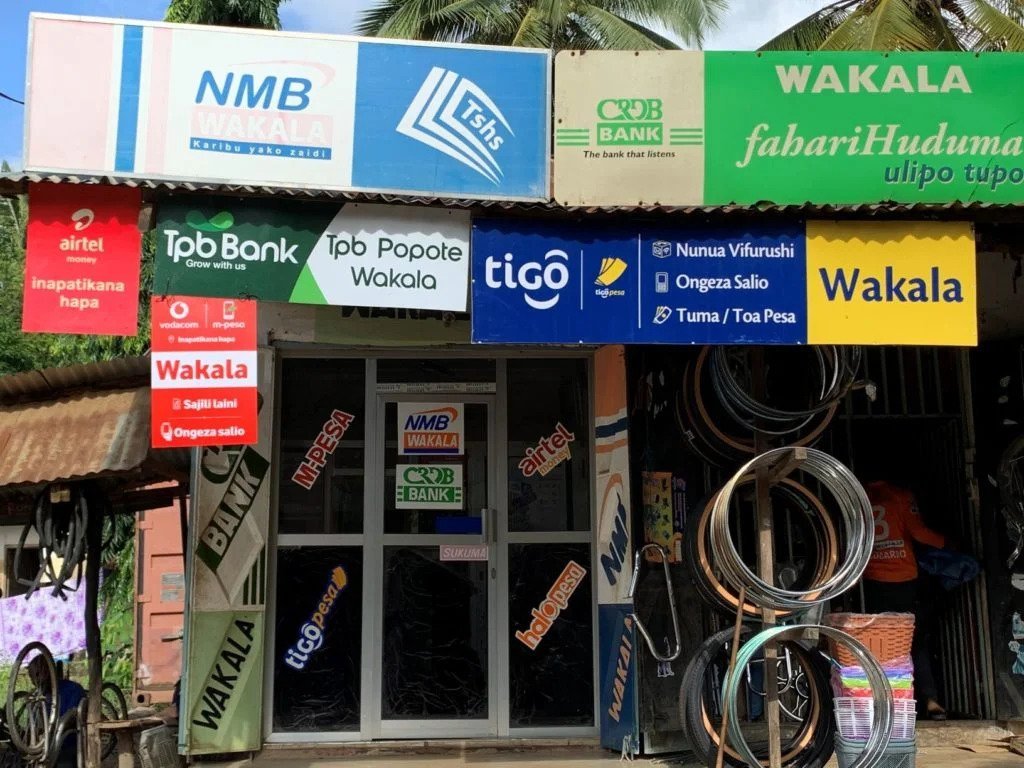
Mobile money ownership in Sub Saharan Africa has quadrupled to 40 percent and formal saving has risen to 35 percent, but investment participation remains limited. New products in Kenya, Uganda and Tanzania are beginning to connect digital wallets directly to capital markets.
Mobile money has changed the financial architecture of Sub Saharan Africa more dramatically than almost any other financial innovation of the past two decades, bringing millions of people into formal financial systems without requiring them to enter a bank branch, own a smartphone or maintain the income patterns traditionally associated with bank accounts. The proportion of adults in the region with a mobile money wallet has quadrupled over the past decade to approximately 40 percent, while formal saving has doubled to 35 percent. Yet the 2026 Absa Africa Financial Markets Index identifies an increasingly important gap between access to money and participation in investment: Africa has become remarkably successful at giving people digital accounts through which they can send, receive and store money, but considerably less successful at converting those accounts into ownership of investment products, securities and other financial assets.
The distinction matters because financial inclusion has different economic stages. The first is access, where households acquire an account or wallet. The second is usage, where that account becomes part of everyday payments, transfers and savings. The third is capital formation, where accumulated savings are invested into assets capable of generating returns and financing companies, governments and productive activity. Africa has advanced rapidly through the first two stages, but the third remains much less developed. The next phase of the continent’s financial revolution may therefore depend less on enrolling another hundred million people into mobile wallets than on connecting the hundreds of millions who already have them to money market funds, government securities, equities, unit trusts and other regulated investments.
The infrastructure required for that transition is beginning to emerge. Kenya has connected mobile money to investment funds capable of attracting substantial retail capital, Uganda has introduced phone based access to unit trusts from as little as 1,000 Ugandan shillings, and Tanzania has linked mobile money wallets directly to central securities depository accounts, contributing to increased retail activity on the Dar es Salaam Stock Exchange. These initiatives suggest that the same technology that displaced cash as the primary interface between millions of Africans and formal finance could eventually become the distribution infrastructure through which ordinary households participate in capital markets.
Africa Solved The Account Problem Faster Than The Investment Problem
The transformation in basic financial access has been extraordinary. In 2011, fewer than one third of adults in the region reported having an account. By 2024, more than half did, with mobile money playing a central role in expanding access among people who previously found conventional banking expensive, geographically inaccessible or poorly suited to their incomes. In Sub Saharan Africa, mobile money accounts have become the most widely held type of financial account.
The economics behind that adoption are straightforward. A conventional bank branch carries substantial fixed costs including property, staff, security, systems and compliance, making it difficult to economically serve customers making very small transactions in remote or low income communities. Mobile money replaces much of that physical infrastructure with mobile networks and agent outlets, allowing customers to transact from basic feature phones without travelling long distances or maintaining traditional bank accounts.
That architecture turned telecommunications networks into one of Africa’s largest pieces of financial infrastructure. Money could move instantly between individuals, businesses and regions that previously relied heavily on physical cash, while transaction histories created records that could eventually support other financial products. Governments and companies increasingly began paying salaries and transfers digitally, households started purchasing utilities through mobile wallets and small businesses gained tools for receiving customer payments without requiring card terminals or conventional merchant banking arrangements.
By 2024, more than half of adults in Sub Saharan Africa had made or received a digital payment, compared with 28 percent in 2014. Yet only about one fifth had made a digital merchant payment, demonstrating that even within payments the transition from access to comprehensive digital usage remains incomplete. Cash remains deeply embedded in many economies, particularly among poorer and rural communities.
The investment gap is even larger. A wallet can hold money, but holding money is not the same as building wealth. Balances that remain as cash or transactional float do not provide the same long term compounding opportunities as investments in securities, interest bearing funds or productive assets. The economic question now confronting African financial systems is whether the infrastructure that made payments ubiquitous can be extended into savings and investment products without recreating the cost, complexity and access barriers that mobile money originally bypassed.
Kenya Is Beginning To Turn Mobile Money Users Into Investors
Kenya provides the most advanced example of what that transition could look like because mobile money has already become deeply embedded in its economy. The Absa report says 87 percent of Kenyan adults use a mobile money account, almost twice the proportion holding a traditional bank account, while it cites an estimate that nearly 60 percent of the country’s GDP flows through M Pesa.
The more consequential development for capital markets is the emergence of M Pesa linked investment products. Ziidi, a money market fund integrated with M Pesa, accumulated more than US$100 million in assets under management within a year of its launch in late 2024. The scale is significant because the product reduces many of the frictions traditionally separating small savers from professional asset management. Investors do not need to develop a relationship with a fund manager or physically visit a financial institution before beginning to invest; an existing mobile wallet becomes the interface through which capital enters the fund.
Money market funds are particularly suited to this transition because they sit relatively close to cash in the financial risk spectrum. They generally invest in short term government securities, bank deposits and other relatively liquid instruments, allowing customers to earn returns without accepting the volatility associated with shares. For a first time investor accustomed to keeping surplus money in a mobile wallet, the conceptual move from cash to a money market fund is significantly smaller than the move from cash directly into equities.
The importance extends beyond individual returns. A million households placing relatively small amounts into collective investment products can create substantial pools of capital when aggregated. Fund managers can then deploy that money into government bills, corporate instruments and other securities, transforming fragmented household savings into institutional capital.
This is the mechanism through which mobile money can begin affecting capital markets rather than merely payment systems. The phone ceases to be only a device for moving money between consumers and becomes a distribution channel through which household savings enter investible financial assets.
Tanzania Has Already Connected Mobile Money Directly To The Stock Market
Tanzania offers another important example because mobile wallets have been connected directly to central securities depository accounts, making it easier for retail investors to participate in securities markets through infrastructure they already use for daily transactions. The Absa report says the linkage has increased retail activity on the Dar es Salaam Stock Exchange.
The significance is larger than simply digitising a payment channel. One of the barriers to retail participation in capital markets is the number of steps between possessing money and acquiring an investment. A potential investor may need to open a brokerage account, understand settlement processes, transfer funds through a bank and navigate platforms designed primarily for professional market participants. Each additional step creates friction, particularly for someone investing modest amounts.
Connecting mobile wallets with securities accounts reduces that distance. The customer already possesses a payment instrument, already understands how to load and transfer funds and already interacts with an agent network capable of converting cash into electronic money. If those rails can be connected directly to investment accounts, capital market participation begins to resemble other mobile transactions rather than an entirely separate financial activity.
For Tanzania, this matters because the Dar es Salaam Stock Exchange remains considerably smaller and less liquid than its potential domestic savings base would suggest. The 2026 Absa index ranks Tanzania ninth among 29 African financial markets, supported by money market reforms, heavily subscribed bonds and the launch of the country’s first exchange traded funds, yet its market depth score remains only 43.
Mobile distribution could help address that constraint by allowing capital markets to reach individuals who would never interact with traditional brokers. If millions of Tanzanians already possess mobile wallets, the challenge becomes designing investments that are simple enough, affordable enough and trusted enough for those wallet holders to use.
The potential is especially important for government bonds and collective investment schemes, where investment can be broken into smaller amounts and where products can be structured around straightforward returns rather than requiring customers to analyse individual companies.
Uganda Is Bringing Unit Trusts Onto The Phone
Uganda is moving in a similar direction through Yinvesta, which provides access to a regulated unit trust from as little as 1,000 Ugandan shillings. The required entry amount is economically important because traditional investment products often impose minimum balances that exclude customers whose savings accumulate in small amounts.
The digital model changes the economics of small investments. Processing a US$1 or US$5 contribution through a physical financial institution can be uneconomic when staffing, documentation and administrative costs are considered. The same transaction conducted automatically through a mobile platform can be processed at significantly lower marginal cost.
That allows investment products to adapt to how many African households actually earn money. Income among informal workers may arrive daily, weekly or unpredictably rather than through monthly salaries. A trader who earns surplus cash after a strong day may be able to invest a small amount immediately rather than waiting to accumulate enough money to meet the minimum requirements of a traditional product.
The Absa report similarly highlights mobile based savings products elsewhere in the region. Ghana’s Yello Save allows users to schedule transfers directly from mobile wallets into savings accounts, while Pesewa Susu collects small residual wallet balances automatically. Uganda’s MoPesa and SuperSaver provide phone based access to interest bearing savings accounts.
These products represent an important behavioural shift because they attempt to move saving closer to the point at which income is received. Traditional financial advice often assumes that households earn income, meet expenditure and then consciously transfer whatever remains into savings. In practice, low and irregular incomes frequently mean little remains. Automated micro savings can reverse the process by moving small amounts before they are absorbed into consumption. The same principle could eventually apply to investment.
Formal Saving Is Rising, But The Number Of Savers Has Not Risen In The Same Way
The proportion of adults saving formally in Sub Saharan Africa has doubled over the past decade to approximately 35 percent, an encouraging sign that more people are using banks, mobile wallets and other regulated channels to store money. But the Absa report introduces an important qualification: the increase in formal saving has not increased the aggregate share of people who save. In other words, part of the improvement reflects savers moving from informal mechanisms into formal systems rather than a comparable increase in the total number of households setting money aside.
That distinction changes how the financial inclusion story should be interpreted. Digitisation can make existing savings easier to observe and manage without solving the underlying income constraint preventing many households from saving at all.
For low income families, financial exclusion is often discussed as though the primary problem is access to accounts. The report shows that insufficient funds remain the most frequently cited reason people lack both bank and mobile money accounts. In Ethiopia, for example, 72 percent of adults without a mobile money account identify insufficient funds as the reason. Fees and taxes on digital financial services can add another barrier by making small transactions disproportionately expensive.
Financial technology cannot manufacture disposable income. An individual spending nearly everything earned on food, housing, transport and education will not become a meaningful investor simply because an investment app is available.
This is why mobile money access and household wealth should not be treated as equivalent measures of financial development. Digital accounts solve transaction problems. Investment requires surplus income, suitable products, trust and enough financial understanding to accept the tradeoff between risk and return.
Ghana Shows How Mobile Money Can Expand Without Transforming Investment
Ghana provides a useful warning against assuming that widespread mobile money adoption will automatically produce widespread participation in financial markets. The report finds that formal savings and investment products have gained relatively little traction among lower income groups despite broader mobile money penetration, while retail investors account for only about 13 percent of market turnover.
This suggests that the technological bridge is necessary but insufficient. A customer may possess a mobile wallet and still see government bonds, mutual funds or equities as complex, risky or irrelevant. The interface can reduce the cost of investing, but it cannot automatically create demand for investments that people do not understand or trust.
Financial literacy therefore becomes more important as investment products migrate onto mobile platforms. The traditional challenge was getting customers into formal finance. The emerging challenge is ensuring that people understand what they are buying once financial products become only a few taps away.
That concern is particularly important with higher risk products. A mobile money customer may understand that a transfer of 10,000 shillings sends exactly 10,000 shillings to another person. Investments do not operate with the same certainty. Equity values can decline, bond prices can move and investment returns are generally not guaranteed. If digital platforms make sophisticated products look as simple as sending money, customers may underestimate the risks they are accepting.
Regulation will therefore have to evolve alongside access. Product disclosures need to be understandable on small screens, suitability rules need to account for inexperienced retail investors and platforms need to distinguish clearly between savings products and investments whose value can fluctuate.
High Fees Can Destroy The Economics Of Small Investments
The economics of mobile investing are particularly sensitive to transaction costs because users often invest small amounts. A fixed fee that appears insignificant on a large institutional trade can consume a substantial percentage of a small retail investment.
If an investor contributes US$5 equivalent and pays US$0.50 across transaction, withdrawal or transfer charges, the investment begins with a 10 percent cost before generating any return. A product promising an annual return of 8 percent would require more than a year merely to recover that transaction cost.
This is why the same competition that reduced the cost of African digital payments needs to extend into savings and investment products. Mobile network operators, banks, fund managers, exchanges and regulators need structures in which micro investments remain economically viable at very small transaction sizes.
The report identifies fees and taxes on digital financial services as continuing barriers and argues that greater competition, infrastructure investment and partnerships between mobile money providers and banks can reduce costs. In Benin, survey respondents reported that bank to mobile money interoperability lowered transaction costs and expanded access to financial services.
Kenya’s 2025 national financial inclusion strategy similarly targets substantial reductions in person to person mobile money transaction costs, demonstrating that even the continent’s most advanced mobile money market continues to treat pricing as a financial inclusion issue.
The same discipline will be required if wallets are to become investment platforms.
Mobile Investing Could Help Solve Africa’s Retail Investor Problem
African stock exchanges generally remain dominated by governments, corporations and institutional investors, while direct retail participation is often limited. That contributes to low trading volumes and reduces the amount of domestic household savings flowing directly into capital markets.
Mobile investing offers a possible way to change the distribution economics of those markets.
Traditional brokers were built to serve customers capable of investing amounts large enough to justify individual account administration. Digital platforms can spread those costs across millions of users and automate processes previously handled manually. Securities can potentially be fractionalised or packaged through collective investment products, allowing someone with modest savings to participate without purchasing an entire bond or large block of shares.
This could produce a different type of capital market, where retail participation is not concentrated among middle and upper income professionals familiar with securities but extends gradually into the same population already using mobile money.
The impact could become substantial because the numbers involved are large. Forty percent of adults across Sub Saharan Africa already hold mobile money wallets. Even if a small proportion began investing relatively modest balances, aggregate assets could become significant.
Kenya’s Ziidi crossing US$100 million in assets within roughly a year illustrates that possibility. The important number is not simply the fund’s size but the distribution mechanism that made rapid accumulation possible.
For exchanges such as Dar es Salaam, Nairobi, Uganda Securities Exchange and other smaller African markets, mobile distribution could eventually expand the investor base faster than conventional brokerage networks ever could.
But More Investors Will Not Automatically Create Deeper Markets
The supply side remains equally important. Africa cannot create deep capital markets merely by giving millions of people apps through which to invest if those platforms offer very few attractive assets.
The 2026 Absa report repeatedly identifies liquidity as a constraint across African markets. It notes that expanding financial products is encouraging but warns that more instruments do not automatically create deeper markets. Genuine market development requires repeat issuance, active turnover, broader ownership and lower financing costs rather than simply announcing new financial products.
Mobile distribution can increase demand for securities, but companies still need to list, governments and businesses need to issue suitable instruments and secondary markets need enough activity for investors to buy and sell efficiently.
This creates a sequencing question. Africa has successfully built a mass digital distribution network for money before building equally broad and liquid capital markets into which that money can flow.
The next phase therefore requires both sides to develop together. Retail investors need affordable products and simple digital access, while exchanges and regulators need a larger supply of credible equities, bonds, collective investment schemes and other assets.
Otherwise mobile investment platforms risk becoming primarily distribution channels for government securities and money market funds rather than gateways into the wider productive economy.
Tanzania Has A Particularly Large Opportunity
Tanzania sits at an interesting point in this transition because it combines widespread mobile money usage with a capital market that remains relatively shallow. The Absa index ranks Tanzania ninth overall among 29 African financial markets in 2026, supported by money market reforms, heavily subscribed bonds and the launch of its first exchange traded funds, yet the country scores only 43 for market depth.
Linking mobile wallets directly to central securities depository accounts begins addressing the demand side by reducing the friction faced by retail investors. But Tanzania will only capture the full benefit if the supply of investible assets also expands.
The country needs more companies willing to list shares, more corporate bond issuance, greater free float in listed companies and more collective investment products capable of serving households with small amounts of capital. The mobile wallet can become the door into capital markets, but there must be enough worthwhile assets on the other side.
The same logic applies to Tanzania’s large domestic savings institutions. Pension funds and insurers can provide institutional capital while mobile platforms bring retail savings into the market. A deeper financial system ultimately requires both.
This would have consequences beyond the stock exchange. Companies currently dependent almost entirely on bank loans could gain alternative sources of equity and long term debt. Households could gain assets that generate returns rather than holding all financial wealth in cash, deposits or property. The government could also broaden the domestic investor base for securities without relying as heavily on banks and pension funds.
Mobile money therefore provides Tanzania with distribution infrastructure that earlier generations of financial systems had to build through expensive physical branches and brokerage networks. The remaining task is converting that distribution advantage into actual capital formation.
The Uchumi360 Insight
Africa has already achieved one financial revolution. Millions of people who were once effectively outside formal finance can now transfer money, receive salaries, pay bills and store value through devices they already carry. The next revolution is harder because it requires moving from transactions to ownership.
A payment wallet changes how money moves. An investment account changes what households own. That distinction determines whether financial inclusion merely makes consumption and transfers more efficient or begins helping households accumulate assets and participate directly in the financing of their economies.
The early evidence is promising. Kenya has demonstrated that a mobile linked investment fund can accumulate more than US$100 million quickly. Uganda is lowering investment thresholds to levels accessible to ordinary mobile users. Tanzania has already connected wallets with securities accounts and seen increased retail participation on its exchange.
But Africa cannot digitise its way around the more fundamental constraints. Many households still lack money to save, transaction costs remain significant, financial literacy is uneven and capital markets often offer too few liquid investment opportunities.
Mobile money solved much of the infrastructure problem of getting Africans into finance. The next challenge is creating enough income, trust and investible assets to give millions of mobile money users a reason to stay in the financial system after the payment has been completed.
Africa built the rails for moving money. It now has to use those rails to build wealth.
FAQ
How many adults in Sub Saharan Africa use mobile money? The 2026 Absa Africa Financial Markets Index says the proportion of adults with a mobile money wallet has quadrupled over the past decade to approximately 40 percent.
How many adults in Sub Saharan Africa save formally? The proportion saving through formal financial channels has doubled over the past decade to about 35 percent.
How is Kenya using mobile money for investment? M Pesa linked money market funds are allowing customers to invest directly through mobile channels. Ziidi accumulated more than US$100 million in assets under management within roughly a year of its launch in late 2024.
What is Uganda doing? Uganda’s Yinvesta provides mobile access to a regulated unit trust from as little as 1,000 Ugandan shillings, while other phone based products provide access to interest bearing savings.
How is Tanzania connecting mobile money to capital markets? Tanzania has linked mobile money wallets directly to central securities depository accounts, a change that the Absa report says increased retail activity on the Dar es Salaam Stock Exchange.
Why has mobile money not automatically increased investing? Access to a wallet does not create disposable income or investment knowledge. Low incomes, fees, financial literacy, limited investment products and shallow capital markets remain barriers.
Could mobile money deepen African stock markets? Potentially. Mobile platforms can dramatically reduce the cost of reaching small retail investors. But deeper markets will also require more listed companies, corporate bonds, investment funds and liquid securities for those investors to buy.
 Uchumi360
Business Intelligence
Uchumi360
Business Intelligence
Uchumi360 covers business, investment, and economic policy across East, Central, and Southern Africa.
For the serious reader
You read to the end. That places you in a small group.
Uchumi360 is built for readers who demand precision over speed, structure over sentiment, and analysis that holds uncomfortable conclusions rather than softening them. If this work sharpens how you think about Africa's economy, help us keep building the infrastructure behind it.
Institutional Partners
Commission intelligence. Shape the conversation.
Uchumi360 works with development finance institutions, investment firms, sovereign bodies, and strategic organisations across the coverage region. Institutional partnership unlocks:
- Commissioned sector and country intelligence reports
- Branded research series under your institution's authority
- Exclusive data briefings for internal strategy teams
- Speaking and editorial presence at Uchumi360 events
- Co-published investment outlooks for your markets
Support Our Work
Independent analysis has a cost. Help us bear it.
Uchumi360 does not carry advertising. It does not take editorial direction from sponsors. Every article is produced without commercial compromise. Your contribution funds the reporting, research, and editorial infrastructure that keeps this analysis free from influence.
Secure checkout: One-time and monthly support are processed securely. Add payment credentials to enable checkout here.
Stay Connected
Keep up with every new insight.
Follow our latest analysis, policy coverage, and market intelligence as soon as it is published. If you need something specific, reach out directly and we will point you to the right research.
