
South African Banks are Gaining Ground in East Africa, From Infrastructure Finance to Mobile Credit
Ready
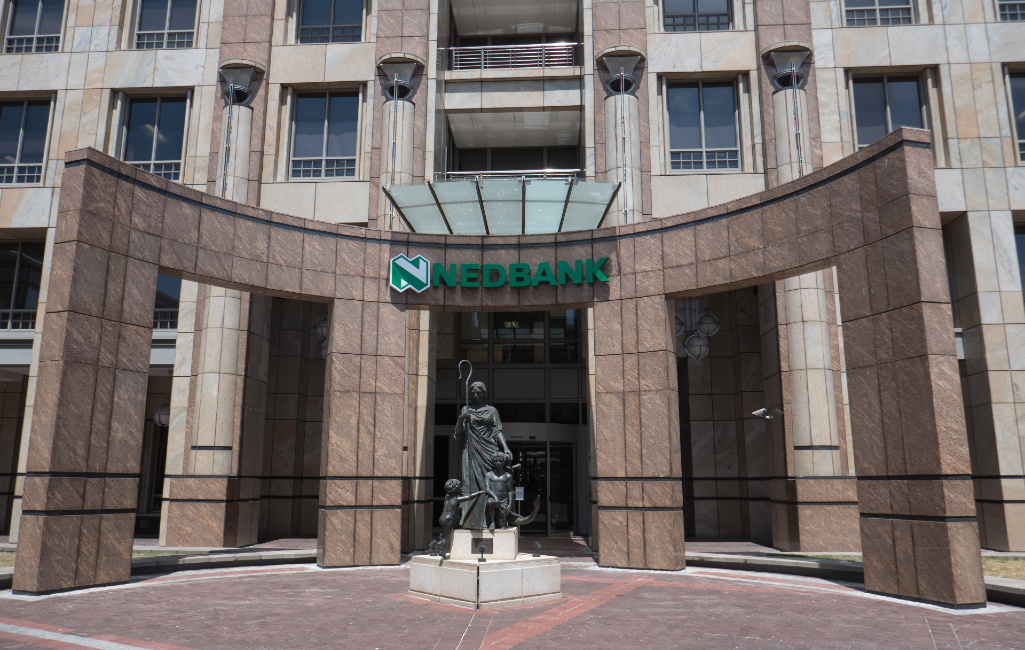
Nedbank’s acquisition of NCBA and Absa’s expansion in Uganda give South African banking groups a larger stake in how East Africans save, borrow and do business. In Tanzania, local banks still lead by size, while South African groups can shape how major projects and cross-border trade are financed.
On 3 November, South Africa’s Nedbank took control of Kenya’s NCBA Group after a 66 per cent stake changed hands on the Nairobi Securities Exchange. Ten days later, Absa Bank Uganda took over Standard Chartered Uganda’s wealth and retail banking business. Britain’s Standard Chartered retained its corporate and investment banking operation in Uganda.
The transactions expand South African influence in different ways. Nedbank bought control of a group with banking operations in Kenya, Tanzania, Uganda and Rwanda, along with established relationships with mobile operators. Absa added retail and wealth customers to a Ugandan bank it already owned. Whether businesses get better loan terms or households pay less for financial services will depend on what the owners do with the businesses they bought.
Four Tanzanian banks under three South African groups
Absa has had a presence in Tanzanian banking since acquiring a majority stake in the National Bank of Commerce (NBC) in 2000. It owns 55 per cent of NBC and 100 per cent of the separate Absa Bank Tanzania. The Tanzanian government holds 30 per cent of NBC and the International Finance Corporation holds 15 per cent. South Africa’s Standard Bank Group controls Stanbic Bank Tanzania. Nedbank gained indirect control of NCBA Bank Tanzania on 3 November through its acquisition of a controlling stake in NCBA Group.
At 30 September 2026, NBC reported TZS 6.71 trillion in assets, the largest balance sheet of the four. Stanbic Bank Tanzania followed with TZS 4.33 trillion. Absa Bank Tanzania reported TZS 2.06 trillion, and NCBA Bank Tanzania reported TZS 0.62 trillion.
The four banks had about TZS 13.7 trillion in combined assets before eliminating any exposures between them. NMB and CRDB were each larger on a bank-only basis at the same date, with assets of TZS 19.3 trillion and TZS 25.4 trillion, respectively. The September figures capture assets held by the Tanzanian banks before the Nedbank deal settled. Measuring capital flows from South Africa would require separate figures. FirstRand’s experience also shows that ownership can move in the other direction. In 2022, Tanzania’s Exim Bank bought selected assets and liabilities of FNB Tanzania.
Balance-sheet size shows where Tanzania’s largest banks stand. A smaller bank can still help determine whether a water utility can issue a ten-year bond, whether a manufacturer can refinance in shillings or whether an importer can obtain a letter of credit that an overseas supplier will accept.
Who arranges capital and who supplies it
Absa served as lead transaction adviser on Tanga’s TZS 53.12 billion water infrastructure green bond, listed on the Dar es Salaam Stock Exchange in 2024. The UN Capital Development Fund reported that local investors accounted for 65 per cent of subscriptions collected. Absa helped structure and bring the issue to market, and investors supplied the money. This was a South African banking group helping a Tanzanian utility mobilise financing in Tanzanian shillings, largely from local investors.
The East African Crude Oil Pipeline illustrates a different role. When the project company closed its first tranche of external financing in March 2025, the lenders included Standard Bank of South Africa and Stanbic Bank Uganda, alongside Afreximbank, KCB Bank Uganda and the Islamic Corporation for the Development of the Private Sector. The South African parent and its East African affiliate participated as lenders in a wider syndicate. The announcement confirmed the first tranche and left individual bank commitments undisclosed. Decisions about whether to lend, and on what terms, sit alongside scrutiny of environmental risks and land compensation.
The same networks can serve smaller firms. Stanbic Bank Tanzania secured a TZS 70 billion facility through Finance in Motion and the eco.business Fund to support lending to SMEs, including in agriculture and processing. Stanbic drew the facility in two tranches, in 2025 and 2026. How much reached businesses, and on what terms, remains unclear. For an agroprocessor that earns shillings, the economic gain would be a loan it can service from local sales, with enough time to turn an equipment purchase into higher output.
Nedbank gains a regional distribution network
Kenya offers a benchmark for the scale of the ownership shift. At the end of 2025, NCBA Bank Kenya, Absa Bank Kenya and Stanbic Bank Kenya together accounted for 20.1 per cent of the Central Bank of Kenya’s composite market index. KCB Bank Kenya and Equity Bank Kenya together accounted for 29.1 per cent. The index combines assets, deposits, capital and account counts. Through the acquisition, Nedbank gained control of a bank that was already competing for Kenyan customers.
The transaction also changed who owns part of Nedbank. As part of the purchase, the South African group issued 43.63 million new shares and paid KSh 23.23 billion in cash to accepting NCBA shareholders. NCBA remains listed in Nairobi with about 34 per cent of its shares publicly held. The next thing to watch is whether Nedbank commits additional capital or increases financing limits for clients trading between East and Southern Africa.
Nedbank gains a bank that already reaches customers through products such as M-Shwari with Safaricom in Kenya, MoKash with MTN in Uganda and M-Pawa with Vodacom in Tanzania. These partnerships were built before the takeover. They give Nedbank exposure to a market where a bank can originate and service small loans without having a branch near every borrower. The telecom operators retain control of their networks. For households and traders, the measures that matter are the total cost of borrowing, repayment terms and whether a loan supports cash flow or leads to repeated short-term borrowing.
Uganda shows a different path to scale
Absa’s Uganda purchase expanded an existing local business. The formal transfer took effect on 13 November, and former Standard Chartered retail and wealth customers began banking through Absa on 16 November, according to New Vision. The deal expands Absa’s reach in savings, lending and wealth management in a market where South Africa’s Standard Bank Group already controls 80 per cent of Stanbic Uganda Holdings. What matters for transferred customers is whether service remains reliable and pricing competitive after the migration.
Competition takes different forms across the region. Standard Bank operates in the Democratic Republic of Congo and has a presence in South Sudan. East African groups have networks of their own. KCB operates across markets including Burundi and South Sudan, Equity has EquityBCDC in the DRC, and Tanzania’s CRDB operates in both Burundi and the DRC. South African banks are competing with institutions that also understand local borrowers and can follow them across borders.
What better financing would look like
Regional ownership can help a Tanzanian exporter obtain trade finance, manage currency risk or borrow in more than one market. It can also make several subsidiaries dependent on decisions taken by the same parent. A group can support a local bank during a domestic shock. It can also tighten lending across several countries at once if its own funding costs rise or its appetite for risk changes. That is why local capital and liquidity oversight, disclosure of exposures between group entities and cooperation between home and host supervisors matter.
Stronger competition could improve access to the financing East African businesses struggle to obtain. Manufacturers need longer-term shilling loans, suppliers need guarantees and working capital, and traders too small to negotiate corporate banking rates need affordable cross-border payments. The East African Community is still developing its framework for regional payment interoperability. If banks and payment providers can connect on fair terms, businesses could pay suppliers across borders efficiently through their existing providers.
For Tanzania, the gains will be tangible if a firm can finance a factory for longer, pay a regional supplier for less, or raise money from local investors without taking on unnecessary currency risk. Those are outcomes local competitors can push South African banking groups to deliver.
 Uchumi360
Business Intelligence
Uchumi360 covers business, investment, and economic policy across East, Central, and Southern Africa.
For the serious reader
You read to the end. That places you in a small group.
Uchumi360 is built for readers who demand precision over speed, structure over sentiment, and analysis that holds uncomfortable conclusions rather than softening them. If this work sharpens how you think about Africa's economy, help us keep building the infrastructure behind it.
Institutional Partners
Commission intelligence. Shape the conversation.
Uchumi360 works with development finance institutions, investment firms, sovereign bodies, and strategic organisations across the coverage region. Institutional partnership unlocks:
- Commissioned sector and country intelligence reports
- Branded research series under your institution's authority
- Exclusive data briefings for internal strategy teams
- Speaking and editorial presence at Uchumi360 events
- Co-published investment outlooks for your markets
Support Our Work
Independent analysis has a cost. Help us bear it.
Uchumi360 does not carry advertising. It does not take editorial direction from sponsors. Every article is produced without commercial compromise. Your contribution funds the reporting, research, and editorial infrastructure that keeps this analysis free from influence.
Secure checkout: One-time and monthly support are processed securely. Add payment credentials to enable checkout here.
Stay Connected
Keep up with every new insight.
Follow our latest analysis, policy coverage, and market intelligence as soon as it is published. If you need something specific, reach out directly and we will point you to the right research.
