
Tanzania Lost TZS 3.08 Billion to Digital Financial Crime in Six Months as Fraud Cases Rose 46%
Ready
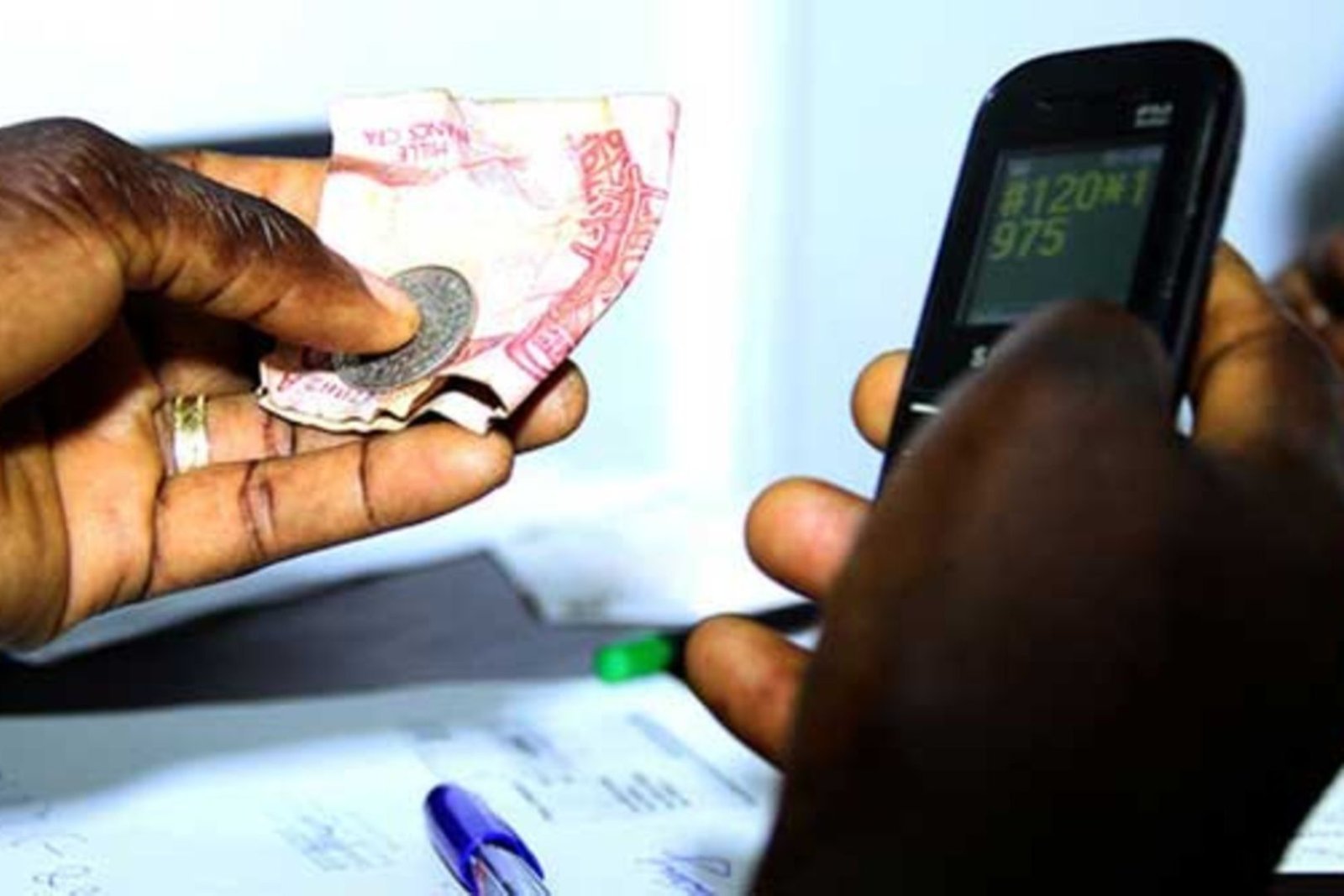
Tanzania recorded 2,281 financial transaction crime cases and more than TZS 3.08 billion in losses during the first six months of 2026, raising the economic cost of fraud as mobile money and digital payments become central to the country’s financial system.
Tanzanians lost more than TZS 3.08 billion through financial transaction crimes involving mobile phone networks, bank transfers and ATM withdrawals during the first six months of 2026, as reported cases rose 46.3 percent from a year earlier and cyber offences increased sharply across several categories.
The figures come from the Tanzania Police Force report on Crime and Road Safety Statistics for January to June 2026, which recorded 2,281 financial transaction crime cases compared with 1,559 during the same period in 2025, an increase of 722 cases. Police said TZS 3.078 billion was stolen and 261 suspects were arrested.
The report defines these offences as crimes involving citizens being defrauded through mobile phone networks, money being transferred from bank accounts, or cash being withdrawn through ATMs. The detailed regional table shows that the overwhelming majority of reported cases involved mobile financial channels rather than direct bank transfers or ATM withdrawals, indicating that the fraud problem is increasingly concentrated around the same digital infrastructure that has expanded financial access across Tanzania.
This gives the crime statistics an economic significance beyond the direct value of money stolen. Tanzania has spent more than a decade expanding digital payments, mobile money, agent networks and interoperable financial services, making electronic transactions central to how households and small businesses move money. As adoption rises, the integrity of those systems becomes part of the country’s financial infrastructure because consumer confidence determines whether people are willing to keep more money digital, use merchant payments, adopt formal savings products and conduct higher value transactions electronically.
Fraud therefore carries a cost that extends beyond TZS 3.08 billion. It can increase compliance and security expenditure for banks and mobile operators, raise the burden on law enforcement, discourage users from adopting new digital services and reinforce the preference for cash among customers who already have concerns about the safety of electronic finance.
Mobile Financial Channels Accounted for Most Reported Cases
The Tanzania Police Force regional breakdown shows that mobile financial services accounted for 1,967 of the 2,281 reported financial transaction crime cases during the first six months of 2026, compared with 253 cases involving money transferred from bank accounts and 61 involving ATMs.
That means more than 86 percent of the reported cases captured by the police table were linked to mobile financial channels.
The concentration reflects the scale and accessibility of mobile money in Tanzania. Mobile based services have become the primary financial interface for a large share of the population because they require less physical banking infrastructure and can be accessed through ordinary mobile phones and extensive agent networks.
FSDT’s 2026 to 2030 strategy, citing FinScope Tanzania, reports that mobile money usage reached 72 percent in 2023 compared with 22 percent for commercial bank services. That difference shows why digital fraud increasingly follows mobile channels: criminals target systems where transaction volume and user participation are greatest.
The economic policy response therefore cannot rely on reducing digital usage or discouraging mobile transactions. Tanzania’s financial inclusion model increasingly depends on digital channels, meaning the response has to improve security without sacrificing convenience, accessibility or interoperability.
Dar es Salaam Recorded Some of the Largest Losses
The geographical distribution of reported losses also shows that digital financial crime is strongly concentrated in major commercial centres.
Kinondoni recorded 433 cases involving stolen funds worth about TZS 789.6 million, while Temeke reported 556 cases involving roughly TZS 507.3 million. Ilala recorded 145 cases with losses of about TZS 313.4 million. Together, those three Dar es Salaam police regions accounted for a large share of the national losses reported during the period.
The concentration is not surprising because Dar es Salaam is the country’s largest commercial centre, with higher transaction volumes, more businesses, greater mobile money activity and deeper integration between banks, merchants and digital platforms.
What matters is that financial crime increasingly follows the geography of economic activity. The places with the highest transaction intensity can also become the most attractive targets for fraud, which means financial security has to be treated as part of the infrastructure required to support urban commerce.
Cybercrime Rose 49.9% in the Same Period
The rise in financial fraud occurred alongside a broader increase in cyber offences. Police recorded 745 cybercrime cases between January and June 2026 compared with 497 during the same period in 2025, an increase of 49.9 percent.
Several categories recorded much faster growth. Computer related fraud increased 77.8 percent, illegal data interference rose 257.1 percent, illegal system interference increased 144.4 percent and computer related forgery doubled.
These categories should not be treated as identical to financial transaction crime because the police report records them separately, but the simultaneous rise is relevant to the wider risk environment surrounding digital finance. More sophisticated interference with systems and data creates additional vulnerabilities for banks, fintech companies, telecom operators and consumers, particularly as more financial activity shifts online.
The financial sector therefore faces a broader security problem than simple theft from individual customers. It also has to manage identity fraud, compromised devices, unauthorised access, manipulated data and attacks on digital infrastructure.
Financial Inclusion Depends on Trust as Much as Access
The rapid expansion of digital finance has already solved one of Tanzania’s historic financial inclusion problems by reducing the need for physical bank branches. A mobile phone can now provide access to payments, transfers, merchant services and, increasingly, savings and credit products.
The next challenge is whether users trust those services enough to deepen their use.
FSDT’s 2026 to 2030 strategy identifies limited consumer trust as one of the constraints affecting the adoption of financial services and argues that improved transparency, pricing and consumer experience are necessary to build confidence.
That matters because a person who has a mobile money account but withdraws cash immediately after receiving funds is participating in digital finance only at a basic level. The economic gains become larger when consumers are willing to leave balances in the system, pay merchants digitally, save electronically, build transaction histories and use those records to access other financial products.
Fraud can interrupt that progression by making cash appear safer than digital money, particularly for lower income users who cannot absorb the loss of even a small balance.
The Recovery Rate Was Small Relative to the Losses
The police table shows that TZS 301.98 million of the TZS 3.078 billion reported stolen had been recovered, equivalent to less than 10 percent of the total losses recorded during the period.
That gap between money stolen and money recovered is economically important because it shapes how consumers perceive the consequences of being defrauded. If a customer believes there is little chance of recovering stolen funds, the perceived risk of using digital financial services rises even when the probability of fraud remains low relative to overall transaction volumes.
The same issue affects financial institutions because disputes over liability can damage customer relationships. Fraud may originate from social engineering, identity theft, compromised credentials, device access or weaknesses elsewhere in the transaction chain, but the consumer experiences the loss through the financial service provider they use.
This makes complaint handling and recovery procedures part of financial market competitiveness. Institutions that can detect suspicious transactions quickly, freeze funds, communicate effectively with customers and support recovery will have an advantage as digital finance becomes more sophisticated.
Digital Literacy Remains a Structural Weakness
Financial security is also tied to the digital capabilities of users. FSDT, citing FinScope Tanzania 2023, reports that while about 60 percent of adults were financially literate, only 40 percent had digital financial literacy.
That gap creates an opportunity for fraud because digital financial services often require users to understand PIN security, phishing, fake customer service calls, identity verification, suspicious links and the difference between legitimate and fraudulent requests.
The expansion of smartphones, mobile applications and digital credit will make these capabilities more important because the financial interface is becoming more complex than traditional USSD based mobile money.
Security policy therefore has to include education alongside technology. Stronger authentication can reduce some forms of fraud, but users who voluntarily disclose credentials or approve fraudulent transactions remain vulnerable even when the underlying payment infrastructure is secure.
Banks and Mobile Operators Face Higher Security Costs
The increase in fraud also has implications for the operating costs of financial institutions.
Banks, mobile network operators and fintech companies have to invest more in fraud monitoring, transaction analytics, identity verification, cybersecurity teams, customer support and regulatory compliance as digital transactions grow. These costs become part of the economics of financial inclusion because they can influence pricing, product design and the profitability of serving lower value customers.
Tanzania has simultaneously been trying to reduce the cost of digital payments. FSDT notes that mobile money transaction costs remain relatively high compared with some East African peers and that affordability continues to influence financial inclusion.
The sector therefore faces a difficult balance. Digital payments need to become cheaper and more accessible, but institutions also need to spend more on preventing fraud. If security costs are simply passed to users through higher fees, the result could undermine the affordability agenda.
This increases the importance of shared financial infrastructure, interoperable fraud intelligence and industry wide security standards that reduce duplication across institutions.
Identity Infrastructure Will Become More Important
The next phase of Tanzania’s digital financial system is increasingly linked to better identity infrastructure. FSDT’s current strategy places significant emphasis on national identification, electronic know your customer systems, data sharing and the development of digital financial infrastructure capable of supporting more secure onboarding and customer verification.
Better identity systems can make it more difficult to open fraudulent accounts, improve traceability and reduce some forms of impersonation, particularly when mobile numbers, financial accounts and official identity records can be verified more consistently.
They will not eliminate social engineering or all forms of cybercrime, but they can raise the cost of fraud and make stolen funds easier to trace across institutions. As Tanzania develops more interoperable financial infrastructure, the security layer will therefore become as important as the payment layer itself.
Digital Finance Is Becoming Critical Economic Infrastructure
The police statistics show that financial crime is moving toward the same channels Tanzania increasingly depends on for commerce, inclusion and payments.
More than 2,200 financial transaction crime cases in six months is still small relative to the enormous number of legitimate transactions conducted through banks and mobile money, so the figures should not be interpreted as evidence that Tanzania’s digital financial system is broadly unsafe.
The trend is nevertheless significant. Reported financial transaction crime increased 46.3 percent in one year, cyber offences rose almost 50 percent and more than TZS 3 billion in losses were recorded during only half of 2026.
As the country pushes more payments away from cash, digital financial security will increasingly affect economic efficiency. Merchants, households and businesses need to trust that money transferred electronically will arrive safely, remain accessible and be recoverable when fraud occurs.
Tanzania has already built much of the infrastructure required to make digital payments widely available. The next stage will depend on whether its fraud prevention, consumer protection, identity systems and law enforcement capacity can expand at the same pace.
The economic value of digital finance ultimately depends not only on how easy it is to move money, but on whether users believe the money will still be there when the transaction is complete.
 Uchumi360
Business Intelligence
- Tanzania Police Force, Crime and Road Safety Statistics, January to June 2026
- The report records financial transaction crimes involving mobile financial services, bank transfers and ATM withdrawals, alongside broader cybercrime statistics
Uchumi360 covers business, investment, and economic policy across East, Central, and Southern Africa.
For the serious reader
You read to the end. That places you in a small group.
Uchumi360 is built for readers who demand precision over speed, structure over sentiment, and analysis that holds uncomfortable conclusions rather than softening them. If this work sharpens how you think about Africa's economy, help us keep building the infrastructure behind it.
Institutional Partners
Commission intelligence. Shape the conversation.
Uchumi360 works with development finance institutions, investment firms, sovereign bodies, and strategic organisations across the coverage region. Institutional partnership unlocks:
- Commissioned sector and country intelligence reports
- Branded research series under your institution's authority
- Exclusive data briefings for internal strategy teams
- Speaking and editorial presence at Uchumi360 events
- Co-published investment outlooks for your markets
Support Our Work
Independent analysis has a cost. Help us bear it.
Uchumi360 does not carry advertising. It does not take editorial direction from sponsors. Every article is produced without commercial compromise. Your contribution funds the reporting, research, and editorial infrastructure that keeps this analysis free from influence.
Secure checkout: One-time and monthly support are processed securely. Add payment credentials to enable checkout here.
Stay Connected
Keep up with every new insight.
Follow our latest analysis, policy coverage, and market intelligence as soon as it is published. If you need something specific, reach out directly and we will point you to the right research.
