
Tanzania's Merchant Digital Payment Network More Than Doubled to 2.79 Million in 2025. This Single Number May Matter More Than Any Other in Tanzania's Digital Economy Story.
Ready
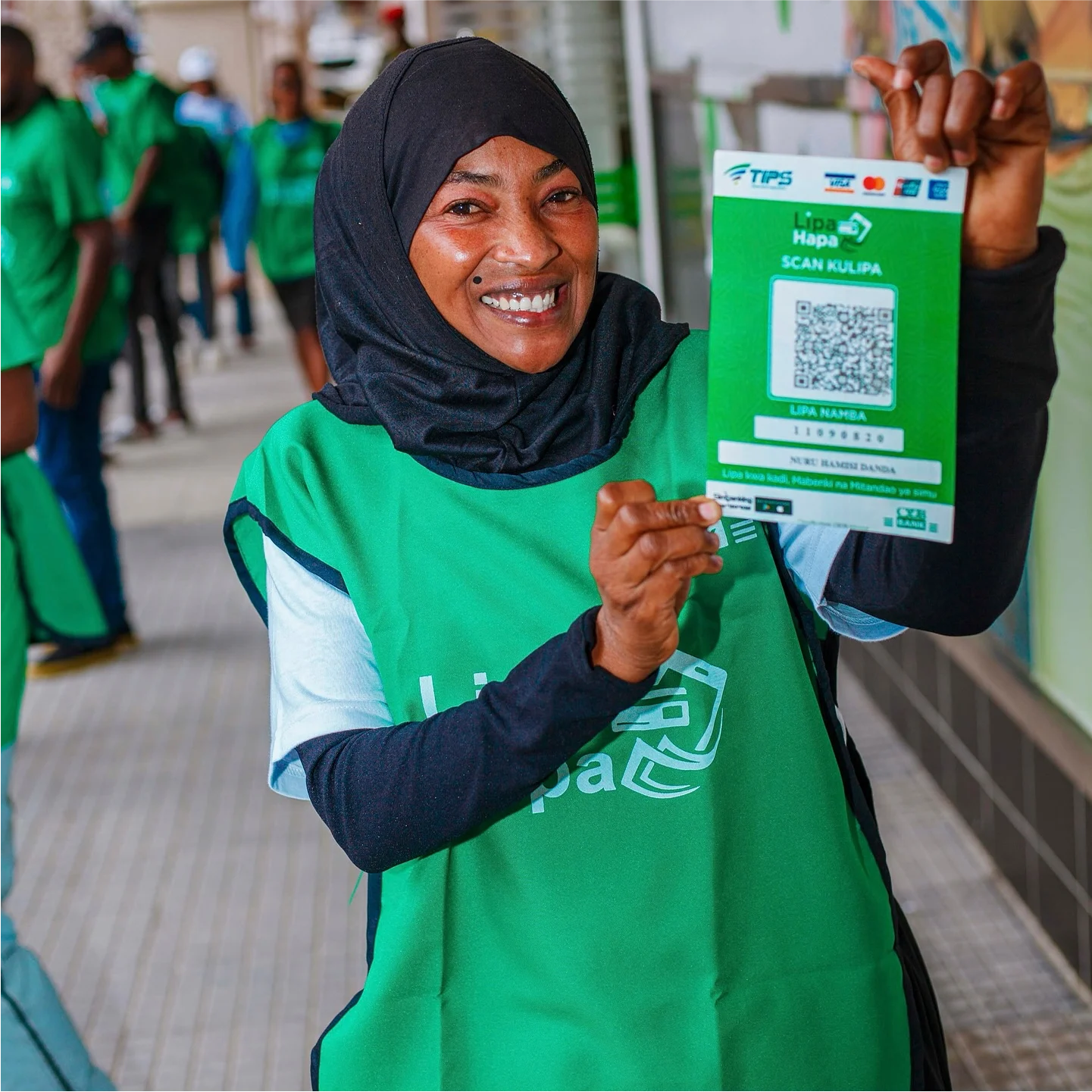
Tanzania's merchant digital payment network grew 110 percent from 1.33 million to 2.79 million in 2025, driven primarily by TANQR and Pay Number solutions that allow businesses to accept payments from any bank or mobile money provider through a single QR code or payment number. Every merchant that joins the digital payment network becomes visible to the formal economy simultaneously: easier to pay for customers, easier to finance for banks and fintechs, easier to tax for government, and easier to integrate into supply chains and procurement systems for larger buyers. Digital economies are not built when consumers hold digital wallets. They are built when businesses accept digital payments at the scale and breadth that makes cash a genuinely inconvenient alternative. Tanzania's 2.79 million merchants, distributed across food vendors, pharmacies, transport operators, retailers, hardware stores, and service providers, represent the supply-side infrastructure whose density is approaching the threshold at which digital payment becomes the default commercial behaviour rather than a deliberate choice. For banks, the merchant network expansion creates a loan book opportunity whose credit assessment is now supported by transaction data that cash-based businesses cannot generate. For fintechs, it expands the addressable market for merchant services, embedded finance, and business management tools. For government, it improves fiscal visibility into economic activity whose formality the digital payment trail creates. Tanzania may have reached the supply-side inflection point that separates a digital payments market from a genuinely digital economy. The consumer side of Tanzania's digital economy has been building for a decade. The business side doubled in a year. That asymmetry is the most important structural development in Tanzania's financial system in 2025.
DAR ES SALAAM — The Bank of Tanzania's National Payment Systems Report for 2025 contains dozens of data points whose individual significance is real. Transaction volumes up 40 percent. TIPS value up 84 percent. Mobile money users at 75.8 million. Cheque transactions down 20 percent. Each number describes an aspect of a financial system whose digital transformation is advancing at a pace that makes Tanzania one of East Africa's most compelling digital economy development stories.
But one number sits above the others in its structural economic significance.
The number of merchants accepting digital payments in Tanzania grew 110 percent in 2025, from 1.33 million to 2.79 million.
Transaction volumes describe how much digital activity is occurring. The merchant number describes how much of Tanzania's commercial economy is capable of participating in digital activity at all. The distinction is the difference between a digital payments market and a digital economy, and Tanzania's 2025 data suggests the country has crossed a threshold that most East African economies have not yet reached.
Why the merchant number is structurally different from every other metric
Every other headline metric in Tanzania's payment systems report measures demand-side activity: consumers making payments, users transacting, value flowing through digital rails. These metrics are important because they confirm that digital financial services are being used at scale and that the investment in mobile money infrastructure, instant payment systems, and digital banking is generating the adoption that justifies continued investment.
The merchant metric measures something structurally different. It measures the supply side of the digital economy: the number of commercial points at which digital payment is accepted. A consumer with a fully loaded mobile money account cannot transact digitally at a business that only accepts cash. The digital wallet's economic utility is constrained by the density of merchant acceptance in the consumer's commercial environment. Where merchant acceptance is sparse, cash remains the default behaviour because it is the only universally accepted medium of exchange. Where merchant acceptance is dense enough that digital payment is available at most commercial interactions a consumer encounters, the friction of maintaining cash as a parallel payment medium begins to exceed the friction of using digital payment exclusively.
Tanzania's growth from 1.33 million to 2.79 million merchants in twelve months represents a near-doubling of the supply-side digital payment infrastructure whose density determines whether digital payment is a deliberate choice that requires planning or a default behaviour that requires no additional friction beyond the transaction itself. The businesses behind those 2.79 million merchant accounts are not abstractions. They are the food vendor in Kariakoo whose customers can now pay with their phone rather than requiring exact change. The pharmacy in Arusha whose prescription payment no longer requires a trip to the ATM. The bus operator on the Dar es Salaam commuter routes whose fare collection no longer requires a cash handling process. The hardware store in Mwanza whose contractor clients can settle invoices without visiting a bank. The fuel station in Dodoma whose fleet customers can pay from a corporate mobile money account rather than managing a petty cash float.
Each of these businesses becoming a digital payment acceptance point creates a commercial interaction that is visible to the formal economy in ways that cash transactions are not, and whose visibility creates the data trail that transforms the merchant's economic position across multiple dimensions simultaneously.
What happens to a business when it joins the digital payment network
The economic transformation that a business undergoes when it begins accepting digital payments extends far beyond the convenience of the payment transaction itself. The transition creates a documented transaction history whose existence changes the business's relationship with banks, tax authorities, fintechs, suppliers, and larger commercial buyers in ways that compound over time.
A cash-based business whose revenue flows through physical currency has no machine-readable evidence of its commercial activity. Its turnover is invisible to the banking system, which has no basis for credit assessment beyond the owner's declared income and whatever physical assets can serve as collateral. Its revenue is invisible to the tax authority, which must rely on declared income or estimated assessments that create the adversarial compliance relationship that characterises informal economy taxation in most developing country contexts. Its supply chain relationships are managed through personal trust rather than documented commercial history, limiting the business's ability to access trade credit, volume discounts, and preferred supplier relationships with larger buyers.
A business whose revenue flows through TANQR or Pay Number has a documented transaction history within weeks of joining the digital payment network. Its daily, weekly, and monthly revenue is recorded in a format that the banking system can read, analyse, and use as the basis for credit assessment. Its revenue visibility to the tax authority improves, creating both the compliance pressure and the compliance facilitation whose combination characterises the transition from informal to formal economic participation. Its supply chain relationships can be documented, creating the commercial history that supplier credit and preferred buyer arrangements require.
The credit opportunity is particularly significant for Tanzania's financial system because it represents the mechanism through which the merchant network's growth converts into bankable loan demand. A merchant processing TZS 5 million per month through digital channels is a merchant whose 90-day transaction history supports a working capital credit assessment that the same merchant with no digital transaction record cannot support. At 2.79 million merchants generating transaction histories, the addressable market for merchant finance, micro-business lending, and embedded credit products is substantially larger than the 1.33 million merchant base from twelve months earlier.
NMB Bank's Agenda 2030 strategy, which Uchumi360's NMB versus CRDB analysis documented as prioritising SME ecosystem development beyond lending into payments, insurance, and advisory, and CRDB's growing non-funded income programme both reflect the commercial opportunity that the merchant network expansion is creating for Tanzania's banking sector. A bank that can offer a merchant a payment acceptance solution, a working capital credit facility, a business insurance product, and a cash management tool in a bundled proposition is a bank that has converted the merchant digital onboarding from a payment product sale into a multi-product financial services relationship whose lifetime value is substantially higher.
The formality transition that merchant digitisation creates
Tanzania's informal economy encompasses a large share of commercial activity whose participants are not formally registered, do not file tax returns that reflect their actual revenues, and do not access the formal financial services whose availability depends on the documented commercial history that informal cash-based businesses cannot generate. The transition of these businesses into digital payment acceptance does not automatically formalise them, but it creates the data infrastructure whose existence is the precondition for formalisation to become economically attractive rather than purely regulatory.
A food vendor who begins accepting mobile money payments has not registered with BRELA, filed with TRA, or joined the formal economy in any legal sense. But the vendor now has a transaction record whose existence changes the economic calculation around formalisation. If the vendor's mobile money transaction history can support a credit application for a refrigerator, a generator, or a stall improvement whose returns exceed the cost of the credit, the vendor has a financial incentive to maintain the transaction record that the credit requires. If maintaining that transaction record requires declaring revenue to TRA, the vendor faces a formalisation decision whose economic logic is different from a pure compliance-cost calculation.
The Bank of Tanzania's fee cap interventions, including the standardised TZS 1,000 interchange fee for international transfers and the caps on bank-to-wallet transfers, reflect an understanding that the merchant network's continued expansion depends on keeping the cost of digital payment acceptance low enough that the benefits to the merchant exceed the costs. A merchant accepting TZS 50,000 per day in small transactions cannot absorb a per-transaction fee structure that consumes a significant share of thin margins. Keeping digital payment acceptance economically attractive for the lowest-volume merchants is the condition for the network to continue expanding from its current 2.79 million base into the deeper informal economy where the largest share of Tanzania's unserved commercial activity resides.
What 2.79 million merchants means for Tanzania's development trajectory
Tanzania's Vision 2050 industrial and economic transformation objectives require a commercial infrastructure that can support the manufacturing investment, export-oriented production, agricultural commercialisation, and services sector development whose achievement is the strategy's substance. That commercial infrastructure includes the payment and financial services infrastructure whose availability, reliability, and cost-effectiveness determines how effectively commercial activity can be organised, financed, and scaled.
A Tanzania whose commercial economy operates primarily in cash is a Tanzania whose manufacturers face supply chain payment friction, whose agricultural traders face settlement delays, whose export-oriented businesses face documentation challenges, and whose government faces fiscal visibility gaps that undermine both tax collection and the economic data quality whose improvement is necessary for evidence-based policy. A Tanzania whose 2.79 million merchants generate digital transaction histories is a Tanzania whose commercial infrastructure is building the data layer that advanced economic management requires.
The Tanzol Solar Manufacturing Complex's USD 300 million US export programme, the Bagamoyo SEZ's supply chain ecosystem, and the SGR Central Corridor's regional logistics network all operate more effectively in a commercial environment whose payment infrastructure is instant, documented, and accessible to the full range of businesses in the supply chain. A large manufacturer whose supplier base can accept digital payment can manage its working capital more efficiently, its supply chain compliance more rigorously, and its cost structure more transparently than a manufacturer whose suppliers can only be paid in cash whose management creates the administrative overhead and fraud risk that cash-dependent supply chains impose.
Tanzania's merchant network growth in 2025 is the supply-side investment in the digital commercial infrastructure that these macro-level development objectives depend on. The 1.46 million merchants added in a single year did not each individually change Tanzania's economic trajectory. Collectively, they moved it closer to the threshold at which digital payment is the default commercial behaviour rather than a deliberate choice, and at which the data infrastructure whose creation that default behaviour enables becomes the foundation for the financial services, fiscal management, and economic planning improvements that compound over time.
The consumer side of Tanzania's digital economy has been building for over a decade. The business side nearly doubled in a single year. That pace, if sustained, would place Tanzania among Africa's leading digital merchant economies within the current decade and create the supply-side foundation whose depth makes the demand-side growth in mobile money users, TIPS transactions, and digital payment values into a genuinely transformative economic force rather than an impressive metric in a payment systems report.
One merchant at a time. 2.79 million of them, and growing.
FAQ
How many merchants accept digital payments in Tanzania? As of 2025, 2.79 million merchants in Tanzania accept digital payments, up from 1.33 million in 2024, a 110 percent increase in a single year. The expansion was driven primarily by TANQR and Pay Number solutions that allow businesses to accept payments from any bank or mobile money provider through a single QR code or payment number.
Why does merchant digital payment acceptance matter economically? A merchant accepting digital payments creates a documented transaction history that transforms its relationship with the formal economy. Its revenue becomes visible to the banking system for credit assessment, to the tax authority for compliance, and to supply chain partners for trade credit and preferred buyer arrangements. The merchant network's growth is the supply-side condition that determines whether digital payment becomes the default commercial behaviour rather than a deliberate choice.
What does the merchant growth mean for Tanzania's banks and fintechs? Each merchant generating a digital transaction history creates an addressable credit and financial services opportunity that cash-based businesses cannot generate. NMB Bank's Agenda 2030 SME ecosystem strategy and CRDB's non-funded income programme both reflect the commercial opportunity that 2.79 million transaction-generating merchants create for bundled financial services including working capital credit, merchant insurance, and business management tools whose lifetime value substantially exceeds a single payment product sale.
What is driving Tanzania's merchant network expansion? The primary driver is TANQR and Pay Number solutions that allow businesses to accept payments from customers regardless of which bank or mobile money provider they use. Provider-agnostic acceptance removes the friction of choosing between payment methods and creates a single acceptance point that serves the full range of digital payment users simultaneously. The Bank of Tanzania's fee cap interventions keeping digital payment costs low for small-volume merchants are supporting the network's expansion into the lower-revenue commercial segments where the largest share of Tanzania's remaining cash-dependent commercial activity resides.
How does merchant digitisation connect to Tanzania's broader development strategy? Tanzania's Vision 2050 industrial and economic objectives require a commercial infrastructure that supports manufacturing supply chain management, agricultural commercialisation, export-oriented production, and services sector development. A commercial economy operating primarily in cash imposes payment friction, settlement delays, and documentation gaps that constrain the efficiency of these activities. A commercial economy with 2.79 million digital payment-accepting merchants generates the transaction data, fiscal visibility, and financial services addressability that advanced economic management and industrial development require.
 Uchumi360
Business Intelligence
Uchumi360
Business Intelligence
- Bank of Tanzania, National Payment Systems Report 2025
- Merchant growth from 1.33 million to 2.79 million, 110.08 percent increase
- TANQR and Pay Number expansion
- Fee cap interventions
- Available at bot.go.tz
- Uchumi360, "Tanzania Processed TZS 412 Trillion in Digital Payments in 2025
- Merchants Nearly Tripled to 2.79 Million," June 2026
- Available at uchumi360.com
- Uchumi360, "NMB Made TZS 760 Billion
- CRDB Made TZS 729 Billion," June 2026
- NMB Agenda 2030 SME ecosystem strategy and CRDB non-funded income programme context.Available at uchumi360.com
- Tanzania Investment and Special Economic Zones Authority, Tanzol Solar Manufacturing Complex and Bagamoyo SEZ supply chain context.Available at tiseza.go.tz
- Tanzania Business Registrations and Licensing Agency, business formalisation framework.Available at brela.go.tz
- Tanzania Revenue Authority, tax compliance and digital economy fiscal visibility context.Available at tra.go.tz
- World Bank, merchant digitisation and financial inclusion research.Available at worldbank.org
- African Development Bank, East Africa digital financial services and merchant payment research.Available at afdb.org
- GSMA, mobile money merchant acceptance and digital economy development research.Available at gsma.com
- IMF, Tanzania financial sector and digital economy assessment.Available at imf.org
Uchumi360 covers business, investment, and economic policy across East, Central, and Southern Africa.
For the serious reader
You read to the end. That places you in a small group.
Uchumi360 is built for readers who demand precision over speed, structure over sentiment, and analysis that holds uncomfortable conclusions rather than softening them. If this work sharpens how you think about Africa's economy, help us keep building the infrastructure behind it.
Institutional Partners
Commission intelligence. Shape the conversation.
Uchumi360 works with development finance institutions, investment firms, sovereign bodies, and strategic organisations across the coverage region. Institutional partnership unlocks:
- Commissioned sector and country intelligence reports
- Branded research series under your institution's authority
- Exclusive data briefings for internal strategy teams
- Speaking and editorial presence at Uchumi360 events
- Co-published investment outlooks for your markets
Support Our Work
Independent analysis has a cost. Help us bear it.
Uchumi360 does not carry advertising. It does not take editorial direction from sponsors. Every article is produced without commercial compromise. Your contribution funds the reporting, research, and editorial infrastructure that keeps this analysis free from influence.
Secure checkout: One-time and monthly support are processed securely.
Stay Connected
Keep up with every new insight.
Follow our latest analysis, policy coverage, and market intelligence as soon as it is published. If you need something specific, reach out directly and we will point you to the right research.
