
A Golden Gateway: How Tanzania Can Turn China’s Zero-Tariff Policy into Economic Transformation
Ready
China’s zero-tariff policy is a significant window of opportunity, but it is not a guarantee of success. The ultimate benefit will be determined by Tanzania's internal preparedness.
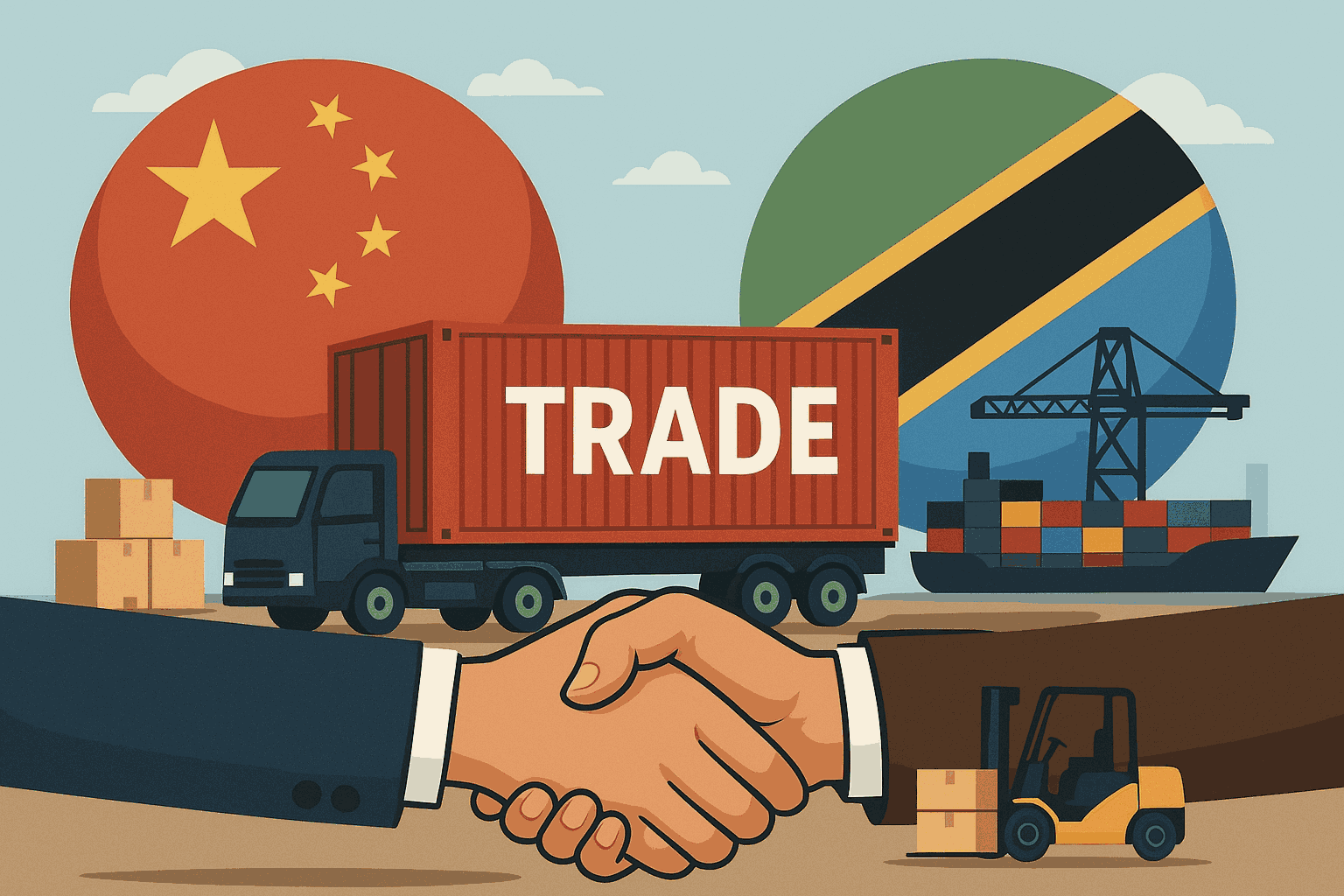
China’s recent decision to expand its zero-tariff policy, granting duty-free access for nearly all products from Least Developed Countries (LDCs), including Tanzania, and progressively extending this to all 53 African nations, is more than a diplomatic gesture. It is a catalyst for change and a rare, massive market opportunity.
By eliminating customs duties on up to 100% of goods, China is effectively removing a major financial barrier for Tanzanian exporters accessing the world's second-largest economy and its 1.4 billion consumers. For Tanzania, leveraging this policy can shift the nation's trade dynamic from a reliance on raw commodity exports to a focus on high-value, processed goods.
Here is how Tanzanian businesses and the government can strategically turn this tariff waiver into a tangible economic benefit:
1. Shift from Raw Materials to Value-Added Exports (The Avocado and Honey Opportunity)
Historically, Tanzania's primary exports to China have been raw materials like minerals, raw cashew nuts, and sesame seeds. The zero-tariff policy makes it economically compelling to shift focus towards processed and semi-processed goods.
- The Opportunity: A kilogram of roasted, packaged Tanzanian coffee, or a textile made from local cotton, now enters the Chinese market without the tariffs that would have been placed on an equivalent product from many other countries. Crucially, high-potential agricultural products like Tanzanian avocados and pure, natural honey can now compete on price with global rivals in China. The demand for healthy, specialty foods in China is soaring, making this the perfect time to market products like the Hass avocado and unique forest honey varieties.
- The Action: Tanzania must prioritize investment in agro-processing, textiles, leather products, and specialty food industries. This is the moment to attract Foreign Direct Investment (FDI) into factories and processing hubs that transform local inputs into final consumer goods ready for the Chinese consumer, such as avocado oil and packaged, traceable honey.
2. Attract Export-Oriented Foreign Direct Investment (FDI)
The duty-free access to China makes Tanzania an exceptionally attractive base for international manufacturers, including Chinese firms, seeking to enter the massive Chinese market.
- The Incentive: A Chinese or international company that sets up a factory in a Tanzanian Special Economic Zone (SEZ) to process cashews or manufacture leather shoes can use local resources, create local jobs, and then export the finished product back to China without paying tariffs.
- The Action: The government must aggressively promote this competitive advantage. Streamlining business registration, improving infrastructure (ports, SGR), and ensuring a stable regulatory environment are crucial to making Tanzania the preferred production hub for African-China trade.
3. Focus on Quality and Non-Tariff Barriers
While tariffs are gone, other hurdles remain. Chinese consumers have high standards for product quality, food safety (Sanitary and Phytosanitary - SPS standards), and packaging. Non-tariff barriers (NTBs) often prove more challenging than tariffs.
- The Challenge: Tanzanian exporters, especially those dealing with fresh produce like avocados, must comply with China’s stringent health, safety, cold-chain, and labeling regulations. This requires rigorous quality control from the farm to the port.
- The Action: The Tanzania Bureau of Standards (TBS) and the Ministry of Agriculture must work closely with Chinese regulatory bodies to negotiate mutual recognition of standards. Capacity building for SMEs in quality assurance, certification, and export documentation is a non-negotiable step to ensuring local goods can actually be sold in Chinese supermarkets.
4. Leverage Digital Trade and E-Commerce
The massive scale of China's e-commerce market through platforms like Alibaba and JD.com offers a direct route for small Tanzanian businesses to reach millions of consumers.
- The Tool: Digital platforms bypass the need for traditional, complex import-export chains. Speciality Tanzanian products like pure honey, organic spices, and unique handicrafts can find niche markets. Local beekeepers, for instance, can leverage e-commerce to sell directly to Chinese consumers looking for natural, traceable products.
- The Action: Tanzanian trade promotion agencies (like TanTrade) should facilitate participation in Chinese trade expos (such as the China International Import Expo) and launch dedicated Tanzanian product storefronts on major Chinese e-commerce sites, backed by streamlined cross-border logistics.
The Call to Action
China’s zero-tariff policy is a significant window of opportunity, but it is not a guarantee of success. The ultimate benefit will be determined by Tanzania's internal preparedness. The time for deliberation is over; the time for strategic investment in industrial capacity, logistical efficiency, and quality assurance is now.
By moving decisively to add value to its abundant resources and empowering its local entrepreneurs, Tanzania can effectively utilize this golden gateway to transform its trade deficit with China into a foundation for inclusive, sustained economic growth.
 Uchumi360
Business Intelligence
Uchumi360
Business Intelligence
Uchumi360 covers business, investment, and economic policy across East, Central, and Southern Africa.
For the serious reader
You read to the end. That places you in a small group.
Uchumi360 is built for readers who demand precision over speed, structure over sentiment, and analysis that holds uncomfortable conclusions rather than softening them. If this work sharpens how you think about Africa's economy, help us keep building the infrastructure behind it.
Institutional Partners
Commission intelligence. Shape the conversation.
Uchumi360 works with development finance institutions, investment firms, sovereign bodies, and strategic organisations across the coverage region. Institutional partnership unlocks:
- Commissioned sector and country intelligence reports
- Branded research series under your institution's authority
- Exclusive data briefings for internal strategy teams
- Speaking and editorial presence at Uchumi360 events
- Co-published investment outlooks for your markets
Support Our Work
Independent analysis has a cost. Help us bear it.
Uchumi360 does not carry advertising. It does not take editorial direction from sponsors. Every article is produced without commercial compromise. Your contribution funds the reporting, research, and editorial infrastructure that keeps this analysis free from influence.
Secure checkout: One-time and monthly support are processed securely. Add payment credentials to enable checkout here.
Stay Connected
Keep up with every new insight.
Follow our latest analysis, policy coverage, and market intelligence as soon as it is published. If you need something specific, reach out directly and we will point you to the right research.
