

Tanzania Is Now Assembling Four Different Aircraft in Morogoro. Almost Nobody Is Paying Attention.
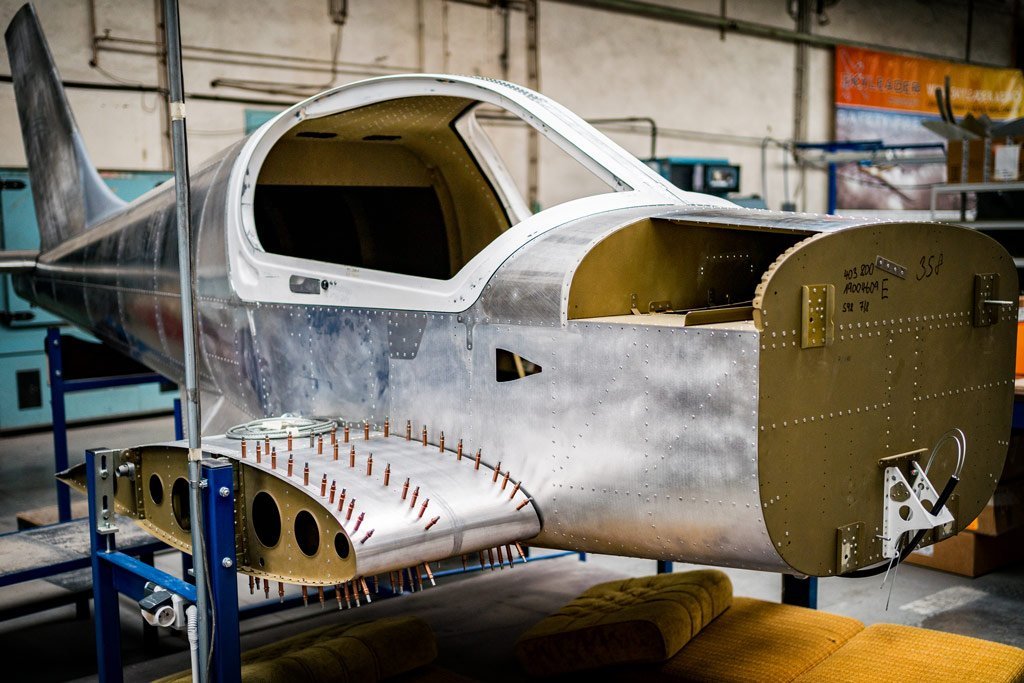
The Morogoro facility of Airplanes Africa Limited now produces all four models in the Czech-engineered Skyleader portfolio, covering everything from entry-level pilot training to business travel and agricultural operations. The production volume is modest. The industrial significance is not. And the fact that this is happening with almost no coverage in Tanzania's economic conversation is itself part of the story.
The Factory That Most People Have Not Noticed
Approximately 190 kilometres west of Dar es Salaam, inside the perimeter of Morogoro Regional Airport, a plant is producing aircraft. Not importing them, not servicing them, not displaying them at trade exhibitions. Assembling them, from components, using Tanzanian technicians, many of them graduates of the National Institute of Transport, under the technical direction of a Czech aerospace company that decided, after evaluating its options across multiple continents, that Tanzania was the right place to establish its only African manufacturing base.
Airplanes Africa Limited was established in Tanzania in 2021 by the Czech producer of ultralight, microlight, and light sport aircraft. Its Morogoro facility is the company's sole African branch, sitting alongside operations in the Czech Republic, Germany, China, and Russia. In March 2024, the Tanzania Airport Authority confirmed that three Skyleader aircraft had been assembled at the facility, with Mussa Mbura, the TAA Director General, describing the achievement as a significant milestone and noting the investment's dual contribution to government revenue and Tanzanian employment. The first of the three aircraft was unveiled publicly at TIMEXPO 2023 at the Diamond Jubilee Hall in Dar es Salaam.
The Morogoro facility has since expanded to produce all four models in AAL's Skyleader portfolio, a development that marks the transition from a facility testing its capability with initial assembly to one operating across its full product range. AAL intends to market these aircraft both domestically and across East Africa from the Morogoro base, which it describes as the future supply point for the regional market.
The production volume remains modest relative to what a mature aircraft manufacturing operation would represent. What the existence of this facility, this technology partnership, and this four-model production portfolio represents in the context of Tanzania's industrial development, and why the decision by a European aerospace company to locate its African manufacturing base in Morogoro rather than in Johannesburg, Nairobi, or Cairo is worth examining, is the analytical substance this article addresses.
The Four Aircraft Made in Tanzania
The Skyleader portfolio produced at the Morogoro facility spans a range of performance characteristics, applications, and market segments that collectively address most of the light aviation demand categories relevant to East Africa's operating environment.
The Skyleader 600 is the flagship model and the aircraft most directly relevant to the business travel and premium pilot training market. An all-metal, two-seat, low-wing aircraft with a trapezoidal wing, tricycle landing gear with wheel pants, steerable nose wheel, and retractable gear option, the 600 is the most capable aircraft in the portfolio by range and endurance. It achieves a maximum speed of 265 kilometres per hour, a cruise speed of 220 kilometres per hour at 75 percent power, and a range of 1,600 kilometres on its 120-litre fuel tank, with endurance of 8.5 hours plus 30-minute reserve. Powered by Rotax 912 or 914 series engines producing between 80 and 115 horsepower in turbocharged configuration, it requires a take-off run of only 90 to 100 metres and a landing distance of 200 metres, making it operable from the shorter and less-developed airstrips that characterise much of East Africa's regional aviation infrastructure. The 600 is ASTM certified and carries Made in Tanzania on its product sheet, a designation that is more than a marketing statement. It is an industrial claim.
The Skyleader 500 occupies the mid-range position in the portfolio, balancing performance with economic efficiency. With a maximum speed of 260 kilometres per hour, a range of 1,100 kilometres on a 90-litre tank, and endurance of 4.5 hours plus reserve, it offers performance close to the flagship model at lower operating cost. The 500's positioning for agricultural use and rural operations, as AAL's commercial communications describe it, makes it the model most directly relevant to the precision agriculture applications that Tanzania's agricultural sector has historically been unable to access affordably due to the cost and inaccessibility of conventional agricultural aviation equipment.
The Skyleader 400 is the sport aviation model in the portfolio. Inspired by racing car design with an opening canopy and aggressive cowling, it is aimed at the recreational and sport pilot market. With a maximum speed of 200 kilometres per hour, a range of 850 kilometres on the standard 80-litre tank or 1,250 kilometres with the extended 120-litre configuration, and endurance of 4.5 to 7 hours depending on fuel load, it offers flexibility for both short recreational flights and longer cross-country journeys. Powered by Rotax 912 series or Continental O-200D engines at 80 to 100 horsepower, it requires a take-off and landing distance of 200 metres. Its all-metal construction and ASTM certification place it at the same quality standard as the rest of the portfolio.
The Skyleader 200 is the entry-level model, categorised as UL rather than UL/LSA, targeting new pilot training, recreational flying, and cost-sensitive operators who require a capable but economical platform. With a maximum speed of 260 kilometres per hour, a range of 1,050 kilometres on a 90-litre tank, and endurance of 5.5 hours plus 30-minute reserve, it offers a performance envelope that exceeds what its entry-level positioning might suggest. Its combination of range and endurance makes it viable for regional connectivity applications across East Africa's shorter routes.
The four-model portfolio covers a market span from entry-level training aircraft through sport aviation to business travel and agricultural operations, addressing the primary demand categories in East Africa's light aviation market from a single manufacturing base in Morogoro. This portfolio breadth is significant because it means the Morogoro facility is not a single-product assembly operation dependent on a single market segment. It is building the production diversity that a commercially sustainable light aviation manufacturing operation requires.
Why This Sector, and Why Now
Aircraft manufacturing occupies a specific and instructive position in the hierarchy of industrial complexity. It is not the most capital-intensive manufacturing sector, which is dominated by petrochemicals, steel, and semiconductor fabrication. But it is among the most technically demanding at the production level, requiring precision engineering in metalwork and composites, strict quality management systems aligned with aviation safety certification requirements, supply chain traceability across hundreds of components, and technical workforce skills that take years of training to develop and that transfer readily into other precision manufacturing applications.
The industrial development literature consistently identifies high-complexity manufacturing as the most valuable entry point for economies attempting to build technical capability, because the spillover effects from aerospace, automotive, and precision instruments manufacturing into other industrial sectors are larger and more durable than spillovers from lower-complexity processing activities. An economy that learns to manufacture aircraft components to aviation safety standards has demonstrated a level of quality management, dimensional precision, and materials handling that is directly applicable to medical devices, scientific instruments, defence equipment, and advanced automotive components. Tanzania has none of these manufacturing sectors at meaningful scale today. The existence of an aircraft assembly facility in Morogoro producing four models across a complete product portfolio is the beginning of the technical ecosystem from which they could eventually grow.
The specific segment AAL is operating in, ultralight and light sport aircraft, is a strategically intelligent entry point for a country at Tanzania's industrial development stage. These aircraft are substantially less complex than commercial aviation or military aerospace, but substantially more complex than the consumer products and basic industrial goods that constitute the majority of Tanzania's current manufacturing output. They require precision metalwork, avionics integration, and structural testing that develops genuine aerospace engineering capability without the certification burden and capital requirements of commercial aircraft manufacturing.
David Grolig's explanation of why AAL chose Tanzania for its African manufacturing base is worth taking seriously as market intelligence rather than promotional language. The company cited Tanzania's security, stability, and peace as primary factors, alongside the country's favourable investment climate and the willingness of its people to embrace new technologies. These are the specific institutional quality variables that manufacturing investors weight heavily in location decisions, for the straightforward reason that manufacturing requires long-horizon capital commitment that cannot be relocated quickly if the operating environment deteriorates.
The Czech Technology Partnership and What It Transfers
The technology partnership between Airplanes Africa Limited and the Czech Skyleader producer is the most economically significant dimension of the Morogoro facility. Czech aerospace manufacturing has a distinctive heritage that makes it a particularly valuable technology partner for an emerging manufacturing economy. The Czech Republic has maintained a small but technically sophisticated aerospace manufacturing sector for decades, producing light aircraft, gliders, and aerospace components exported globally and competing on quality and precision engineering rather than production scale.
AAL's explicit trajectory from kit assembly toward fuller manufacturing is structured around three levels of final aircraft assembly that the company identifies as Fast Build Kit, Kit, and Super Kit, with increasing levels of local content and technical complexity at each stage. The stated mission is to transform the assembly line process into a fully manufacturing process operating from the Morogoro base, with finished products carrying a Made in Tanzania designation. The four models now in production represent the full scope of what that Made in Tanzania designation covers, from the entry-level Skyleader 200 through to the flagship 600.
The employment of NIT graduates as technicians in the Morogoro facility is the ground-level evidence of technology transfer that matters most for Tanzania's industrial ecosystem. The National Institute of Transport produces engineers and technicians in transport, logistics, and engineering disciplines. When those graduates are employed in aircraft assembly operations under Czech aerospace technical direction, they are acquiring skills in precision metalwork, avionics systems, structural integrity testing, and quality management that are not available through any other employer in Tanzania's current industrial landscape.
The Agricultural and Regional Market AAL Is Building Toward
The Skyleader 500's positioning for agricultural use in rural areas and the Skyleader 200's entry-level accessibility together address the two most immediate light aviation demand gaps in Tanzania's operating environment.
Tanzania's agricultural sector employs the majority of the population and contributes substantially to export earnings, but it operates with very limited access to precision agriculture capabilities that aerial platforms make possible. Crop monitoring, pest and disease surveillance, spraying applications, and yield assessment services that are standard in agricultural economies with developed aviation infrastructure are largely unavailable to Tanzanian farmers. An ultralight aircraft with low operational costs, designed for unpaved runway operations, and maintained locally by technicians trained at the Morogoro facility represents a genuinely different value proposition from the imported agricultural aviation equipment that Tanzanian agribusinesses have historically been unable to access affordably.
The regional export ambition, supplying East Africa from the Morogoro base, is strengthened by a portfolio that covers multiple operator profiles. A Rwandan tourism operator, a Kenyan agricultural cooperative, a Ugandan bush pilot training school, and a Tanzanian business traveller represent different buyers with different requirements. A manufacturing base that offers all four Skyleader models can address each of those buyers from a single regional production and maintenance hub in a way that a single-model facility cannot.
The Certification Challenge: The Constraint That Will Define the Trajectory
The most significant constraint on AAL's ambitions, and the one that the company's website acknowledges directly in describing the complex process of obtaining all official documentation, is the regulatory certification pathway that aircraft must navigate before they can be legally operated and sold.
All four Skyleader models carry ASTM certification, the American Society for Testing and Materials standard that governs light sport aircraft design and production, providing the technical baseline for their airworthiness in markets that recognise this standard. Tanzania's Civil Aviation Authority needs to establish or recognise an equivalent framework for ultralight and light sport aircraft to allow the Morogoro-assembled fleet to be legally registered and operated in Tanzania and across the East African regional market.
This certification framework is the critical path item that determines whether the production capability being built at the Morogoro facility can be converted into commercial revenue at scale. Until it is fully established across all four models, the production output cannot be matched by sales at the volume required to make the manufacturing operation commercially self-sustaining.
This challenge also represents an opportunity for Tanzania's institutional framework to demonstrate the regulatory competence that manufacturing investors require. An efficient, technically credible TCAA pathway for certifying the Skyleader portfolio would signal to other aerospace and precision manufacturing investors that Tanzania's regulatory environment can support complex manufacturing at the standard the sector requires.
What Four Models in Morogoro Actually Represents
Tanzania's investment and industrial development discourse is dominated by the large numbers. USD 10.95 billion in approved investment. 2,115 megawatts of new hydro generation. USD 42 billion in LNG negotiations. These are the figures that appear in investment promotion materials and that dominate economic planning documents.
Four Skyleader models assembled in Morogoro will not appear in any of those documents. They will not register in Tanzania's manufacturing GDP statistics in any meaningful way.
What they represent is nonetheless industrially significant, because they are the first evidence in Tanzania's modern economic history that aerospace manufacturing, the most technically demanding category of precision industrial production, is possible on Tanzanian soil, using Tanzanian hands, under Tanzanian conditions. The progression from initial three-aircraft assembly to a full four-model portfolio marks the transition from proof of concept to operational manufacturing, modest in scale but genuine in industrial content.
Every industrial sector that Tanzania has ambitions to develop requires some version of the engineering discipline, quality management culture, and precision manufacturing capability that aircraft assembly demands. The Morogoro facility is building that capability in the only way industrial capability can be built, by doing the work, making the mistakes, solving the problems, and iterating toward a standard that the market accepts and regulators certify.
AAL's combination of Czech engineering heritage, a graduated assembly-to-manufacturing trajectory, Tanzanian technical graduates, and a genuinely relevant African market for a four-model aircraft portfolio represents a more credible industrial development model than many of the larger and better-publicised manufacturing investments that Tanzania has attracted. It is small, it is early, and it faces the certification, financing, and supply chain challenges that confront every manufacturing startup in a frontier industrial environment. But it is real, it is running, and the four aircraft types assembled at Morogoro Regional Airport are the most concrete evidence currently available that Tanzania's manufacturing ambitions extend beyond the exhibition halls where they are most often articulated.
Whether it scales will depend on the regulatory framework, the financing environment, the technical training pipeline, and the regional market development that transforms a modest assembly operation into a manufacturing business that defines Made in Tanzania in one of the world's most technically demanding industrial sectors.
_______________________________________________________________________________________
Sources: Airplanes Africa Limited Website, Product Specifications and Company Documentation. Skyleader 600 and 400 Official Product Sheets, AAL Morogoro 2023. AAL Website Aircraft Portfolio, all four models. The Citizen Newspaper Tanzania, March 2024, reporting on Morogoro plant milestone. Tanzania Airport Authority Director General Statement, March 18, 2024. TIMEXPO 2023 Exhibition Records, Diamond Jubilee Hall, Dar es Salaam. National Institute of Transport Tanzania Graduate Employment Data. European Aviation Safety Agency and ASTM Ultralight and Light Sport Aircraft Certification Standards. Tanzania Civil Aviation Authority Regulatory Framework.
_______________________________________________________________________________________
Uchumi360 covers business, investment, and economic policy across East, Central, and Southern Africa.
